Angus Colwell

Angus Colwell

Angus Colwell is The Spectator’s daily newsletters editor, and lead author of Morning Press. He also reviews restaurants for the magazine.

Britain and US launch airstrikes against Houthis

The US and the UK have launched airstrikes against Houthi rebels in Yemen whose continued attacks are disrupting trade in the Red Sea. Rishi Sunak convened his cabinet on Thursday night to discuss what action would be taken. Strikes were reported in Yemen’s capital, Sanaa, and the Houthi stronghold port of Hudaydah. Downing Street said that the strikes were carried out by the Royal Air Force on military facilities. The UK’s National Security Council met on Thursday, and an emergency meeting of Cobra was convened. The Leader of the Opposition and the Speaker of the House of Commons were briefed. It’s understood that Sunak will not recall parliament on Friday to discuss the intervention.

Is the West at war in the Red Sea?

Britain and the US are getting ever more drawn in to the conflict in the Red Sea, as Iran-backed Houthis fire missiles at commercial ships. The USS Carney has downed 14 attack drones launched from Houthi-controlled territory and the Royal Navy destroyer HMS Diamond is also there shooting down missiles.  The Houthis are firing from Yemen, and the Iranian regime is reportedly sending them real-time intelligence and weaponry. The Houthis claim that they are only targeting ships headed to Israel, but evidence suggests otherwise. On Saturday a ship travelling from Saudi Arabia to India was struck. Christmas Eve was one of the busiest days yet: US Central Command said that it had ‘shot down four unmanned aerial drones originating from Houthi-controlled areas in Yemen’.

‘Rizz’, ‘vibes’, and what we lose with Very Online language

Welcome to our language: ‘rizz’. Here’s the OED definition: colloquial noun, ‘defined as ‘style, charm or attractiveness; the ability to attract a romantic or sexual partner’. It was announced on Monday as the Dictionary’s word of the year, and it’s here to stay sadly, because that’s how language works. That’s why we don’t speak like George Eliot characters. Rizz became popular the way all words do nowadays: they start somewhere opaque online, then filter effortlessly into real life. As a 23-year-old, I hear it semi-frequently, although I kind of wish I didn’t. What does it mean for a word to go ‘viral’? It means that everyone starts using them, and then we get a stale monoculture. These words, by definition, become clichés immediately.

‘I was astounded’: Gary Marcus on the Sam Altman saga

This morning, OpenAI – the firm behind ChatGPT – rehired its chief executive, Sam Altman, after it fired him on Friday. Altman is the most prominent ambassador for the world of artificial intelligence, and was set to join Microsoft after leaving the company. After his sacking, more than 95 per cent of OpenAI’s employees demanded that the board leave and reinstate him. Many staff were threatening to quit the lab, and Microsoft had agreed to match their pay. Today, OpenAI caved and welcomed him back. What’s going on here? Did a firm that was set up to make AI ‘for the benefit of humanity’, whose whole idea was to not be dictated by the whims of the market, forget itself? I spoke to Gary Marcus, whose Substack is one of the most interesting around.

Svitlana Morenets, Sean Thomas and Angus Colwell

21 min listen

This week, Svitlana Morenets says Ukraine’s counteroffensive is not living up to the hype (00:59), Sean Thomas says he likes travelling to crappy towns (10:27), and Angus Colwell defends London’s rickshaw drivers (17:38).  Presented and produced by Max Jeffery.

In defence of Rickshaws

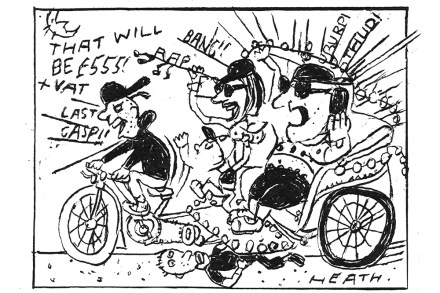
London rickshaws, or pedicabs, are always described as a scourge. They’re too bright and they’re too loud, the charge sheet reads: they block up the road and rip people off. Last week, the government announced in the King’s Speech that Transport for London will be given powers to license them. Drivers will have their fares regulated, their backgrounds checked and their driving abilities probed. At the moment, it’s a Wild West. If you buy a pedicab – congratulations, you’re a pedicab driver. You can now take German families over Westminster Bridge and play ‘Despacito’ as loud as a jet engine. I went out over the weekend to speak to some of London’s pedicab drivers about their trade, and whether they were worried it’s going to die.

Inside the Armistice Day protests

The Metropolitan Police today staged their largest-ever operation with two marches – the pro-Palestinian march and a smaller counter-protest – taking place in London. The latter, centred on Westminster, provided most of the arrests. The main route of the pro-Palestine march (which started in Park Lane and was moving towards the US Embassy in Vauxhall) passed more peacefully with fewer scuffles. The demonstration drew perhaps 300,000 (although Jeremy Corbyn claimed a million) and the main arrests seem to be those who decided to sit down at Waterloo station and not move when asked. No one person on the march can hope to give an account on the whole thing. But I can say what I observed and summarise some of the various reports.

Kamala Harris doesn’t get AI

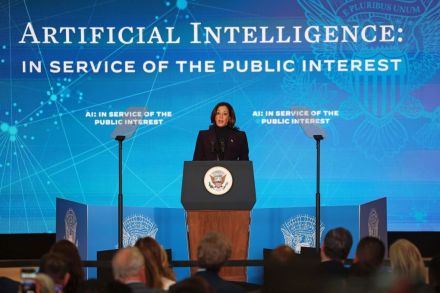
At least Kamala Harris managed to avoid the dreaded phrase that we should ‘harness AI’s ‘potential’. But that was just about the only blessing in the Vice President’s impressively rubbish speech yesterday at the US embassy in London. Artificial intelligence, it is generally agreed, is the most important issue facing humanity, yet all we had was 14 minutes of waffle from the Veep. Still, it was nice of her to turn up. Joe Biden has put Harris in charge of artificial intelligence. You can read that one of two ways: either Biden thinks that Kamala Harris is perfectly suited to grappling with the gravest existential threat, or that he thinks this AI malarkey is all a bit airy, so that looks like a good one for giving Kamala something to do.

Both sides deny being behind Gaza hospital strike

Who is responsible for the bombing of a hospital in Gaza? This evening as many as 500 people are thought to have been killed in one terrible act in a medical building in Gaza. Thousands of civilians were reportedly sheltering there, after fleeing their homes following an Israeli order to evacuate the northern part of the Gaza strip. Israel were quick to deny having a role in the attack, blaming Palestinian militants – and a misfired Palestinian rocket barrage – for the disaster. It follows an incident earlier on Tuesday, when – according to the UN – a school in central Gaza where 4,000 people were sheltering was hit, killing at least six people.

Netanyahu: ‘What we will do to our enemies will echo for generations’

Just a week ago, Benjamin Netanyahu was urging Israelis to take a break. He said citizens should ‘go for a walk in our beautiful country’ during the Sukkot holiday. He posed for photographs with his wife Sara in the Golan Heights, the two of them smiling as the sun set. Tonight, he prepared citizens for an immense retaliation campaign against Israel’s foes. He said that the air strikes seen so far against Gaza are ‘just the beginning’, and that ‘what we will do to our enemies in the next few days will echo for generations.’ Earlier today, his defence minister ordered a ‘complete siege’ of the Gaza strip, cutting two million people off from the supply of electricity, food, water and fuel.

Welcome to the pub of 2030

In 2030 I will turn 30. I hope to be in the pub, but maybe a little less often than I am now. Judging by the way things are going, that might be easier than we’d like to admit. And not just because we lost 383 pubs between the start of the year and the end of June.  I’ll set the scene: it’s seven years from now. Off I go, to one of the last four pubs in London, and park my e-bike next to three thousand others. I walk through the entrance, the etched Victorian glass door replaced by government-mandated energy-efficient double glazing, and there they are: eight 0 per cent beers on draught.  Human beings like pork scratchings and a fag and a pint, and will do forever ‘Do you have anything alcoholic?’  ‘What?

A 50-quid, hour-and-a-bit troll: Aphex Twin, at Field Day, reviewed

Forty per cent of London is green space. And what we do with all that grass – all that potential – is pave it with music festivals. This year, Hyde Park hosted Billy Joel and Bruce Springsteen. Gunnersbury Park had Boygenius. Finsbury Park welcomed Pulp and Travis Scott. Field Day is a staple of the season. Always falling on a Saturday in late August, the day is wholly reserved for electronic music. Reams of twentysomethings make the pilgrimage: set off from wherever, change at Bank, District Line to Mile End, 15-minute walk, enter, set aside £7.50 for a can of warm Red Stripe. Everything is very clean: the organisers don’t want Woodstock. The first thing you see upon entry is a stand to buy Alpine’s MusicSafe Pro High Fidelity Earplugs.

The real problem with Thomas Straker

Thomas Straker became famous for his TikTok recipes, although he doesn’t like it when people point that out. He protests that he’s a serious cook – he has worked at Elystan Street, Dinner by Heston Blumenthal and The Dorchester – but most people know him as the butter guy. It’s hard to avoid that label when his flavoured butter recipes have led to a following of 2.1 million people. His TikToks are perfectly constructed using schizophrenic jump cuts and ASMR narration and he likes to make viewers salivate over his Bloody Mary butter, Biscoff butter, tequila butter, and bone marrow butter. Here’s him doing something indecent with chicken skin:  https://www.youtube.com/watch?

How to enjoy Glastonbury from your sofa

More than 200,000 people have schlepped down the ley lines for another year of ‘Glasto’. It’s tempting to deride these people: they’ll stink, they’re anchorless hedonists, they’re blue-haired hippies. However, they’ve got tickets to Glastonbury and I haven’t, so they win.  Actually going to the festival, however, is a minority experience. More of us will be watching it on TV. And whether you dig the Glastonbury vibe or not, there’s plenty of good music for all across this weekend.  The most important thing to remember, though, is to watch as little of the coverage as possible. It’s fluff. For three whole days, everything is ‘fantastic’, everyone will ‘bring it’ and ‘vibes’ will always be ‘elite’ for the gawping BBC presenters.

Save our cheese sandwiches!

Sad things, cheese sandwiches, especially in their most basic form. Most would add a garnish: pickle, tomato and onion are the most popular. Cowards. The point of a cheese sandwich is its beigeness. This is fuel, not food. Consoling sad corporate workers at their desks. Rows upon rows of sandwiches on Tesco shelves: ‘Cheese – no mayonnaise.’ No mayonnaise is important. That would be too much fun. Everyone knows how the Earl of Sandwich repurposed bread and beef and started an eating revolution. No one really knows who first put cheese into the mix, however. The first mention seems to be from William Shakespeare’s The Merry Wives of Windsor, where Nym refers to a dish of ‘bread and cheese’. It’s hard to tell whether he meant a sandwich, of course.

Martin Amis 1949-2023: How The Spectator covered his life

Martin Amis died in Florida on Friday, of oesophageal cancer at the age of 73. Some of The Spectator’s best writers praised, reviled, laughed at and scorned Amis throughout his career. Here’s some extracts from our archive: The Rachel Papers ‘The narrative is often very funny indeed, but I suspect that Martin Amis is getting the last laugh. Charles Highway is so much the archetypal youth, of a certain time and a certain class, that he is necessarily a comic creation. Sex is nowadays the vox populi, and almost vox dei if certain clergymen have anything to do with it, but for Highway it is a road paved with bad intentions.

Why are the Nat Cons so serious?

The problem with socialism, the saying goes, is that it takes up too many evenings. Well, the National Conservatism conference, or NatCon, is currently detaining ‘delegates’ for 12 hours at a time, for three days in a row. We’ve had long agonised debates about protectionism vs free trade, communitarianism vs individualism, Ukraine support or Nato scepticism. When did the right get so sincere? NatCon is an American import, and it feels like it. The programme uses the language of ‘plenaries’ and ‘keynote addresses’. It has that American feel of ‘movement conservatism’ – mixing the over-intellectual with the underwhelming.  The problem for a lot of conservatives today is that they can’t decide if they should be angry or not.

Sam Leith, Lionel Shriver and Angus Colwell

23 min listen

This week: Sam Leith explains how he’s been keeping up friendships by playing online scrabble (00:55), Lionel Shriver questions Nike and Bud Light's recent marketing strategy (06:52) and Angus Colwell reads his review of the V&A Dundee’s tartan exhibition (15:24).

What the V&A Dundee exhibition doesn’t tell you about tartan

Criss-crosses, everywhere: 300 objects covered in them. The exhausting range and depth of the world’s most famous pattern is on full display at the V&A Dundee’s vast new exhibition. Tartan is a more genuine emblem of Scottish nationhood than the famous deep-fried Mars bar, which no one really eats. But it’s not uniquely Scottish. Plaid has been worn across western Europe for hundreds of years, then was claimed by Scotland as the symbol of the nation, now recognised the world over. It’s even a political weapon. In the recent SNP leadership election, the outsider Ash Regan wore practically nothing but the fabric. Ian Blackford has in the past unnerved many a viewer when he bent down in his kilt to lay a wreath at the Cenotaph.

The new technocracy: who’s who in the chatbot revolution?

Decades are happening in weeks in the world of artificial intelligence. A fortnight ago, OpenAI released GPT-4, the latest model of its chatbot. It passed the bar exam in the 90th percentile, whereas the previous model only managed the tenth. Last week, Google introduced its own chatbot, Bard. Now, the British government is announcing plans to regulate AI for the first time, as well as to introduce it into hospitals and schools. Even some of the biggest technophobes are having to grasp this brave new world. We’re familiar with some of the technology by now, but we know little about the humans in the world of AI.