Angus Colwell

Angus Colwell

Angus Colwell is The Spectator’s daily newsletters editor, and lead author of Morning Press. He also reviews restaurants for the magazine.

‘Trump trauma’ might be dead

In the Spectator offices, my colleague Mary Wakefield and I often end up talking about young people while we’re making tea. She thinks I’m a bit too cocky about civilisation. Apparently when she starts telling me something weird that she’s seen my generation doing, my eyes start darting madly, looking for a way out. She probably looks at me and thinks I’d open the gates to the barbarians to avoid the horror of an earnest opinion. The re-election of Donald Trump has us feeling different ways too. Mary has written this week about the phenomenon of ‘Trump trauma’. There’s some pretty wild examples in there, all of which are deserving of our laughs. But I found these people strange, even though they’re of my generation, and I didn’t recognise them.

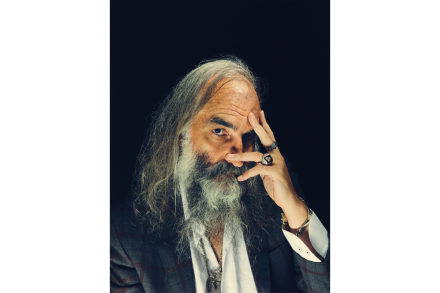
Nick Cave’s right-hand man Warren Ellis on AI, Gorecki and staying young

In the next few days Nick Cave and the Bad Seeds play Leeds, Glasgow, Manchester and London. There are still some tickets left. The price is reasonable but the price doesn’t matter when the band are unequivocally one of the finest of live acts. By whatever means you can, go. When you get there, enjoy Nick Cave himself, of course. Prepare to be awed by ‘Tupelo’, converted by ‘Into My Arms’. Prepare to cry to ‘Girl in Amber’ and dance to ‘Stagger Lee’. Get ready to experience an assault on every one of your orifices by the impossibly loud and dark ‘Jubilee Street’. ‘I think you feel like you’re a young person until you accept that you’re old. And I don’t want to do that’ But also watch Warren Ellis.

Miliband’s net zero madness & meet Reform UK’s new poster boy

39 min listen

This week: Miliband’s empty energy promises. Ed Miliband has written a public letter confirming that Labour plans to decarbonise the electricity system by 2030. The problem with this, though, is that he doesn’t have the first idea about how to do it. The grid doesn’t have the capacity to transmit the required energy, Ross Clark writes, and Miliband’s claim that wind is ‘nine times cheaper’ than fossil fuels is based upon false assumptions. What is more, disclosed plans about ‘GB Energy’ reveal that Miliband’s pet project isn’t really a company at all – but an investment scheme. This empty vessel will funnel taxpayer money into the hands of private companies rather than produce any energy itself.

Is it time to pity restaurant critics?

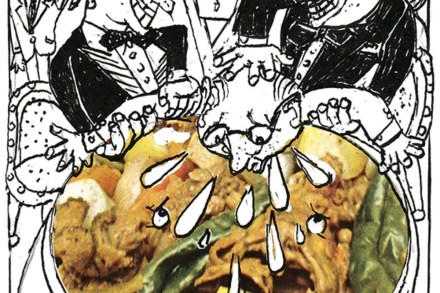
An atom is made of protons, electrons and neutrons, and protons are made of quarks, and a quark is the size of the violin you’d play for a restaurant critic who complains about their job. It’s the best job in the world: go out for dinner on expenses with a friend or a lover, then bash out a thousand words. Why, then, might we feel some pity for our restaurant critics? One reason could be that the Grim Reaper is hovering. Last week, the Evening Standard’s restaurant critic Jimi Famurewa announced that his column was being scrapped, as the paper moves to a weekly edition. Another reason, perhaps, is the lifestyle of a restaurant critic. Earlier this year, the New York Times’s Pete Wells left his column for health reasons: ‘I can’t hack the week-to-week reviewing life any more.

There should be a maximum smoking age

In January 2022, the New York Times ran a piece that declared that smoking was back, quoting Martin Amis’s daughter saying it seemed like it was. In the summer of 2023, the Guardian ran a piece that declared that smoking was back, because Lily-Rose Depp looks great when smoking. Last month, the Guardian again ran a piece that declared that smoking was back, because Dua Lipa smokes and Charli XCX pretends to.  Smoking between 35 and 60, however, is really very dangerous But it isn’t back, and there’s stats to prove it. However, what those pieces do say is that smoking retains its ‘cool’ image. We know that. Kate Moss and James Dean knew that.

How to save Pret

Can you imagine how great it must have felt to be a Pret a Manger executive in late 2019? There was a Pret restaurant. They’d just bought Eat and its 94 stores. Veggie Pret was taking over the south east. London mayoral candidate Rory Stewart said Pret was his favourite pub. There was a Twitter account called Pret L’Etranger where visits to Pret were written in the style of Albert Camus. They started selling lobster rolls. That starts with getting rid of 90 per cent of the rubbish sandwiches Pret bigwigs were Masters of the Universe. But then Covid, then lockdown, and disaster. Revenue in 2020 dropped by £299 million. Their survival plan was to beg: for £20 a month, you could get five drinks a day (it later went up to £30).

We’ll miss Gareth Southgate

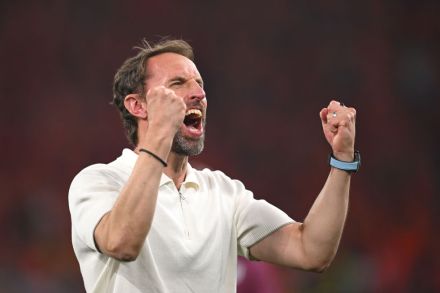
This piece was originally published in a different form on 12 July. Gareth Southgate, who has just resigned as England manager, deserves better than what he got. He is not perfect, as some football journalists imply (you end up suspecting they’re particularly chummy with the right people). But it’s not too much to say that Southgate achieved something special in his eight years.   In 2018, he took England to the semi-finals of the World Cup, the first time since 1990. He took England to the final of Euro 2021, and then repeated the achievement despite playing far worse. True, we went out in the quarters in 2022, but against a France side that would end up making the final.

Freddy Gray, Angus Colwell, Matthew Parris, Flora Watkins and Rory Sutherland

30 min listen

On this week’s Spectator Out Loud: after President Biden’s debate disaster, Freddy Gray profiles the one woman who could persuade him to step down, his wife Jill (1:05); Angus Colwell reports from Israel, where escalation of war seems a very real possibility (9:02); Matthew Parris attempts to reappraise the past 14 years of Conservative government (14:16); Flora Watkins reveals the reasons why canned gin and tonics are so popular (21:24); and, Rory Sutherland asks who could possibly make a better Bond villain than Elon Musk? (25:00).  Presented by Patrick Gibbons.

Israel says it’s ready for another war

According to my phone, I’m in Beirut-Rafic Hariri International Airport. Except I’m not. The Israel Defence Forces have scrambled the GPS of everyone within about an hour’s drive of the Israel-Lebanon border. The same navigation system that tells my iPhone its location is the same navigation system that Hezbollah could use to identify targets in northern Israel. They’ve been firing across the border since 7 October, and the Israelis are fed up. They’ve evacuated 80 kibbutzim, nine villages, three community centres and two Arab villages. The phrase that ministers use to describe the displaced is ‘refugees in their own country’. The offensive in Gaza is winding down, and after that – says an official – ‘we are ready to deal with Lebanon’.

Israeli minister’s Labour warning

Britain’s general election campaign is being watched around the world, especially in countries that have relied on our support. One of those countries is Israel, where I spent a few days earlier this week as part of a Europe Israel Press Association delegation. I write about it in next week’s magazine, but there was one exchange that stands out. I met Amichai Chikli. He’s Israel’s Minister of Diaspora Affairs and Combating Anti-Semitism, is a member of Benjamin Netenyahu’s cabinet, and also of his Likud party. His job is to look after ties between the State of Israel and Jewish people. It’s a big task: the ministry’s website says the ‘Israeli government sees itself as being responsible for all Jews worldwide’.

When did Gareth Southgate get quite so ruthless?

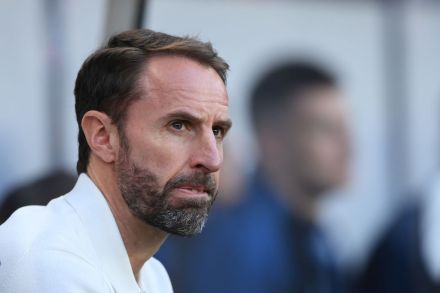
Gareth Southgate, England’s semi-intellectual, waistcoat-strapped manager, knows he’s on his last chance at Euro 2024. He’s failed to bring a trophy home three times now and four will be unacceptable. This perhaps explains his newfound ruthlessness: he’s cut his most heroic failures from the squad who will travel to Germany. Jack Grealish, who brought good vibes but not a trophy, is gone. Jordan Henderson, who was kept around to set a good example, is no longer needed. Mason Mount, the teachers’ pet, didn’t make the cut. Nor did Marcus Rashford, the nation’s favourite player-activist. Harry Maguire, a Dunkirk boy for a squad trying to ape Normandy, is not worth the injury risk.

Wannabes: are any of them ready?

36 min listen

On this week's Edition: Wannabes - are any of them ready? Our cover piece takes a look at the state of the parties a week into the UK general election campaign. The election announcement took everyone by surprise, including Tory MPs, so what’s been the fallout since? To provide the latest analysis, The Spectator’s political editor Katy Balls joins the podcast (2:00). Then: Angus Colwell reports on how the election is playing out on social media, and the increasing role of the political ‘spinfluencer’. These accounts have millions of likes, but how influential could they be during the election? Alongside Angus, Harry Boeken, aka @thechampagne_socialist on TikTok, joins us to share their thoughts on who is winning the social media war (15:08).

The TikTok stars taking on the Tories

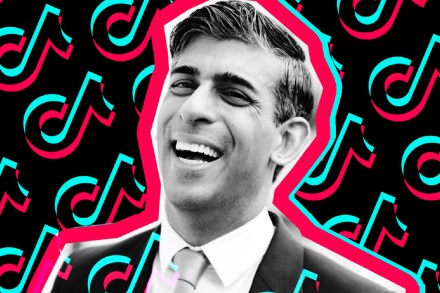
‘Sorry to be breaking into your usual politics-free feed,’ chirrups Rishi Sunak in his first-ever TikTok video. He is awkward, understandably. TikTok is enemy territory for the Tories. What most users learn about the Conservatives is usually damning, from left and right. ‘I think the Tory party deserves to die,’ says Jess Gill, who with 1.2 million ‘likes’ has a larger TikTok following than the party she wants dead. ‘They’ve betrayed Britain. On all fronts, but particularly immigration. We have an extremist immigration policy that is ruining this country.’ She is from Bolton and commutes from Reading to King’s College London on the two days she has to go in to study. Her videos denounce those who ‘simp for’ (or ‘defer to’) the Tories.

Slavoj Zizek, Angus Colwell, Svitlana Morenets, Cindy Yu, and Philip Hensher

32 min listen

On this week’s Spectator Out Loud: Philosopher Slavoj Zizek takes us through his diary including his Britney Spears Theory of Action (1:08); Angus Colwell reports from the front line of the pro-Palestinian student protests (8:09); Svitlana Morenets provides an update on what’s going on in Georgia, where tensions between pro-EU and pro-Russian factions are heading to a crunch point (13:51); Cindy Yu analyses President Xi’s visit to Europe and asks whether the Chinese leader can keep his few European allies on side (20:52); and, Philip Hensher proposes banning fun runs as a potential vote winner (26:01).  Produced by Patrick Gibbons and Oscar Edmondson.

Drama students: how universities raised a generation of activists

39 min listen

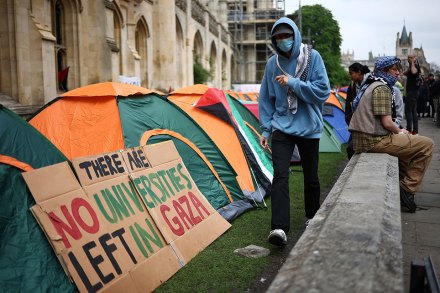
This week: On Monday, tents sprung up at Oxford and Cambridge as part of a global, pro-Palestinian student protest which began at Columbia University. In his cover piece, Yascha Mounk, a professor at Johns Hopkins University, explains how universities in both the US and the UK have misguidedly harboured and actively encouraged absurdist activism on campuses. Yascha joined the podcast to discuss further. (01:57) Next: Bugs, biscuits, trench foot: a dispatch from the front line of the protests. The Spectator’s Angus Colwell joined students at tent encampments this week at UCL, Oxford and Cambridge. He found academics joining in with the carnival atmosphere. At Cambridge one don even attended with their baby in tow. ‘Peaceful protest?

Bugs, biscuits, trench foot: from the front line of the uni protests

On the grass in front of UCL’s main building, on Sunday night, there were about 30 tents and the portico was plastered in handwritten signs: ‘Students: You’re in debt so UCL can fund a genocide!’ Some protestors sat on chairs, eating biscuits. Others stood at the front gate chanting ‘From the River to the Sea’. ‘Do you want a tent, bro?’ asked one protestor. I explained that I was a reporter and was immediately whisked away to talk to a spokesman. ‘Spectator, Spectator … yeah, I think that’s left-wing. All good.’ A girl who had come along for the day received a keffiyeh tutorial and as night began to fall, I watched as most of the demonstrators headed towards the front lawn to pray. One student didn’t fall asleep until 6.30 a.m.

Matthew Parris, Laurie Graham, Rachel Johnson, Laura Gascoigne and Angus Colwell

32 min listen

This week: Matthew Parris questions what's left to say about the Tories (00:57), Laurie Graham discusses her struggle to see a GP (07:35), Rachel Johnson makes the case against women only clubs (13:38), Laura Gascoigne tells us the truth about Caravaggio's last painting (19:21) and Angus Colwell reads his notes on wild garlic (28:58).  Produced by Oscar Edmondson, Margaret Mitchell and Patrick Gibbons.  Presented by Oscar Edmondson.

City folk go wild for wild garlic

For a certain type of Barbour-clad middle-aged man, the best time of year is late summer, and the arrival of the grouse season. But if you’re in your twenties and living in Hackney, you’re more likely to get excited for spring and the arrival of wild garlic. Foraging has become a fashionable activity for twentysomethings. ‘Instagram has changed the game,’ says the nature writer and wild garlic picker Patrick Galbraith. ‘People love the foraging aesthetic.’ Some fans generously compare notes online on the most fruitful spots. Others gatekeep. The Instagram page ‘Real Housewives of Clapton’, which satirises the lifestyles of young bourgeois east Londoners, has gained a following making snide memes about hopeless amateurs foraging in Dr Martens.

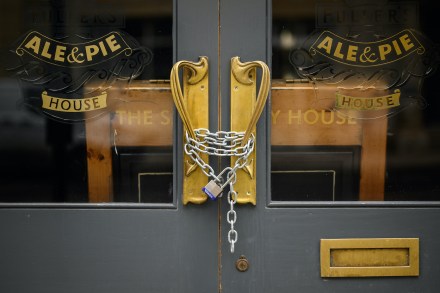
Thank goodness pubs shut at 11

A group of four stagger out of a pub in Britain at around 11.20 on a Thursday night. The search begins for somewhere to have one more drink without a £20 entry fee. Men on doors say no by shaking their heads. Pubs show their appetite for more visitors by turning their lights up a little brighter than an exploding sun. There are bars open, but the mark-up on a glass of white seems out of sync with the occasion and the bank balance. Half an hour’s increasingly muted search ends halfway across the other side of town. Nothing is open. Google maps is opened. Everyone mutters goodbye. If we were given late-night pubs, it would be carnage for two weeks, and then we would shun them Some of us younger Brits have become agitated at how early everything shuts.

The lazy corpspeak of the Foreign Office establishment

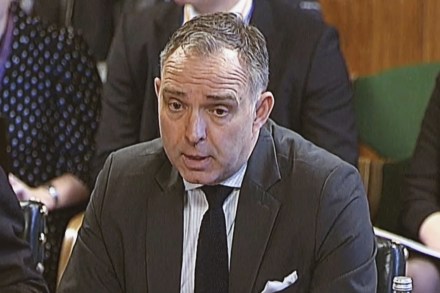
Mark Sedwill is a serious man. He has a master’s in economics from Oxford. He worked in Cairo, Nicosia, Baghdad and Islamabad over several decades as a diplomat. He was a UN weapons inspector, Her Majesty’s Ambassador to Afghanistan and served as the Nato senior civilian representative there. He became cabinet secretary in 2018 after the death of Jeremy Heywood, and left just two years later after the first wave of Covid. Throughout the document, thoughtless language produces thoughtless thinking A shame then, considering his pedigree, that he has entered the world of corpspeak and insubstantial guff.