Andrew Tettenborn

Andrew Tettenborn is a professor of law at Swansea Law School

Scrapping one-word Ofsted verdicts is a mistake

The decision to scrap one or two-word Ofsted inspection grades for England's schools is good news for teachers – but bad news for just about everyone else, not least parents and pupils. Many school staff have never liked the labelling of schools as 'Outstanding', 'Good', 'Requires Improvement' and 'Inadequate'. They say that it doesn't give the full story and heaps pressure on staff during inspections. In one case last year, a head teacher took her own life after her school received an unflattering report. What happened to Ruth Perry was a terrible tragedy. But while some reform was no doubt necessary, getting rid of straightforward Ofsted summaries is not the answer.

Starmer may regret an outdoor smoking ban

It’s a curious political world. Few who voted Labour last month actually wanted Labour policies, or for that matter had more than the haziest idea what they were. Now the Labour leadership is returning the compliment. It is increasingly obvious that it has neither much idea what electors want, nor any great desire to provide them with it. Withdrawing the winter fuel allowance, going hell-bent for net zero (whatever the consequences), clamping down on our rights online, the list goes on. The government’s proposed extension of the smoking ban, leaked yesterday, is a further case in point.

The worrying return of non-crime hate incidents

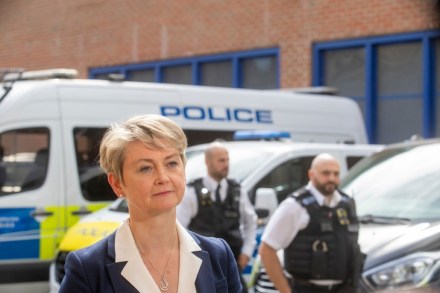
The longer it continues in office, the more reactionary and beholden to vested interests this government turns out to be. So far it has surrendered to the establishment on immigration, on the EU, and on higher education (blocking any awkward notions of making administrators respect free speech). Yvette Cooper, the Home Secretary, now appears to believe it is the police establishment’s turn to be appeased: witness the reports this week about the recording of non-crime hate incidents, or NCHIs. Until about three years ago, NCHIs were recorded by the police in vast numbers, largely against people who spoke out of turn online, however lawfully, and had a complaint made against them.

Louise Haigh’s LTN policy is doomed to fail

The Labour party is in a bind over cars. Its instincts – collectivist, green, managerialist – strongly favour anti-car measures like low traffic neighbourhoods (LTNs) with roads strategically blocked off, and 20 mph speed limits. Unfortunately motorists overwhelmingly disagree. In Wales, the new government under Eluned Morgan has learnt this to its cost. Faced with something like a 70 per cent disapproval rate of the national default 20 mph limit in urban areas, it has now been humiliatingly forced to roll it back. It’s working people who will bear the brunt of these anti-car measures In England, Transport Minister Louise Haigh has sought to play a more subtle game.

Are too many young people going to university? 

University hopefuls trepidatiously opening their official A-level emails this morning will on the whole be happier than last year. All the indications are that they are more likely to get a college place, and indeed have a better chance of making their first choice. The reasons for this are complex, but largely boil down to two serendipitous facts. One is the disappearance of the artificial bubble created by Covid, which left universities overfilled and so constricted their scope for new admissions. The other is a drop in foreign applications, due among other things to students being discouraged from bringing their extended family with them, and to the collapse of the currency of Nigeria, from which many overseas students previously came.

Will a social media crackdown really stop future riots?

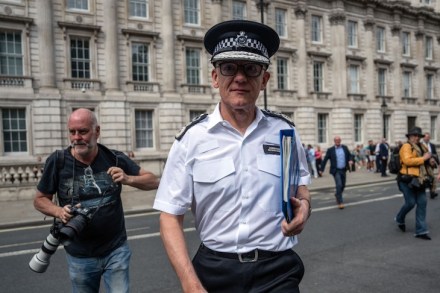
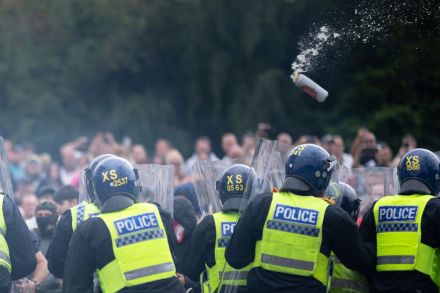
The riots of 2024 will be remembered for many things. One of them is the way the establishment spectacularly closed ranks on online speech.  Metropolitan Police commissioner Mark Rowley said on Saturday that he intended to throw the book not only at rioters themselves, but at ‘keyboard warriors’ who might support them. The CPS, through the Director of Public Prosecutions, solemnly warned that anyone repeating inflammatory material online faced prosecution. Meanwhile, senior police were said to be trawling social media to hunt down those fomenting hatred and division.  Action followed words.

Why Britain must say no – again – to China’s ‘super embassy’ in London

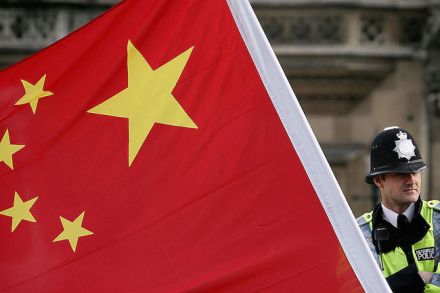
The previous Tory government may not have been very successful in containing the global ambitions of China, but at least it tried. Whether David Lammy’s Foreign Office has the same ambition to stand up to Beijing’s bullying is unfortunately becoming more doubtful. A straw in the wind is the announcement by China this week that it has revived plans to build a spanking new 'super embassy' – ten times the size of Beijing’s current outpost – on land it owns in the heart of the capital, a stone’s throw from the Tower of London.  This isn’t any old exercise in replacement of one piece of real estate with another. What China wants to build is a massive campus covering about 5.4 acres of prime City land just across the road from the old St Katharine Docks.

Using terror laws to prosecute rioters is a mistake

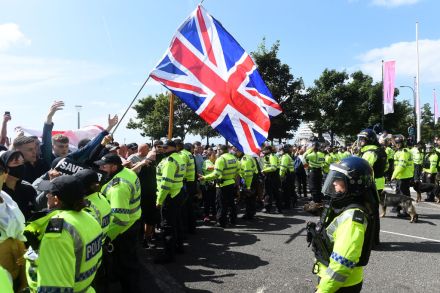
Authorities encountering the kind of civil disorder that has marked the last few days in Britain are best advised to keep a cool head and quietly deploy the powers of the ordinary law to face it down. Unfortunately there are worrying signs that this is not happening. The announcement from the Director of Public Prosecutions Stephen Parkinson that the Crown Prosecution Service favours on occasion invoking terrorism laws against those co-ordinating the unrest, is a case in point. True, in doing this the CPS would be strictly within its rights. In law, any action designed to influence the government and involving violence or serious damage to property with intent to advance a political cause is regarded as terrorism.

24-hour courts are risky, but right

Yesterday evening, the government instituted a little-known procedure called the Additional Courts Protocol. Set up following the 2011 London riots, this involves emergency ad hoc magistrates’ courts sitting 24 hours a day to deal swiftly with the troublemakers.  This was the right decision. But it still may come back to bite the people who made it. It’s not difficult to see the advantages. Quick justice, bypassing the usual bureaucracy and reducing the scope for suggestions that witnesses’ memory may have faded, may well give offenders a salutary shock: the prospect of it can concentrate minds in future.

Does Labour care about free speech on campus?

Universities fought tooth and nail against plans to impose fines if they failed to uphold freedom of speech. That proposal – contained in last year’s Higher Education (Freedom of Speech) Act – was one of the few things the Tory government could point to as a success. But under Labour the plan has been shelved. It's a good day for universities; a bad day for anyone who cares about free speech on campus. This bleak episode neatly sums up Labour’s attitude to higher education Education Secretary Bridget Phillipson said that the ministerial order, which was required to bring into force the relevant parts of the new law, would be delayed. She told the Commons, with obvious pleasure, she was ready to 'consider options, including repeal.' In short, the Act is dead.

Letting the worst universities collapse would be an act of kindness

Nobody said much about it before the election, but the new government inherits a ghastly financial problem with the higher education system. Rising costs, stagnant tuition fees, and a big drop in foreign student enrolments have left several universities tottering like ivory Jenga towers. We probably have too many universities This week we got an inkling of what education secretary Bridget Phillipson and higher education minister Jacqui Smith are thinking of doing about this mess. Not surprisingly, big money bail-outs are out (chancellor Rachel Reeves won’t allow them), as are increases in student fees (which backbenchers wouldn’t stand for). Instead, apart from telling the institutions in trouble to tighten their belts, the government seems rather short on solutions.

Just Stop Oil fanatics deserve their lengthy jail terms

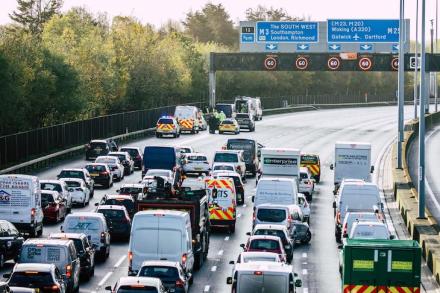
The prison sentences passed on the Just Stop Oil protesters who immobilised the M25 – five years for Roger Hallam and four for the others – were certainly stiff. With prisons overflowing and some violent offenders receiving less harsh sentences, a small reduction in the jail terms might have been justified. But despite the backlash from environmentalists, justice has been served. Those who say that the protesters are merely conscientious practitioners of civil disobedience – and that the punishments imposed amount to a stamping on the right of peaceful protest – are wrong.  Roger Hallam’s casting of himself in the role of a civil disobedience advocate is both disingenuous and incorrect.

Have the Republicans resolved their abortion dilemma?

The botched assassination attempt on Donald Trump could well generate a wave of sympathy that helps waft him into the White House in November. Another indirect result of those same events may contribute further to this effect. Until the Republican National Convention opened in Milwaukee this week, the GOP had a potentially awkward problem over its stance on abortion rights. Following the attempt on Trump’s life, this has now disappeared.

How Hungary’s presidency could shake up the EU

Life in the Berlaymont building, the Brussels headquarters of the European Union, just got a bit more surreal. A striking feature of the EU is its rotating presidency, under which the 27 member states take it in turns to do a six-month stint running its technically supreme political body, the European Council. This week, Hungary, the bad boy of Europe, took over the hot seat. It keeps it until the end of this year. The difficulty is that the government of Viktor Orbán in Budapest, albeit still popular at home, is at loggerheads with the EU. Politically, its scepticism over Ukraine’s war effort and its open dislike for liberal social policies exasperate Brussels; legally, it is under attack over the so-called rule of law, LGBT rights and its intransigence on immigration and asylum.

Unesco’s Stonehenge threat isn’t worth taking seriously

If you gaze south from the sarsens of Stonehenge, your view at present is of a constant crocodile of cars and caravans grinding along the nearby A303 en route to the West Country. Unfortunately the government’s plans to improve matters by burying the road in a neat two-mile tunnel, already badly delayed by activist lawfare, now face another obstacle. The problem is that Stonehenge is a Unesco world heritage site – and the UN functionaries that run Unesco do not approve. Indeed they disapprove so much that the Unesco World Heritage Committee last week recommended that unless it was stopped, Stonehenge should be added to its official list of heritage in danger. For a principled government, there is only one answer to this impertinence.

Assange is released – but there is still a danger to press freedom 

James Cleverly may now be a care-and-maintenance Home Secretary, but even so he will be heaving a sigh of relief as he finally tapes up the file on Julian Assange. The Australian journalist and WikiLeaks founder was on the point of being extradited to the US for revealing state secrets obtained from agents in that country. Last night we heard that Assange’s lawyers had closed a deal with American prosecutors. The arrangement is this. Assange voluntarily surrenders to US officials in the Marianas Islands; he pleads guilty to one offence of revealing US classified information, and gets five years. The court then providentially notices that he has already spent more than that in HMP Belmarsh, gives him credit for it, and releases him to fly to his native Australia.

The Supreme Court has put the future of fossil fuel projects in jeopardy

'Britain is evolving from a democracy towards a kritarchy – the rule of lawyers,' wrote Ross Clark in today’s Spectator magazine. His gloomy prediction has been proved correct almost immediately. A 3-2 majority in the Supreme Court today put the emergency brakes on long-standing plans to extract oil at Horse Hill in Surrey when it struck down the council’s necessary grant of planning permission. As with most legal decisions, the reasoning was convoluted. But in essence it was this: the court ruled that the environmental impact of emissions from burning fossil fuels must be considered in planning applications for new extraction projects, not just the impacts of the emissions produced in extracting them.

Reform’s radical manifesto would do wonders for democracy

In this election, neither Labour nor the Tories are particularly interested in serious constitutional reform. By contrast, there’s one smaller opposition party that makes it quite clear in its manifesto that it does believe in serious democratic change to make government radically responsive to what voters want. That party is Reform. True, there’s a lot in its manifesto, launched today, to make you cautious: its elements of rehashed free-market Thatcherism, for instance, not to mention its fairly sketchy funding projections. But a number of its constitutional proposals make for interesting reading.

Cosying up to the EU would do Britain more harm than good

If anyone thought our relations with the EU since the Brexit referendum would be a respectful dialogue of equals, they were quickly disabused. Relations remain, to use an understatement, strained. Three national opposition parties have all chosen to weaponise this unpleasantness, and call for re-engagement with at least some EU institutions. Before you follow them and cast an anti-Sunak vote two weeks on Thursday, you could do worse than read their manifestos. If you like the look of the Greens’ 'real hope, real change' motto, do note that they openly want the UK back in the EU as soon as possible. Meanwhile they would sign up immediately again to the customs union and to free movement of people.

Why the EU is cracking down on Hungary’s migrant policy

We are set for another high-profile tussle between Budapest and Brussels. Yesterday the EU Court of Justice chose to impose a whopping €200 million fine on the Hungarian government for failing to apply EU asylum laws, a fine that increases by €1 million for every day the infringement continues.   Politics is never very far from the surface with the EU court The legalities as ever were murky, but essentially Brussels’s complaint was this. EU law requires that asylum seekers be allowed into a member state to seek protection and to stay there until their claim is handled. Originally Hungary had prevented this by corralling applicants in border reception centres, until the Court decided in 2020 that this was not good enough.