Andrew Tettenborn

Andrew Tettenborn is a professor of law at Swansea Law School

Are the wheels finally coming off net zero?

Hands up: who still supports net zero 2050? This is rapidly becoming a sensible question to ask. Kemi Badenoch for the Tories suggested three weeks ago that it simply couldn’t be done: since then her shadow energy secretary Andrew Bowie has confirmed on GB News, no doubt with her say-so, that the party has indeed dropped any commitment to it at all. Meanwhile Labour, hitherto solid on carbon emissions, is itself under plenty of attack on that front. It is desperately trying to prevent the steelworks in Scunthorpe, a traditional Labour heartland, from closing down because the highest energy prices in Europe, which it introduced, make it hopelessly uneconomic.

Is Hungary right to quit the ICC?

When Hungarian leader Viktor Orbán, who is nobody's fool, offered Israeli prime minister Benjamin Netanyahu a state visit to Budapest last year, he knew a storm would follow. Netanyahu has now arrived in Hungary – and the backlash has duly followed. Orbán has vowed not only to ignore the International Criminal Court's (ICC) arrest warrant against Netanyahu for alleged war crimes and crimes against humanity during the war between Israel and Hamas; he has said his country will withdraw altogether from the ICC. During a joint press conference yesterday with Netanyahu, Orbán said the ICC had become a 'political court'. Netanyahu hailed Hungary's 'bold and principled' decision to withdraw from the court.

The US is right about free speech in Britain

The US government’s threat to scupper any trade deal with the UK unless we commit to widening free speech not only looks like a naked attempt to interfere with our internal affairs – it is one. On Sunday, the US State Department unusually released a statement saying it was ‘monitoring’ the case of Livia Tossici-Bolt, who was charged after holding a sign saying ‘here to talk’ near an abortion centre. The Business Secretary Jonathan Reynolds denied this morning that free speech had been raised in the trade talks he’d been a part of, yet the Telegraph reports a source familiar with the negotiations believes there will be ‘no free trade without free speech’.

Will Labour back ECHR withdrawal?

Amidst the U-turns, if there is one thing on which Labour has remained almost rock-solid until now, it is human rights and the UK’s continued participation in the ECHR (European Convention on Human Rights). But even here things are changing. ECHRexit, like Brexit once did, looks increasingly respectable On Saturday, a group of Red Wall Labour members, led by Hartlepool MP Jonathan Brash, broke ranks and publicly called for the government to do something to stop ECHR being used to stymie the removal of criminals and other undesirables from the UK. They said that 'huge numbers' of others in Labour supported them. Even if that is an exaggeration, this is still very significant. At this stage, it must be admitted that the initiative is pretty quixotic.

Why should MPs tell parents not to smack their kids?

Is it about to become illegal for parents to smack their child? We might have known that the already top-heavy Children's Wellbeing and Schools Bill would be hijacked by those with an agenda to push. Labour MP Jess Asato has tabled an amendment, backed by 26 MPs (including surprisingly one Tory), that would abolish the legal defence of reasonable chastisement. This would criminalise all physical punishment, even within the home, as has been done in Wales and Scotland. A number of organisations have already lined up behind her, including Humanists UK and the Royal College of Paediatrics and Child Health (RCPCH). This amendment must be resisted.

The CofE is dealing with its safeguarding crisis badly

The John Smyth affair in the Church of England has already claimed the scalp of Archbishop of Canterbury Justin Welby and may yet engulf Stephen Cottrell in York. Earlier this week, it became clear that its reverberations will go much further. The Church has applied to arraign ten other clergy, including an ex-Bishop of Durham, under the Clergy Discipline Measure. It alleges that they knew or ought to have known about Smyth’s proclivity for brutally flagellating young men, indulged first at an evangelical camp at Iwerne Minster in Dorset and later in southern Africa after he was packed off there in 1984, and that they could have taken steps to stop him. If upheld, the proceedings could lead to their being banned from priestly functions for life.

Should burning the Quran be against the law?

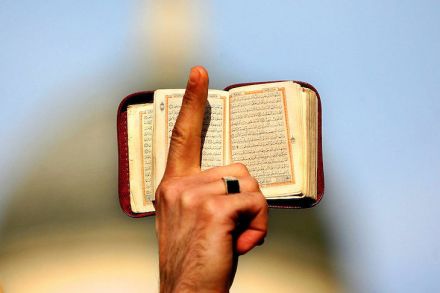
There are worrying signs in Britain that a blasphemy law – abolished in 2008 – might be sneaking in through the back door. Last week, a Turkish man allegedly set fire to the Quran as part of a protest against the Turkish government outside its consulate in Rutland Gate, London. He was then attacked by an outraged zealot with a knife, arrested and charged with a similar offence. He has pleaded not guilty and remains to be tried. Earlier this month, a Manchester man filmed publicly burning pages from the Quran in protest at Islamist excesses was also very swiftly arrested and locked up. Two days later, the man pleaded guilty to a religiously-aggravated offence under the Public Order Act for abusive behaviour likely to cause distress. He will be sentenced in April.

Judges have finally backed a Christian who was sacked for LGBT posts

Finally, some good news on the free speech front: a Christian school worker who lost her job after sharing posts about gay relationships has won a crucial legal battle. Seven years ago, Kristie Higgs, a pastoral worker and mother at a primary school who held firm Christian views, used her private Facebook account to complain in colourful language about plans to rejig sex and relationships education in primary schools. One post referred to "brainwashing our children". Another mentioned "suppressing Christianity and removing it from the public arena". Higgs also called on her Facebook friends to sign a petition. She felt particularly exercised about suggestions that gender was a matter of choice, and that same-sex relationships might be stated to be as good as heterosexual ones.

The Sara Sharif family court judges should have been named far sooner

There is something of an anti-climax in the naming of the judges involved in the Sara Sharif case. It's true that Judge Alison Raeside, Judge Peter Nathan and Judge Sally Williams oversaw Family Court hearings involving Sara in the years before she was murdered in 2023 by her father Urfan Sharif and stepmother Beinash Batool. But Family Court judges in England are hardly household names. The vast majority of people will never have heard of Raeside – who decided that Sara should live with her father – or Nathan and Williams. It is a fair inference that, after a few days, their names will be forgotten.

Why is the assisted dying bill being rushed through parliament?

A change in the law letting people demand help from the state to kill themselves is the sort of thing any government ought to take a great deal of time over. It’s an area where thoughtful delay is entirely desirable, with committees of the great and the good encouraged to take a deep breath, hear as many views as possible and take their time over any conclusions. Unfortunately this is the exact opposite of what is happening with the Labour MP Kim Leadbeater’s Terminally Ill Adults (End of Life) Bill. It’s increasingly apparent that this proposal is being treated more as if it were some urgent infrastructure project that needs to be cleared and got under way as soon as decently possible.

‘Non-crime hate incidents’ are a threat to free speech

There’s more than meets the eye to today’s story of a leaked Home Office report calling for police to be encouraged to file ever more reports of non-crime hate incidents (NCIHs). The word “report,” suggesting work by scrupulously impartial civil servants, seems a strange description of what looks like a pretty blatantly political document, which at one point castigates suggestions of two-tier policing as a “right-wing extremist narrative.” But while that comment has grabbed most of the headlines, we should not ignore the worrying suggestion that police officers could come under pressure to record more NCHIs.

Why is the High Court ruling on political consultations?

No one came out very well from the government’s High Court defeat yesterday morning over planned changes to long-term sickness benefit. A botched, hasty, penny-pinching wheeze, promoted by the Tories but ultimately backed by Labour, came unstuck. But there is a rather more profound difficulty with this episode. Even after reading the news, most people will still be very much in the dark about what was decided, why it matters, or what happens now. Judgments that leave us with this degree of uncertainty are perhaps an indication that something is straying into the legal field that shouldn’t be there.

In defence of prejudice

There’s always something that seems clinically compelling about a claim that we need yet more equality laws. Mary Prior KC, chair of the Criminal Bar Association and a proud working-class Potteries girl, has demanded that regional accents and social deprivation should be legally protected characteristics. At first sight it’s difficult to argue with the icy logic. If it’s unfair to do someone down because they’re female, or Catholic, or black, it can’t be all right for a lah-di-dah appointments committee in SW1 to prefer Serena to Sharon, or Simon from Surbiton over Steve from Sunderland. Or can it? Some will gravitate to certain jobs, some to others. So what?

Angela Rayner’s devolution plans encourage petty authoritarianism

Hidden in the hot air of Angela Rayner’s devolution white paper published just before Christmas – there are promises, for example, to empower councillors to ‘convene local people to engage in their community as respected leaders’ – there lurk some proposals which need careful investigation. By-laws currently passed by local authorities are subject to confirmation by central government. But in Rayner’s white paper this rather prudent requirement is pooh-poohed as ‘hundreds of years old and outdated.’ Local leaders, the proposed legislation says, should have the final say over what they want to ban. Furthermore, it continues, authorities should probably get powers to enforce prohibitions by using on-the-spot fines rather than criminal prosecution.

The EU can detect weakness in its dealings with Keir Starmer

Labour’s election promise to respect Brexit and at the same time reset our relations with the EU was easy to make. Keir Starmer must have realised that riding both these horses at the same time might be troublesome, but with an election to win he doubtless hoped for the best.  If so, he has been quickly disabused. Following tentative approaches to Brussels, it is clear that the Prime Minister faces a bleak choice: either come back with not much to show, or agree to a return of Euro-control over large swathes of UK life which the electorate will see for precisely for what it is; in name, if not in substance: the abandonment of much of Brexit.  Starmer has two choices: stall, or give in The difficulty is that each side wants what the other is highly unlikely to give.

What Nigel Farage gets wrong about ‘two-tier justice’

Stories of two-tier justice are back. On Monday, Victoria Thomas Bowen, the model who doused Nigel Farage with milkshake on the Clacton campaign trail earlier this year, received a three-month suspended sentence for assault at Westminster magistrates’ court (plus 120 hours of unpaid work and a compensation order.) Farage was very unhappy: 'We now live in a country where you can assault a Member of Parliament and not go to prison,' he said, calling this 'the latest example of two-tier justice'. One might think the occasional attack like this showed the political process in rude health Is he right? The judge who sentenced the assailant, Tan Ikram, is already known for his eclectic sentencing record.

Beware Labour’s desire to get cosy with Europe

There was nothing seriously unexpected in Rachel Reeves’s speech today to EU finance ministers. Most of it was non-committal flim-flam: 'I believe that a closer economic relationship between the UK and the EU is not a zero-sum game. It’s about improving both our growth prospects.' Making reference to 'breaking down barriers' and relationships 'built on trust, mutual respect and pragmatism' isn’t going to excite anyone. One suspects Reeves's niceties are more for home than European consumption: a dig at the Tories, and a repetition of the pre-election party line that Labour wants a grown-up rather than argumentative relation with Brussels. Nevertheless there are lurking dangers.

The Lords needs more peers like Charlotte Owen

It is clear who is the unnamed target of Labour's rule change over political nominations to the House of Lords. When two bright but relatively unknown political advisers aged 29 and 30, Charlotte Owen and Ross Kempsell, were elevated to the Lords last year after being nominated by Boris Johnson, there were loud complaints. Critics said that party loyalty had counted for everything and experience (or rather lack of it) for very little. This week, Labour amended the rules so that parties will have to explain why a person is fit to be nominated to the Lords. The citation will not affect the process of appointment but will be published for all to see if the candidate is successful.

Why did the state let Kneecap win?

There was something predictable in the government’s agreement last week to accept defeat in the Belfast High Court. The overtly republican Irish band Kneecap had brought a judicial review over the withdrawal of an offer of a £14,500 state grant to support artists overseas, alleging unlawful political discrimination. The government lawyers caved at the door of the court. It is going a bit far to expect government to directly fund something so contrary to its own interests and values Put simply, there were many advantages for the government in acting as it did. The sum at stake was chickenfeed, and blame for the whole affair could be conveniently placed on Kemi Badenoch, the business secretary in the previous government who had vetoed the grant in the first place.

Is there really a human rights crisis in the Highlands?

It’s grim up north in Scotland, we’re told. A mission from Edinburgh has produced a report about the woes of life in the Highlands and Islands, and a demand for measures to deal with them. Problems include a high incidence of poverty; a lack of affordable housing and public transport; long trips to the nearest hospital or surgery; limited social care; cultural desertification; a lack of local places of worship suitable for refugees; limited childcare and access to fresh food; and a good deal besides. Highlanders aren't cowering at the feet of some megalomaniac dictator in Lochaber So far, so predictable. But this report comes not from some progressive think-tank, but from an official body, the Scottish Human Rights Commission (SHRC).