Andrew Tettenborn

Andrew Tettenborn is a professor of law at Swansea Law School

Sunak’s crime crackdown won’t pay off for the Tories

The Tories are pledging to reshape our homicide laws if they win re-election. There could, as in many US states, be first-degree murder for intentional killing, second-degree murder for manslaughter because of diminished responsibility or death arising from a deliberate wrong. Rishi Sunak is also promising to get tough on domestic abuse, with a minimum tariff for murder in the home. The crackdown will form a key part of the Conservative manifesto. The plan is far from foolproof You can understand Sunak’s thinking. The hospital order imposed on Nottingham triple killer Valdo Colocane earlier this year after he admitted manslaughter owing to diminished responsibility raised eyebrows among those who looked to the Tories as defenders of law and order.

Cracking down on the ECHR won’t save Sunak

Rishi Sunak’s unequivocal statement this week about sex and the Equality Act was a clever piece of electioneering. Subsequent reports suggesting that the Tories planned to harden their stance on the European Convention on Human Rights (ECHR), by contrast, had the air of a measure taken in sheer panic. Regrettably, this will be obvious to many potential voters already mulling the idea of quietly jumping ship to Reform UK. The Prime Minister has failed badly in the presentation stakes. This matters. One of the chief attractions of Reform is that, for all their faults, they have never made any bones about their commitment to give notice to exit the ECHR and to give top priority to the connected topic of suppressing irregular migration.

The Northern Irish law posing a threat to free speech in Britain

On Friday, the High Court in Northern Ireland deflected a serious threat to the right to free speech, not only in the province but also in the country as a whole. It was, however, a very close-run thing, and the affair is still highly worrying. A Northern Ireland Assembly law that came into effect last year, the Justice (Sexual Offences and Trafficking Victims) Act (Northern Ireland) 2022, made it an imprisonable crime to publish the fact that someone had come under police investigation for a sexual offence unless and until they were charged. If they were never charged the matter had to be hushed up until 25 years after their death (or even longer, if a court agreed to their relatives’ request). As I pointed out at the end of last year, this law was incredibly wide-ranging.

Fewer kids should go to university

Rishi Sunak said on Tuesday what many of us have quietly suspected for some time. As a nation, we have too few apprentices and too many university students. Why not, he said, look hard at the higher education courses we provide at public expense, and where we see high drop-out rates, or poor employment and earnings prospects, be prepared to axe them and use the money to support apprenticeships? Predictably, the call for a cut in the number of university students has led to yelps of dissent, both from Labour with an election to win, and also from the higher education establishment with sales to safeguard. For all that, however, Rishi has made a good point, although his suggested remedy may need alteration. What about a bit of old-fashioned academic elitism?

Is the West being hypocritical about Georgia’s foreign agents law?

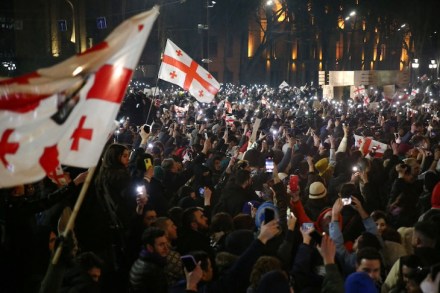
The Georgian parliament has rammed through its new foreign agents law amid massive protests, overriding the veto of pro-western and pro-EU president Salome Zourabichvili. The new law essentially will require all non-commercial organisations operating in Georgia to register as foreign agents and publicise themselves as such if they receive over 20 per cent of their funding from abroad. Its aim is to counter the influence of pro-western NGOs in the country. The Georgian government has a point when it defends the requirement of registration as a transparency measure The proposal has already caused serious unrest, and this will undoubtedly now balloon. You can see why. The government led by ruling party Georgian Dream is not a pleasant grouping.

Judges are empowering Just Stop Oil

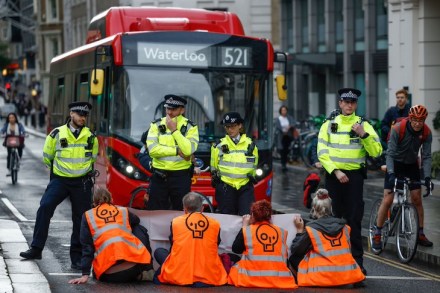
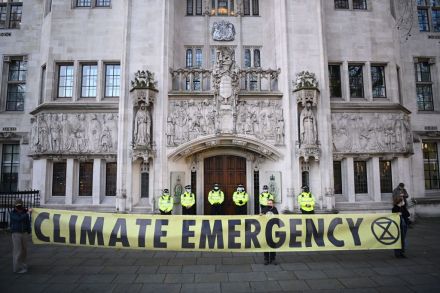
It has been argued that the preparedness of the courts to declare governmental action unlawful is vital to the rule of law. Well, up to a point, Lord Copper. Yesterday’s High Court decision which annulled new police powers to control protests shows that there might be two sides to this, especially when you find yourself on the school run behind a deliberately dawdling crocodile of JSO protesters or in front of a a bunch of XR zealots lying in the road. The rule of law is all very well, but progressives cannot be allowed to have it all their own way The background to the episode is boringly legalistic. (Please accept apologies in advance.

Press freedom means protecting Julian Assange

James Cleverly won’t be able to move the Julian Assange file out of his inbox quite yet after all. The High Court has allowed Assange to appeal once more against extradition to the US on the basis that no sufficient assurances have been received over his ability to rely on the First Amendment if tried there. We don’t know what the result will be (today’s hearing merely gave permission to appeal, with no guarantee as to its outcome). Nevertheless, we should still think twice before we hope that the appeal will ultimately be dismissed, thus allowing the final removal of someone who has been a thorn in the UK authorities’ side for nearly 15 years. This is Assange’s second brush with extradition law.

Stay-at-home parents don’t need free nursery places

Except for households blessed with rather generous incomes, most mothers these days have to work to keep a family decently fed and housed. Some kind of subsidised childcare is therefore an unfortunate necessity. The government recognises this, and has just introduced a new scheme. When fully up and running, it will give parents working full-time who earn less than £100,000 a free 570 hours a year of child-minding or early education for each child between nine months and four years. Plus it will (in effect) also hand them a basic rate tax deduction if they want to spend a further £10,000 per year on it. This will be over and above a free 570 hours available to any parent of any child aged three or four. Generous?

Do we need a Sikh court?

Last week in Lincoln’s Inn Hall, nearly 50 prominent Sikhs gathered to mark the formation of the world’s first specifically Sikh court. When the body opens for business on 1 June, its members will be available essentially to do two things. They can provide what the lawyers call Alternative Dispute Resolution, helping to settle family and community arguments. In addition, on request they will act as arbitrators in property or business disputes, with the power to give determinations which will be legally binding.

UNRWA hasn’t earned our trust in Gaza

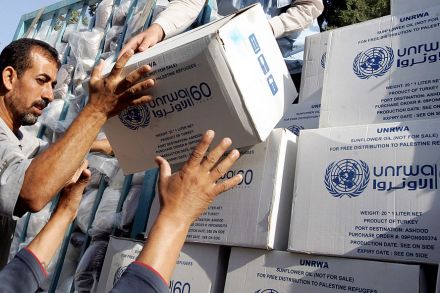
Before 7 October last year, observers had long suspected an uncomfortable symbiosis between UNRWA, the UN organisation tasked with organising aid to the unfortunate Palestinians of the Gaza Strip, and the autocratic Hamas government in control in Gaza city. The attack on Israel on that day certainly didn’t dispel these suspicions, and in January this year Israel alleged that a number of UNRWA staff had been implicated. Seventeen countries paused funding for UNRWA, including the US, Australia, Canada, Japan, the EU and several individual European states. So did the UK, which last year had provided about £35 million. The UK, which had said it would await the Colonna report before making a decision, will now face immense pressure to resume payments Will this funding come back?

The National Portrait Gallery’s bizarre obsession with slavery

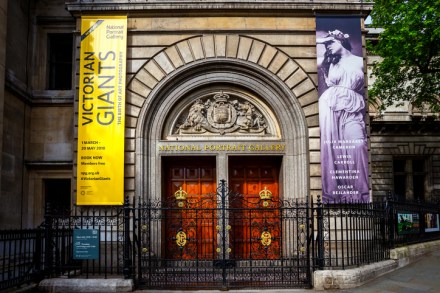
The movement to radicalise the art and museum world was always going to come back and bite its own children. It has happened more quickly than we thought, as demonstrated by the seriously red faces at the National Portrait Gallery (NPG) last week. Among the paintings on display at the NPG was one by French society artist James Tissot of Edward Fox-White, a well-known British 19th century art dealer who opened his first gallery in Glasgow in 1854. Last year, Donald Gajadhar, a descendant of Fox-White’s and manager of the art appraisal business founded by him, noticed a statement in the gallery’s notes next to the picture of his great-great-grandfather.

The courts can’t solve climate change

It was always a racing certainty that this week’s ‘Swiss grannies’ climate change judgment in Strasbourg would spawn a new wave of environmental lawfare and give new life to that already in progress. A taste of the brave new future duly came from the High Court in London yesterday. Section 58 of the Climate Change Act requires the government periodically to lay before parliament its objectives to deal with climate change. The government has duly produced a so-called ‘National Adaptation Programme 3’, but some people say it is not good enough.

Is climate change really a human rights matter?

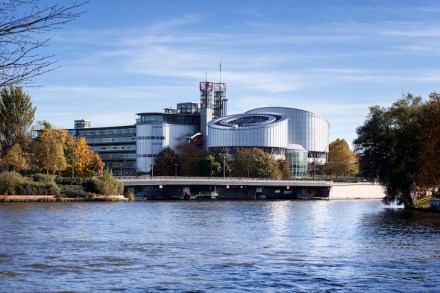
The media and the middle class may love net zero. Unfortunately, it is increasingly clear that voters are less keen. Predictably then, activists have been trying to take as much power as possible away from elected representatives, transferring it instead to international courts and judges. This morning, this programme of lawfare scored a major success in the European Court of Human Rights. Every yard gained by a well-meaning extension of the ECHR is a yard lost to the democratic process Some months ago, three high-profile cases reached the Court where the claimants suggested that climate change was a European human rights matter.

Civil servants can’t down tools if they don’t like Israel

Britain in the nineteenth century pioneered the idea of the professional, impartial civil service independent of politics. In the twenty-first, that same civil service is unfortunately pioneering the notion of a body increasingly independent of the state that employs it, and apt at times to follow its own remarkably political agenda without much control from anyone. Following your conscience is a good deal less impressive when you are doing it on someone else’s dime British companies export a good deal of military equipment to Israel. To do so, they require export licences from the Department for Business and Trade (DBT).

Barristers should be allowed to join the Garrick

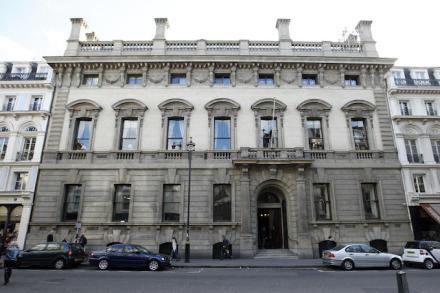
The Garrick Club affair has taken a new and slightly worrying twist, this time courtesy of – of all bodies – the Bar Council. Hot on the heels of calls for judges to resign en masse from the club because it remains single-sex, the Council now apparently wants to go even further. It is hinting that it may forbid any member of the Bar from being a member. Its menacing words bear quoting in full:  For now, it is a matter for individuals to determine whether or not membership of an institution, such as the Garrick Club, is compatible with the views they espouse in their professional lives, but this may change. As a profession it is vitally important that we retain the trust and confidence of the public.

Why the WHO’s pandemic planning poses a threat to Britain

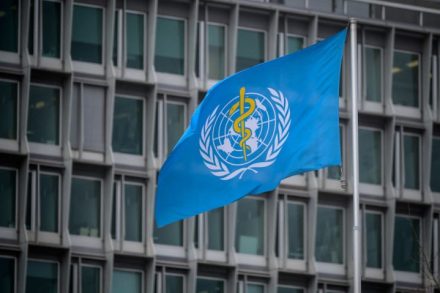
The fall-out from Covid continues. Its latest manifestations on the international stage are a draft pandemic preparedness treaty, soon to be formally published and opened for signature by the WHO, and an upcoming vote on proposals to amend the organisation's International Health Regulations 2005 (IHR). The latter is a set of internationally binding rules for dealing with, among other things, pandemics. Neither text makes for gripping reading; both might look innocuous and almost uncontroversial. In fact, however, as a group of Tory MPs and peers from the all-party parliamentary group on pandemic response and recovery pointed out this week, they could carry considerable dangers for Britain's sovereignty, freedom and democracy.

Why can’t Ukraine trademark the phrase: ‘Russian warship, go f**k yourself’?

Ukraine's bravery and daring in the face of Russian aggression marks a stark contrast with European – or at least EU – lethargy and disinclination to take sides. A recent spat over, of all things, European trade mark law is a case in point. In early 2022, a soldier on the desolate Snake Island in the Black Sea famously added to Ukrainian folklore by greeting the Russian cruiser Moskva, which had come to take over the island, with the words 'Russian warship, go f**k yourself'. This slogan quickly became hot merchandising property. Kyiv understandably decided to put to work to aid the war effort: it applied to register the phrase as a European trade mark, on the basis that if anyone should be allowed to profit from its use, it should. But their pleas fell on deaf ears.

UCL is harming itself by pandering to China

We have suspected for some time that UK universities were supping with the devil when they relied on legions of foreign, especially Chinese, students to balance the books. Last week the mask slipped spectacularly at University College London.  Some months ago a Chinese student complained of ‘horrible provocation’ when Michelle Shipworth, an associate professor dealing with human behaviours, asked a seminar class of whom about a quarter were Chinese, to criticise statistics suggesting that China had one of the world’s biggest modern slavery problems. The case escalated. She was leant on to lay off China in favour of, say, India so that Chinese students would not feel ‘singled out’. She refused, citing academic freedom. The result was all too predictable.

In defence of Judge Tan Ikram

Judge Tanweer Ikram is not your usual judge. Ikram, who has a CBE to his name for services to diversity, has tirelessly insisted that minorities need to see people looking like them in senior positions (he has Pakistani Muslim heritage). Whether you see him as an innovative radical or a dreary progressive, Ikram is now mired in less savoury controversy. Last month, he notoriously gave a 12-month conditional discharge to three women guilty of publicly displaying paraglider images supporting Hamas, a banned terrorist group. It was quickly pointed out afterwards that he had previously 'liked' a post on LinkedIn accusing Israel of terrorism in Gaza (something he says he did mistakenly).

The Church of England should stop distracting itself with ‘racial justice’

Churches are emptier than ever since Covid. Fewer clergy have more and more parishes to look after; the buildings themselves are falling down, with little money available to repair them. In the face of these existential problems, what high-profile subject was discussed over the weekend by the General Synod of the Church of England? Encouraging more worshippers, perhaps, or possibly improving finances? Not quite. You’ve probably guessed the answer: racial justice.  The Synod ran what can best be described as a consciousness-raising session to cheer on the work of the Archbishops’ racial justice commission. It's aim, it seems, is to push race towards the top of the ecclesiastical agenda.