Andrew Tettenborn

Andrew Tettenborn is a professor of law at Swansea Law School

Why is the assisted dying bill being rushed through parliament?

A change in the law letting people demand help from the state to kill themselves is the sort of thing any government ought to take a great deal of time over. It’s an area where thoughtful delay is entirely desirable, with committees of the great and the good encouraged to take a deep breath, hear as many views as possible and take their time over any conclusions. Unfortunately this is the exact opposite of what is happening with the Labour MP Kim Leadbeater’s Terminally Ill Adults (End of Life) Bill. It’s increasingly apparent that this proposal is being treated more as if it were some urgent infrastructure project that needs to be cleared and got under way as soon as decently possible.

‘Non-crime hate incidents’ are a threat to free speech

There’s more than meets the eye to today’s story of a leaked Home Office report calling for police to be encouraged to file ever more reports of non-crime hate incidents (NCIHs). The word “report,” suggesting work by scrupulously impartial civil servants, seems a strange description of what looks like a pretty blatantly political document, which at one point castigates suggestions of two-tier policing as a “right-wing extremist narrative.” But while that comment has grabbed most of the headlines, we should not ignore the worrying suggestion that police officers could come under pressure to record more NCHIs.

Why is the High Court ruling on political consultations?

No one came out very well from the government’s High Court defeat yesterday morning over planned changes to long-term sickness benefit. A botched, hasty, penny-pinching wheeze, promoted by the Tories but ultimately backed by Labour, came unstuck. But there is a rather more profound difficulty with this episode. Even after reading the news, most people will still be very much in the dark about what was decided, why it matters, or what happens now. Judgments that leave us with this degree of uncertainty are perhaps an indication that something is straying into the legal field that shouldn’t be there.

In defence of prejudice

There’s always something that seems clinically compelling about a claim that we need yet more equality laws. Mary Prior KC, chair of the Criminal Bar Association and a proud working-class Potteries girl, has demanded that regional accents and social deprivation should be legally protected characteristics. At first sight it’s difficult to argue with the icy logic. If it’s unfair to do someone down because they’re female, or Catholic, or black, it can’t be all right for a lah-di-dah appointments committee in SW1 to prefer Serena to Sharon, or Simon from Surbiton over Steve from Sunderland. Or can it? Some will gravitate to certain jobs, some to others. So what?

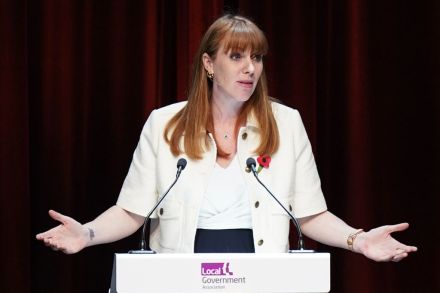
Angela Rayner’s devolution plans encourage petty authoritarianism

Hidden in the hot air of Angela Rayner’s devolution white paper published just before Christmas – there are promises, for example, to empower councillors to ‘convene local people to engage in their community as respected leaders’ – there lurk some proposals which need careful investigation. By-laws currently passed by local authorities are subject to confirmation by central government. But in Rayner’s white paper this rather prudent requirement is pooh-poohed as ‘hundreds of years old and outdated.’ Local leaders, the proposed legislation says, should have the final say over what they want to ban. Furthermore, it continues, authorities should probably get powers to enforce prohibitions by using on-the-spot fines rather than criminal prosecution.

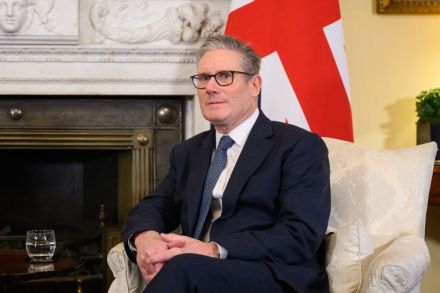
The EU can detect weakness in its dealings with Keir Starmer

Labour’s election promise to respect Brexit and at the same time reset our relations with the EU was easy to make. Keir Starmer must have realised that riding both these horses at the same time might be troublesome, but with an election to win he doubtless hoped for the best.  If so, he has been quickly disabused. Following tentative approaches to Brussels, it is clear that the Prime Minister faces a bleak choice: either come back with not much to show, or agree to a return of Euro-control over large swathes of UK life which the electorate will see for precisely for what it is; in name, if not in substance: the abandonment of much of Brexit.  Starmer has two choices: stall, or give in The difficulty is that each side wants what the other is highly unlikely to give.

What Nigel Farage gets wrong about ‘two-tier justice’

Stories of two-tier justice are back. On Monday, Victoria Thomas Bowen, the model who doused Nigel Farage with milkshake on the Clacton campaign trail earlier this year, received a three-month suspended sentence for assault at Westminster magistrates’ court (plus 120 hours of unpaid work and a compensation order.) Farage was very unhappy: 'We now live in a country where you can assault a Member of Parliament and not go to prison,' he said, calling this 'the latest example of two-tier justice'. One might think the occasional attack like this showed the political process in rude health Is he right? The judge who sentenced the assailant, Tan Ikram, is already known for his eclectic sentencing record.

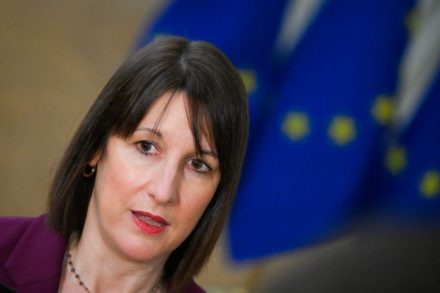
Beware Labour’s desire to get cosy with Europe

There was nothing seriously unexpected in Rachel Reeves’s speech today to EU finance ministers. Most of it was non-committal flim-flam: 'I believe that a closer economic relationship between the UK and the EU is not a zero-sum game. It’s about improving both our growth prospects.' Making reference to 'breaking down barriers' and relationships 'built on trust, mutual respect and pragmatism' isn’t going to excite anyone. One suspects Reeves's niceties are more for home than European consumption: a dig at the Tories, and a repetition of the pre-election party line that Labour wants a grown-up rather than argumentative relation with Brussels. Nevertheless there are lurking dangers.

The Lords needs more peers like Charlotte Owen

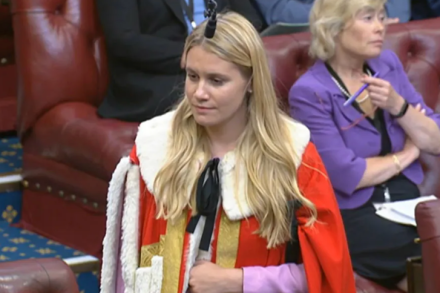
It is clear who is the unnamed target of Labour's rule change over political nominations to the House of Lords. When two bright but relatively unknown political advisers aged 29 and 30, Charlotte Owen and Ross Kempsell, were elevated to the Lords last year after being nominated by Boris Johnson, there were loud complaints. Critics said that party loyalty had counted for everything and experience (or rather lack of it) for very little. This week, Labour amended the rules so that parties will have to explain why a person is fit to be nominated to the Lords. The citation will not affect the process of appointment but will be published for all to see if the candidate is successful.

Why did the state let Kneecap win?

There was something predictable in the government’s agreement last week to accept defeat in the Belfast High Court. The overtly republican Irish band Kneecap had brought a judicial review over the withdrawal of an offer of a £14,500 state grant to support artists overseas, alleging unlawful political discrimination. The government lawyers caved at the door of the court. It is going a bit far to expect government to directly fund something so contrary to its own interests and values Put simply, there were many advantages for the government in acting as it did. The sum at stake was chickenfeed, and blame for the whole affair could be conveniently placed on Kemi Badenoch, the business secretary in the previous government who had vetoed the grant in the first place.

Is there really a human rights crisis in the Highlands?

It’s grim up north in Scotland, we’re told. A mission from Edinburgh has produced a report about the woes of life in the Highlands and Islands, and a demand for measures to deal with them. Problems include a high incidence of poverty; a lack of affordable housing and public transport; long trips to the nearest hospital or surgery; limited social care; cultural desertification; a lack of local places of worship suitable for refugees; limited childcare and access to fresh food; and a good deal besides. Highlanders aren't cowering at the feet of some megalomaniac dictator in Lochaber So far, so predictable. But this report comes not from some progressive think-tank, but from an official body, the Scottish Human Rights Commission (SHRC).

Why shouldn’t schools encourage middle class aspirations?

Education Minister Bridget Phillipson wants to make our schools engines of ambition and social mobility. Good for her. Unfortunately, some of the the advice she has received as to how to do this demonstrates one thing more than anything else: when it comes to class prejudice, it’s earnest bourgeois reformers who habitually head the pack. Lee Elliot Major, a professor of social mobility, has told her that the answer lies in schools’ downplaying of middle class institutions. Out with visits to museums and theatres and references to skiing, jam-making or house-buying, which the underclass can’t connect with.

Non-crime hate incidents are out of control

It’s police overreach season again on free speech and non-crime hate incidents, or NCHIs. On Remembrance Day morning, we had Essex police’s surreal doorstepping of journalist Allison Pearson, demanding an interview about a long-forgotten Tweet by her they refused to identify. Pearson has said the police told her it was a NCHI, though the force says it regards the issue as a criminal matter concerning material ‘likely or intended to cause racial hatred’ under the Public Order Act 1986.

Surely no MP can vote for this assisted dying bill

There’s a beguiling simplicity to the idea behind Kim Leadbeater’s Terminally Ill Adults (End of Life) Bill, published yesterday. If someone is terminally ill and likely to die within six months and wants to accelerate the process, surely it’s only kind that the state should give two doctors the ability to help them do it rather than force them to endure months of anguish and possibly severe pain. Put in safeguards against undue pressure, make sure proper legal procedures are followed by requiring the imprimatur of a High Court judge, and who can rationally complain? Well, I can.

Raising university tuition fees will only delay the inevitable

Universities in the UK desperately needed Bridget Phillipson’s announcement this afternoon of a rise in tuition fees. The Education Secretary has said they will rise from £9,250, to £9,535 next year and £10,500 by 2029. This was necessary if only to offset the effect of last week’s Budget announcement of a 1.2 per cent rise in employers’ NI and the reduction in the threshold at which it becomes payable; that alone will saddle them with extra costs of just under £400 million a year.  What is unsustainable is the number of students the state chooses to support All this aside, the institutions are already in deep trouble. Fees for domestic students do not cover costs.

Street lights are costing Britain too much

The East Riding of Yorkshire is flat, prosperously agricultural and slightly off the beaten track. Deeply conservative, it isn’t the place you would normally look for originality. Over the weekend, however, its county council announced an inspired experiment. It wants to see what happens if it gets rid of large numbers of its street lights. Not the lighting in town centres, you understand, but the endless lines of light-stalks you see on the main roads that wind their way between the cornfields. As a trial over the next three years, it plans to switch off hundreds of the lamp-stalks that march grimly alongside the road that connects York and the Humber Bridge.

Chris Kaba and the danger of inquests 

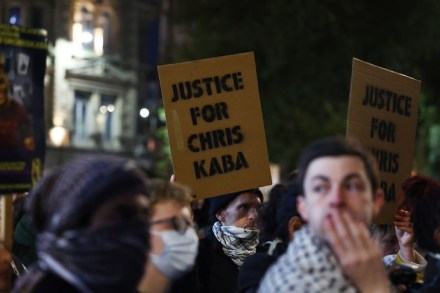
The firearms officer Martyn Blake was cleared of murdering Chris Kaba this week. Kaba was a serious wrong ‘un: a violent gangland enforcer with a rap sheet as long as your arm going back to the age of 13. During the trial this information was kept under wraps, on the basis that Kaba’s past was irrelevant to Blake's guilt or innocence and speculation about it potentially prejudicial to the Crown’s case. After the acquittal, however, all this is rightly in the open. What is worrying, however, is that our ability to know the full facts even now was a fairly close-run thing. Immediately after the trial Chris Kaba’s family tried hard to keep the matter legally secret. Why?

It’s shameful that an army veteran was convicted over a prayer for his dead son

Adam Smith-Connor was this week convicted of a heinous offence, slapped with a conditional discharge and a costs order for £9,000. The actual crime in question? The 51-year-old army veteran was praying silently, on his own, for the soul of a child which he had, now much to his regret, aborted many years earlier. The reason this affair reached Poole Magistrates’ Court was that he had been doing this near a Bournemouth abortion clinic, and that clinic was the subject of a buffer zone order. This episode should worry all of us, pro-life or pro-choice, if we believe in the idea of liberty.

Labour’s worrying creep back towards the EU

In Labour’s manifesto this year, Keir Starmer cannily sought to reassure any Brexiteers out there by ruling out a return to the EU single market. But, being a lawyer, he carefully inserted a small-print proviso. The Labour leader said that he did not rule out doing much the same thing by realigning Britain piecemeal with EU standards as opportunity presented itself. This process he has now started. As the eagle-eyed Lord Frost pointed out yesterday in the House of Lords, the government’s boring-sounding Product Regulation and Metrology Bill is something of a Trojan horse.

Boris is right: we need a referendum on the ECHR

Nobody should be surprised that Boris Johnson favours a referendum on leaving the ECHR, as his book now makes clear. Boris is an instinctive populist and maverick, who cordially despises the educated progressive establishment which argues for continued membership. He is also right.  Intellectually, the case for remaining in the ECHR gets ever flimsier Intellectually, the case for remaining in the ECHR gets ever flimsier. When we ratified it in 1951, the convention was fairly uncontroversial.