Alex Massie

Alex Massie

Brexit has encouraged an eruption of nasty nativism. Why is anyone surprised by this?

Even in an age of ridiculousness there is something preposterous about the sight of so many prominent Leavers clutching their pearls in horror as they contemplate the possibility - the real possibility - that Andrea Leadsom could become the next leader of the Conservative party and, by golly, Prime Minister too. I mean, where do they think she came from? Who created her? Mrs Leadsom's credentials to occupy the highest political office in the land come down to one single fact: she is the most virulently eurosceptic candidate available. That's a powerful thing, however, and those Leavers who think their creation can be safely kept in the laboratory may yet have cause to regret their complacency. Because it's not as easy as that. Sometimes things escape.
Is Brexit the beginning of the End of Britain?

So where are we now? Pretty much in the same position as the traveller who asks for directions to Limerick and is told, 'Well, I wouldn't start from here.' But we are where we are, for better or, more probably, for worse. Not before time it is slowly dawning on people in England that while this was very much their referendum it has consequences for the whole of the United Kingdom. They were warned this would be the case and, if it was not something that was ever uppermost in their thoughts, they cannot claim they were not told. Because they were. I don't dispute English voters' right to privilege their disgruntlement with the EU over their weakened preference for the United Kingdom to remain, well, just that. That's a choice but choices have consequences.

Ruth Davidson is not the answer to English Tory prayers

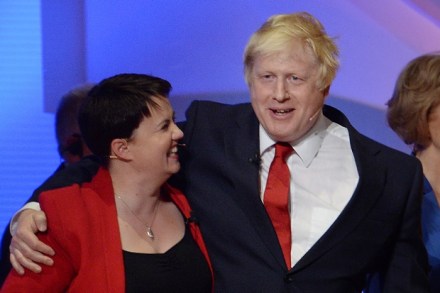
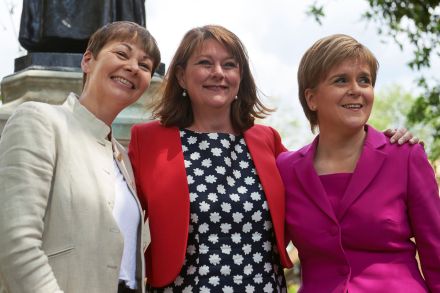
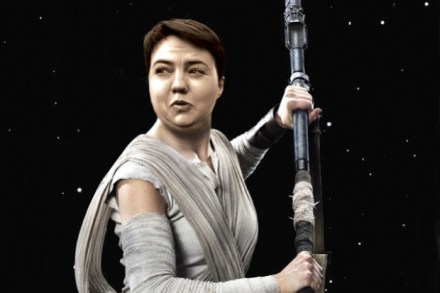
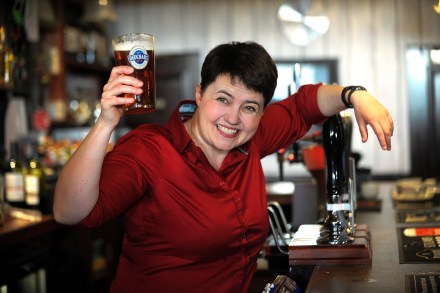
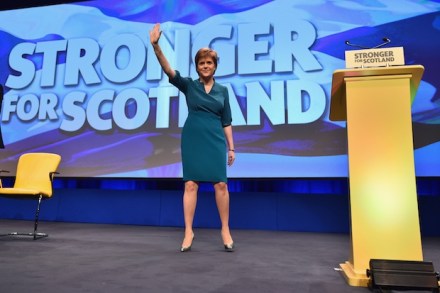
Tacitus argued that, after 68, 'the secret of imperial rule was revealed: an emperor could be made somewhere other than Rome'. It has taken metropolitan observers some time to wake up to the fact the same is true in Britain today. A star can be born far from London. The difference, however, is that not all roads lead to Westminster. It takes time for change to work its way through the system so perhaps it is not surprising that it is only now that we are seeing the fruits of devolution. In their different - very different - ways Nicola Sturgeon and Ruth Davidson have each demonstrated that devolution works. It has, at least in Scotland, established an alternative to Westminster. Careers and reputations can be made and won 400 miles from the House of Commons.

Every political generation has its low moment; this is ours

No, there was never a Golden Age of genteel and elevated discourse. Never a time when the fate of the country didn't seem to hang in the balance or when politics was ever played for anything less than all the marbles. Check old election-day copies of the Daily Mirror if you doubt this. Check the hammers and tongs with which Gladstone and Disraeli set about each other if you doubt this. Check the 1970s, when Britain seemed to be falling apart, or the early 1980s when terrorism and race riots and industrial action scarred the British political and social landscape. Politics is, and always has been, a contact sport and every generation has its low moment. But can we agree this might be ours? It is a reactive moment, nonetheless.

A Day of Infamy

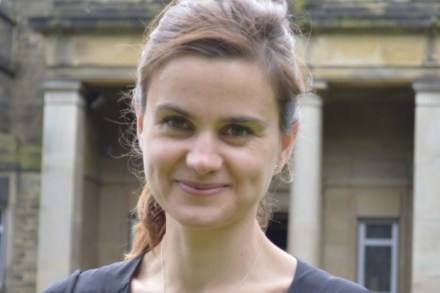
Events have a multiplier effect. And when they come in bunches the effect can be overpowering. This was already a sad and demeaning day, even before we heard the ghastly news a Labour MP, Jo Cox, had been murdered outside her constituency surgery in Yorkshire. Politics is, figuratively speaking, a contact sport. It is a hard business because it is an important business. It matters and it matters even more when the stakes are so very high. But just as class will out at the highest level in sport, when the stakes are the very greatest and everything seems to be on the line, so character reveals itself in politics too. Even, especially, when it really counts. A referendum is one of those moments when it counts.

Has England gone mad?

In the final, frenzied, all-things-seem-possible days of the Scottish referendum on independence - the days when it seemed there was something in the air and perhaps the water too - some people outside Scotland began to ask a disconcerting question: Has Scotland gone mad?  Scots, whether Unionist or Nationalist, disliked the question but while their huffiness was both predictable and understandable, not least because the question was often posed in ways that didn't exactly flatter the Scots, the question itself was not as lunatic as it might have seemed. Or, rather, it was a telling question.

Every honest and decent person must hope Hillary Clinton wins this Presidential election

You don't have to like Hillary Clinton to hope she becomes the next President of the United States. But, by god, this year, in this election, she is, as you might say, likeable enough. Of course there is something dispiriting about Mrs Clinton's campaign. But, based on time-served entitlement and identity politics as it may be, it is nowhere - nothing - like as dispiriting as the alternative. Nor is it as mournfully depressing as the spectacle of so many Republicans dutifully lining up to endorse a man they know - if they have any shred of intellectual or even political decency - is the most appalling, dangerous, and unqualified candidate selected by either major party in living memory.

Confirmed: the junior doctors’ strike was about money, not patient safety

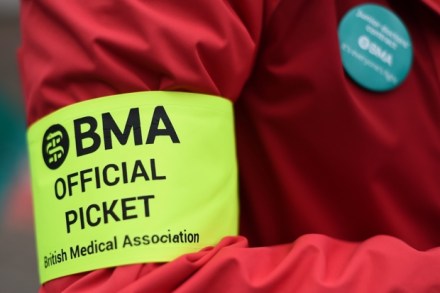
Everyone respects doctors. Some people even love them. They may not be quite as nobly exalted as nurses but they're still worthier-than-thee. And why not? It's a job that's as demanding as it is vital. Everyone knows this too, which is one reason why no-one objects to the fact that doctors with modest seniority are amongst the top 20 percent of earners and those with greater experience still higher up the income scale. It is a profession and deserves to be rewarded as such. Rewards come in different forms, of course, and respect is just as important as cold, hard, cash. Junior doctors felt disrespected by the terms of the government's proposed new contract for their services (in England). Who the hell was Jeremy Hunt to dictate terms to them?

Project Fear 2 is a rubbish sequel. But it will still work

Sometimes, in this game, it's tempting to over-complicate things. The lesson of Talleyrand's death - What did he mean by that? - has been all too well absorbed. And so we search for hidden meanings and a deeper truth whenever a politician says something. The real story always lurks beneath the surface, nothing should be taken at face value and everyone is always thinking three moves ahead. It's an appealing thought right enough. The trouble is it's also often nonsense. Sometimes even politicians just mean what they say. Nicola Sturgeon's visit to London yesterday offered a case in point. The First Minister insisted, as she has always insisted, that she wants the UK to remain a member of the European Union.

Jeremy Corbyn should not be allowed to rewrite the history of his support for the IRA

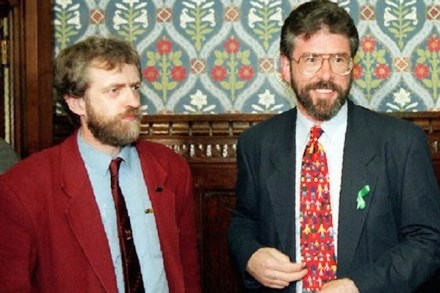
Something remarkable is happening in British politics right now. Something rotten and disgusting too. Jeremy Corbyn, the leader of Her Majesty's loyal (sic) opposition, is trying to rewrite history. Here is what Corbyn said to Robert Peston at the weekend: "I do make the point that if you are to develop a peace process in the Middle East or anywhere else in this world for that matter, you have to have serious conversations and negotiations with all the forces involved. [...] Listen, the Northern Ireland parallel is sometimes a bit overplayed by nevertheless it is an important one. The successive British governments thought there was a military solution in Northern Ireland.

Yes, there really has been a Tory revival in Scotland. Only a fool can deny that.

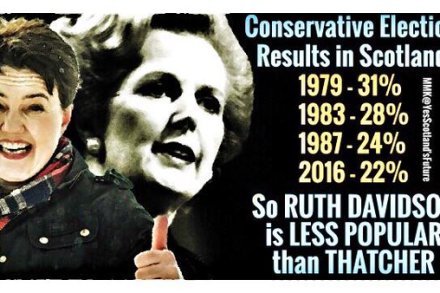
For people who profess to be utterly uninterested in the fortunes of the Scottish Conservative and Unionist party, SNP parliamentarians and the usual ragbag collection of independence supporters seem terribly keen to demonstrate that the so-called Tory revival witnessed on Thursday is no such thing. Hence this entertaining poster that's been doing the rounds on social media today. And it is true what it says: Margaret Thatcher was much more popular in Scotland than popular imagination - especially in Scotland - cares to remember. She and her party were certainly always more popular than the Scottish National Party.

A force awakens in Scotland: the Union strikes back

Nicola Sturgeon has her mandate but it is a smaller, feebler, mandate than almost everyone thought likely as recently as 18 hours ago. The SNP remains the natural party of government in Scotland - a position it is unlikely to relinquish for the foreseeable future - but it no longer enjoys an overall majority at Holyrood. The nationalist advance, seemingly all-powerful and unstoppable, has not been stopped but it has been checked. Now you could hardly call winning almost half the seats in a system expressly designed to make a majority all but impossible except in the most freakish circumstances a disappointing result. And, indeed, the SNP share of the vote increased by a couple of points on 2011.

The Tories’ Return: New poll puts Conservatives ahead of Labour in Scotland

At the 1997 general election the Scottish Conservative and Unionist party won 17.5 percent of the vote and lost its last remaining 11 seats in Scotland. Scotland was now a Tory-free zone, at least in terms of its parliamentary representatives. Nearly twenty years later, the Scottish Conservative and Unionist party might, if next week's elections to the Holyrood parliament follow the pattern revealed by today's STV/Ipsos-Mori poll, finish in second-place. They may achieve this on little more than 18 percent of the vote. In other words, this is Schrodinger's Revival: it is both real and not real and it all depends upon how you look at, or think about, it. Has Ruth Davidson emerged as a vigorous, capable, Tory leader who can spread the Tory gospel to new congregations? Yes.

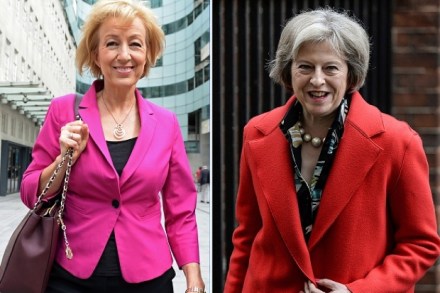
Theresa May sells Tory members an empty promise: are they as gullible as she thinks they are?

What is Theresa May playing at? I mean, it's one thing to treat the Conservative party's remaining members as fools but it's quite another to think the same of the rest of us. Her speech yesterday in which she attempted to carve a middle way through the Tory euro-forest has been generally well received. And, as a piece of political positioning, May's 'Reluctant Remain' approach allows her to be with the Prime Minister but not enthusiastically so and against Boris but not comprehensively so. It is, if you like, a Tory Goldilocks approach. All of which is all very well and good and if this is the sort of thing you admire it's the sort of thing you admire. Unfortunately, as a matter of policy, May's speech was garbage. That, actually, is probably putting it too kindly.

Barack Obama is driving the British right crazy. No wonder they sound like Republicans

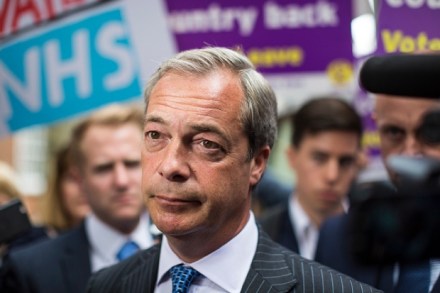
Something very strange and rather disturbing appears to be happening to the British right. Or at least to a large and noisy segment of it. It seems to have decided that the Republican party is something to emulate. Of course Ukip has always had a Tea Party tendency but this once-niche persuasion appears to be going mainstream. The reaction to Barack Obama's remarks yesterday, in which he suggested that Brexit campaigners were not being wholly straight with the British people (I know! Who knew?) has been as remarkable as it has been depressing. How dare Obama insult Britain like this! How dare he threaten the British people! Why has Britain allowed itself to be humiliated in this fashion! And who is this guy to talk anyway?

A vote for Brexit is a vote against Toryism

It's the rage I struggle to comprehend. There is, I am sure, an entirely reasonable case to be made for leaving the European Union, it's just that, for the most part, we've not heard it. Instead, the dominant feature of the Out campaign has been its anger. Many of these people really do seem to think this is some kind of struggle for national liberation. If they didn't they wouldn't talk about Britain regaining its 'independence'. Nor would they suggest that being a member of the EU is somehow incompatible with being a 'free' country.

All shall have prizes: the SNP launch the most unnecessary manifesto in Scottish political history

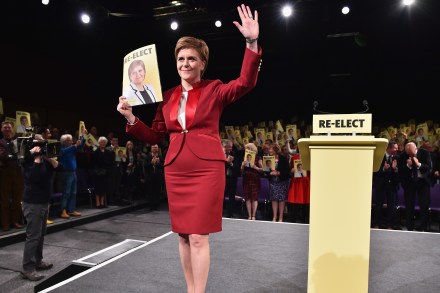
The SNP launched their manifesto for the forthcoming election to the Scottish parliament in Edinburgh today. 1,400 party members gathered for morning worship at the Edinburgh International conference Centre. Members of the media were forced to wear security bracelets emblazoned with the slogan "I'm with Nicola" which, given the contempt with which many nationalists view the press, was a nice touch. Your correspondent was not present, partly because he had forgotten the manifesto launch was taking place today but chiefly because none of it mattered in the slightest. The SNP don't need a manifesto to win this election. They are the masters now and there's nothing they or their opponents can do about it. Still, the SNP really is unlike other parties.

If you think this photograph is shameful you should probably be ashamed of yourself

Today's starter for ten: how does this photograph make you feel? Does it make you angry? Does it do more than that? Perhaps your are the kind of person who feels this a truly shameful photograph. Perhaps, if this is the case, you need to get out more. Perhaps you also need a holiday from politics. Now, of course, a referendum - being a binary Yes/No question - is a divisive business. That does not require you to abandon all sense of perspective. If the sight of the Prime Minister in the company of Paddy Ashdown and Neil Kinnock leaves you frothing with disbelief you probably should, as the Irish put it, cop on to yourself. We have been here before, of course.

There’s been a Tweet but, worry not, DCI Taggart is on the case

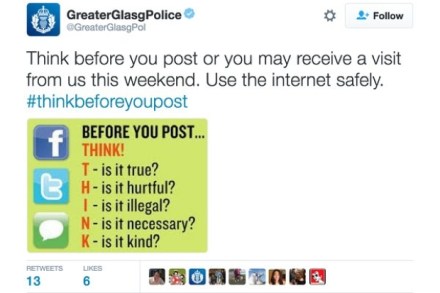
Behold, the Tweet that banned the internet. Has it really come to this? Evidently so. It is necessary to laugh at Greater Glasgow Police and you'd be advised to do so while it remains legal to do so too. Doubtless this latter consideration is simply the result of an administrative oversight but we must make the best of a bad situation that is not itself of our own making. All this is true and yet not enough either. You might think this is merely an April pleasantry, a first of the month jape designed to entertain you as we await the first real sighting of spring in these northern parts. If you think that then all I can say is that you are a kinder soul than I. The Scottish Police, you see, have form in these matters. Their record is as long as a long man's arm.

The genius of Myles na Gopaleen must not be subjugated by the imperialism of Flann O’Brien

Faith, has it really been two score years and ten? It has you know. Well, would you credit that? I know. Fifty years! Seems appropriate, though. What? That he'd leave this day. For sure. I mean, of all the days to pick! This one would be among the best. Possibly the very best. You're not wrong there. I might even be right. Woah, hold your horses! Even the little ones? Especially them. Brutish little creatures. Brutes, yes. Be that as it may - and mark my words, it may (even in April) - today marks the fiftieth anniversary of the death of Flann O'Brien, the second-greatest* Irish writer of the twentieth century. There should, by rights, be scarcely a dry eye in The Palace bar today. This includes the glass ones.