Alex Massie

Alex Massie

Did Jeremy Corbyn really save the Labour party in Scotland?

If a line is repeated often enough it becomes true. Or true enough, anyway. This, at any rate, is one of the axiomatic rules of modern politics. He who controls the ballyhooed “narrative” owns the truth. Which is why the interpretation of any given event swiftly becomes almost as important as the actual event itself. So up-pops Matt Zarb-Cousin, formerly Jeremy Corbyn’s spokesman and now one of his more charming outriders on social media, to claim that it was Jezzah what has saved the Labour party in Scotland. As he puts it, “Corbyn’s supporters have long argued that returning Labour to its socialist roots would be necessary if the party was to ever regain support in Scotland.” Well, up to a point Lord Spart.

Brexit is a retreat – not a liberation

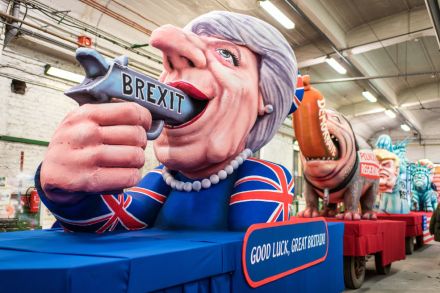
It is a mark of Britain’s estrangement from the European Union - and, at least for now, the country’s diminished standing on the international stage - that although Theresa May attended a memorial service to Helmut Kohl at the weekend, she was not invited to speak. Of course there are hierarchies of closeness on such occasions, but there is something piercing about the manner in which what this country, and its leaders, have to say now has so little resonance.  Kohl’s death should have occasioned more commentary in this country than it has. By any reasonable estimation, he was a titan of modern European history.

Nicola Sturgeon asks Scotland for one thing: patience

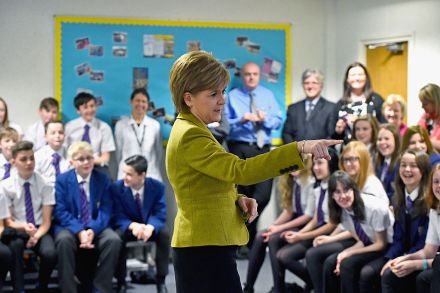
Ever since the general election Nicola Sturgeon has lurked in her tent, contemplating the future. The result of that election, in which the SNP’s share of the vote fell by 13 points and in which it lost 21 seats, demanded a period of 'reflection' from the first minister. Where does Scotland stand now? The answer, which was wearily predictable, is just where it stood before. Nicola Sturgeon emerged from her period of reflection yesterday with a simple message: nothing has changed. Sure, she talked about 'resetting' her timetable for independence, confirming that she would not this year introduce a bill at the Scottish parliament seeking the Section 30 order from the Westminster parliament that would permit a referendum to be held legally.

England, you wanted Brexit so you can pay for it

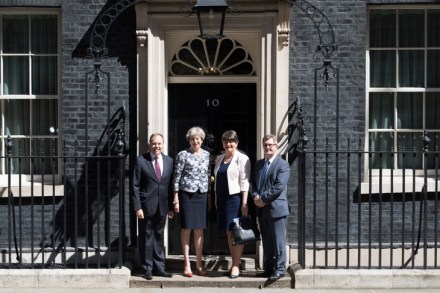
The message to be taken from today’s Downing Street proceedings is a simple one: England, you wanted Brexit so you can pay for it. That, in essence, is the meaning of the confidence and supply agreement brokered between the Conservatives and the Democratic Unionist Party. That the DUP favoured Brexit too is of no account and nothing more than a cute irony. Nobody gets between an Irish politician and their pork. ’Twas ever thus, north and south of the border, and ’twill ever be thus. This is the word of the book, you know. Enough too, please, of pretending to be shocked by the shocking discovery that politics is a shockingly transactional business. Besides, the sums involved are almost laughably small.

Britain is in desperate need of a truly national party

I am not sure I can think of any great public assembly in Britain I’d enjoy less than Glastonbury. Within reason, I’m not sure you could even pay me to go there. Glastonbury is a place for dear Hugo Rifkind not for me, and that’s the way I imagine we both prefer it.  Still, there was something worth seeing at Glastonbury this year. Jeremy Corbyn, obviously. His appearance was remarkable, even if it has also prompted a fresh outbreak of one of Britain’s under-appreciated traditional sports: members of the middle-class sneering at other members of the middle-class.  Even so, two things can be said about this. First, the Labour party cannot win unless it is a broad church.

How long can Nicola Sturgeon pretend that nothing has changed?

Is Nicola Sturgeon, not to put too fine a point on things, losing it? Just six weeks ago this question would have seemed preposterous. But that was before the SNP’s disastrous election result. Yes, disastrous. Sure, everyone expected the SNP to lose votes and seats but no-one really thought they could lose 21; no-one really thought their share of the vote would fall by 13 points or that they would misplace almost half a million voters. No-one thought their result would be so very much worse than expected. No-one includes the opposition points and, pertinently, the SNP itself.  And in response to this, what has Nicola Sturgeon said? Only this: nothing has changed. This is a line that will not, cannot, hold.

Hands off our Ruth

At last, there is light in the north. The long Scottish Tory winter has finally ended, giving way to the freshest spring imaginable. Just ten days ago, leading Scottish Tories believed they might win half a dozen seats at the general election. Even on election night they struggled to accept the reality of what was happening. ‘Ayr? Really?’ But they did win Ayr. And Stirling. And Angus. And Gordon. And Moray. This was emphatically not Theresa May’s victory. It was Ruth Davidson’s. Now, in the aftermath of this Ruthquake, a question arises: if Ruth can save the Scottish Tories, couldn’t she do something similar south of the border? Every newspaper has carried a version of this fantasy.

If Theresa May was the election’s biggest loser, Nicola Sturgeon was its second greatest loser

Comeuppance is a dish best served scalding hot. That’s the first thing to be said about this glorious election result. Like Ted Heath, Theresa May asked 'Who governs Britain?' and received the answer 'Preferably not you'. Her election campaign – a word that grants it greater dignity than it merits – will be remembered for decades to come as a classic example of what not to do.  Until yesterday we had thought her victory would be tainted by the fact she had only beaten Jeremy Corbyn; now we might reappraise our view to note that poor Jeremy Corbyn has been such a hapless leader of the Labour party he couldn’t even beat Theresa May.  One lesson is clear: never, ever, take the voters for granted. Never, ever, presume only one result is possible.

Nicola Sturgeon, the second biggest loser

Comeuppance is a dish best served scalding hot. That’s the first thing to be said about this glorious election result. Like Ted Heath, Theresa May asked ‘Who governs Britain?’ and received the answer ‘Preferably not you’. Her election campaign — a word that grants it greater dignity than it merits — will be remembered for decades to come as a classic example of what not to do. Until yesterday we had thought her victory would be tainted by the fact she had only beaten Jeremy Corbyn; now we might reappraise our view to note that poor Jeremy Corbyn has been such a hapless leader of the Labour party he couldn’t even beat Theresa May. One lesson is clear: never, ever, take the voters for granted. Never, ever, presume only one result is possible.

Nicola Sturgeon has just kebabed Kezia Dugdale in the STV debate

For much of last night’s STV debate, the last such contest in Scotland in this election, it looked as though the headline story would be the manner in which Ruth Davidson was hammered by all the other Scottish party leaders. The Tory leader was taken to task over the government’s changes to tax credits and, in particular, the so-called ‘rape clause’. Valiantly as she tried to defend herself she was unavoidably on the back foot. And then Nicola Sturgeon changed the subject. According to the first minister, in a private conversation just after the Brexit referendum, Kezia Dugdale, the Labour leader, told Sturgeon that she and her party were now open to the idea of a second referendum on independence. That, children, is what a nationalist dead cat looks like.

Theresa May’s decision to cuddle the Donald looks worse by the day

It is not often, especially in the midst of what has been a grimly dreadful election campaign for her, that one feels some measure of pity for Theresa May. But there she was today, gamely putting on her bravest, gamest, face when she was asked for her reaction to Donald Trump’s latest witless provocations.  The American president, you can hardly failed to have noticed, has not covered himself in glory since the weekend’s terrorist attack in London. When the city’s mayor, Sadiq Khan, suggested that Londoners should not be alarmed by the deployment of additional armed officers on the streets of London, Trump blustered “At least 7 dead and 48 wounded in terror attack and Mayor of London says there is ‘no reason to be alarmed!

Theresa May has become the Tories’ Gordon Brown

At the outset of this general election campaign one thing seemed clear: Labour would get everything they deserved but, alas, the Tories would not. That is, Jeremy Corbyn would lead Labour to a thoroughly-merited disaster and Theresa May would gain an ill-deserved, but whopping, victory. Well that was then and this is now as it looks, at least for the moment, as though this scenario could be reversed. The Tories, enduring a stinker of a campaign, may be punished just as thoroughly as they deserve to be but, if that is the judgement of the British people, it also requires voters to treat Labour with a gentle indulgence the party does not merit.

Jeremy Corbyn must have been the most secret peacemaker of all

I suppose that if you are under thirty, Northern Ireland seems a place far away and it must be difficult to imagine a time when news from the province was a regular feature of the BBC and ITV nightly news bulletins. The Good Friday Agreement, for all its imperfections and awkward compromises, settled something that now belongs to something close to ancient history. A YouGov poll last month suggested only one in five voters thought they knew even a fair amount about Jeremy Corbyn’s history with Sinn Fein, the IRA, and the wider republican movement. The young can be forgiven their ignorance. But there are many people old enough to remember what really happened in the 1970s, 1980s and 1990s who seem determined to ignore historical record.

Scottish Labour’s Jeremy Corbyn problem

At one of Lord Ashcroft’s focus groups recently, participants were asked what jobs they thought might suit politicians if they were not, well, politicians. In Edinburgh, one respondent unkindly suggested Nicola Sturgeon would make an excellent traffic warden. For her part poor Kezia Dugdale - I’m afraid 'Poor Kezia Dugdale' has become the accepted form of labelling the Scottish Labour leader - was reckoned to be just the sort of person who would thrive working in a pet rescue centre. There are many times that must seem preferable to leading the Labour party in Scotland. For the whole of this campaign Ms Dugdale has suggested that the very last thing Scotland, and indeed the United Kingdom, needs is a second referendum on independence. No, no, no, she says.

Nicola Sturgeon knows her policy – but her only real concern is independence

No-one has ever accused Nicola Sturgeon of winging it. Unlike some politicians, she enjoys doing her homework. If you want to talk about the detail of policy, about the technical parameters within which this or that is measured, about the baseline assumptions that dictate funding decisions or the procedural manner in which policy is formulated, then she’s your lady. That much was evident in her election interview with Andrew Neil this evening. I imagine long sections of it were baffling to viewers outwith Scotland as the first minister and Mr Neil traded statistics on the economy, health and, especially, education. Sturgeon has asked to be judged on her record and Neil was happy to accept her invitation.

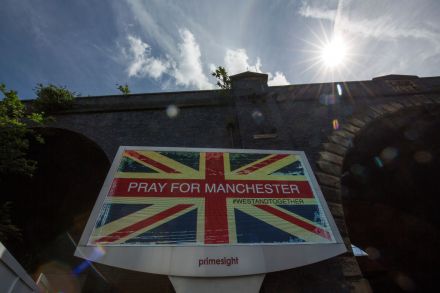
The Manchester attack is especially vile but we must go on

The first victim named was from Lancashire, the second an eight-year old girl. Two girls from the isle of Barra in the Western Isles are among those still unaccounted for. A reminder, if it were needed, that though this was an attack in Manchester, the chains of personal connections to the horror stretch all across Britain. You cannot read the stories of those killed or missing without choking, without tears, without appreciating that even by the standards of contemporary terrorism there was something especially vile about this latest atrocity.

There’s a palpable desire for a no-nonsense alternative to the SNP – and Ruth Davidson is delivering it

Theresa May came to Scotland today to offer her support to Ruth Davidson. Notionally, the Scottish Tory leader is supposed to support the Prime Minister but in this election, Ruth is a greater asset to the Conservative and Unionist party than Theresa.  Today’s YouGov poll for The Times confirms as much. Mrs May has a net approval rating in Scotland of -17; Ms Davidson’s is +10. Two thirds of those voters who endorsed Labour candidates in 2014 think Davidson is doing a good job and so, remarkably, do one in three voters who supported the SNP two years ago.  The same poll was interesting precisely because there was nothing startling in it.

Theresa May’s preachy government is on a mission to restore our confidence

Every political moment is informed by, and a reaction against, its predecessor. The Age of May is no exception. David Cameron’s successes were founded, at least in part, on the vague appreciation that he seemed like a nice enough chap. Theresa May’s victories are built on the fact that she isn’t.  Being a 'bloody difficult woman', if also a bloody dull one, has its advantages and not just in terms of paying a measure of homage to the great ghost of the Iron Lady. Theresa will stand for no nonsense, you understand, and things will be done properly and with a sense of order and purpose. What you see is what you get and there’s no need to like it; you are simply asked to respect it.

The SNP’s muddled education policy is failing Scottish kids

I am afraid that whenever a politician asks to be judged on their record, it is sensible to assume this reflects a confidence they won’t be. At the very least such promises are hostages to future headlines. Take, for instance, Nicola Sturgeon’s boast that education  - and specifically closing the gap between the best and worst schools in Scotland - is her top priority. Judge me on this, she said. Well, OK.  Today the SNP government published the results of the latest Scottish Survey of Literacy and Numeracy and, as has become annually predictable, they make for depressing reading. While standards of reading have remained relatively constant amongst both primary and secondary pupils, there has been a sharp decline in writing ability.

The Tory revival in Scotland belongs to the Unionists

Well, then. It turns out that the revival of the Scottish Conservative and Unionist party is a real thing. Last year, the party won 31 seats at the Scottish parliament elections, supplanting Labour as the second force in Scottish politics. This week, it became the second largest party in local government across Scotland. The Tories are a party reborn, the beneficiaries of an increasingly polarised political landscape. It may be ironic that Ruth Davidson’s party benefits from the SNP’s dominance but there you have it. Caveats apply, of course. The voting system used in Scottish council elections helps the Tories. The single transferable vote is a very different beast to first past the post. That makes mapping these election results onto the general election a risky endeavour.