Alex Massie

Alex Massie

The government’s deeply cunning Brexit plan comes unstuck

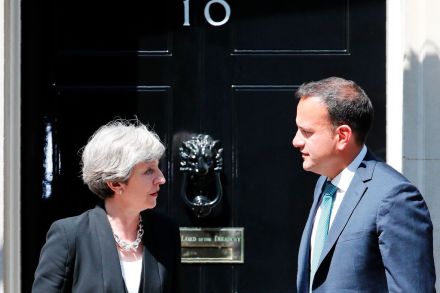
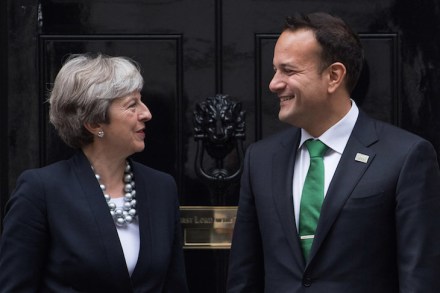
So, Frances Fitzgerald, the Tánaiste, has resigned. It now looks as though Leo Varadkar’s minority Irish government will not face a vote of no-confidence that it would likely have lost and, consequently, there will be no Irish election before Christmas. That’s a matter of considerable relief in Dublin but also in London.  Irish political scandals are often esoteric but this, frankly, was no time for an election and that recognition, above all else, compelled Fitzgerald’s departure. In other circumstances she – and Fine Gael – might have fought this to the final furlong. But these are not ordinary times in Dublin.
Ireland has punctured Brexiteers’ wishful thinking

In his column this week, James Forsyth reports there is ‘mounting anger’ inside the government at the way the Irish government are behaving over Brexit. I am sure there is, though it still surprises me that people are surprised to discover that the Irish government is defending its own interests. Doubtless this is why you will sometimes find exuberant Brexiteers suggesting that the answer to the Irish problem is for the Irish to leave the EU too. That might work in theory; it doesn’t do so in practice. I’m afraid things are a little more complicated than that. Now it is, of course, tiresome that Brexit is being complicated by the Hibernians. But none of this was unforeseeable and none of it should be a surprise.

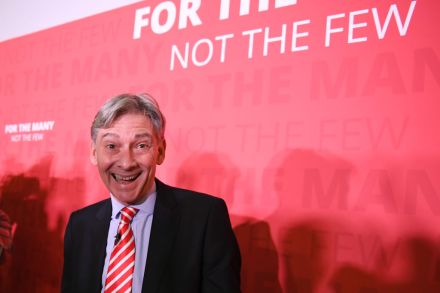
Scottish Labour’s new leader is unlikely to trouble Davidson or Sturgeon

In the end, it wasn’t even close. Richard Leonard now takes ownership of the black spot handed to every leader of the Scottish Labour party. He defeated Anas Sarwar, the son of the former MP Mohammed of that ilk and the early presumed favourite in the race, by 12,469 votes to 9,516. Mr Leonard is the party’s sixth leader in a decade. Sarwar began the contest with several disadvantages, the first of which being that he was relatively well-known. That was sufficient to win him the support of most of his Holyrood colleagues but a grave handicap in terms of a party membership craving something - anything - new. His background hardly helped either.

The Tory Brexit contradiction

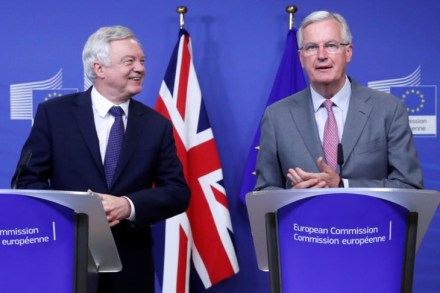
It has not been a great few weeks for David Davis, the government’s designated Brexit Bulldog. In the first place, his ambition to succeed Theresa May as leader of the Conservative party and prime minister looks and feels increasingly at-odds with the temper of the times. I suppose parading buxom lasses in figure-hugging t-shirts emblazoned with the slogan 'It’s DD for me' was meant as just a bit of nudging, winking, fun. The kind of thing you could get away with in simpler times. But it was naff a decade ago and seems something a little worse than that now. Perhaps it’s unfair to draw too many conclusions from a single episode, but it remains hard to shake the thought it was in some sense a character-revealing moment. Not brilliant, but certainly unsound.

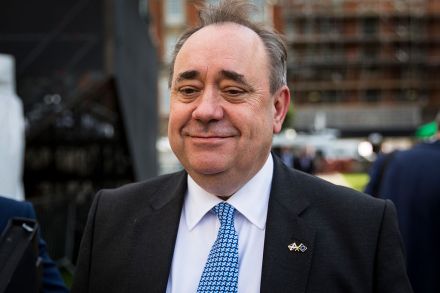
Alex Salmond has become Russia’s useful idiot

When Alex Salmond became first minister of Scotland in 2007 many people wished him well. You did not need to have voted for the SNP to appreciate that Salmond’s minority administration was a welcome breath of fresh air. It replaced a tired and muddled Labour-Lib Dem coalition with one that had a pleasing sense of purpose and ambition. Scotland was ready to grow and Salmond seemed the kind of statesman who would not embarrass the nation.  A decade later, Salmond is reduced to working for the Kremlin’s propaganda station “Russia Today”. It has been a depressing fall from grace, one to be pitied as much as anything else. You do not often see an erstwhile statesman chump himself quite so thoroughly as this.

Never mind fake news, this is fake government

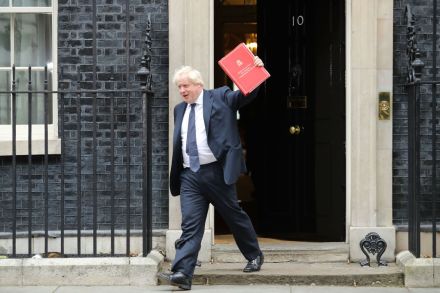
There’s a line in 'All the President’s Men' which seems dismally appropriate for our current government: 'News that would have occasioned banner headlines a few weeks ago was now simply mentioned in a larger story'. When things fall apart, boy they really fall apart.  This is not Watergate, of course, and Brexit must happen because that is what the people have commanded. Nevertheless, this is not a government that inspires confidence even on its own benches. And by God there is too much news. More, certainly, than can fit in a single story or be the subject of its own banner headlines.  Up until now, the standard view has been that Boris Johnson is less trouble in the Foreign Office than he would be were he left to prowl the back benches.

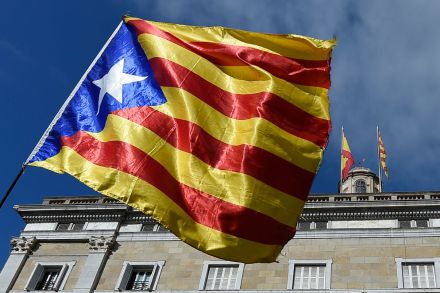
The Catalans are making the same mistake as some Brexiteers

The current crisis – not too strong a term – began a long time ago. And in a sense part of it really is the European Union’s fault. The EU’s failures, or rather shortcomings, play a part in this story but the greater share of it is the consequence of the EU’s successes, not its weaknesses. Across much of Europe, previously unquestioned ideas about the nation state – and its sanctity – are now subjected to some interrogation. The United Kingdom has some recent experience of this and so, of course, do Belgium and Spain. This moment has been building for some time; even, perhaps, for more than a quarter of a century.  The collapse of the Soviet Union unblocked a drain, reopening history.

Scottish nationalists need a plan B – but so do Unionists

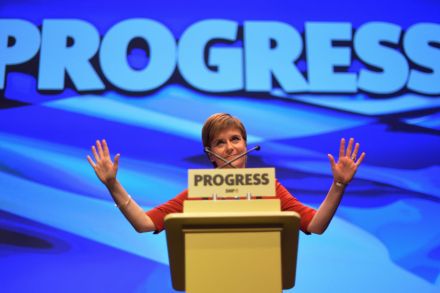
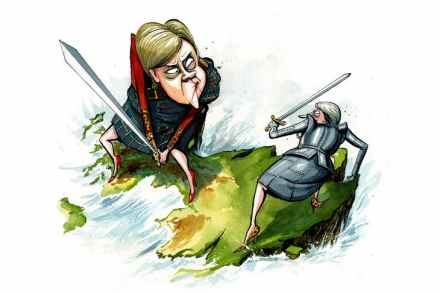
The SNP has become so accustomed to setting the agenda that the situation in which it presently finds itself - one of uncertainty tinged with the mildest dose of ennui - is modestly disconcerting. Nicola Sturgeon played all the right notes during her conference speech yesterday but there was still something perfunctory about her address. The delegates liked it but it wasn’t greeted with the kind of joyous rapture prompted by Ms Sturgeon’s previous conference speeches. She still believes in a place called independence, of course, it’s just that she doesn’t know - and, worse, cannot say - when it will next be glimpsed. It exists, of course, but seeing how you get there is harder than it used to be.  From 2011 to 2017, the nationalists set the agenda.

Can Ruth Davidson save the Tory brand?

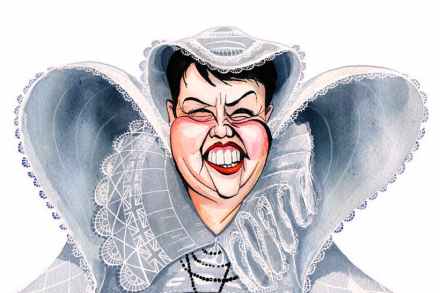
When a bird as sagacious as Danny Finkelstein writes a column in The Times headlined 'If the Tories want to win, they’ll send for Ruth Davidson' you know something is in the water. Ruthmania is getting out of hand. The Fink accepts that his plan for how Ruth can be brought south from Scotland to save the Tory brand - and idea - in England is under-cooked but, when every other plan is impossible, whatever’s left is the best cake available.  Davidson, however, has evidently been the star of this year’s conference. That’s what will happen when you’re the only leading Conservative who could be happy with the general election result. And when you look at the cabinet Ruth’s appeal becomes really quite easy to understand.

Why young Britain is repelled by the Tories

Of all the difficulties Theresa May faces, the importance of denying the truth may be the most acute. There are certain things a prime minister cannot say; certain fabrications that must be insisted upon because political expedience cannot withstand too much daylight. Mrs May, then, must pretend her position is secure and that, contrary to the expectations of her party and the country, that she will lead the Conservative party at the next general election, whenever that may be. If this makes her seem modestly ridiculous then so be it; the alternatives are even worse. Even so, some fictions would be better abandoned. Last week the prime minister was asked if the Conservative party needed to revisit the ‘modernising’ agenda that, in part, Mrs May was once a part of.

Brexit has opened the door to Corbynism

Like football, politics is a game of space and movement. Whoever controls the space has room to move. As matters stand, the Conservative party has ceded control to Labour. The Tories, consumed by Brexit, have opened the door to the very thing they fear most: a ‘socialism for the 21st century’, as Jeremy Corbyn put it in his conference speech this afternoon. The laws of unintended consequence are sardonic statutes, right enough. Who knows, if, at some point, Corbyn forms a government and if he then implements the agenda he hinted at today (an agenda better hinted at than stated openly, it is true) then perhaps, just perhaps, some Tories will look back on Brexit and wonder if it was really such a good idea; if it was really worth it. Some, of course, will.

Nicola Sturgeon’s Third Way

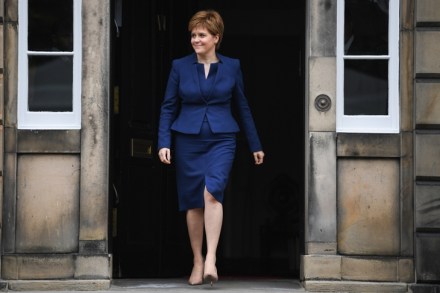
Nicola Sturgeon is invariably at her most persuasive best when she puts partisanship to one side and emphasises that, in addition to leading the Scottish National Party, she is also first minister of Scotland. Occasions such as yesterday, when she outlined her programme for government, give her that opportunity to shine. In place of boastfulness, there was modesty; in place of gurning about what she could not do, there was a refreshing emphasis on what she could. It was a speech tacitly admitting the truth of admissions made by former SNP ministers that during the referendum years the party allowed itself to be distracted by independence at the expense of ambitious government on the domestic front.

How much pain are Brexiteers prepared to inflict on us?

When this magazine endorsed Brexit, it did so in typically trenchant and elegant fashion. ‘Out and into the world’ we said. The central thesis of The Spectator’s case for Leave was that the European Union has become a parody of itself, a sclerotic, irredeemably unreformable, set of institutions that are, at some core, fundamental, level intrinsically incompatible with this country’s instincts, traditions, and future. Even so, that case, forceful though it was and certainly hardly without merit, still suffered from the wishful thinking that has, alas, been so typical of so many Brexiteers.

Kezia Dugdale’s resignation leaves Labour in turmoil all over again

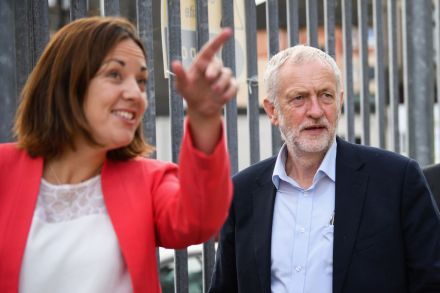
Even in Scotland, ‘Name the post-devolution leaders of the Scottish Labour party’ is a pretty decent pub quiz question. There have been so many and so few of them left much of a legacy. The people’s standard has been borne by Donald Dewar, Henry McLeish, Jack McConnell, Wendy Alexander, Iain Gray, Johann Lamont, Jim Murphy and Kezia Dugdale. Eight leaders in eighteen years. (In the same period, the SNP and the Tories have each only had three leaders.) And now there will be a ninth. Kezia Dugdale’s resignation as leader of the Scottish Labour party surprised even some of her closest allies and senior aides. Many of them are, not to put too fine a point on it, furious, seeing her resignation as something close to an abdication of responsibility.

Scotland’s vast deficit gives nationalists another dose of reality

Happy GERS day everyone! For the uninitiated, the publication of the Government Expenditure and Revenue Scotland figures has become one of Scotland’s most-cherished annual political bunfights. It is a kind of Caledonian Festivus, during which certain rites must be observed. Some people enjoy the Festivus Miracles, others relish the Festivus Feats of Strength and magical thinking but everyone agrees that the true meaning of Festivus - and GERS - is only truly made apparent during the traditional and joyous Airing of Grievances. Today, happily, will be no exception. the latest GERS figures show some improvement in Scotland’s financial position. The deficit run by Scotland last year only amounted to £13.3 billion, slightly better than the £14.

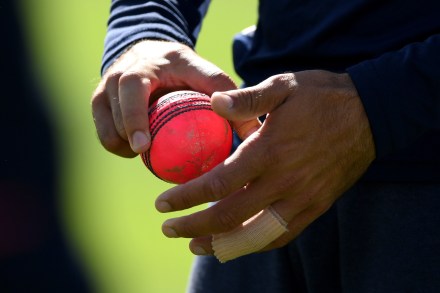
Cricket’s traditionalists should embrace the day-night Test

Stereotypes die hard. Consider the summer game, for instance. It is axiomatic to complain that cricket is a desperately conservative game, run by fuddy-duddies, inimitably hostile to reform or change or modernity.  If anything the pad is on the other leg; there are times when cricket’s rush to attract new audiences leaves one suspecting that the game’s presiding officers think the sport’s current audience is part of the problem. If you like things the way they are and have been you’re an obstacle to progress. Sometimes, at least in darker moments, you think cricket’s administrators are so caught up in and obsessed with the need to attract new fans they’d happily jettison the game’s existing admirers if that was the price of success.

Trump’s presidency will stain America for years to come

It is amazing what a crowd - or a basket - of deplorables can do. Sometimes they can even strip away cant and reveal the truth. Such has been the case since a few hundred neo-Nazis and assorted other white supremacists marched in Charlottesville, Virginia, at the weekend. They were protesting the planned removal of a statue honouring General Robert E. Lee, a statue typical of the American south’s longstanding emotional sympathy for the Confederacy. The Confederates might have been wrong, but they were romantic and, besides, they were our kind of wrong. Of course they should still be honoured by statues that serve as consolation prizes or participation trophies. America’s original sin endures, you know.  And it lives in the White House too.

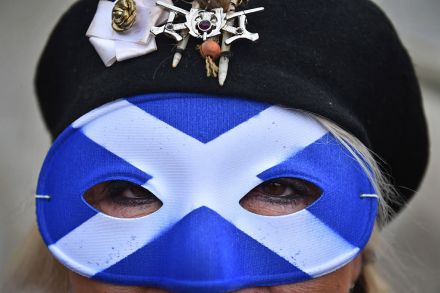
The battle for Scottish independence is far from over

It is August and, except in Washington and Pyongyang, the square root of heehaw is happening. This poses certain difficulties for the residents of Grub Street. Desperate times call for desperate measures and if that means burning your hot take then so be it.  Hence the recent proliferation of articles claiming that Scottish nationalism is on the brink of extinction, undone by internecine feuding and subject to the implacable laws of diminishing returns.

Ruth Davidson is on manoeuvres. What is she playing at?

So Ruth Davidson, honorary colonel in the signals reserve, is on manoeuvres again. It is past time, the leader of the Scottish Conservative and Unionist party says, for the government to rethink its approach to immigration. Time, instead, for an adult debate on the subject at the end of which, she hopes, the government will rethink its obstinate insistence on treating immigration as nothing more than a numbers game. And since the government keeps missing its targets on immigration, perhaps it would be sensible to revise those targets? At the very least, she says, it is absurd to insist that foreign undergraduates should be counted as immigrants when the public itself doesn’t think they should.

English cricket is too glass half-empty for its own good

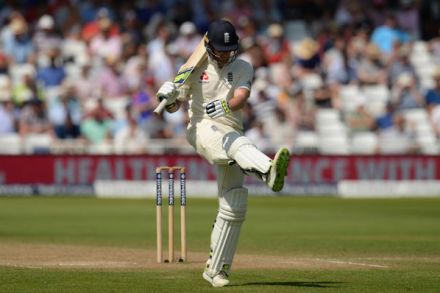
There is, let us be honest, a certain kind of England supporter who derives some cheerful satisfaction from disaster and weak-minded capitulation. Many England cricket supporters - for it is summer and time to put away minor matters such as Brexit and concentrate instead on more substantial civilisational matters - are naturally crepuscular, forever looking forward to the dying of the light. And why not? There is much to be said for being an Eeyore, especially if - as sometimes seems to be the case - being a Tigger is the only available alternative. Nevertheless, it is always a mistake to take things too far. Today’s miserable collapse at Trent Bridge, where England have been beaten by 340 runs, losing twenty wickets inside 100 overs, is a case in point.