Culture

Culture

The good, the bad and the ugly in books, exhibitions, cinema, TV, dance, music, podcasts and theatre.

Is this the worst production of all time? Royal Court’s The Glow reviewed

Theatre

It’s getting silly now. London’s subsidised theatres aren’t just competing to put on the worst play of the year but to create the worst production of all time. The Young Vic’s new effort, Conundrum, is an impenetrable rant which even the Guardian criticised. The Royal Court enters the fray with Alistair McDowall’s The Glow, directed by Vicky Featherstone. Act One is a flatshare sitcom set in the 19th century and features a pompous spiritualist, Mrs Lyall, who forces her chippy son, Mason, to live with a lunatic called Sadie. Mrs Lyall purchased Sadie from an asylum and together they conjure up a host of ancient spirits including an angry Jesus figure who has a sword and an Irish accent.
Borderline soft porn but thrilling: Moulin Rouge! The Musical at Piccadilly Theatre reviewed

Theatre

Moulin Rouge wins no marks for its storyline. A struggling Parisian theatre is bought out by an evil financier who wants to marry the venue’s star, Satine, whose heart belongs elsewhere. The show opens like a pantomime with a bantering style and cheesy jokes. And there are passages of physical comedy that look weird amid the glamour of fin-de-siècle Paris. But the slapstick is crisply acted and well directed. And the comic scenes are balanced by full-throttle dance routines played by strutting hunks and twerking lovelies in black fishnet stockings. Every bodice is wound tight enough to ping open at any second. It’s borderline soft-porn but it’s delivered with thrilling doses of self-confidence and brio.

Suchet makes Poirot sound like craft beer: Poirot and More, at Harold Pinter Theatre, reviewed

Theatre

Producers are getting jittery again. Large-scale shows look risky when a single infection can postpone an entire show. Hence Poirot and More in the West End. This is a conversation piece in which David Suchet talks about his career as Agatha Christie’s most celebrated nosy parker. Not much technical rehearsal is needed and Suchet relies on the support of a single performer, Geoffrey Wansell, who feeds him easy-peasy questions. Scrapping the production would hardly cost the earth. The pair are old friends but they seem to be at war in the costume department. Suchet looks like a Blair clone in a dark blue blazer and a white, open-necked shirt. Wansell’s richer plumage stretches to a spotted bow tie and a pair of pink-rimmed John Birt spectacles.

One of the best nights of my life: Hampstead Theatre’s Peggy For You reviewed

Theatre

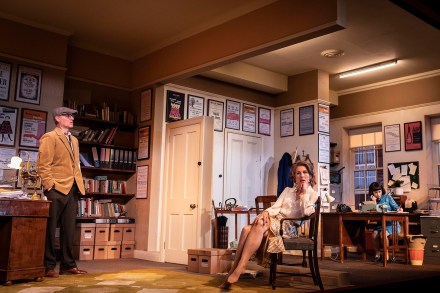
Hampstead Theatre has revived a play about Peggy Ramsay, the legendary West End agent who shaped the careers of Joe Orton, Robert Bolt, David Hare and others. We first meet her on the phone to a dramatist whose new script is good but, warns Peggy, it must not be produced because it will damage his career. She hates ‘fine writing’ and she knows how easily a scribbler can be corrupted by praise, awards and cash. Peggy is one of those rare creatures whom everyone wants to please and whose faults are considered charming oddities. Some might find her maddeningly fey but this show, directed by Richard Wilson, is part of the fan club. She has clients scattered across Yorkshire and she assumes that they must be next-door neighbours.

Artless, crude and thuggish: Bridge Theatre’s Book of Dust reviewed

Theatre

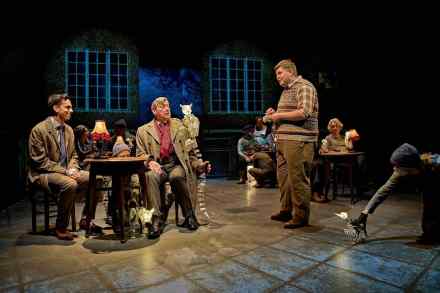
Philip Pullman’s The Book of Dust has been adapted at the Bridge. The yarn is set in Oxford, and the surrounding countryside, and the whole of the first act is devoted to exposition because Pullman’s fantasy world is impenetrably complicated. The chief character, a dim-witted child, wanders around the place and listens while terms like ‘magisterium’, ‘alethiometer’ and ‘daemon’ are explained to him. Meanwhile we’re introduced to Pullman’s range of human personalities. He can do two: first, the ooh-arr yokel who is thick but kind, and secondly, the posh academic who is clever but evil. These archetypes give rise to a total of 32 characters who are represented by 16 actors. A lot of simplification was needed here.

Clive Rowe is astonishing: Hackney Empire’s Jack and the Beanstalk reviewed

Theatre

Jack and the Beanstalk is a big, sprawling family show that opens with a baffling gesture. A booming voiceover announces that Hackney is being menaced by some unseen threat. Enter an evil monster, Funella Fleshcreep, who wears facial moisturiser made from liquefied avocado. This green-cheeked ogre is challenged by the virtuous characters, Jack Trot and Simple Simon, who must defeat her and deliver Hackney from danger. The show starts to finds its way once Clive Rowe appears as the dairymaid, Dame Trot, who needs to milk a dysfunctional, dried-up cow. There are few performers in Britain who are as versatile as Rowe. He can do broad slapstick as well as stand-up comedy. He can descend into the stalls and weave a spot of improvisational magic with a crowd of strangers.

An amazing technical achievement: Life of Pi at Wyndham’s Theatre reviewed

Theatre

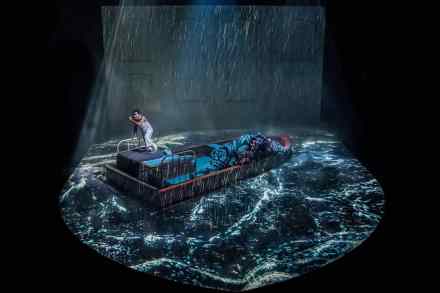
Yann Martel’s novel Life of Pi is a complicated organism. The action starts in southern India where we meet a precocious teenager, Piscine, who tells his parents that he wants to be known as Pi. The family own a failing zoo and they buy a Bengal tiger to attract fresh customers. The new arrival promptly rips the head off Pi’s pet goat and eats it. Next they take a ship to Canada, with the zoo stowed in the luggage hold, but the vessel hits stormy weather. The beasts break out of their cages and start to eat each other. And when the ship sinks, Pi finds himself on a life raft alongside an orangutan, a zebra with a broken leg, and the Bengal tiger. These spectacular scenes are tricky enough for a novelist to describe but to put them on stage seems an act of madness.

The National has become the graveyard of talent: Manor, at the Lyttelton, reviewed

Theatre

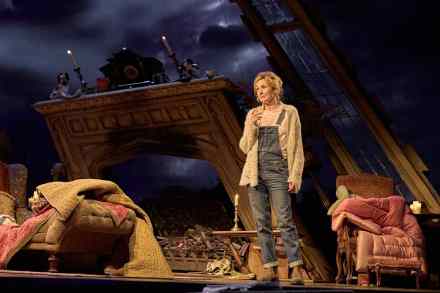
Somewhere in the wilds of England a stately home is collapsing. Rising floodwaters threaten the foundations. Storms break over the leaking roofs. Inside, an argument rages between a snooty moron, Lady Diana, and her drunken Marxist husband who used to be rock star. This is the chaotic opening of Moira Buffini’s country-house drama Manor. The angry husband picks up a hunting rifle and blasts ornaments to smithereens. Then he chases his wife to the top of a staircase where she hits him with a candlestick. Once the fight ends, more commotion erupts as various groups of evacuees rush in through the front doors. Two women arrive from south London. They’re soaking. A daft local priest shows up, followed by a white supremacist with a broken ankle.

Guilt-free hilarity: Vanya and Sonia and Masha and Spike at Charing Cross Theatre reviewed

Theatre

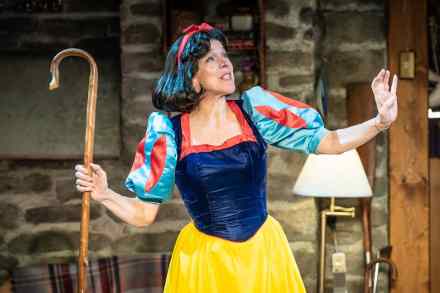
World-class sex bomb Janie Dee stars in a fabulously silly revival of the American comedy Vanya and Sonia and Masha and Spike. She plays a movie diva, Masha, who loves to flaunt her wealth in front of her mousy sister and bookish brother. Striding into the family home with her long hair flying and her scarlet lips curling, she narrows her eyes and flings shafts of desire in all directions. Then she arches her neck and tosses back her head to give her bust an extra half-inch of uplift. A stunning display. The show is about three middle-aged siblings whose over-intellectual parents named them after characters in Chekhov plays. Vanya is a hopeless dreamer.

A gem that should be released online: Park Theatre’s Abigail’s Party reviewed

Theatre

Mike Leigh’s classic, Abigail’s Party, has been revived under the direction of Vivienne Garnett. The script is a guilty secret for middle-class types who like to sneer at those beneath them but who can’t express their shameful feelings openly so they watch Mike Leigh instead. The only sympathetic character, Susan, is a well-bred gal who arrives at the party with a bottle of red wine which Beverly puts in the fridge. Red wine in the fridge! How hilarious. Offered a gin or a Bacardi and Coke, Susan asks for a sherry, which Beverly doesn’t stock. A drinks cabinet with nothing but gin and Bacardi! What a bunch of barbarians. Next they’ll be saying ‘lounge’ instead of ‘sitting-room’.

An affectionate exercise in comic sabotage: Pride & Prejudice* (*sort of) reviewed

Theatre

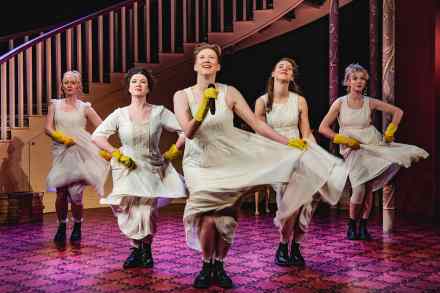
Let’s be honest. Jane Austen is popular because War and Peace doesn’t fit inside a handbag. Austen’s best-loved novel, Pride and Prejudice, has been updated in a fetching new production that treats the sacred text as a screwball comedy. The fun starts before curtain-up with the cast of five girls messing about on stage and struggling with a chandelier that almost shatters but doesn’t. This improv bit is irritatingly predictable. Then the show begins and the girls start to curse, laugh and pontificate their way through the tale. We get a feminist lecture explaining that Mrs Bennet’s predicament owes itself to the laws of bequest that prevented women from inheriting property. So if Mr Bennet dies, his wife and five daughters will be destitute.

Like Alan Bennett but less funny: ‘night, Mother at Hampstead Theatre reviewed

Theatre

’night, Mother is a two-hander that opens like a comedy sketch. ‘I’m going to kill myself, Mama,’ says Jessie. She’s cleaning a pistol and loading it with bullets. ‘I’ll shoot myself in a couple of hours.’ The pair live together in a lonely farmhouse, and Jessie wants to make sure her mother will be able to cope after her death. She tours the kitchen explaining where the fuses and the cleaning materials are kept. Mama, who doesn’t seem unduly alarmed, offers to phone her son and get him to thwart the suicide attempt. ‘I’ll just have to do it before he gets here,’ says Jessie. This is an intensely dramatic set-up which ought to be either gripping or hilarious, or both. Somehow it lacks punch.

Every MP must see this play: Value Engineering – Scenes from the Grenfell Inquiry reviewed

Theatre

Scenes from the Grenfell Inquiry is a gripping, horrifying drama. Nicolas Kent and Richard Norton-Taylor have sifted through the public hearings and dramatised the most arresting exchanges. Ron Cook, often miscast as a comedian, is superb as the frosty and occasionally irascible inquisitor, Richard Millett. Early on, he asks the witnesses ‘not to indulge in a merry-go-round of buck-passing’. Later, he comments acidly, ‘That invitation has not been accepted.’ Every witness has something to hide and something to be ashamed of. A fireman searching for a child on the upper floors can’t explain why he didn’t rouse families from their flats and help them escape. A witness describes the inferno’s ghastly noise, ‘like sparklers’.

Somewhere in this production lies Shakespeare’s tragedy: Almeida’s Macbeth reviewed

Theatre

Yaël Farber’s Macbeth sets out to be a great work of art. The director crams the Almeida’s stage with suggestive props, glass panels, microphones, a wheelbarrow full of jackboots. The witches are not the usual vagrants or carbuncled mystics. These grim-looking ladies have expensive hairdos and nicely ironed shirts — like a panel of disgruntled academics at a tribunal. William Gaunt is a decrepit Duncan who looks ready to receive his telegram from the Queen. He can barely rise from his NHS wheelchair. But one wonders why this frail old chap had to be knifed to death? Much easier to smother him with a pillow and claim he expired naturally.

A triumph: Young Vic’s Hamlet reviewed

Theatre

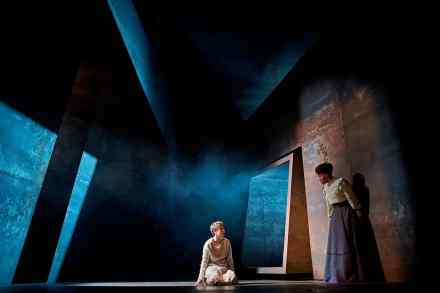
Here goes. The Young Vic’s Hamlet, directed by Greg Hersov, is a triumph. This is a pared-back, plain-speaking version done with captivating simplicity and perfect trust in the text. The star is Shakespeare and the production merely opens up an aperture to his dazzling account of human greatness and frailty. The action takes place on a small, level stage that could be covered by two bedspreads. Designer Anna Fleischle adds an oblong arch of distressed stone along with three tall blocks that rotate to create internal hiding places, corridors and cubby-holes. That’s all she needs to suggest a house of horrors, a court of nightmares, a royal palace beset by plots and whispers of secret killings.

A well-meaning but dull Official History: Olivier’s Normal Heart reviewed

Theatre

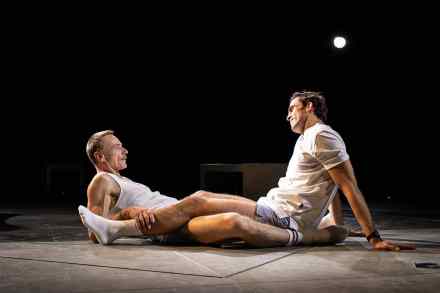
The Normal Heart is not about Aids. Larry Kramer’s play is set in New York in 1981 at a time when clinicians were struggling to find a link between a handful of rare diseases that struck only gay men and heroin addicts. The term ‘Aids’ wasn’t adopted until late in 1982. And this dampens the wheels of Dominic Cooke’s production. A playgoer is likely to stifle a yawn as the characters on stage try to discover medical facts that have been common knowledge for decades. There are other problems with Kramer’s ageing script. The story follows an indignant activist, Ned, who has to persuade the city authorities to take the plague seriously. He embarks on a laborious campaign whose numerous battlegrounds the script exhaustively covers.

Gripping slice of old-fashioned entertainment: Old Vic’s Camp Siegfried reviewed

Theatre

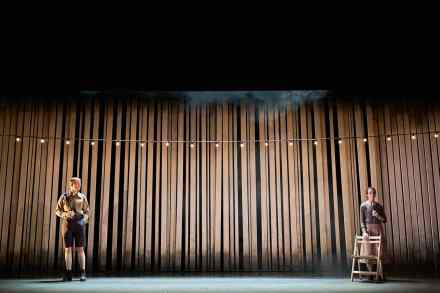
Boy meets girl. Girl gets pregnant. Then the entire world collapses. That’s the story of Camp Siegfried, which is set in the late 1930s at a holiday park in Long Island where German-Americans come to enjoy the outdoor life and to celebrate their ancestral culture. The boy is a strapping 17-year-old who chats up an awkward geeky girl with little sexual experience. Or so it seems. The boy is keen on Germany’s dynamic new chancellor but the girl finds Hitler too ‘excitable’. But when she’s invited to give a speech to the entire camp, she becomes an overnight convert and extolls the Nazi virtues of unity and patriotism. And she’s tempted to believe a rumour that the Führer himself travelled from Germany to hear her speak.

Jennifer Saunders is brilliant: Blithe Spirit at the Harold Pinter Theatre reviewed

Theatre

Blithe Spirit is a comedy with the plot of a horror story. Charles, a middle-aged novelist, lives happily with his second wife, Ruth, but he accidentally conjures up the spirit of his first wife, Elvira, during a séance. He becomes the target of a ghostly murder plot. Elvira decides to bump Charles off and enjoy his company in the afterlife. The play was one of Noël Coward’s biggest hits and although the script is 80 years old, this production features intriguing new material. The spiritualist, Madame Arcati, suffers from wind. She refers to her dietary anxieties several times and she mentions her dislike of red meat and roast pigeon.

Sexist, classist and pro-global warming: Frozen, at Theatre Royal Drury Lane, reviewed

Theatre

Frozen the musical declares war on woke politics. The 2013 Disney movie has been turned into a song-and-dance show that openly celebrates sexism, classism and misogyny. Plus, it salutes the joys of global warming. It’s set in a Scandinavian realm ruled by a kindly monarch who lives in a castle attended by fawning servants. No sign of social mobility here. An impetuous young princess, Anna, falls in love with an eligible duke, Hans, but their betrothal annoys Anna’s sister, Princess Elsa. This is dangerous because Elsa has magical powers that she can’t control. She accidentally casts a spell on Anna, who falls to the ground with a terrible illness. Things get worse when a cold snap arrives from the north and plunges the entire kingdom into a new ice age.

Tsunami of piffle: Rockets and Blue Lights at the Dorfman Theatre reviewed

Theatre

Deep breath. Here goes. Winsome Pinnock’s new play about Turner opens with one of the most confusing and illogical scenes you’re ever likely to see. A teacher on a school trip is showing her pupils a Turner painting displayed in a gallery housed inside a ship donated by the producers of a film starring a famous actress, Lou, who happens to be on board wearing a sumptuous outfit for an awards ceremony, which she plans to avoid for fear that a coveted prize will be handed to a rival. Lou invites the school teacher to an after party that is scheduled to start when the awards ceremony ends. She then gets distracted by the sight of movement on the surface of the Turner canvas. The painted figures, frets Lou, appear to be shifting and jerking.

Glib and snarky: Andrew Lloyd Webber’s Cinderella, at Gillian Lynne Theatre, reviewed

Theatre

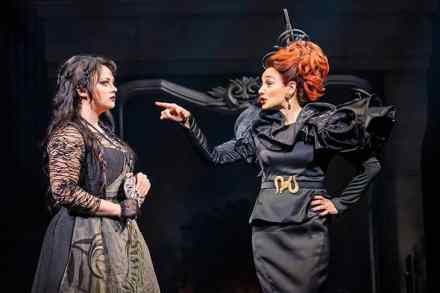
It’s a rum beast the new Andrew Lloyd Webber musical. Cinderella is set in Belleville, a European city of 18th-century vintage, whose inhabitants are fixated with the body beautiful. Cinderella, a pasty Goth, rejects this ethos and vandalises a statue that commemorates a handsome prince who recently died in battle. Cinders is punished by being chased into a forest and tied to a tree but she’s rescued by her best friend, Prince Sebastian, who will inherit the throne as soon as he marries. Sebastian and Cinders are pals whose friendship is destined to blossom into romance. They can’t see this. We can. And that’s the story. Oscar-winner Emerald Fennell has created a heap of trashy, unsympathetic characters.

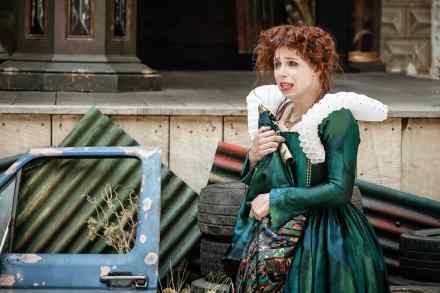
Captures the rapturous gaiety of the original: Globe’s Twelfth Night reviewed

Theatre

The new Lily Allen vehicle opens in a spruced-up terrace in the East End. Allen plays a self-satisfied yuppie, Jenny, whose cynical husband has invited two ghastly friends over for a bitchy booze-up. At first sight this looks like a Hampstead comedy from the 1970s but it’s a horror story, and it has a huge black hole at its core. A classic horror yarn should be driven by a single, powerful premise. In Ira Levin’s Deathtrap, a failing playwright has to bump off a talented rival to restore his fortunes. In Psycho, a bland motel is terrorised by a deranged and violent loner. Even Shakespeare dipped into the horror genre. In Hamlet, a vacillating prince is ordered to commit murder by his father’s ghost.

Homeric levels of misery: Paradise, at the Olivier Theatre, reviewed

Theatre

The National Theatre has given Sophocles’s Philoctetes a makeover and a new title, Paradise. This must be ironic because the location is hell on earth. The action starts in a dirt circle sprawling with smashed military gear where a group of plump female vagrants are waking up in a clutch of filthy old tents. They’re living on a Caribbean island which also houses a prison for migrants. In a nearby cave dwells an exiled Homeric archer, Philoctetes, who survives by eating squirrels which he kills with his handmade bow. A committed anti-vegan, Philoctetes shuns the plentiful rice, garlic and mangos that grow naturally in the tropics. Enter two British soldiers in contemporary battle fatigues, who want to track Philoctetes down. The Brits are called Odysseus and Neoptolemus.

Sinatra, Bacon and a YouTube star: Edinburgh Fringe Festival round-up

Theatre

Sinatra: Raw (Pleasance, until 15 August) takes us inside the mind of the 20th century’s greatest crooner. The performer, Richard Shelton, catches Sinatra in confessional mode in the 1970s as he looks back on his chequered career. In the early days, a promoter suggested the stage name ‘Frankie Satin’ but his tough-minded mother, Dolly, vetoed the idea. The show’s best sections investigate the harrowing details of his tangled and doomed romance with Ava Gardener. Fame and wealth never sweetened Sinatra’s prickly character. ‘Drink is my worst enemy,’ he quips, necking whisky from a tumbler. ‘But, like the Bible says, you’ve got to love your enemies.

Ian McKellen is riveting: Hamlet, at Theatre Royal Windsor, reviewed

Theatre

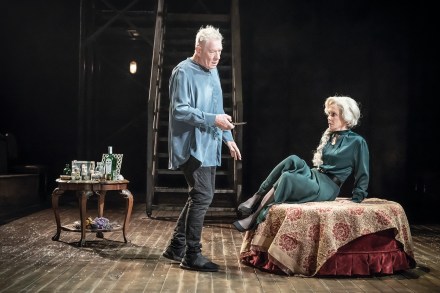
Ian McKellen in his early eighties plays the Dane in his mid-twenties. A production with such a strange innovation should be conventional in all other details so that the virtues and demerits of the experiment can be judged in the right context. But Sean Mathias’s show adds extra puzzles. Elsinore is a modern palace ruled by Claudius, in a charcoal suit, and Gertrude in a chic emerald dress, pinched at the waist. Nice togs. But the audience knows how a constitutional monarchy works and that a rightful heir succeeds automatically and peacefully. So why are these murderous nutcases roaming the corridors plotting to slit each other’s throats? That contradiction goes unexplained.

One for hardcore Tennessee Williams fans only: The Two Character Play reviewed

Theatre

It can be difficult to remember that Tennessee Williams, the great songster of the Deep South during the 1950s, was still churning out plays when he died in 1983. In the 1960s he was past his peak and he began to experiment with form, perhaps hoping to compete with fashionable youngsters like Tom Stoppard and Harold Pinter. Hampstead Theatre staged the world première of his absurdist melodrama The Two Character Play in 1967. And now, a mere 54 years later (an interlude that hints at its merits as a crowd-pleaser), the show has returned to its cradle. Sam Yates directs. This is an obscure and sometimes baffling script that features some excellent innovations and ideas.

What a comic treat: The Game of Love and Chance at the Arcola reviewed

Theatre

Lady Sylvia is a gorgeous aristocrat whose hand is sought by the charming Dorante whom she has never met. To avoid the stiff formalities of courtship, Lady Sylvia swaps places with her maid and observes Dorante from the safety of pretended servitude. But instead of falling for Dorante, she becomes enamoured of his manservant. However, there’s another wrinkle coming in Marivaux’s classic comedy. Deronte’s manservant, unbeknown to Lady Sylvia, is actually Dorante himself, who has pulled an identical switcheroo with his valet. The story is so hopelessly contrived that its sheer artificiality becomes part of the joke. This production of The Game of Love and Chance, directed by Jack Gamble, captures the fun-loving spirit of the original.

A shrill, ugly, tasteless muddle: Romeo & Juliet reviewed

Theatre

What shall we destroy next? Romeo & Juliet seems a promising target and the Globe has set out to vandalise Shakespeare’s great romance with a scruffy, rowdy, poorly acted and often incomprehensible modern-dress production. It starts with two lads having a swordfight using curtain poles. Enter the Prince who fires a gun and halts the action. Then the preaching starts. ‘Rather than trying to understand the nature of the violence, the Prince threatens the community,’ says an actor. These intrusions continue. ‘Patriarchy,’ says someone else, ‘is a system in which men hold power.’ The slogan appears on a screen as well.

This play is a wonder: Bach & Sons at the Bridge Theatre reviewed

Theatre

Bach & Sons opens with the great composer tinkling away on a harpsichord while a toddler screeches his head off in the nursery. The script becomes a broader portrait of a richly creative and competitive family where everyone is bright, loud, witty, inventive, good-natured and affectionate. Bach teaches the elements of composition to his gifted sons. ‘Rules provoke expression. They challenge your ingenuity.’ And the audience is unobtrusively schooled in the elements of counterpoint by four actors singing ‘Frère Jacques’. Bach considers Carl’s work good but workmanlike. Wilhelm is better, a wayward, inspired and anarchic talent. When Carl hears this verdict he falls into a jealous rage but it doesn’t last.