Culture

Culture

The good, the bad and the ugly in books, exhibitions, cinema, TV, dance, music, podcasts and theatre.

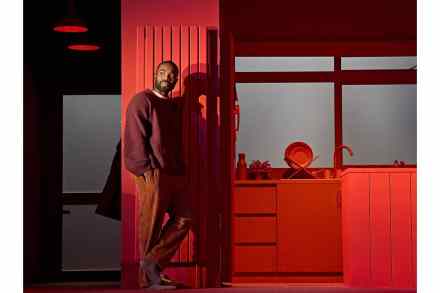
The dialogue ripples with energy: King Hamlin, at the Park Theatre, reviewed

Theatre

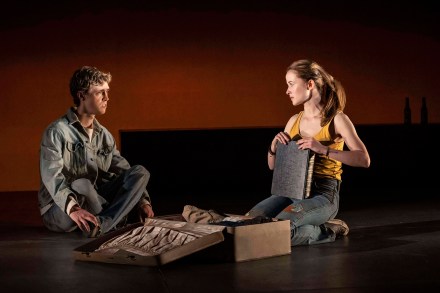
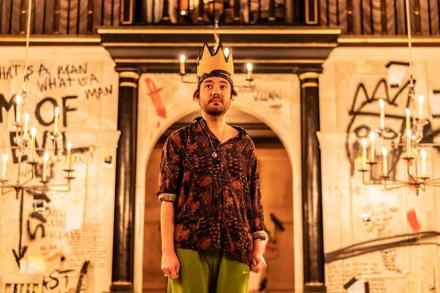
King Hamlin is a shock-horror drama about gang crime in London. Hamlin, aged 17, has left school without learning any useful facts or skills. He even lacks a shirt to wear so he shows up for a job interview looking like a vagrant and starts to swear at his future boss. No work for him. He dreams of studying computer software but he doesn’t own a laptop and seems incapable of getting one. His life is devoid of functioning adults. There’s no teacher, relative, or competent older friend to advise him. No father, of course. His poor dad was knifed to death because he was ‘too good for the hood’. Which is a new cause of crime in London. An excess of virtue can get you stabbed, it seems.

Kids will enjoy this new show at the West End’s newest theatre more than adults: Marvellous, @sohoplace, reviewed

Theatre

London has a brand-new theatre – yet again. Last summer, a cabaret venue opened in the Haymarket for the first time. More recently, the Marylebone Theatre near Regent’s Park held its debut show. And now Nica Burns of Nimax Theatres has announced a new venture, @sohoplace, which she says is the first West End venue to open for 50 years. The playing area is a hoop-shaped enclosure with rising tiers of seats overlooking a deep oblong pit. Cage fighting and mud-wrestling could be staged here to great advantage. The poster for the debut show, MARVELLOUS, features the title in bright pastel letters with a yellow balloon, a pair of clown’s shoes and a perky budgerigar.

This production needs more dosh: Good, at the Harold Pinter Theatre, reviewed

Theatre

Good, starring David Tennant, needs more dosh spent on it. The former Doctor Who plays John, a literary academic living in Germany in 1933, whose cosy life is disrupted by troublesome females. His mum is a cranky basket case dying in hospital and his wife is a manic depressive who can’t look after their kids. Both women speak with Scottish accents. John has a fling with a third Scotswoman who studies Goethe at his university. Weirdly, all three women – mum, wife and girlfriend – are played by the same actress. Couldn’t the producers fork out for a proper cast? They certainly didn’t spend more than a fiver on the set, which looks like an abandoned bomb shelter made of cardboard.

Mirthless, artless farrago of jabber: The Doctor, at Duke of York’s, reviewed

Theatre

The Doctor is an acclaimed drama from the pen of writer-director Robert Icke. We’re in a hospital run by a famous medic, Dr Ruth, whom the Cockney characters call ‘Dr Roof’. Two major problems beset Dr Roof who has to raise funds for a new private wing while grappling with her partner’s early-onset dementia. A Catholic priest barges in and demands to visit a dying patient. Dr Roof refuses. Then she punches him in the face to prove who’s boss. Her ill-advised left hook plunges the hospital into crisis, and the senior staff gather in the boardroom to sort out the mess created by Dr Roof’s violent temper. All the doctors wear white coats, like pantomime boffins, which seems an unlikely costume nowadays.

A show for politicians: John Gabriel Borkman, at the Bridge Theatre, reviewed

Theatre

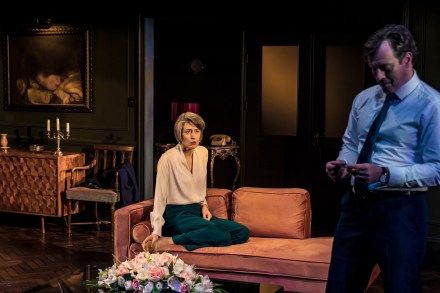
Clunk, clunk, clunk. John Gabriel Borkman opens with the obsessive footfalls of a disgraced banker as he prowls the attic of a shabby townhouse. On a beaten-up sofa lies Gunhild, his estranged wife, who guzzles Coke and watches TV game shows. The whole place stinks of stagnation and failure. The reclusive Borkman was once the country’s best-known banker until envious colleagues accused him of embezzlement and got him sent to jail for five years. After his release, he began a life of self-destructive solitude. The family are more riven with feuds than the royals. Gunhild loathes her twin sister, Ella, while Borkman blames both women for his downfall. His one hope, his son Erhart, openly shuns him and prefers the company of a sexy local seductress.

Worthy of Wilde: Eureka Day, at the Old Vic, reviewed

Theatre

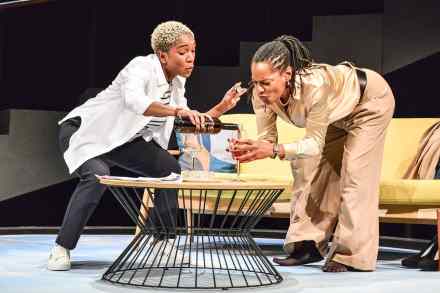
Eureka Day is a topical satire set in a woke school in America. An outbreak of mumps has led to calls for a vaccination programme that will prevent the school from being quarantined and shut down entirely. The script, written in 2018, has acquired new layers of meaning since the Covid terror. It opens with a playful sketch in which four white teachers and a black parent try to agree how many ethnic categories should be recognised by school officials. Their friendly conversation conceals a toxic seam of racial suspicion and hostility. The writer, Jonathan Spector, is probably a rock-sold liberal who wants the world to know that the woke cult has gone too far. The play’s highlight is a 20-minute passage of comedy which reaches a peak of hilarity that would make Oscar Wilde envious.

A masterpiece: Rose, at Park Theatre, reviewed

Theatre

Look at this line. ‘I’m 80 years old. I find that unforgivable.’ Could an actor get a laugh on ‘unforgivable’? Maureen Lipman does just that in Rose, by Martin Sherman, a monologue spoken by a Ukrainian Jew who lived through the horrors of the 20th century. In the opening sections, Lipman plays it like a professional comic and she fills the theatre with warm, loving laughter. Rose’s dad is a hypochondriac who spends all day in bed. ‘He never stopped dying but as far as we could tell there was nothing wrong with him.’ Eventually he loses his life when a wardrobe stuffed with pills topples on to him. ‘He was crushed to death by medicine.

A tremendous show that will attract serious attention from the West End: Rehab – The Musical reviewed

Theatre

Rehab: The Musical opens with a boyband star, Kid Pop, getting busted for possession of cocaine. The judge sentences him to a course of treatment at the Glade which he attends with great reluctance. Giving up marching powder is the last thing on his mind. ‘I said no to drugs but they just wouldn’t listen.’ His sharky agent, Malcolm Stone, wants to prolong Kid Pop’s notoriety by sending an undercover ‘addict’ to the Glade to spy on him and leak stories to the press. Stone hires a luscious sex bomb, Lucy, to take on the job, and it’s obvious that Kid Pop will seduce her and their affair will end in redemption for both parties. Predictable enough, perhaps, but the couple’s journey is a joy to experience.

Rhapsodic banalities: I, Joan, at the Globe, reviewed

Theatre

‘Trans people are sacred. We are divine.’ The first line of I, Joan at the Globe establishes the tone of the play as a public rally for non-binary folk. The writer, Charlie Josephine, seems wary of bringing divinity into the story too much, and he gives Joan a get-out clause to appease the agnostics. ‘Setting aside religiosity we’ll settle for more of a street god, a god for the queers and drunks… a god for the godless.’ What can ‘a god for the godless’ mean? No idea. Joan throws in a few more hipster platitudes about ‘elevating our humanity, finding the unity hidden inside community, remembering our collective connectivity fuels courageous creativity [sic]’.

Our prison culture is more barbaric than it was in 1823: Elizabeth Fry ‘The Angel of Prisons’ reviewed

Theatre

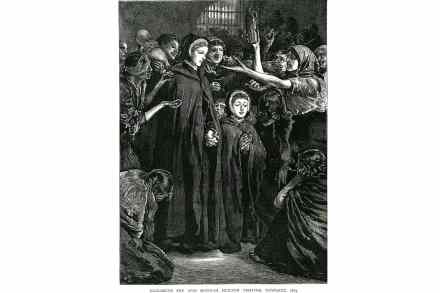
The Angel of Prisons dramatises the life of the penal reformer Elizabeth Fry, who lived near Canning Town. She married a wealthy Quaker, Joseph Fry, who encouraged her philanthropic work which she managed to pursue while raising 12 children. Early in life, Fry had been a party girl who loved dancing, and this production shows her practising her moves to a soundtrack of thumping contemporary music. The script, by James Kenworth, blends present-day London vernacular with the dialect of the early 19th century. It’s easy to watch and it delivers heaps of information without any hint of lecture-hall formality. When Fry visited the mixed-gender Newgate Prison near the Old Bailey she found her vocation.
The show works a treat: Globe’s The Tempest reviewed

Theatre

Southwark Playhouse has a reputation for small musicals with big ambitions. Tasting Notes is set in a wine bar run by a reckless entrepreneur, LJ, whose business bears her name. In real life, LJ’s bar would go bust within weeks. It serves vintage wines to a clientele of wealthy tipplers who chug back large tureens of Malbec and claret but who eat no food. The staff help themselves to free champers and Burgundy whenever they choose, and the boss fusses around like a mother hen making sure her brood are safe and content. Bad punctuality is never punished and the staff improvise each shift as they go along. But the emotional atmosphere of LJ’s feels right.

The Dane gets an interpretive dance makeover: Ian McKellan’s Hamlet reviewed

Theatre

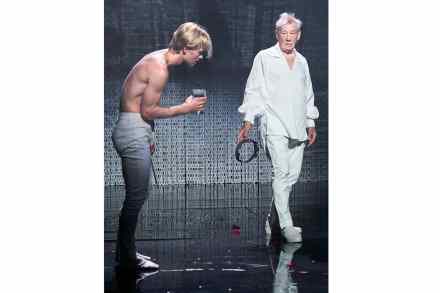
Ian McKellen’s Hamlet is the highlight of Edinburgh’s opening week. In this experimental ballet, Sir Ian speaks roughly 5 per cent of the lines, accompanied by a hunky blond dancer, Johan Christensen, who offers a physical interpretation of the Dane’s melancholy. The other roles are played by a ballet troupe in olde worlde costumes. The performing area is a black thrust stage, gleaming like patent leather, surrounded by low spotlights and swirling dry ice. It looks like Elsinore recreated by a cruise-ship designer. Newcomers will find the story mystifying. Hamlet smoulders longingly at Horatio and they dance like a hot couple at a gay night spot.

I can’t recommend this Cole Porter musical highly enough: Anything Goes, at the Barbican, reviewed

Theatre

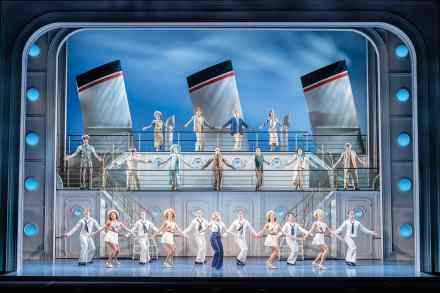
The Barbican’s big summer show is billed on the website as ‘the sold-out musical sensation, Anything Goes’. The term ‘sold-out’ is a strange way to describe a production that’s keen to get your business. You’d be forgiven for clicking away and hunting for a show with seats available. What the Barbican means is that this is a revival of an earlier production that did great business. And that may explain why tickets aplenty are available even on a busy Friday night. This version stars Kerry Ellis as the showgirl, Reno, who falls in love on a transatlantic cruise ship. Virtually every number is a classic. If you read any couplet from the title song you’ll be humming the melody all day. https://www.youtube.com/watch?

Stupendously good: Much Ado About Nothing, at the Lyttelton Theatre, reviewed

Theatre

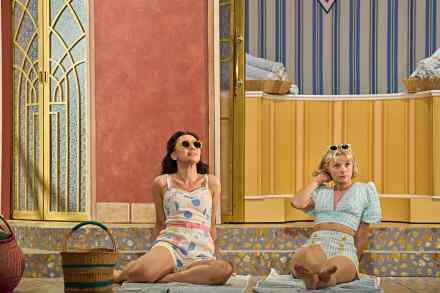
Simon Godwin’s Much Ado About Nothing is set in a steamy Italian holiday resort, the Hotel Messina, in the 1920s. A smart move, design-wise. The jazz age was one of those rare moments in history when every member of society, from the lowliest chambermaid to the richest aristocrat, dressed with impeccable style and flair. The show is stupendously good to look at it and it kicks off with a thrilling blast of rumba music from a jazz quartet on the hotel balcony. Even sceptics of jazz need not fear these players. The musical score is a triumph for one simple reason: there are no jazz solos. https://www.youtube.com/watch?

An entertaining display, clearly destined for Netflix: Patriots, at Almeida Theatre, reviewed

Theatre

Patriots, by Peter Morgan, is a drama documentary about recent Russian history. And though it’s a topical show it’s not entirely up to date. The central character, Boris Berezovsky (1946-2013), was a schoolboy maths wizard who went into academia and published 16 books before entering politics. His Jewish background excluded him from the leadership of Russia so he became king-maker to Boris Yeltsin. An early contact, the deputy mayor of St Petersburg, asked for Berezovsky’s help. The rising youngster seemed to be harmless, malleable, and rather needy so Berezovsky installed him as a tame prime minister. Thus Vladimir Putin’s career began. Berezovsky owned a TV station that criticised the handling of the Kursk submarine disaster in 2000. And Putin was incensed.

Hytner hits the bull’s eye: The Southbury Child, at the Bridge Theatre, reviewed

Theatre

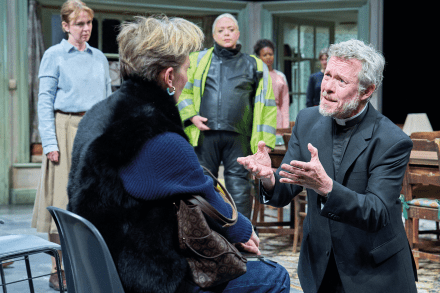
The Southbury Child is a comedy drama set in east Devon featuring a distressed vicar, Fr David, with a complex addiction history. Alex Jennings stars with his habitual urbane charm. Is there perhaps a credibility gap there? Jennings seems far too decent, clever and friendly to be a problem drinker who likes nothing better than a fling with a randy wench. And, more crucially, he doesn’t face the fallout from his days of boozing and bedhopping. His dramatic task is unconnected to his personal flaws. https://www.youtube.com/watch?v=z8Nei2P9xeA A little girl has died in controversial circumstances and her parents want balloons at her funeral. No way, says the vicar. The family fight back.

Right play, wrong place: The Fellowship, at Hampstead Theatre, reviewed

Theatre

Roy Williams’s new play is a wonky beast. It has two dense and cumbersome storylines that aren’t properly developed. Dawn is a mother grieving for her eldest son who was murdered by a gang of white boys. Her younger lad is dating a white girl who used to hang out with the killers. It’s a heavy start. But Williams doesn’t explore this web of bereavement and forbidden romance and turns instead to Dawn’s sister, Marcia, a barrister, who is dating a white MP. ‘Giles is one reshuffle away from being a cabinet minister.’ Dawn claims that all white people are die-hard racists who pine for the old days when the N-word was in regular use. She pours scorn on Marcia’s blossoming affair with Giles.

If you see this show you’ll want to see it again – directed properly: The Glass Menagerie, at the Duke of York’s Theatre, reviewed

Theatre

The Glass Menagerie directed by Jeremy Herrin is a bit of an eyeball-scrambler. The action takes place on a huge black platform flanked by 1930s antiques: a typewriter, a broken piano, a reel-to-reel tape recorder and a smattering of Anglepoise lamps. This cryptic setting suggests that the play is being developed in a Museum of the Great Depression, and the show we are seeing is the latest rehearsal. It’s not clear what purpose is served by this fiddly imposture. And although the act of sabotage doesn’t quite destroy the show, it’s touch and go during the opening 20 minutes. Herrin has shared the role of Tom between two actors. Tom Glynn-Carney is a character who participates in the action and Paul Hilton is a narrator who explains the drama to us.

Bloated waffle: Jitney at the Old Vic reviewed

Theatre

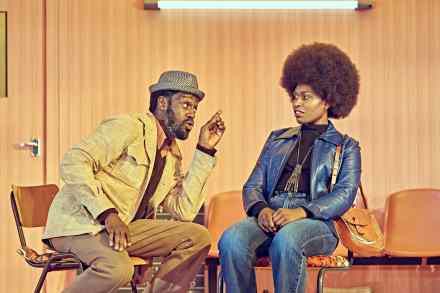
The Old Vic’s new show, Jitney, has a mystifying YouTube advert which gives no information about the play or the characters. If the producers paid for the marketing themselves, they’d do a better job. https://www.youtube.com/watch?v=4AZK_C3lqsM The advert fails even to mention that ‘Jitney’ is Pittsburgh slang for ‘taxi’ and that the action is set in a cab firm in the 1970s. The boss, Becker, is a growling despot who dominates his crew of uppity young drivers by glaring at them psychotically. The prattling cabbies hang around the office gossiping about casual sex and petty crime. Or they ogle porno magazines. Or they show off their bedroom technique by thrusting their pelvises towards the viewers in row A.

Joyously liberating: Tony! [The Tony Blair Rock Opera] reviewed

Theatre

Harry Hill’s latest musical traces Tony Blair’s bizarre career from student pacifist to war-mongering plaything of the United States. With co-writer Steve Brown, Hill has created a ramshackle, hasty-looking production that deliberately conceals the slickness and concentrated energy of its witty lyrics, superb visuals and terrific music. The last thing it wants to seem is sophisticated and it starts off with a parade of New Labour grandees, all grotesquely overblown. John Prescott is a violent northern drunkard who wants to punch everyone in the face – including the Scots because ‘they’re too far north to be proper north’. Robin Cook is a cerebral sex maniac.

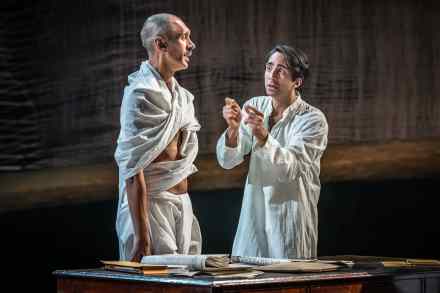
Gandhi’s killer is more loveable than his victim: The Father and the Assassin reviewed

Theatre

Dictating to the Estate is a piece of community theatre that explains why Grenfell Tower went up in flames on 14 June 2017. The abandoned block stands, like a cenotaph, a few minutes’ walk from the social club where the show is presented. The local council never cared much for Grenfell’s 120 families. Plans to destroy the tower and expand the estate – with higher rents, of course – had long been under discussion. A one-bedroom flat in west London goes for half a million pounds so there were profits galore to be made. ‘A gold mine for the council,’ said one developer, ‘and they don’t even have to dig for gold.

Newcomers will need to read the play in advance: Julius Caesar, at the Globe, reviewed

Theatre

Some things are done well in the Globe’s new Julius Caesar. The assassination is a thrilling spectacle. Ketchup pouches concealed inside Caesar’s costume explode bloodily with each dagger blow and the conspirators are doused in dripping scarlet gore. During the assault, Caesar fights back and very nearly survives. Highly realistic. Afterwards, his statue is toppled and rolled off the stage in a subtle echo of Colston’s ducking in Bristol docks. The crowd relished every minute of this pacy, high-energy show even though the visuals are wildly confusing. Brutus (Anna Crichlow) is a lesbian who sports a beige pashmina, a white T-shirt and a fetching gold turban. She looks like the deputy chairperson at a seminar about dolphins.

Hard to believe this rambling apprentice-piece ever made it to the stage: Almeida’s The House of Shades reviewed

Theatre

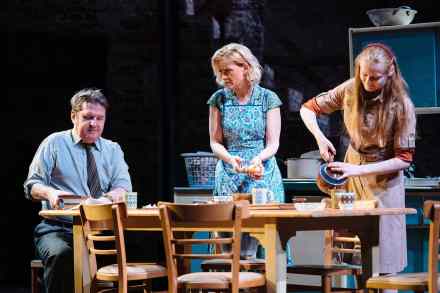
The House of Shades is a state-of-the nation play that covers the past six decades of grinding poverty in Nottingham. The action opens in 1965 with a corpse being sponged down by an amusingly saucy mortician. The dead man, Alistair, sits up and walks into the kitchen where he natters with his prickly, loud-mouthed wife, Constance (Anne-Marie Duff). They seem to live in the city’s most dangerous dwelling. People keep dying. Then they come back to life to make a speech or two. Constance’s pregnant daughter doesn’t survive a back-room abortion and she shows up half a dozen times in a skirt dripping with blood. Alistair expires again and returns to life to tell us what it’s like to die. How the writer, Beth Steel, researched this experience isn’t clear.

The playwright seems curiously detached about rape: The Breach, at Hampstead Theatre, reviewed

Theatre

Hampstead’s latest play is a knotty rape drama by Naomi Wallace set in Kentucky. Four teenagers with weird names meet in a hired basement. Hoke and Frayne are boys. Jude is a girl whose younger brother, Acton, gets bullied at school. Their chat is aggressive, cynical and funny. Jude boasts that she’s already lost her virginity but she’s proud to have slept with just two men: ‘You’ve got to do six or seven to qualify for slut.’ Hoke claims to have groped his 34-year-old aunt when she was drunk, ‘but she never knew it happened so in a way it didn’t’. Great opening dialogue. Wallace’s attitude to sexual assault is curiously detached. She seems to think rape is ‘just one of those things’ Then it all goes haywire.

Two hours of bickering from a couple of doughnut-shaped crybabies: Middle, at the Dorfman Theatre, reviewed

Theatre

‘I fink I doan luv yew any maw.’ A marital bust-up drama at the National Theatre opens with a whining Cockney, Maggie, telling her City whizzkid husband Gary that their relationship is over. Gary and Maggie are aspriring underclass types who’ve achieved bourgeois prosperity: John Lewis kitchen, vintage wine rack and a ceramics collection. They have an eight-year-old daughter at a private school where she learns ballet steps and the piano instead of watching road-rage videos on YouTube like a council-house kid. She’s called Annabelle, by the way, and one wonders if Gary and Maggie style themselves ‘Garfield and Margaret’ at the school gate.

Angry diatribes and amusing pranks: Donmar Warehouse’s Marys Seacole reviewed

Theatre

The title of the Donmar’s new effort, Marys Seacole, appears to be a misprint and that makes the reader look twice. Good marketing. The show is a blend of Spike Milligan-esque sketches and indignant speeches about race but it starts as a straightforward historical narrative. Mary Seacole enters in Victorian garb and introduces herself as a woman of half-Scots and half-Caribbean heritage who believes that ethnic differences create hierarchies of competence. Her veins, she says, flow with ‘Scotch blood’ and this gives her an entrepreneurial advantage over her ‘indolent’ Caribbean neighbours. Inflammatory stuff. If a white author embraced that supremacist creed, there’d be outrage.

Muddled, tricksy and cheap: The Corn is Green at the Lyttelton Theatre reviewed

Theatre

The Corn is Green by Emlyn Williams is a sociology essay written in 1938 about a prickly tyrant, Miss Moffat, who tries to civilise Wales by setting up a village school where sooty-faced miners are taught to read and write. Miss Moffat is an unmarried English layabout who has money to burn and time on her hands and so, of course, she wants to ‘help’. You know the type? Director Dominic Cooke treats the script as a period joke and the actors are encouraged to mock their characters mercilessly. Hoots of cheap laughter echo around the theatre. The show is presented very weirdly as a sort of botched technical rehearsal with lots of clunky sound effects and a Writer/Narrator on stage who paces about and shouts directions at the actors.

This Trump satire is too soft on Sleepy Joe and Cackling Kamala: The 47th at the Old Vic reviewed

Theatre

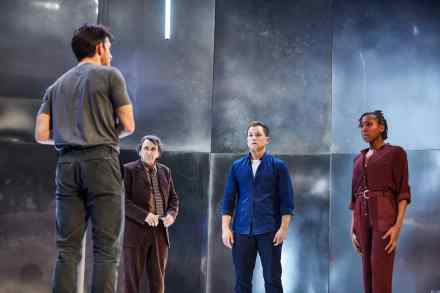
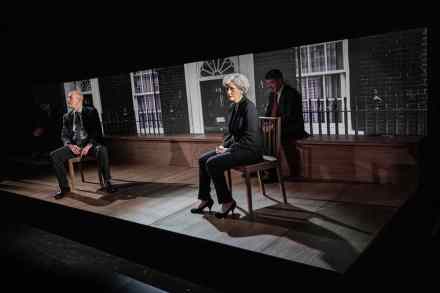
Trump is said to be a gift for bad satirists and a problem for good ones. He dominates Mike Bartlett’s new play, The 47th, which predicts that the 2024 presidential election will be a run-off between Trump and Kamala Harris. Bertie Carvel’s Orangeman is a subtle and highly amusing spoof that never descends into exaggeration or grotesquery. The visuals are convincing: the sandy blond wig, the baggy golfing outfits, the spare tyre around the midriff. Excellent design work. And Bartlett captures the repetitive lullaby pulse of Trump’s rhetoric. Like a lot of liberals, he seems to admire Trump and this show reflects a perverse fascination with its target. The script is understandably soft on Sleepy Joe and his faltering brainpower.

Could the Arts Council pay Americans to keep this stuff in America? Daddy and The Fever Syndrome reviewed

Theatre

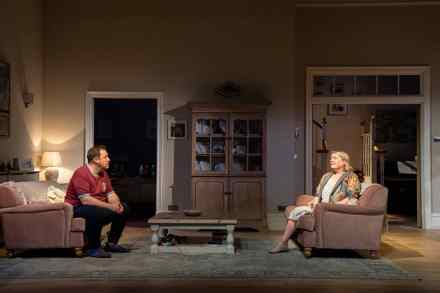
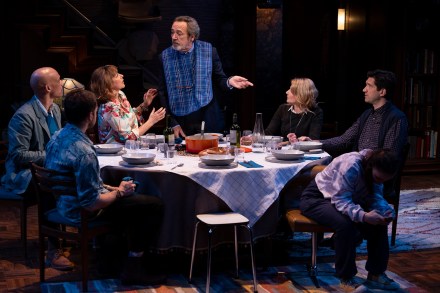
The Fever Syndrome is a dramatised lecture set in a New York brownstone occupied by the super-brainy Myers family. The old man, Prof. Richard, is an IVF expert whose daughter, Dot, wants to defrost her embryos and have a second baby. Cue lots of chat about in vitro technology in the 1970s. Dot’s daughter, Lily, has a hereditary ailment that causes epileptic seizures. This, too, is discussed in further Ted Talk passages. And Prof. Richard suffers from incontinence and Parkinson’s disease so these conditions are aired as well. It’s perfectly riveting for medics. Less so for civilians who may not share the view of the Myers family that everyone in the Myers family is a world-class intellectual. Robert Lindsay stars as Prof.