Culture

Culture

The good, the bad and the ugly in books, exhibitions, cinema, TV, dance, music, podcasts and theatre.

Our island story | 26 March 2011

Television

I vividly remember the moment when I saw my first black person. It was December in either ’68 or ’69, so I would have been three or four at the time, and my father’s works had arranged some kind of coach outing to meet Father Christmas. Seated near me was a black child a bit older than me, and I recall gazing fascinated at the blackness of his skin and noticing that it had white blotches on it like a mirror image of the dark freckles and moles on my skin. ‘Daddy, what are those white things?’ I asked, pointing at the boy’s skin. ‘Pigment,’ my father explained. I vividly remember the moment when I saw my first black person.

Apocalypse now?

Television

The BBC’s Horizon is, amazingly, almost 50 years old and this week, in its The End of the World? Guide to Armageddon (BBC4, Thursday), it looked back at some of its scariest predictions. The BBC’s Horizon is, amazingly, almost 50 years old and this week, in its The End of the World? Guide to Armageddon (BBC4, Thursday), it looked back at some of its scariest predictions. The media have always loved frightening us to death, and there are plenty of scientists ready to help. The most recent, of course, is the greenhouse effect, and man-made global warming. I find myself an agnostic, lacking the absolute certainty possessed by many Spectator writers and, on the other side, the equal certainty of various scientists, politicians and activists.

Triumph of the West

Television

If at the beginning of the 15th century you’d had to predict who was going to dominate the world for the next 500 years, the answer would surely have been China. If at the beginning of the 15th century you’d had to predict who was going to dominate the world for the next 500 years, the answer would surely have been China. From the sophistication of its sanitation system to the size of its fleet, China — under the Emperor Zhu Di and his eunuch naval commander Cheng Ho — was a country going places. Its mighty, 400-foot-long ships sailed as far as Malindi on the East African coast and probably Australia. It had invented the clock and, of course, gunpowder. Europe, during the same period, was — relatively speaking — a stagnant, backward mess.

The real thing | 5 March 2011

Television

I had prepared myself for another rant at Comic Relief, a grisly occasion on BBC1 in which every year parades of slebs preen themselves on their good works. What made my teeth curl was the way some comedian would announce that the Twistelton Lions had held a pram race through the town (with the mayor dressed as a baby!) and took £1,459, a fraction of what the sleb expects for a single performance. Last year we saw Jonathan Ross congratulating all those people who had climbed Kilimanjaro, so raising one-20th of Ross’s annual salary. Couldn’t he have saved them the trouble by writing a cheque? As Jeremy Hardy used to say, if you were collecting door-to-door what would you think if someone said, ‘Yes, I’ll give £10 for cancer research.

Shameful bias

Television

So you’re the leader of the Netherlands’ youngest, and now second-most-popular political party — and the reason you’re doing so well so soon is that your policies strike a chord with many Dutch. So you’re the leader of the Netherlands’ youngest, and now second-most-popular political party — and the reason you’re doing so well so soon is that your policies strike a chord with many Dutch. You believe in smaller government and lower taxes; you believe nuclear power is a safer bet than nuclear energy; and you believe that creeping Islamisation poses a serious threat to your country’s national identity. And now someone wants to make a guerilla documentary about you.

The human factor

Television

Successful programmes often become bloated, and MasterChef (BBC1, Wednesday) is headed that way. They are now increasingly focused on the human interest rather than the food. What a long way it has come from the days of Loyd Grossman, and his catchphrase ‘deliberated, cogitated and digested’ as he contemplated some appalling dish of liver in a gooseberry jus, served with individual mackerel and yam pavlovas. In those days contestants were hoping to prepare a half-decent dinner party; now they want their lives changed. I am sure many lives are changed, though most winners seem to disappear, from our ken, at any rate. But the hype is needed to evince the emotion. Contestants weep with gratitude if they make the last 20; others weep if they fail.

Grandfather’s footsteps

Television

In the good old days, when Hackney still had a proper swimming pool, I used to do lengths every morning with an old boy called Bob. And, because I recognised him as a man of a particular generation, I used to prod him in the changing room afterwards to tell me his war stories. But Bob only ever told me one and it was rather depressing. He’d served in Palestine and one day his convoy had been ambushed by Irgun or Stern gang terrorists. Among those terrorists he and his fellow soldiers had shot while defending themselves was a young pregnant woman. ‘They called us the Baby Killers, after that.’ What a terrible time to have been called up. There are your slightly older mates having all covered themselves in glory in the great heroic war to defeat the Nazi menace.

Grown-up viewing

Television

Sky’s new channel, Atlantic, kicked off this week with two big shows: Boardwalk Empire, which is set in 1920 and is about gangsters, and Blue Bloods, which is set in the modern day and is about a family of New York law enforcers. Sky’s new channel, Atlantic, kicked off this week with two big shows: Boardwalk Empire, which is set in 1920 and is about gangsters, and Blue Bloods, which is set in the modern day and is about a family of New York law enforcers. As in all American cop shows, there is a lot of badge-flashing, though for some reason none of the people they flash their badges at ever asks for a closer look. It would be quite easy to make one from an old credit card and a milk-bottle top, quite good enough to pass in the half-second the average flash takes.

Wasted talent

Television

‘We’ve got our main presenters,’ they explained. ‘What we need are interviewees to fill the guest slots. People with strong opinions on ...well, what are your views on the EU, for example?’ So I told them my views on the EUSSR, while swearing quite a lot. This seemed to make them happy. ‘It’s called 10 O’Clock Live,’ they said. ‘You probably saw our pilot. The one-off special with Lauren Laverne, Charlie Brooker, David Mitchell and Jimmy Carr? It got pretty good ratings.’ No, I replied. That isn’t the sort of programme I’d watch in a million years. Lefty comedians making lefty jokes to a lefty audience about politics from a relentlessly lefty perspective? No, thanks.

Reality check

Television

Horizon (BBC2, Monday) asked, ‘What is reality?’ and didn’t really have an answer. Horizon (BBC2, Monday) asked, ‘What is reality?’ and didn’t really have an answer. Well, it seems nobody does, though plenty of physicists, mathematicians and astronomers are working on it. As the voiceover told us, ‘Once you have entered their reality, your reality may never look the same.’ You can say that again. It appears that quantum particles can literally be in two places at the same time. But we are made up of quantum particles, and we are never in two places at the same time, even if that would occasionally be useful. So maybe there are more of us, all made up of the same particles but doing different things in different places.

Waste not, want not

Television

‘I want everyone to be as angry as I am,’ says Hugh Fearnley-Whittingstall, and I hope he succeeds for the thing that makes him so angry is one of the things that makes me most angry, too: the senseless eradication of the world’s fish stocks. ‘I want everyone to be as angry as I am,’ says Hugh Fearnley-Whittingstall, and I hope he succeeds for the thing that makes him so angry is one of the things that makes me most angry, too: the senseless eradication of the world’s fish stocks. All this week on Channel 4, HF-W has been campaigning in a series of programmes called Hugh’s Fish Fight. In the first episode he set the scene nicely by going out with a trawler into the fishing grounds 80 miles off the north Scottish coast.

Forgotten laughter

Television

The Radio Times now lists 72 channels, and that’s not all of them. The Radio Times now lists 72 channels, and that’s not all of them. No wonder television has to feed on itself, like a hungry tigress scoffing her cubs. In particular, it devours the past, so this week we had a Morecambe and Wise evening on BBC2, starting with the Christmas show from 1976, a third of a century ago. These shows got peak audiences of 28 million, inconceivable now, and just as French education ministers can allegedly tell you what every child in the country is studying at any moment, programme controllers could sigh with pleasure and know precisely what flickering image was in front of more than half the population. They riveted the nation, in Bagehot’s sense: they tied us together.

Weekly shockers

Television

Did you hear the one about Jordan’s disabled son? Unlikely, since you probably don’t watch Tramadol Nights (Channel 4), nor read the Mirror (‘Katie Price furious after Frankie Boyle joke about her disabled son’), nor the Guardian (‘Frankie Boyle’s Katie Price joke sparks Ofcom investigation’). Did you hear the one about Jordan’s disabled son? Unlikely, since you probably don’t watch Tramadol Nights (Channel 4), nor read the Mirror (‘Katie Price furious after Frankie Boyle joke about her disabled son’), nor the Guardian (‘Frankie Boyle’s Katie Price joke sparks Ofcom investigation’). Don’t worry, I’m not going to repeat it here. What kind of sicko do you think I am: Rod Liddle?

Interview: Goodies’ triple triumph

Television

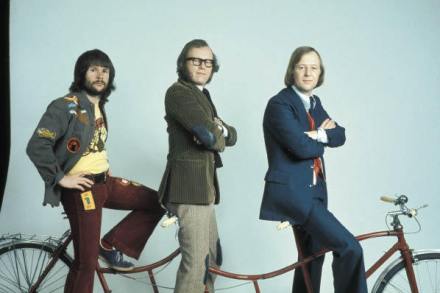
Here in HMV on London’s Oxford Street, three comedians are signing autographs. Here in HMV on London’s Oxford Street, three comedians are signing autographs. The queue of fans stretches through the foyer, almost out on to the street. Nothing unusual about that — this record shop regularly stages personal appearances by Britain’s biggest stars. What’s so surprising is that these comics are in their late-sixties, and the show that they’re promoting hasn’t been on TV for nearly 30 years. As The Goodies autograph their new DVD (a compilation of vintage shows, rereleased to mark their 40th anniversary) their greatest hits are replayed on a giant screen above their heads. Yet this isn’t just nostalgia. These old clips still feel fresh and funny.

Top of the pops

Television

The most watched programme on British television this year was the special live edition of EastEnders, broadcast in February to mark the soap’s 25th anniversary. The most watched programme on British television this year was the special live edition of EastEnders, broadcast in February to mark the soap’s 25th anniversary. This was the one — I assume you’re keeping up — in which Bradley Branning plunged to his death and Stacey confessed that she had killed Archie. At the end, some 16.6 million people were watching, which is roughly 28 per cent of the population, still a fraction of the 50 per cent who watched the old Morecambe and Wise show on Christmas Day back in the 1970s. But television is no longer the glue that binds us.

Juggling statistics

Television

I love statistics. Possibly my favourite is the one from Bjorn Lomborg’s The Skeptical Environmentalist: the total number of birds killed in the Exxon Valdez disaster was the same as are killed each day in the US flying into plate-glass windows or the same as are killed in Britain every two days by cats. It’s good because you can use it in so many different ways: to annoy cat lovers; to amaze friends at dinner parties; and above all to bait those tortured souls for whom Exxon Valdez has become the ne plus ultra of the kind of Man Made Eco Armageddon that must never, at all costs, be allowed to happen again. Obviously, we’d all rather those little tweetie birdies didn’t die, but that’s not the point.

Street life

Television

It is the 50th anniversary of Coronation Street and there seems to be as much celebration and feasting as there was for the Queen’s own golden jubilee, in 2002. It is the 50th anniversary of Coronation Street and there seems to be as much celebration and feasting as there was for the Queen’s own golden jubilee, in 2002. I have to declare a personal interest here. The inventor of Corrie is Tony Warren, who told my father that his book, The Uses of Literacy, had been one of his inspirations. It had shown working-class life to be as rich and complex as the lives lived by the middle and upper classes. This does not mean that it was in any sense superior, merely that it was as textured and as interesting as anything that happened to people with more money.

Tendentious drivel

Television

It told the story of two best mates, Frankie and Peter, serving in an unidentified northern regiment in Afghanistan where Peter quickly discovers he can’t cope under fire — and as a punishment is made the unit’s ‘camp bitch’ by the sadistic Lance Corporal Buckley (Mackenzie Crook). ‘Our interest’s on the dangerous edge of things. The honest thief, the tender murderer, the superstitious atheist.’ So I suppose you could argue that  Jimmy McGovern was merely following the fine tradition of Robert Browning when he wrote his drama about cowardice, bullying and murder among British soldiers on the frontline in Afghanistan. But I wouldn’t.

Hard times

Television

Courtroom dramas filled the schedules this week, with Jimmy McGovern writing a series for the BBC called Accused (BBC1, Monday). Mr McGovern, who invented Cracker, does grim. In a McGovern drama, things start badly in the first five minutes. Then they get worse. Occasionally, events might take a turn for the better. Ha! Don’t be fooled. They are about to get unimaginably grimmer. It would be fun if the BBC persuaded him to adapt some P.G. Wodehouse. ‘Biffo Prendergast is hopelessly in love with the Hon. Letitia Honeysett. But the bluebird of happiness is about to be sucked into the aircraft engine of his life. She accuses him of rape and, thanks to evidence planted by a rival, he goes down for 12 years.

Rallying cry

Television

Britain’s Trillion Pound Horror Story (Channel 4, Thursday) was unquestionably the most important programme that will appear on British television this year. Britain’s Trillion Pound Horror Story (Channel 4, Thursday) was unquestionably the most important programme that will appear on British television this year. Yes, even more important than Downton Abbey. The thing that really drove home just how important was the point, quite early on, where the Fawn turned to me and said, ‘Ohmygod! Where do we emigrate to?’ And it’s not as though the Fawn has ever been one of those irksome left-liberal wives who keeps undermining her husband’s thought-through right-wing wisdom with prissy right-on inanities based on nothing more solid than hormones. No, sirree.

All over the shop

Television

I’m writing this near Ludlow, a town which has miraculously kept its centre. I’m writing this near Ludlow, a town which has miraculously kept its centre. On Saturday last there was a bustling market, selling hundreds of things you might actually want to buy. Around it were the shops: independent butchers with pheasants hanging above the door, bakers you had to hurry past because you’d want to buy enough cakes to bring on a heart attack, independent clothiers selling long-forgotten styles, none made for 7p an hour by children in Bangladesh. It all looked marvellous.

Education in horror

Television

When my brother and I were teenagers growing up in the arse end of nowheresville — Bromsgrove to its friend — we were mainly looked after by Nanny VHS. When my brother and I were teenagers growing up in the arse end of nowheresville — Bromsgrove to its friend — we were mainly looked after by Nanny VHS. Every day, Mummy would take us to the rental store to hire a new video so as to keep us off her back. Sometimes it would be war porn, like The Deerhunter, which I think we must have watched about eight times — and the key Russian Roulette scene about 500 times. Sometimes it would be horror porn like Shivers or the Texas Chainsaw Massacre. I’d quite forgotten I’d seen Shivers until I watched A History of Horror with Mark Gatiss (BBC4, Monday).

United Nations

Television

There have been the usual moans about the BBC spending £100,000 on coverage of the Chilean miners. There have been the usual moans about the BBC spending £100,000 on coverage of the Chilean miners. I suppose the figure includes wages that would have been paid whether the people were in South America or Shepherds Bush, and, if accurate (I suspect the real cost was much more), it strikes me as minuscule — around two-thirds of one penny for every person in the country, an astounding bargain. There are some events which, in Bagehot’s phrase, ‘rivet’ the world, both in his sense of binding us together and in the more modern usage of being utterly fascinating; 9/11 is the most obvious example.

Back to basics

Television

One of the few professional stand-up comics I’ve met who wasn’t bitter, twisted, malign, graceless, grumpy, chippy, egomaniacal and slightly to the left of Stalin is Mark Billingham. One of the few professional stand-up comics I’ve met who wasn’t bitter, twisted, malign, graceless, grumpy, chippy, egomaniacal and slightly to the left of Stalin is Mark Billingham. We bonded at the Dubai literary festival earlier this year, and I liked him so much that I very nearly bought one of his bestselling crime thrillers.

All about sex

Television

The Song of Lunch (BBC2) was a rum old go. Christopher Reid’s poem, about a publisher half-hoping to rekindle a past love affair over an Italian meal, was read out by Alan Rickman, who acted the publisher and recreated the lines on film. The Song of Lunch (BBC2) was a rum old go. Christopher Reid’s poem, about a publisher half-hoping to rekindle a past love affair over an Italian meal, was read out by Alan Rickman, who acted the publisher and recreated the lines on film. Thus, when the poet wrote, ‘he drinks until the ice rests on his upper lip’, you see the ice, actually resting on his upper lip!

Sex lives and videotape

Television

Him and Her (BBC 3) is the BBC’s notion of a really edgy sitcom. Him and Her (BBC 3) is the BBC’s notion of a really edgy sitcom. This is not My Family. The first words uttered are from a bloke who is in bed with his girlfriend. ‘You. Are. Very good at blow jobs.’ ‘Thank you,’ she says demurely. ‘And I am brilliant at receiving them.’ Moments later we see her sitting on the loo, and not just for a pee. Then a neighbour drops round to discuss, inter alia, Kate Winslet’s breasts, and how everyone pauses that bit on the Titanic DVD. I found myself wondering what would have happened if an advance tape had been shown to Lord Reith. ‘It is, um, er, director-general, somewhat experimental in tone and content.

Other people’s lives

Television

There was a sad moment in The Family (Channel 4, Wednesday) this week when Dad, the very long-suffering Simon Hughes, is inspecting his daughters’ bedroom, and doesn’t like what he sees. He has been assured that the room is neat and clean, so he responds with a blast of sarcasm. ‘Oh, look at this tidy, tidy, tidy room, oh crumbs, how tidy it is, all this stuff doesn’t exist, it’s a figment of my imagination...’ I felt a blast of pity for him. Most dads, like me, would have given up long ago but he goes onward, ever onward, in the quest for orderly bedrooms. Sisyphus had it easier with his rock. Of course, the kids don’t see it that way.