Culture

Culture

The good, the bad and the ugly in books, exhibitions, cinema, TV, dance, music, podcasts and theatre.

Lives less ordinary | 6 September 2018

Radio

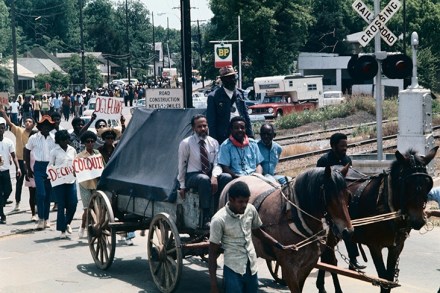
To have been a black lawyer in the deep south of America in the early 1960s would have taken a level of courage well beyond the ordinary. Chevene Bowers King was just such a man. He could have worked in the desegregated north, but instead chose to risk his life in Georgia, defending black people imprisoned on trumped-up charges and organising non-violent demonstrations to end segregation. David Morley’s two-part play on Radio 4, The Trials of CB King, took us through the blatant racism, the everyday brutality and dangerous reality for the black citizens of Albany, Georgia, where the sheriff encouraged the police to beat up the innocent purely because of the colour of their skin. Those who dared to befriend black people or fight their cause could also end up literally under fire.

Listening habits

Radio

Here’s a thought. Matthew Bannister, former Radio 1 controller turned presenter of programmes such as Outlook on the World Service and Radio 4’s The Last Word, has just announced that he’s leaving Outlook, which goes out several times a week, to ‘join the world of podcasting’. In fact, he’s already launched his own podcast, Folk on Foot. It’s as if he now believes that podcasting is where the exciting new challenges in audio (note, not broadcasting) can be found. We wireless-lovers should pay attention. Bannister is a radio man through and through. Does he really believe that podcasting is the future? We’re still waiting for the podcast that truly challenges the best of conventional radio.

Mind over matter | 23 August 2018

Radio

The return of Sue MacGregor’s long-running Radio 4 series The Reunion (produced by Eve Streeter) is a welcome reminder of just how good radio can be at taking us inside an experience while at the same time opening our minds to things we should know about. First there is MacGregor herself, such a vibrant, resonant voice, never too fast or too slow. Then there is her understanding of how to communicate. Each week she gives a short resumé of how and why the people she has gathered in the studio were first brought together, summarising complicated events in such a concise but clear way, giving all we need to know without burdening us with too much detail. When the conversation with her chosen guests begins, we know exactly why we should be listening to them.

Street life | 16 August 2018

Radio

‘What can you tell me just now,’ asks Audrey Gillan. She’s talking to Tara, who’s been sleeping rough on Fournier Street in Spitalfields, close to Gillan’s home. Tara, aged 47, sounds like a man, so deep and growly is her voice, ruined by drink, cigarettes and the hardness of her life. Gillan wants to know how and why she ended up living on the street. But beyond explaining that she was slung out by her mum when she was 14 there’s little that Tara can or is prepared to tell Gillan.

Poles apart | 9 August 2018

Radio

Much ado is being made of the latest listening figures, which have suggested that the percentage of those aged between 15 and 44 who turn on the radio at least once a week has fallen still further, down now to 13.8 million, or just 21 per cent of the population. Are we losing the listening habit? How worried should BBC Radio be, asked Roger Bolton on Radio 4’s Feedback (produced by Will Yates). He pointed out that while BBC Radio 5 Live is suffering a loss of audience, as is Radio 4’s flagship Today programme, other non-BBC talk-radio stations such as LBC are booming.

Beyond the grave

Radio

If proof were needed that radio will survive the onslaught of the new (or rather now not-so-new) digital technologies, albeit somewhat battered and slimmed down, then series like Radio 4’s Unforgettable (produced by Adam Fowler) should clinch it. Each episode is self-contained, and only 15 minutes long (the perfect length for podcasting). It’s cheap to make, requiring just a single guest, and inspired by a really simple idea — to create a conversation between a guest in the studio and someone they once knew who has died. You could make it at home, except that you probably couldn’t because an advanced editing machine is required, and an incredibly skilled operator.

Primal screams

Radio

Raw, earthy, ear-piercing. It’s hard to decide which was more terrifying and unsettling: the roar of the elephants in Living with Nature on the World Service, or the screaming women and men who we heard letting rip in Garrett Carr’s Radio 4 documentary, The Silence and the Scream. The elephants were recorded by sound engineer Chris Watson, and his producer Sarah Blunt in northern Kenya in the first of their new series in which they use sound as their tour guide and listening as their way of experiencing the landscape. We couldn’t see the golden orb of the sun rising over the miles of flat grasslands peppered with acacia groves and rocky outcrops, but the soundscape created by Watson and Blunt took us there in spirit.

Profit and loss | 19 July 2018

Radio

There’s been a lot of fuss and many column inches written about levels of pay at the BBC, as revealed in its latest Annual Report. Who gets too much? Why are women presenters still paid less than their male counterparts? What can be done to create more equality at the BBC? But all this controversy about money and gender is a red herring, diverting attention away from what we should be far more concerned about. Quietly, without fanfare, the BBC has been changing the way it makes and delivers its programmes.

On the buses | 12 July 2018

Radio

When did you last take the bus? If you don’t live in London, probably not for ages. In her two-part series for Radio 4, Mind the Gap, Lynsey Hanley set out to demonstrate just how difficult it is to access public transport outside the capital. In Skelmersdale, billed in the 1960s as a place of opportunity, a new town where everything would work better to make life easy for everyone, rich, middling and poor, no rail connection was built into the plan and now there are very few buses to get around. So bad is it that the council has had to set up a subsidised taxi scheme (euphemistically known as ‘the demand responsive transport system’) so that workers without cars can get to those offices, shops and factories no longer on a bus route.

Rules of engagement | 5 July 2018

Radio

‘Can one person really grasp the significance of what another person has been through?’ asks Dr Rita Charon in this week’s essay on Radio 3. She’s a physician in New York (isn’t it somehow telling that in Britain we’ve long since forgotten what GP actually stands for?) and as a result of her experiences as a doctor has set up a pioneering training programme at Columbia University. In Narrative Medicine (produced by Elizabeth Funning) Charon explained how she came to believe in the power of literature, of listening to stories, as a way of bringing physicians ‘near enough to the patient to recognise their suffering and help them through their ordeal without disabling clinical judgment or rendering them helpless with passive sympathy’.

Imperial measures

Radio

It’s been a heavyweight week on Radio 4 with the start of the annual series of Reith Lectures and a talk on empire by Jan Morris, and thank heavens for that. We need serious, we need facts, we need to think in these trying times, beset as they are by Love Island and persistent presidential tweeting. As it happens, both talks were given by women, and I can’t help wondering whether their gender has something to do with the way neither of them plugged a definite line but instead suggested there are more ways than one of looking at things. On Wednesday morning Morris looked back at Britain’s imperial past in her own inimitable fashion, calling her programme The British Empire: An Equivocation (produced by Gareth Jones).

When the boat comes in

Radio

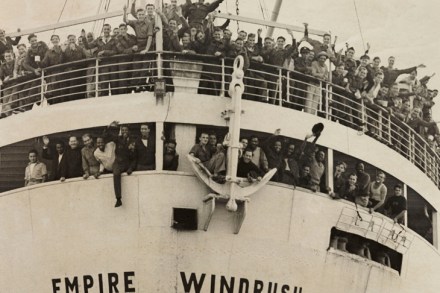
There was one of those moments late on Sunday night when a voice is so arresting (either through tone, timbre, or from what’s being said) that you just have to stop what you’re doing and listen, really concentrate, anxious not to miss a word. Floella Benjamin was on the Westminster Hour on Radio 4 talking about the 70th anniversary of the arrival of the Empire Windrush at Tilbury Docks with 500 passengers from the Caribbean. Nothing unusual about that; it’s an anniversary that’s been given a lot of coverage. But then she started talking about her own experience of coming to the UK by boat, in 1960, with her three siblings, travelling by themselves across the Atlantic to join their parents, who had gone on ahead with two of their children to find work.

Women’s work

Radio

I don’t know which day Rod Liddle travelled down from the northeast and found nothing but women’s voices cluttering up Radio 4, as he wrote about in last week’s magazine. But his description is not one I recognise. If anything we still hear too much from male commentators, male presenters, male writers, male comedians. In recent years, for instance, the gender-balance of contributors to the Today programme has improved from the 18 per cent of female guests just a decade ago, but there’s still a long way to go before we need to apologise for wanting to hear more from women. Very often they speak truth to power (because not in power themselves) as did Vera Brittain in her searing account of the impact of the first world war, Testament of Youth.

First thoughts | 7 June 2018

Radio

Headlines announcing that Radio 4’s flagship Today programme is losing its audience while Radio 3’s Breakfast has put on numbers got me up and listening extra early to find out which of all the presenters is most likely to keep me tuned in. Why have the efforts to brighten up Today, with longer interviews, more arts coverage, puzzles and news items from the web, not gone down well? What’s been happening on 3 to encourage more people to tune in first thing? And, further afield, how’s Classic FM doing, or those other breakfast stalwarts, Nick Grimshaw and Chris Evans? Evans was off-duty when I tuned in to Radio 2 one morning last week, but Sara Cox sounded as if she was loving every minute of being in his chair. Evans had better watch out.

What drama

Radio

One sphere that podcasts have so far not much penetrated is drama. Audible.co.uk is itching to develop its own brand but so far has limited itself to producing audiobooks read by a galaxy of stars. Recording plays is expensive, requires an understanding of studio techniques and a cast of actors who have learnt how to play to the microphone, not an auditorium. Only the BBC has as yet the necessary experience and resources, with its own repertory company and team of spot-effects experts and sound designers.

Faulty connection | 24 May 2018

Radio

‘Do you ever imagine your audience?’ was a question thrown at James Ward, creator and presenter of The Boring Talks podcast, at a recent seminar on podcasting organised by the BBC. ‘I try not to,’ Ward replied.‘I wouldn’t want to meet them.’ Such antipathy is all part of Ward’s alternative persona. The Boring Talks’s USP is to explore those topics usually considered too dull to explore, let alone talk about for half an hour. It’s become very popular, emerging from the Boring Talks conferences that have been held annually now for eight years. But his comment was very revealing. You can really tell when listening to his show that he doesn’t care about us.

The sense of an ending | 17 May 2018

Radio

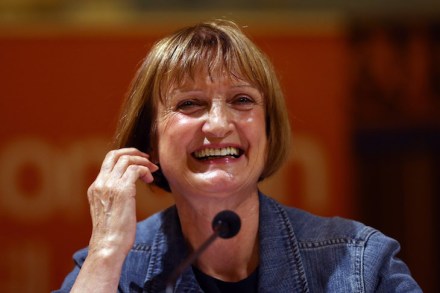
The timing of the Today programme’s series about hospices could not have been more apt, coming as it did so soon after Tessa Jowell’s death was announced with its array of tributes and the poignant interview with her husband and one of her daughters. In themselves such personal testimonies are not always that helpful — everyone’s situation is individual and the actual outcomes necessarily different. But what Jowell’s family said about her last hours and their evident acknowledgment and acceptance of their situation gave a real sense of purpose on Monday to Zoe Conway’s report from the North London Hospice. This was part of the Dying Matters campaign, urging us to think more about death and end-of-life care.

Classified information

Radio

Now here’s a series that would make a brilliant podcast but is also classic Radio 4 — they don’t have to be mutually exclusive. In fact, why can’t podcasts be more like Radio 4? Programmes where the presenter’s role is to draw out the knowledge of experts, and the pace is measured, allowing the fascination of what’s being revealed to make an impact before leaping on, and where there’s no background music except when it adds to the timbre, the meaning, the purpose. Each episode of Classified Britain (produced by John Forsyth) is only 15 minutes long, so not too demanding of one’s time, and yet a lot of information is packed into that slot without it seeming too hectic or over-enthusiastic.

The power of words | 3 May 2018

Radio

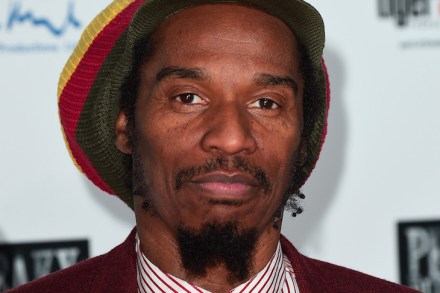
‘For me rhyming was normal,’ said Benjamin Zephaniah, reading from his autobiography on Radio 4. Back in the 1960s, on Saturday afternoons in their house in Hockley, Birmingham, where Zephaniah grew up with his seven siblings, the drinks trolley would come out and the record player be plugged in — Desmond Dekker, Millie Small and Prince Buster — ‘the lyrics of Caribbean life’. The church, too, gave him a love of words and vocal performance, Zephaniah delivering his first gig by reciting a list of the books of the Bible both ways, forwards and in reverse order. The music and the poetry were part of everyday life, ‘it was how we communicated’.

All the world’s a stage | 26 April 2018

Radio

How to stage Shakespeare on air and bring the text to life without the benefit of set, costumes, choreography and all the physical business of a theatrical performance? That’s the question faced by drama directors on radio, and Emma Harding in particular whose adaptation of The Merchant of Venice was broadcast last Sunday on Radio 3. Updated to 2008, just as the financial crash was beginning to impact on individual lives, the play opens with the pulsating beat of a track from the contemporary charts (music and the odd bit of additional dialogue being the only way to indicate setting). For yes, shock horror, in this version of the play Antonio and his merchant banker friends order lattes in a noisy coffee bar.

Speech impediment | 19 April 2018

Radio

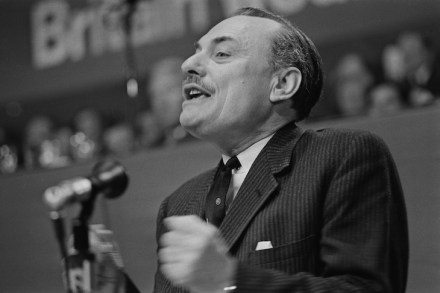
It was a provocative decision by the producers of Archive on 4, 50 Years On: Rivers of Blood (Nathan Gower and David Prest) to base their programme around a full exposition of Enoch Powell’s infamous 1968 speech on immigration, all 3,183 words of it, spoken by an actor (Ian McDiarmid) as if he were giving the speech in front of an audience. Why give further publicity to a speech that gave such offence at the time, and so dangerously expressed such inflammatory opinions? But the explosive reaction to the Radio 4 programme on social media, even before it went out on air, explains and justifies their decision.

Good morning, Martha

Radio

Like a breath of fresh air Martha Kearney has arrived on Radio 4’s Today programme, taking over from Sarah Montague (who will now host the lunchtime news programme formerly presided over by Kearney). Her presenting style is just so different, less confrontational, more investigative, perhaps developed by her because at lunchtime the mood is different, less rushed, more ambulant. The tone on the World At One was always much more reflective than reactive, Kearney pondering events rather than racing through to the next interview, butting in, hustling, flustering her guests. On Monday morning’s Today, she interviewed the author of a book on ‘elastic thinking’.

Communal listening | 5 April 2018

Radio

To Herne Bay in Kent for the UK International Radio Drama Festival: 50 plays from 17 countries in 15 languages broadcast over five days to the festival audience. It’s an opportunity to find out what radio plays sound like in other countries, but also to experience a different kind of listening. About 25 of us were invited into a suite of rooms furnished with flock wallpaper, floral sofas and armchairs to take us back to the great age of radio listening in the 1950s. A kettle boils in the background; buttered scones on a tiered rack are sitting ready for us to pounce on at the next pause between plays.

Of innocence and experience

Radio

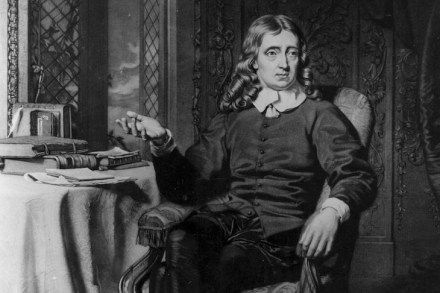
It’s a tough listen, Paradise Lost on Radio 4 at the weekend. In bold defiance of the demands of a broad audience, Milton’s 10,000 lines of high-flown, complex verse runs for two-and-a-half hours (broadcast in two parts on Saturday and Sunday). You need to concentrate and take in every word, not be busy with something else, ears half-cocked to gather the general meaning. But, if you stay with it, the majesty of the subject, that galactic struggle between good and evil, and the mighty flow of words will ensure that all foolish thought is thenceforth banished (at least until the next Trumpian tweet or fallacious Facebook rumour).

The new seekers | 22 March 2018

Radio

As Bob Shennan, the BBC’s director of radio and music admitted this week, there are almost two million podcast-only listeners in the UK who never tune into BBC Radio. They’re captivated by specialist music (Heart, Absolute, etc), specialist talks (mostly religious such as Premier Christian) or specialist news and current affairs (the Economist, Monocle). And they never feel the need to cross over into Auntie’s sphere of influence. The BBC’s response, says Shennan, must be to produce ‘a revitalised audio product’ to meet the needs, or rather demands, of these new audiences. ‘Audio product’ seems a long way from Music While You Work or Down Your Way.

The lady vanishes | 15 March 2018

Radio

‘Close your eyes and be absorbed by the storytelling,’ urged Jon Manel (the new head of podcasting at BBC World Service) as we settled into our chairs. We were just about to hear the ‘world première’ of the latest podcast from the BBC World Service, launched dramatically in the Radio Theatre at Broadcasting House in front of a packed, expectant audience, with full surround sound, every raindrop magnified (and there was a lot of it). It was odd to realise quite how far podcasting has already transformed radio.

Ladies first | 8 March 2018

Radio

You can’t move for women’s voices on the airwaves at the moment — Julie Walters on Classic FM leading off its new big series on turning points in music. Kate Molleson and Georgia Mann joining Sarah Walker and Fiona Talkington on Radio 3 (which this week also gave a big nod to female composers such as Amy Beach, Florence Price and Sofia Gubaidulina). Emma Barnett spicing up the political interview on Radio Five Live. It feels a bit like tokenism, too much too late. As if it’s going to make up for all those centuries of men in the driving seat of life. But the effect of hearing women’s voices almost whenever you switch on is like drinking fresh lemonade on a hot day, slightly acidic but invigorating. Take Carla Bruni on Radio 2. Not exactly a feminist icon.

Tapestry of war

Radio

It feels like a long time since the launch of Home Front on Radio 4 back in June 2014, retracing day-by-day events of 100 years ago as Britain went to war. It is a long time. Yet still the violence in Europe rages on while back home the families of the men and boys in trenches carry on as normal, putting on plays at the local theatre, selling toys, running art classes, working the trams. A new season (number 13, with two more to go before the series ends on 9 November) starts up again on Monday. It may be an everyday story, says its editor, Jessica Dromgoole, but it’s most definitely not a soap. Every episode has been recorded for broadcast in the same studio in Birmingham where The Archers is made.

Light and dark | 22 February 2018

Radio

This week’s edition of Ramblings with Clare Balding did all the usual things: a walk in the country (cue breathy conversation as we followed her up hill and down dale), braving the elements (there’s always rain at some point) with a dog in tow, and in the company of someone for whom the walk has some meaning. But then the programme took off into something quite unexpected as her walking companion, Christina Edwards, began to explain why this particular ramble, in the heart of Northamptonshire, was so familiar to her, and why they were retracing her steps not in daylight, when the rolling hills and gentle fields could best be appreciated, but as darkness fell.