Culture

Culture

The good, the bad and the ugly in books, exhibitions, cinema, TV, dance, music, podcasts and theatre.

The spying game

Radio

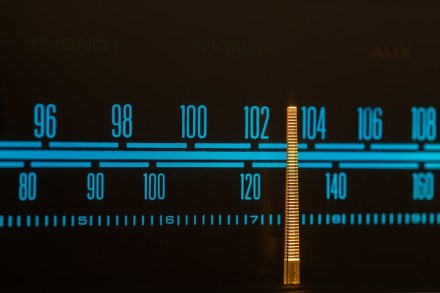
Some of us grew up worrying about reds under the bed, which was perhaps not as foolish as all that if a report on Saturday morning’s Today programme on Radio 4 is to be believed. Amid a cacophony of weird-sounding bleeps and disembodied voices, Gordon Corera, the BBC’s security correspondent (always clear, calm and collected, no matter the brief), told us about the ‘number stations’ that proliferated in the Cold War and are now being brought back to life. Anyone can tune in to them, but only those in the know can understand what they mean, and although the source of the transmissions can be traced it’s impossible to pick up those who are listening in to them, which is why they have come back into use.

State of independence

Radio

When the BBC’s Arabic-language network went out on air for the first time 80 years ago, on 3 January 1938, its mission was to provide ‘reliable news’ to a region that was being fed German and Italian ‘propaganda’ via short-wave transmissions from those countries. News is still its main focus, says Bassam Andari, news-gathering editor for the Arabic service, who has been with the corporation since 1994, arriving in London from Lebanon. He grew up listening to the station during the civil war in that country in the 1970s. ‘My mother would switch the radio on to the BBC every morning to find out what was happening in the world, not just in Lebanon,’ he recalls.

Self discovery

Radio

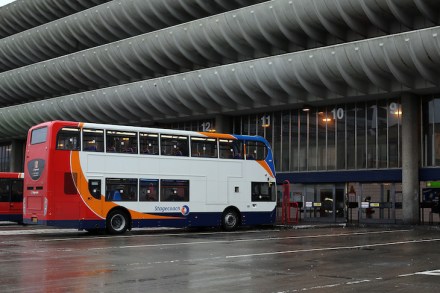
It’s a pity Will Self didn’t embark on his bus tour round Britain before the Brexit vote. If he had, we might have all had a better understanding of what’s going on in the shires. In his series of ten short programmes on Radio 4, Great British Bus Journey (produced by Laurence Grissell), Self sets out to emulate Daniel Defoe, William Cobbett and J.B. Priestley by taking the bus not to the big centres of life in the UK but those smaller towns and cities we often rush past on the motorway or have no reason to add to our bucket list. Places like Plymouth, Preston, East Kilbride, Wolverhampton and Swansea. His big question is to find out what it means to be British today (the intention behind those earlier cross-country trips by horse and chauffeur-driven car).

As time goes by | 25 January 2018

Radio

If you were to ask me by the end of the week what I had written about in this column at the beginning I would probably look blank, fumble desperately through a foggy recollection of plays, news items, snatches of interviews and then reply, ‘I’ve no idea.’ This business of forgetting so soon what was once so clear in the mind is, says Francis O’Gorman in this week’s The Essay on Radio 3 (produced by Lisa Needham), very much part of our modern world. Too much information to take in, too little time to process it. The result, too much forgetting. It’s virtually impossible to remember what you once put down as ‘your favourite meal’ on an online shopping site.

Prick up your ears

Radio

On paper and on air, there’s nothing to suggest that the Radio 4 series Across the Red Line will have sufficient listening power to draw you in so that once you’ve reached home and need to get out of the car you’ll rush straight in to switch on the radio. The billing in Radio Times describes it simply as a 45-minute show in which the journalist Anne McElvoy ‘invites figures on opposing sides of a political issue to listen to each other’. And that’s exactly what it is. A pair of talking heads tossing about a topical football, guided by McElvoy, who has as her sidekick a conflict resolution expert, Gabrielle Rifkind, brought in to moderate the session if things get lively.

Lessons from Rwanda

Radio

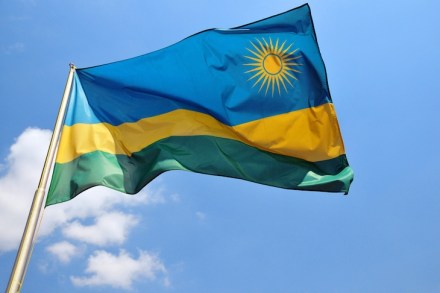
What an incredible statement we heard on My Perfect Country. ‘I can walk into a boardroom and forget I am a woman,’ pronounced Isabelle Masozera, a PR executive, on the World Service programme, which this week visited Rwanda to find out what is happening there to make it qualify for ‘my perfect country’ status. Her words hit home because of the BBC’s current difficulties over equal pay and opportunities. It appears that the corporation has been less than speedy or judicious in its response to the revelations last year about the substantial differences in earnings between some of its male and female employees.

Top of the pods

Radio

It’s racing up the UK podcast charts, overtaking (as I write) the established favourites such as No Such Thing as a Fish, Kermode and Mayo’s Film Review and This American Life, and only just behind the reigning number one, My Dad Wrote a Porno (don’t ask; it’s meant to be funny). Briefly, at the height of Brexit fever last month as phase one came to an end and Theresa May rushed to Brussels for a meeting with President Juncker and co., Brexitcast topped the list, scoring the highest number of downloads. It could well make it to the top again. I had a listen, out of curiosity, not expecting to last the full half-hour. How could yet more talk about the single market and the Norwegian model attract so many listeners?

Foreign exchange

Radio

The season of Advent, for most children, means anticipation, gleeful waiting, the counting down of days. But after a certain age the build-up to Christmas changes its nature, becomes more like anxious preparation. It can, though, be thought of as a time of reflection. Radio 3’s Christmas Around Europe has for years nourished that feeling by taking us on a leisurely, day-long musical tour around the continent, usually on the last Sunday before Christmas. It’s a chance to step back from the frenetic fuss and wander in the mind, as the music plays, to other times and distant places, to take oneself beyond the present, or rather into another kind of present.

Don’t go breaking my heart

Radio

It’s been heart week on Radio 4, celebrating the anniversary of the first ‘successful’ heart transplant in 1967, which was performed, controversially, by Dr Christiaan Barnard in South Africa on a patient called Louis Washkansky (who survived the operation and lived for 18 days). The heart, that mysterious, almost mystical organ, is freighted with such cultural significance that back then there were some who thought such feats of medical skill were tampering dangerously with our humanity. Change the heart, and the person within would never be the same.

Sound of the Gods

Radio

At the launch of the Christmas radio schedules last week, James Purnell, director of radio (and much more) at the BBC, stressed repeatedly the need for radio to be ‘reinvented’ for this new digital age. But what did he mean by reinvent? Was he hinting at the need for a new, leaner radio, the sound-only stations running up cheaper bills for the corporation? Or was he envisaging a translation of the existing radio networks into something more than just audio, focusing not so much on what goes on in the studio but on the new digital future, visualised and captured online.

Watch this space | 23 November 2017

Radio

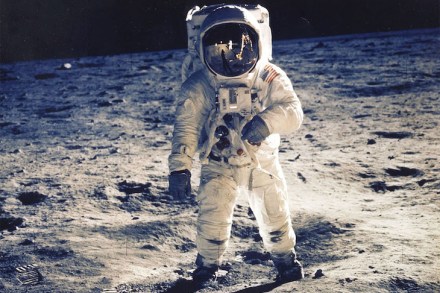
Wally Funk is on a mission — to make real her dream that a woman will walk on the moon in her lifetime. She was one of 13 female pilots who trained at Nasa alongside the Mercury 7 astronauts as they prepared to go to the moon. But when the Apollo programme was abandoned in 1972 (in part because of the costs of the Vietnam war) her dreams of going into space were also junked. Now, though, she has renewed hope, as governments and corporations have resurrected the space race, no longer confined this time to America versus Russia but also involving China, India, the European Space Agency (Esa), as well as Virgin Galactic, Moon Express and Blue Origin.

Local heroes | 16 November 2017

Radio

It’s 50 years since the first local radio stations were launched by the BBC in yet another instance of the corporation working hard to stay ahead of the game, on this occasion responding to the challenge of the pirate stations, whose audiences were local and known to be very loyal. Radio Leicester was the first to go on air on8 November 1967, launched by a very plummy-voiced postmaster-general as ‘the first hometown radio station in Britain’. (The BBC executive behind the idea, Frank Gillard, had spent time in America and been impressed by local radio there, wishing to replicate its homespun feel.) Others followed quickly, dependent on whether the local council was happy to provide part-funding (they are now solely funded by the BBC).

Ulysses on speed

Radio

It’s always odd to hear a familiar voice on a different programme, playing an alternative role. They never sound quite as comfortable behind the mike, as if they are wearing clothes that don’t quite fit. The voice has a different timbre, as it did on Sunday when Garry Richardson, who since 1981 has been keeping Today listeners updated on all the latest sports news, revealed his other passion. Since he was ten, when he was first taken to see the man from Knotty Ash at Blackpool in 1967, he’s been a fan of that extraordinarily tenacious star of the entertainment world, Ken Dodd. In Sir Ken Dodd: What a Beautiful Day!

All’s well that ends well | 2 November 2017

Radio

Mandy was 38 when she was told she was ‘in the end stage’, suffering from COPD and finding it more and more difficult to breathe. Matthew, in his twenties, was given just four to five years of life after being diagnosed with a brain tumour. Vivek, also in his twenties, is confined to a wheelchair because he suffers from Duchenne muscular dystrophy and is already reliant on a ventilator for much of the time. Sophie has stage four lung cancer and tumours in her lungs, lymph nodes, bones and brain. You might think a programme made up of their thoughts, words, experiences would be one of lament and moping, misery and fear. Not a bit of it. Before I Go on the World Service (beautifully made by Sue Nelson) was not in the least bit self-pitying.

The ties that bound us

Radio

Only Neil MacGregor could do it — take us in a single thread from a blackened copper coin, about the size of a 10p piece, dating from Rome in about 200 AD, to a packed music hall in London during the first world war. In his new 30-part series for Radio 4, Living with the Gods, the former director of the British Museum looks at the ways in which societies come together through shared rituals and beliefs and how these rituals are developed and used to make sense of our place in a universe beyond human comprehension. One side of the coin shows a fire burning within the Temple of Vesta, dedicated to the Roman goddess of fire, and surrounded by the Vestal Virgins, whose job it was to keep the flames alight, to protect the ‘hearth’, or the focus of Rome’s power.

Speed limit | 19 October 2017

Radio

Slow radio is popping up everywhere at the moment — programmes that have no outward form but just meander through the schedule, and often, but not always, are played out live in real time. In spite of their spontaneous feel and free flow these programmes have usually been carefully orchestrated, and that’s part of slow radio’s appeal: crafted to sound like life itself, impressionistic, en plein air, long-running. It’s not to everyone’s taste — too slow, too redolent of nostalgia for a mystical past where there was once time and space to think. Who wants to follow Horatio Clare’s every footfall as he tramps for ten miles along Offa’s Dyke (as happened on Radio 3 in the spring)?

Faulty connection

Radio

There’s no doubting her passion for the programme of which she is now chief of staff. Talking to Roger Bolton on Radio 4’s Feedback slot, Sarah Sands told us repeatedly how much she loved Today, how it was ‘a privilege’ to be in charge of such a ‘flagship’ programme, how its length, three hours, was such a luxury after years spent in the newspaper business. She was so happy to have so much time to cover big subjects and invite so many experts into the studio to talk about their subject. She relished the challenge of preserving the programme’s ‘depth and resonance’, its ‘great intelligence’ and ‘thoughtfulness’.

Split decision | 5 October 2017

Radio

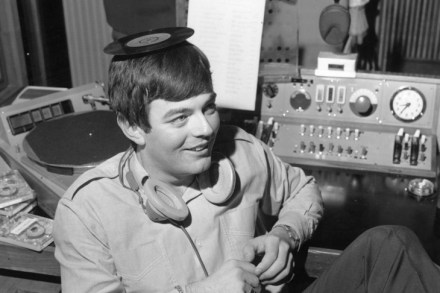
Think back to that morning in September 1967 when the Light Programme was split in two, Tony Blackburn launching Radio 1 with a jaunty new jingle announcing it was all ‘Just for Fun’ while staid old Radio 2 went on with the Breakfast Show and told its listeners to ‘Wake Up Easy’. What is so surprising is just how radical the changes at the BBC were. On that unsuspecting morning, as the Pope urged for peace in Vietnam and a cannabis farm was discovered in Bristol, the Beeb’s radio output was completely overhauled.

Woman of a thousand voices

Radio

‘On air, I could be the most glamorous, gorgeous, tall, black-haired female… Whatever I wanted to be, I could be… That was the thrilling part to me,’ said Lurene Tuttle, talking about her career as a star of American radio in its heyday from the 1930s to the 1950s. She was known as ‘the Woman of a Thousand Voices’ because of her talent for voicing any part, from child to OAP, glamour puss to gangster moll, hard-nosed executive to soft-hearted minion. On Saturday we heard her in full flow on Radio 4 Extra in an episode of Suspense, brought out of the archive from June 1949 for the three-hour special celebrating The Golden Age of American Radio. It was terrifying.

Seeing the light | 21 September 2017

Radio

‘You can’t lie… on radio,’ says Liza Tarbuck. The Radio 2 DJ was being interviewed for the network’s birthday portrait, celebrating 50 years since it morphed from the Light Programme into its present status as the UK’s best-loved radio station — with almost 15 million listeners each week. ‘The intimacy of radio dictates you can’t lie because people can hear it.’ She’s absolutely right. As she went on to explain, when you’re driving and it’s just the radio and you, no distraction, ‘You can hear things in my voice that I don’t even know I’m giving away.

Face time | 14 September 2017

Radio

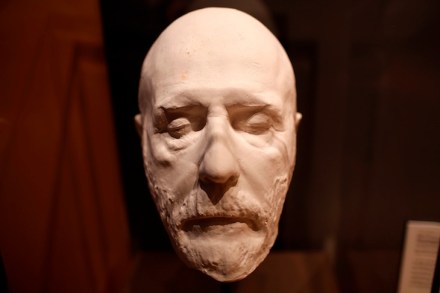
The inimitably pukka voice of Jacob Rees-Mogg echoed through Radio 4 on Thursday morning. He was not, though, talking about nappies, nannies or even Brexit; his topic instead was death masks and specifically that made of his father William, the newspaper editor and vice-chairman of the BBC, who died in 2012. Not long after Rees-Mogg had passed from this life, his facial features were immortalised in wax and silicon rubber by Nick Reynolds, godson of Ronnie Biggs and son of Bruce Reynolds (whose names you may recall from the great train robbery of August 1963).

The listening project

Radio

As Classic FM celebrated its quarter-century on Wednesday with not a recording but a live broadcast of a concert from Dumfries House in Scotland — Bach, Mendelssohn, Chopin and Liszt, and the première of a specially commissioned work by the Welsh composer Paul Mealor — Radio 3 has upped the ante by announcing an autumn schedule that promises to be ‘an antidote to today’s often frenzied world’. Its new programming ranges from a special opera season and a series of organ and choral music to ‘an immersive audio impression’ of what it feels like to hang vertically on the side of a mountain, wind whistling through the ears, feet teetering on the edge.

‘Smile, segue and shut up’

Radio

Three weeks before Classic FM launched, I was on the radio in Hong Kong, introducing hits by Rick Astley and Wet Wet Wet. I’d just turned 21, and was working as a presenter for British Forces Radio. A phone call came from London. ‘My name is Michael Bukht. I’m setting up a new radio station and have heard good things about you. We’d like you to present our afternoon show. By the way, do you know anything about classical music?’ Michael Bukht would not have fared well in today’s consensual media world, where respect is the watchword. He was a bit of a bully, capable of exploding at anyone promoting views not aligned with his own. But he had absolute belief in what he was doing.

Universal appeal | 24 August 2017

Radio

Yet another sign that we are living in very strange times: a pair of celebrities, their names made by TV, have switched over to radio for their next project. Not starring in their own series on BBC2 or Channel 4, but on a medium that could have become redundant yet is refusing to give way (the latest Rajar figures indicated that listening is on the up across all networks). Plenty of stars made by radio have gone on to household-name status on TV (Steve Coogan, David Mitchell, Chris Morris). But Eric Monkman and Bobby Seagull, who began trending on Twitter because of their appearances on BBC2’s University Challenge — Monkman, the geek with his razor-sharp eagerness to get on the button; Seagull, the cool, smiley guy — are now starring on Radio 4 in their own show.

India in a day

Radio

Bold programming by the powers-that-be at Radio 4 meant it was possible to listen to all seven episodes of Ayeesha Menon’s adaptation of Salman Rushdie’s Midnight’s Children in a single day on Tuesday, exactly 70 years since independent India was born, and Pakistan created. Four and three-quarter hours of meticulously crafted drama (directed by Tracey Neale and Emma Harding) ingeniously slotted into episodes of different lengths throughout the day, some just 15 minutes, others a full hour (the adapter having to create and sustain pace in a variety of ways to suit the different lengths).

Big Auntie

Radio

It’s sneaky, the way in which the BBC, so much regarded as part of the family as to be nicknamed ‘Auntie’, has introduced the need to login (or register) whenever you want to listen to something on iPlayer. Maybe I’m doing something wrong because the alert message assures me I will be kept logged in, and that I should only have to login once. But even that is once too much. After all, until now, we’ve had the chance to listen again to whatever we fancy with very little fuss and almost instantly.

Separation anxiety

Radio

As Europe remembers Passchendaele, India and Pakistan recall Partition, just 70 years ago, when Britain so hastily abandoned its Indian empire, exhausted by the costs of war in the world and troubled by the upsurge in violence between Muslims, Hindus and Sikhs as the campaign for Britain to Quit India took root. In Partition Voices on Radio 4 (produced by Mike Gallagher, Tim Smith and Ant Adeane), we heard from those who witnessed the bloody terror that broke out across the subcontinent as it was divided on religious, not political, ethnic or communal grounds, many of whom fled to Britain to make new lives for themselves.

What stopped Stoppard?

Radio

Two programmes this week presented two radically different world views, or rather ways of life. Aditya Chakrabortty’s series for Radio 4, Decoding the News, looked at five words or phrases which have come to characterise how politics, finance and business operate in the UK. We entered a world of policy wonks and pundits, of words used not to enlighten or explain but to calculate and confuse. A world in which those who tell stories get all the attention, while those who insist on sticking to the facts are ignored or on occasion ridiculed. It made for chilling listening as, for instance, Chakrabortty deconstructed the meaning of that slippery term, ‘shareholder value’.

The joy of the Proms

Radio

Summer nights, hot and humid, mean just one thing — it’s Proms season again. Sore feet, sweaty armpits, queuing outside the ladies loos, home on the Underground with a head and heart buzzing with Bruckner or Bacharach, Handel or Honegger. Just as special is the nightly feast on Radio 3 — a live concert, guaranteed every evening, and on top of that specially commissioned talks and literary events to get us thinking. On Sunday afternoon, in between the Mozart and Schumann performed by Bernard Haitink and the Chamber Orchestra of Europe (COE) at the Royal Albert Hall, Sarah Walker took us inside the working life of an orchestra. What does it take to create the particular sound of an ensemble of individual players? How important is the conductor?