Culture

Culture

The good, the bad and the ugly in books, exhibitions, cinema, TV, dance, music, podcasts and theatre.

Interest-free credit

Radio

When did you last experience a boring Sunday afternoon? If you’re over 16, probably not since you were last 16 and stuck at home, raindrops sliding down the window pane, nothing on TV until five o’clock, nowhere to go because everywhere is shut. But boredom, says Phill Jupitus, has become an endangered emotion. Now that we have smartphones, at a gentle swipe, the touch of a button, we have access to any amount of diversion, 24 hours a day. We need never find ourselves with nothing to do, nothing to read that takes our fancy, no one to talk to. He’s not happy about this.

Whodunnit

Radio

Barbed wire, concrete, razor blades, passports, Bakelite and the sewage system are all crucial to the way we live now yet what do most of us know about who, when, how they were invented? In an ambitious new series for the World Service, 50 Things That Made the Modern Economy, Tim Harford intends to put us straight, taking one thing each week over the next year and in just nine, tight, well-ordered minutes giving us its potted history. This weekend, for instance, Harford introduced us to the Haber-Bosch process, which he argues is ‘the most significant invention of the 20th century’, allowing the world’s population to grow exponentially from four billion people in the 1910s when it was first introduced to seven and a half billion now.

Country music | 10 November 2016

Radio

There was something unexpectedly moving about hearing not just one but several renditions of the somewhat naive and rose-tinted but always heartfelt ‘The Star-Spangled Banner’ when I switched on the radio after several days’ absence. America has been so much in our thoughts these past few weeks, but a distasteful, shameful version of itself. It was just so refreshing to hear something different, something meaningful, yet still so American, like a glass of ice-cold water after a long walk in the heat.

Music matters

Radio

There’s nothing new about Radio 3 tearing up the schedules, temporarily abandoning regular favourites such as Private Passions, The Early Music Show, Choral Evensong in search of creative freedom. Its first controller was not just given permission but instructed by the director general, Sir William Haley, to ignore the demands of Big Ben and the news schedule in favour of allowing concerts to run on beyond the hour and to be heard just as they would have been in the concert hall, with ‘live’ operas broadcast in full from Paris or New York. There was to be ‘no annotation’, no commentary on the music that had just been heard.

Identity crisis | 27 October 2016

Radio

You may not listen to them every year. Or even to every lecture in the current series. But the survival of the annual Reith Lectures on Radio 4 from the old days of the Home Service and Radio 3 (they were established in 1948 to honour what Reith had done for the corporation) is crucial to the existence of the BBC.

The power of song | 20 October 2016

Radio

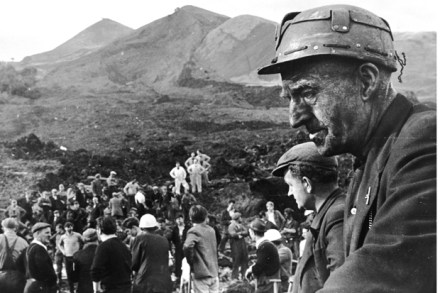
‘I went in at seven and came out aged 22,’ said Brian as he looked back on the day in October 1966 when his primary school in Aberfan was smothered in a great black wave of coal slurry. On that day, of his small school of just 141 pupils, only 25 children survived. Brian lost his older sister; he escaped because he refused to get under the desk as the teacher instructed when they heard this extraordinary, unexplained, overwhelming noise, ‘like an aeroplane coming into land’, getting louder and louder. He later joined the Ynysowen Male Voice Choir, formed in Aberfan a couple of years after the disaster as the fathers, husbands and brothers of those who died began to realise that the only thing that was helping them get by day-to-day was singing.

It’s (still) a man’s world

Radio

When Jane Garvey announced to the audience who had just ‘taken part’ in the 70th birthday celebrations of Radio 4’s Woman’s Hour on Monday morning that a woman listener had sent in an email asking, ‘Why do we need a programme like this in 2016?’, she almost caused a riot in the BBC Radio Theatre. A riot of disbelief and horror. What? Abolish the only programme on the BBC entirely devoted to the issues that affect women?

Head ache

Radio

Quite how one person is expected to oversee not just radio but also ‘arts, music, learning and children’s departments’ was not made clear by the BBC when it announced the stratospheric rise to power within the corporation of James Purnell as the new director of everything that’s not TV or light entertainment. You may recall that Purnell was once culture minister under the Labour government and in 2013 became head of strategy at the BBC, an appointment that at the time was excused (given Purnell’s lack of programme-making experience) by Tony Hall, the director-general, as ‘of course not editorial’.

One day in November

Radio

The weather was ‘treacherous’ on Saturday, 23 November 2013, the day chosen randomly by Gary Younge as the focus for his latest book, Another Day in the Death of America. As he described it, a ‘Nordic outbreak’ of snow, rain and high winds swept across the desert states and up into the northern plains. It was for many Americans a winter’s day like many others but for ten families a shot rang out sometime during those 24 hours and their lives changed for ever. Not that these ten disparate events made the national news. Death by gunshot is so commonplace in the USA that not even when those who died are so young is it considered worth highlighting, remembering, bewailing.

The Third way

Radio

We now think of Radio 3 as the music station, but when it was created in 1946 as the Third Programme music was only meant to take up one third of its output. Dramas, features, talks were just as crucial to its identity, and poetry especially was to be heard ‘three times a week and usually at a peak listening hour, not near midnight’ to quote a contemporary news bulletin from the Manchester Guardian. Last night the station began celebrating its 70th anniversary with a concert broadcast live from the Southbank Centre in London, where for the next fortnight there’s to be an ‘immersive’ Radio 3 experience designed to remind us of the station’s original intentions, with concerts, talks, live happenings.

Cooking the books | 15 September 2016

Radio

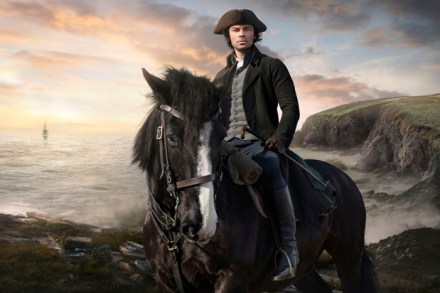
Cooking really shouldn’t make good radio. On television, it’s already frustrating that you can’t taste what you’re seeing, but on radio you can’t even see it. ‘I’m just cracking an egg,’ they tell you. ‘And now I’ll crack another egg.’ The sounds — violent thuds, hissing gas, moist chewing — are more ominous than appetising and the commentary (‘I’m just mixing those eggs together now’) can’t help but be comically sedate (‘OK — they’re mixed’). So it’s a miracle that The Food Programme (Radio 4), after three decades of this sort of experiment, is as good as it often is, and Cooking for Poldark, this week’s ingenious episode, was really very good indeed.

The man who killed The Archers

Radio

Such a hoo-ha about The Archers this week as Helen faces trial by jury — and, much worse, has to confront her horrid husband Rob face-to-face for the first time since she tried to stab him with a knife in the kitchen of Blossom Hill Cottage. Whatever the decision of the court (and of Sean O’Connor, the horrid editor who is supposed to have left his job at the Radio 4 soap but who in a recent interview threatened us with a worst-case scenario that would free Helen but hand custody of the children over to Rob), it’s curtains for life in Ambridge as we know it.

Northern brag

Radio

The last thing we need right now, in these divisive times, is a series that spends all its time crowing about how special the North is, that continually insists it’s the fount of English art, faith and civilisation and also the region where our notions of justice and equality have been forged.

Distant voices

Radio

One of the weirdest responses when someone close to you dies is the gradual realisation that now at last you know them fully. They become to you complete, rounded, fully themselves, in a way that just does not seem possible while they are still alive. It’s so frustrating. Just when you’re at last ready and able to talk to them in the way you’ve always wanted, in full knowledge of who they are, seeing clearly every aspect of their person, they are no longer present. Radio 4 has come up with a partial antidote to this aspect of death, loss, grief, and so too of life and living, with its unsettling new lunchtime series, Unforgettable (produced by Adam Fowler), the title inspired by Natalie Cole’s 1991 single, where she duets with her long-dead father.

Super human

Radio

‘We think we’re in charge of this stuff but we’re not,’ said Quincy Jones, the composer, arranger, jazz trumpeter, musical genius. He was talking to Julian Joseph at the Montreux Jazz Festival for Jazz Line-Up on Radio 3 (Saturday). ‘It’s divine intervention.’ Jones, who masterminded Michael Jackson’s Thriller as well as countless other hits, film scores (including The Italian Job and The Color Purple) and his own ‘Soul Bossa Nova’, was remarkably sanguine about his extraordinary career. His enormous self-confidence was there from the start. Finding himself in Paris in the 1950s touring with a big band, he decided to stay on so that he could study with Nadia Boulanger and learn how to write for a symphony orchestra.

Funny is dangerous

Radio

‘I’m off now,’ says Michael Heath, signing off from his selection of Desert Island Discs on Radio 4, ‘to go and do a gag about God knows what. I haven’t the foggiest idea.’ You’d think at 80 he might want to stop, or have to give up because he’d somehow lost his touch. But not the cartoon editor of this magazine, and chief creator of wicked skits on the idiocies and affectations of contemporary life. What’s it like working as a cartoonist after the attacks on the satirical magazine Charlie Hebdo? asked Kirsty Young. ‘It adds a certain frisson to your drawing,’ Michael replies. ‘But I never wanted to be a political cartoonist… I wanted to be funny.’ ‘People take offence,’ he says.

Far from Naples

Radio

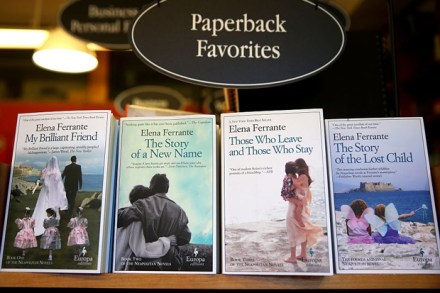
It’s a brave dramatist who would seek to adapt for radio the hit novels of the Italian writer Elena Ferrante. As soon as her quartet of novels set in Naples from the 1950s onwards began appearing in English translation a few years ago they created a bestselling stir because of the unusually bold flavour of the writing and the brutal honesty with which Ferrante is prepared to expose the dark underside of female friendship and motherhood, its jealousies and bitterness, the betrayals and self-centredness. It was even rumoured that Ferrante must be a man (she has never given an interview) because no woman, surely, would be so critical of her own sex (which doesn’t explain why she is not kind to men either).

Fever pitch | 28 July 2016

Radio

It cost just £4/10s for 19-year-old Alan Dryland to buy a season ticket that would take him inside the stadium for all ten of the World Cup matches held in London in that magical summer of 1966. The pound was falling, the Vietnam war raging, but England made it through to the final and the Beatles and Rolling Stones were battling it out to top the charts. If nothing else, 66: We Were There, Radio 5 Live’s affectionate look back at that tremendous victory, proved that Sixties music was brilliant. The producer’s choice on Saturday was pitch-perfect, from the Lovin’ Spoonful’s ‘Summer in the City’ to Chris Farlowe’s ‘Out of Time’. I was there.

Dramatic effect

Radio

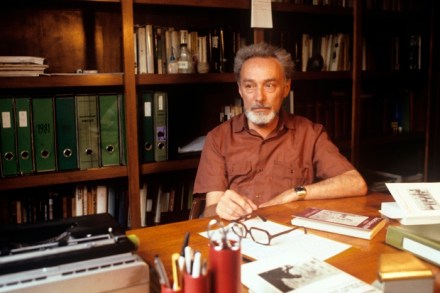
It was hard to believe that Monday morning’s introduction to the Italian writer Primo Levi on Radio 4 lasted for only 15 minutes. It was so rich, multi-layered, filled with meaning. Presented by Janet Suzman, it was intended as a fanfare for the 11-part adaptation of Levi’s most original book, The Periodic Table, in which he explores the chemical elements by equating them to episodes in his own story. Levi, an Italian chemist, was captured by the Nazis as a resistance fighter and a Jew, and at first detained and later sent to Auschwitz. His science training and his knowledge of German saved him from the gas chambers; and a timely bout of scarlet fever ensured he did not die on the death marches from Auschwitz that preceded its liberation.

Sounds of the suburbs

Radio

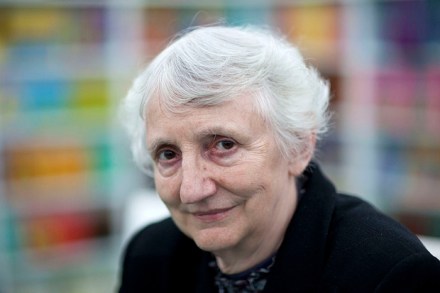
In After the Vote, her talk for this week’s special edition of A Point of View (Radio 4) on the subject of Brexit, the philosopher (and former Reith lecturer) Onora O’Neill suggested that the media have played a large part in creating our current crisis. All branches of it failed ‘to communicate with the public an accurate and honest account’, she argued. The BBC, she said, ‘provided coverage but failed to challenge unfair or dubious claims’ by either side, adding that ‘democracy does not work if such claims are not properly challenged’. This for her is the true nature of ‘the democratic deficit’ — lack of information, of informed debate, of proper checks.

Accentuate the positive | 7 July 2016

Radio

Fifty years ago on Monday the World Service programme Outlook was launched as an innovative news and current affairs programme presented ‘magazine style’ with live interviews featuring ‘star’ guests. Such ‘soft’ journalism was highly suspect back in 1966, as England won the World Cup, Russia landed the Lunar 9 mission on the moon and China embarked on its Maoist cultural revolution, because it relied not so much on factual truths or reportage but on the emotional truth of what it felt like to be there in that place at that moment in time.

Refuge from the referendum

Radio

A brief encounter with Radio 4’s Any Questions to gauge the measure of opinion in the shires after the referendum result was enough to convince me we are entering even more torrid times than during the campaign. For some mysterious reason both Harriet Harman and Alex Salmond, billed in Radio Times to appear on the panel alongside Ken Clarke and Chris Grayling, had reneged on their promise and been replaced by Emily Thornberry, the Labour MP who got into trouble in 2014 for her white van man tweet, and Steven Woolfe, an oxymoronic Ukip MEP.

Madeleine moments

Radio

I’d just heard (on catch-up) Jenny Abramsky (a former director of BBC radio) telling Gillian Reynolds (the esteemed radio critic of the Telegraph) why radio is so special to her: ‘It takes place in my head. It paints pictures in my mind. It talks to me as an individual. It surprises me. It stretches me.’ Then I popped down to the kitchen to make some soup for lunch, reached for the radio button and was hooked instantly as Jeremy Vine talked to a man who had lost his wife in a road accident when their child was just two. (Vine’s Radio 2 lunchtime programme on Monday was focusing on child bereavement following the tragic death of Jo Cox, mother to two young children.) It was just as Abramsky had described. One of those moments.

Women of substance

Radio

Three women, three writers, three very different life experiences. On Monday afternoon the artist Fiona Graham-Mackay introduced us to Imtiaz Dharker, whose portrait she has been painting. While she attempts to capture a visual impression, Imtiaz, who is a poet, tells us what it feels like to be the sitter, the one who is being looked at, drawn, observed with such sharp-eyed scrutiny. A Portrait of... on Radio 4 was one of those seductive programmes that draws you in simply by the quality of the voices and the clear-sighted honesty of what they’re saying. What would it feel like to be painted, and then see yourself as someone else has drawn you? How does the artist know where to begin? With the eyes, the mouth, a first impression?

Polluted by podcasts

Radio

Just to prove my esteemed colleague wrong I’ve been out there in podcast space looking for a wireless moment that will outclass the impact, the fascination, the compelling authority of much (though not all) of Radio 4’s daily output. Of course, there’s a lot of good stuff being made but how do you discover what’s worth spending time with? It’s hard to make a serendipitous discovery by surfing the web. There’s no equivalent to the simple switching of a button and that instant connection, our attention held, communication created, imagination fed. You have to work hard to find a podcast that has edge, knowledge, aural style; all you can do is research online, picking up tips on Twitter or Facebook, and listening to a lot of duds.

Sound and fury | 2 June 2016

Radio

There are few jobs more dishonest than being a radio critic in Britain. I know this because it was how I got my first break 25 years ago as a columnist. In those days you used to get sent huge yellow envelopes full of preview cassettes, whereas now it’s all digital, but the fundamental lie is just the same: essentially you are telling the reader something they know not to be true — that BBC Radio 4 is a wonderfully civilised place to hang out, brimming with all sorts of marvellously fascinating programmes that transport you to another realm. Yes, of course it does happen. In the same way that when Grozny was reduced to rubble in the Chechen wars, I expect there was some beautiful old building left standing, a mosque maybe, which you could have gone to visit.

Baby love

Radio

I like Radio 4 — you can have it on in the background burbling away for hours and hours without taking in a word, and then there comes a moment when you’re making a cup of coffee and find yourself plunged into the story of how, during the first half of the 20th century, premature babies living in incubators were on display to the paying public at Coney Island amusement park. For instance. Life Under Glass (Radio 4, Tuesday) was an intriguing little half-hour documentary, presented by Claire Prentice, about Dr Martin Couney, an American paediatrician who started off touring world fairs in the 1890s with his ‘infant hatchery’ and then from 1903 to 1943 established a sideshow exhibition at Coney Island, that ‘great whirlpool of joy...

Pulling power | 19 May 2016

Radio

Monday’s ‘World on the Move Day’ on Radio 4 was a bold challenge to government policy and proof that radio is much the most flexible, the most accommodating, the most powerful medium when compared with TV. Without much ado, the day’s planned schedule was squeezed, manipulated, overturned to allow the team behind the Today programme to mastermind a live discussion throughout the day about the migration issue, as if to say to the government, here’s what people not just in the UK but from around the world care about. Let’s listen to them and see what solutions they might have to offer.

The power of song

Radio

You might not think that the Eurovision Song Contest (screened live from Stockholm tonight) could have any connection with how we might choose to vote in the coming referendum. Surely it’s just a string of naff pop songs stuck together with fake glitter and a lot of false jollity? The songs are uniformly terrible, the show so overproduced it’s impossible not to mock its grandiosity, the idea that it conjures up the meaning of Europe laughably misplaced. But in a programme for the World Service that caught my attention because it sounded so counterintuitive, Nicola Clase, head of mission at the Swedish embassy in London, tried to persuade us otherwise.