Culture

Culture

The good, the bad and the ugly in books, exhibitions, cinema, TV, dance, music, podcasts and theatre.

Triumphant: Idles at the O2 Academy Brixton reviewed

Pop

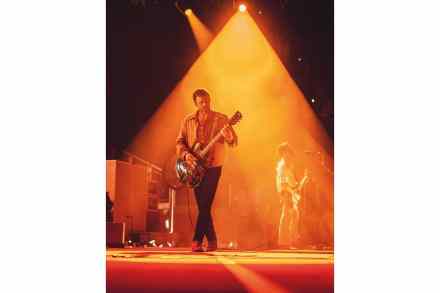
The single thing you don’t want when you are beginning a run of four shows in a prestige venue, with reviewers out in force, is for it all to go tits up at the start. Which is precisely what happened to Idles as they opened their Brixton run. On came the band, up started the throb of the opening song, ‘MTT 420 RR’, and off stalked singer Joe Talbot. Back he came. Off he went. Back he came. Off he went, clearly dealing with some technical issue. The rest of the band carried on, but given that until Talbot starts singing, ‘MTT 420 RR’ is nothing but a monotone drone, this was not the dramatic start one might have hoped for. Next to me, Idles’ booking agent started laughing, a little despairingly.

A story of reflection and self-discovery: Anaïs Mitchell’s new album reviewed

Pop

Any artist who has habitually written or performed in character — from David Bowie to Lady Gaga — eventually arrives at their Mike Yarwood moment: ‘And this is me!’ With the release of her sixth solo record, Anaïs Mitchell has reached the point of personal revelation. ‘I’ve spent a lot of time trying to write in the voice of other characters,’ she says. ‘It felt like after so many years of working on telling other stories — now here are some of mine.’ In 2020 Mitchell was named one of Time magazine’s 100 most influential people. Nevertheless, she requires an introduction.

In praise of seasonal chart fodder

Pop

Christmas: the most vulnerable time of the year. I heard ‘A Winter’s Tale’ by David Essex on the radio the other day and, oh boy. It was Noël Coward who wrote, in Private Lives, that smart little line about the strange potency of cheap music. It is a truism never more apparent than at Christmas, when we allow the gaudy and sentimental access to our hearts with only the most cursory of security checks. Songs that would never make it past the bouncers in May are whisked directly into the VIP area come December. A quick google confirms that ‘A Winter’s Tale’ was released in the run-up to Christmas 1982, which means I was nine years old when it was first released.

A soulful man with a blistering voice: Sipho, at Studio 9294, reviewed

Pop

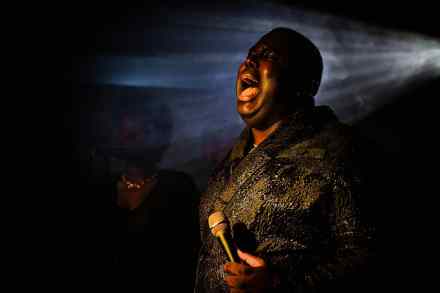
When I were a lad — back when you could buy the entire back catalogue of the Fall for thruppence and still have change to get into a New Order show on the way home — record labels mattered. Well, a cohort of independent labels mattered, because their imprints stood for something. There was Creation, with its dedication to a twin axis of 1977 and 1967 as the only years that counted; 4AD, with its arty sleeves and its wafty, diaphanous music; there was Factory, somewhere between an elaborate practical joke and home to the most forward-thinking musicians in the country. You don’t get many labels like that any longer. The new economics of the music industry militate against the model of the record label as an aesthetic statement, rather than purveyor of vulgar commerce.

The quiet radicalism of the Chieftains

Pop

Pop quiz time: which act was named Melody Maker Group of the Year in 1975? The answer is not, as you might expect, some testosterone-fuelled blues-rock outfit or a hip gang of proto-punk gunslingers, but a gaggle of semi-professional Irish musicians who performed trad tunes sitting down, dressed for church in cardigans, sensible shoes, shirts and ties. The Chieftains were so far from rock and roll they met it coming back the other way. On the cover of Irish Heartbeat, a later collaboration with Van Morrison, they could be mistaken for a loose affiliation of farmers, minor office clerks and earnest ornithologists waiting for a bus outside the town hall. It was a brilliant disguise. The Chieftains wore their radicalism lightly, but radical they were.

One of many soul acts looking back 50 years and doing very good business: Black Pumas, at the Roundhouse, reviewed

Pop

No musician ever went bust overestimating the public desire to hear classic soul. Slapping on a Motown backbeat has revived many a career and made many a star. At the simplest level, what wedding band are you going to hire: the one playing note-for-note recreations of acid-rock wig-outs from 1968, or the one playing note-for-note recreations of the Motown, Stax and Atlantic catalogues from the same year? It’s hardly evidence of the appalling taste of the music-buying public. If we’re going to play that silly ‘What pop era was best?

Joyous perfection from a band that’s sure to go far: Gabriels at The Social reviewed

Pop

The bigger the next big thing, the smaller the room you want them playing in. You want the people who got inside to be thankful they made it in (not least because the more exclusive the show, the more hysterical the tweets afterwards: ‘You plebs couldn’t get a ticket, but I saw the very future of the planet!’). You want the air so thick with heat and chatter before the band comes on that there is a sense of event before a note has been played. You want everyone there — band and audience alike — to feel they are at the only place that matters, regardless of it being a nondescript Thursday evening.

The death of the live album

Pop

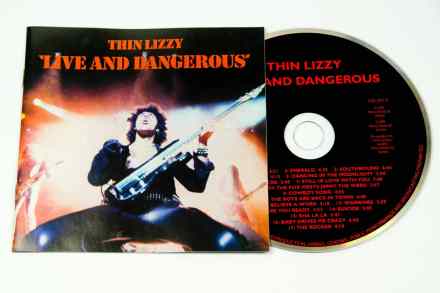
Next week The The release The Comeback Special, a 24-track live album documenting the band’s concert at the Royal Albert Hall in June 2018. Meanwhile, Steely Dan’s last man standing, Donald Fagen, has just released two live albums recorded in 2019. Their musical qualities notwithstanding, these releases feel like relics from a lost world. Much like the fondue set, the live album is much reduced from its 1970s and 1980s heyday, when a pretty blonde sideman-turned-solo artist called Peter Frampton could somehow shift eight million copies of the anodyne Frampton Comes Alive! The stand-alone contemporary live album is now an endangered species; MTV’s Unplugged series in the 1990s offered a final down-home twist on the format.

A terrible joke gone wonderfully right: Rick Astley and Blossoms Perform the Smiths reviewed

Pop

Many of us who grew up loving the Smiths have rather shelved that affection in recent years. Many of us, being lily-livered liberals, have rather taken against Morrissey’s politics and his public support for the far-right For Britain party. Even those inclined to agree with him might have tired of his unrelenting self-pity and his inability to say anything nice about anyone, ever. Yes, we’ve still got lovely Johnny Marr playing the songs in his solo shows, but with the greatest goodwill in the world — and Marr gets granted the greatest goodwill in the world by being such an obviously decent fella — he’s no one’s idea of a great singer.

Banal and profound, bent and beautiful: Nick Cave & Warren Ellis at Edinburgh Playhouse reviewed

Pop

Nick Cave has always been drawn to parable and fable, but more than ever these days he is engaged in the necessary work of mining magic from the base metal of day-to-day existence. The key lines in this show came early, during ‘Bright Horses’: ‘We’re all so sick and tired of seeing things as they are,’ Cave sang in that hollow, sorrowful baritone. ‘This world is plain to see/ It don’t mean we can’t believe in something.’ Cave’s recent songs have a terrible and powerful context: the death of his teenage son, Arthur, in 2015. As an artist he has confronted this personal tragedy side on, acknowledging its profound impact without letting it overwhelm his writing.

Two gigs that prove that rock and pop is never just about the music

Pop

The single most boring and pointless thing that is ever said about rock and pop — and it always comes from the Campaign For Real Rock brigade, with their alphabetised vinyl and back copies of Mojo — is that it should be ‘all about the music’. It is never, of course, all about the music, even among the Real Rockers’ heroes. An ugly Elvis would never have become Elvis; if the Stones had been clean-cut, helpful young men, they might as well have been Herman’s Hermits. Had the Clash made exactly the same records but looked and dressed like the Wurzels, elderly men would not still be banging on interminably about how Joe Strummer changed their lives. It is, in fact, never all about the music. You can see that most clearly at shows.

Teenage Fanclub are not a dramatic group, but they are lovely

Pop

They may no longer get many teenagers at their shows spending all their money on merchandise, then throwing up on the way home, though that certainly happened at the end of the 1980s, when they began, but people do love Teenage Fanclub. Their teenage fans are now middle-aged, and have spent the intervening years growing up with the band. They’ve listened as the group started singing about parenthood, long-term relationships, ageing, and they’ve stayed with a group who reflected their own lives back at them. The music, too, has changed. Where the early Fanclub records were sparky, messy alt-rock, they have spent the decades refining themselves so their songs are now polished miniatures, undramatic at first sight, but filigreed and burnished like tiny masterpieces.

Cast a spell, clear and sharp as frost: The Unthanks reviewed

Pop

As August unwound, the EIF settled into the cavernous gazebo that is Edinburgh Park, and things began to loosen up. First there was an outbreak of vigorous clog dancing — more on which later. This escalated within 48 hours to a polite mini stampede from our designated seats towards the front of the stage at the start of Damon Albarn’s show, instigated at the artist’s request. ‘I’ve checked and we’re allowed,’ said Albarn sensibly. In 2021 we must take rebellion as we find it. When he lit a cigarette near the end it felt like civilisation was teetering on the very brink. As it transpired, this wasn’t really music designed for rushing the stage.

Good noisy fun: black midi, at the Edinburgh International Festival, reviewed

Pop

This year we must love Edinburgh for her soul rather than her looks. The EIF should be commended for making the best of a tricky hand, but the lodgings for its music programme bring to mind a fallen society beauty forced from her New Town villa into a rented bedsit. Edinburgh Park is a cathedral-sized tent in a business park, wedged between the city bypass and a shopping mall. The wooden floor planks buck and roll like a galleon deck. There is a roof but no sides and the Covid-quelling ventilation is, shall we say, robust. So yes, forget the optics. In 2021, content is everything. As it transpires, it proved a fitting spot in which to experience three artists engaged in similar quests to remould the traditional and familiar.

What a genuine delight to be among people: Gorillaz, at the O2, reviewed

Pop

The new music economy relies on cross-promotion and artists reaching out to different scenes. And the rise of streaming means everyone can hop between audiences with ease, hence those singles apparently by one person but with a cricket team’s worth of other names credited. As the Beach Boys once sang, ‘you need a mess of help to stand alone’. Alongside the featured artist sausage factory there are musical patrons. Take Damon Albarn, who has spent much of the past 20 years elevating the work of other artists, using the strength of his own name — made, of course, as the frontman of Blur — to promote music that might otherwise slip past his core audience.

When musical collaborations go right – and when they go horribly wrong

Pop

Big Red Machine release their second album later this month. It’s a fine name for ten tonnes of agricultural apparatus but perhaps not quite so persuasive for a pop group, particularly one with a considerably lower profile than most of its members. A collective formed by the National’s Aaron Dessner and Bon Iver’s Justin Vernon, Big Red Machine has corralled the likes of Robin Pecknold (Fleet Foxes), Sharon Van Etten and Taylor Swift into making a collaborative record called How Long Do You Think It’s Gonna Last?. It sounds intriguing on paper, but the quality of musical collaborations is notoriously hard to gauge from the cast list.

The real death of rock

Pop

What would a rock band have to do now to be seen as heralding the future? Twenty years ago, it was enough to be in possession of sharp cheekbones, tight jeans and 11 fantastic songs. The first album by the Strokes, Is This It, was released 20 years ago this month. It spread around the world in a way that would be impossible now. Only Australia got the album in July 2001. The UK release was not for another month, to tie in with the Reading and Leeds festivals. The US vinyl version was released on 11 September, but the CD edition was held back, so they could remove the song ‘New York City Cops’, whose refrain of ‘they ain’t too smart’ didn’t itself seem too smart in the wake of 9/11.

The joys of musical comfort food

Pop

I’ve given up comfort food. I’m trying to shift lockdown pounds that have left me with the physique of the kind of ageing second-string wrestler you used to see on World of Sport early on a Saturday afternoon in the 1980s. It’s all eschewing oils and measuring portions round these parts, and so I have been seeking my comforts in music. Enough with your Lithuanian drone and your polyrhythmic technical metal from Indonesia! Bring me verses and choruses and melodies and vocal harmonies! Katy J. Pearson — a young woman from the West Country who perhaps wishes she were, instead, from the American west coast — was true comfort food. The whole thing also felt unnervingly like a real gig, the kind one used to go to Before All This.

How Trojan Records conquered the world

Pop

When Trojan Records attempted to break into the United States music market in the early 1970s, it hit an insurmountable barrier: the company shared its name with America’s most popular brand of condom. ‘It was a case of commercial coitus interruptus,’ says Rob Bell, at the time the label’s production manager. In America, Trojan signified rubber, not vinyl. The label proved to have greater staying power in the UK, where it was at the forefront of popularising Jamaican music.

Wispy, gauzy beauty: This Is The Kit, Barbican, reviewed

Pop

On the way home from This Is The Kit’s show at a socially distanced Barbican, I listened to Avalon by Roxy Music, which had been brought to mind by the previous 90 minutes or so of music. It’s perhaps worth saying that This Is The Kit — the nom de chanson of Kate Stables, backed by a three-piece band and three horn players — have absolutely nothing in common with Avalon by Roxy Music, visually or musically. Stables, hair piled on top of her head, and dressed for comfort, not speed, did not look as though she intended to boost the Colombian export trade after the show; perhaps, instead, she would be offering forthright opinions about agribusiness over a lentil bake.

A perfect welcome back to live music: Sarathy Korwar at Kings Place reviewed

Pop

There is a reason music writers tend to stick with music writing rather than transferring their manifold talents to the business side of things. Our dirty secret is that, for all our exquisite taste, most of us — with a few exceptions — have no conception of what the rest of the world actually wants from their music. The first piece I ever wrote was a student newspaper review of a gig in a Leeds pub, in which I gushed about the headliners but noted, with a sneer, the fact that the support didn’t appear to have any actual tunes. We would be hearing no more from them, I cautioned. The headliners were a long-forgotten band called Tad. I forget what happened to the other band; their name was Nirvana.

The sermons poked out of the songs like busted bed springs: Van Morrison livestream reviewed

Pop

Over the decades, Van Morrison’s role within the tower of song has shifted from chief visionary officer to head of complaints. It’s not a promotion. The title track of his new album, Latest Record Project, Volume 1, is a rebuke to those who insist on living in an artist’s past rather than his present. A laudable sentiment, perhaps, but one less easy to put into practice when Morrison’s present consists of 28 tracks which hone an already ornery world view to a paranoic peak. When he isn’t griping about his divorce he’s peddling half-baked conspiracy theories, sneering at internet users and ‘media junk’, and bitching about modern music, crooked politicians and false prophets.

Watch kids go giddy in Niamey: Mdou Moctar live in Niger reviewed

Pop

The other week someone posted on Twitter a link to a YouTube clip titled ‘Family Lotus and D.J. Cookin’ at the Golden Inn, July 4 1981’. It showed a bunch of long-haired people on a makeshift stage in the New Mexico desert and a handful of people dancing around in the dust to the music, which was a weird, trippy, hyper-freaky form of electrified banjo music: ‘psychedelic bluegrass’, apparently. Watching the stream of the Tuareg guitarist Mdou Moctar was an unnervingly similar experience: he and his three-piece backing band were set up in the dust outside a friend’s house, watched by whoever came along. And Moctar’s guitar playing — blurrily deft repeating patterns — was deeply reminiscent of the banjo playing in the YouTube clip.

A redemption song, conventionally sung: Sky’s Tina reviewed

Pop

It has never been easy for women in the music industry. Once upon a time the evidence was largely anecdotal. Now it’s being recorded for posterity, frame by frame. Recent documentaries about Britney Spears and Demi Lovato exposed the trauma inflicted on post-millennial pop stars. Two new portraits of Anna Mae Bullock and Marianne Elliott-Said, better known as Tina Turner and Poly Styrene from punk group X-Ray Spex, ponder the price paid by their forebears. Turner’s story feels archetypal, a tale extracted from deep within the DNA of showbusiness. An abandoned child — ‘my mother didn’t like me’ — from a poor Tennessee background, the opportunity to fulfil her gifts came with the classic caveat: subjugation by an older, controlling man.

Moments of pure wonder: Folk Weekend Oxford reviewed

Pop

Has any musical moment extended its tendrils in so many unexpected directions as the English folk revival of the mid-1960s? In its beginnings, it was a source of pilgrimage for Bob Dylan and Paul Simon, who pinched his arrangement of ‘Scarborough Fair’ from Martin Carthy way back in the dim and distant past when the Beatles walked the earth. It spread into progressive rock and heavy metal (the black metal musician Fenriz, of the Norwegian band Darkthrone, told me recently that he considered Steeleye Span to be an important band in promoting pagan traditions).

The songs are still as fresh and appetising as a hot loaf: The Lightning Seeds livestream reviewed

Pop

One thing about a streamed festival is that the toilets are better than at the real thing. The other thing, though, is that it’s not really a festival. That’s not to knock the North Will Rise Again (TNWRA), which took place over Saturday and Sunday nights a few weeks back, the first featuring Liverpudlian bands and filmed in that city, the second coming from Manchester, with Mancunian groups. The simple fact is, you can’t replicate a festival online: what the best festivals offer is chance, when one stumbles across something wholly unexpectedly on some outlying stage at an unpromising time of day. Simple economics make that impossible for an event charging a tenner: unless you were to get Woodstock levels of attendance, there would be no way to pay the bands.

Reminiscent of Roxy Music’s cocktail sound: The Weather Station reviewed

Pop

One of the unforeseen consequences of the rise of streaming was a change in the very structure of the pop song. Listeners who needed only to click a button to explore an unfathomable amount of music rapidly lost patience. They were less willing to listen to long songs; they were less willing to wait for songs to develop, even over the course of three minutes; they liked songs that sounded the same as other songs they were familiar with. And so, over the past decade or so, pop has adopted a formula: songs now tend to open with a huge hook, then throw more hooks on top of that, and then — because a small cadre of songwriters and producers are viewed as safe hands — they get remade in barely different forms again and again.

Revelatory and grubby: Framing Britney Spears reviewed

Pop

The most headline-grabbing of these three pop docs was Framing Britney Spears, part of the New York Times Presents documentary series, and a bit of a worldwide sensation. It was both revelatory and grubby. As many have noted, the footage of interviews with Spears as a prepubescent and teenager was so deeply unpleasant, so unrelentingly sexual, that it seemed to come not from 20 years ago, but from Neanderthal times. The simple accumulation of the public record was horrifying. No wonder people such as Jimmy Savile were able to thrive. If television interviewers could ask a teenage girl about her breasts, about whether she was having sex, then is it any wonder young women could be treated as sexual chattels behind closed doors?