Culture

Culture

The good, the bad and the ugly in books, exhibitions, cinema, TV, dance, music, podcasts and theatre.

Whatever happened to the stiff upper lip?

More from Books

At some point in the past ten years, trauma became a joke in my household. Should any Ditum suffer a minor mishap, the correct reaction is to adopt a wounded expression, bob your head to the side and whimper: ‘My trauma!’ Not because trauma is funny, but because what Darren McGarvey refers to as the

The word ‘artisanal’ has lost its meaning and dignity

More from Books

‘Artisan’ is now a word attached to coffee, candles, paper, clothes, rugs etc. It is used to raise prices by giving consumers a warm feeling of being pampered with the solid, ancient virtues of the handmade. It is, of course, a lie. If you want to know about Britain and yourself, read this book. James

The ‘idiot Disneyland’ of Sin City

More from Books

In italics at the very end of the preface to Slouching Towards Bethlehem (1968), Joan Didion spills the beans: ‘Writers are always selling somebody out.’ It’s hard to improve on that, but we can at least specify that she had journalists in mind, not poets or novelists, though probably she looked on all scribblers with

Whitehall farce: Clown Town, by Mick Herron, reviewed

More from Books

It’s good to be back in the unspeakable awfulness of Slough House, the decaying London office block in which the security service’s rejects do battle not only with the nation’s enemies but also with each other. Clown Town is Mick Herron’s ninth novel in the series, though he has explored different aspects of Slough House’s

Picasso’s ravishing work for the ballet

Arts feature

Visitors to the Victoria and Albert Museum’s new storehouse in Stratford’s Olympic Park are being enthralled by an atmospherically lit chamber devoted to the display of one vast and magnificent work of art: Picasso’s 10 metre-high, 11 metre-wide drop-curtain for Le Train Bleu, a popular hit of Diaghilev’s Ballets Russes, first seen in 1924. The

The time Spike Milligan tried to kill me

Theatre

The theatre impresario Michael White rang me one day in 1964, and said he was presenting a play at the Lyric Hammersmith, where there was a small role he thought might suit me. The play was an adaptation of the novel Oblomov by Ivan Goncharov, where the eponymous hero spends most of his life in

An English Chekhov: The Gathered Leaves at Park200 reviewed

Theatre

Chekhov with an English accent. That’s how Andrew Keatley’s play, The Gathered Leaves, begins. The setting is a country house where a family of recusant English Catholics meet for a weekend of surprises and high drama. The audience was on its feet, cheering and clapping, some of them in tears At first, the main conflict

Fails to outshine the original: The Roses reviewed

Cinema

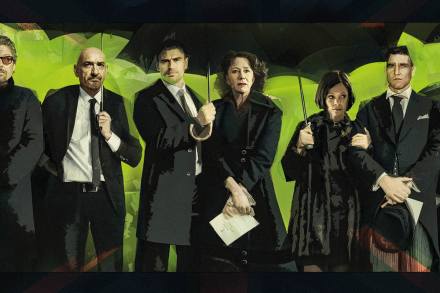
The Roses is a remake of The War of the Roses (1989), the diabolically funny black bitter comedy that was directed by Danny DeVito and starred Kathleen Turner and Michael Douglas as a couple who start out in love, then hate each other like poison, and once their battle is under way it’s no holds

A revelation: Delius’s Mass of Life at the Proms reviewed

Classical

Regarding Frederick Delius, how do we stand? In the 1930s, Sir Henry Wood believed that Proms audiences much preferred Delius to Holst, and most critics back then would have described him as a major British composer. Times change: if you took your music GCSE in the late 1980s, you’ll have sensed that the Bradford lad

The brilliance of BBC Alba

Television

During lockdown, a friend and I moved into a flat that had a difficult relationship with the TV aerial. Ineptitude and laziness combined to ensure that the only channels we were able to watch were BBC ones via the iPlayer app. So most nights – if there was no live sport – we found that

Dirty work: The Expansion Project, by Ben Pester, reviewed

More from Books

The Expansion Project, Ben Pester’s debut novel, builds on the satire of corporate culture that he previously explored in his short stories. It centres on Capmeadow, a business park that proliferates with offices, wellness gardens, chalets, convenience stores and even a temple carved with reliefs of ‘collaborative working practices’. Shrouded in creepy mists, it seems

No stone unturned: the art of communing with rocks

More from Books

At the age of 13, when some girls become passionate about ponies, Anjana Khatwa developed an infatuation with rocks. Growing up in a Hindu family in Slough, she had a moment of epiphany on holiday in south-east Kenya when she walked across an ancient lava flow and felt convinced that the rock beneath her feet

Starry starry night: the return of the sleeper train

More from Books

The railways have survived into the 21st century by constantly reinventing themselves. Written off all too frequently by parsimonious politicians as a 19th-century invention made redundant by the car and the aeroplane, trains have enjoyed a remarkable renaissance. Most happily, the sleeper has made a comeback, despite the fact that towards the end of the

Clerical skulduggery on the far borders of 1830s Germany

More from Books

Königsberg is no more. Now known as Kaliningrad, it forms part of a small Russian exclave surrounded by Lithuania and Poland. It is probably here that the third world war will start. Before it was bombed flat and ethnically cleansed, the historic Baltic city formed one of the main centres of the German province of

Christopher Marlowe, the spy who changed literature for ever

Lead book review

Stephen Greenblatt tells the story of being approached in the 1990s by a screenwriter who wanted to make a Shakespeare -biopic. Greenblatt repeatedly told him to forget Shakespeare and look instead at his predecessor Christopher Marlowe. The screenwriter knew what he was about and ignored Greenblatt’s advice – the result was Shakespeare in Love. The

The masterpieces on your doorstep

Arts feature

I do not, if I can help it, catch a train to anywhere on a Sunday. Yet there I was at 9.14 a.m. heading out from Woodbridge in Suffolk towards Cambridge to view a painting by Walter Sickert, a work I had not seen before and whose vital statistics – what even the work was

I've had it with Anselm Kiefer

Exhibitions

August is always a crap month for exhibitions in London. The collectors are elsewhere, the dealers are presumably hot on their heels, and the galleries are filled with makeweight group shows staged to hold the fort until the end of the holidays. This year, however, even events of that kind are thin on the ground:

Alien: Earth is wantonly disrespectful to the canon

Television

I once spent a delightful weekend in Madrid with the co-producer of Alien. His name was David Giler (now dead, sadly, I’ve just discovered) and he’d hit upon the bizarre idea of trying to get my anti-eco-lunacy book Watermelons made into a Hollywood movie. The film project never came off but I did learn an

The Seeds are primitive but magnificent

Pop

I have nothing but admiration for those men who burn a candle for the music of 1966. Partly because, like them, I believe 1966 to be pop’s greatest year, but mainly because being a psychedelic hipster requires a commitment that invites ridicule. It’s one thing to be an ageing fella who likes rock’n’roll – sharp

Glorious: Good Night, Oscar, at the Barbican, reviewed

Theatre

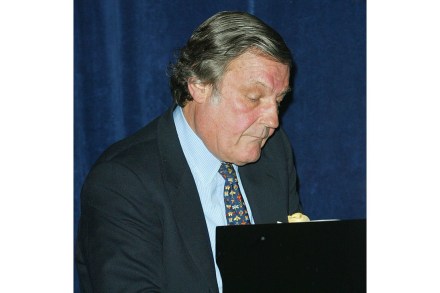
Good Night, Oscar is a biographical play about Oscar Levant, a famous pianist who was also a noted wit and raconteur. The script starts as a dead-safe comedy and it develops into a gripping battle between the forces of anarchy, represented by Oscar, and the controllers of NBC who want to censor his crazy humour.

The mystical hold of the 1990s over Gen Z

Radio

At some point during the past decade and a half, it was decided that the 1990s were a golden age. While Britpop, New Labour and acid house do not immediately evoke the same spirit as, say, Versailles under Louis XIV or Augustan Rome, compared with what followed they were certainly characteristic of something. Appetites for

The decline of Edinburgh International Festival

More from Arts

Edinburgh International Festival was established to champion the civilising power of European high culture in a spirit of postwar healing. But its lustre and mission have now been largely eclipsed by the viral spread of its anarchic bastard offspring, the Fringe. In competition with the latter’s potty-mouthed stand-ups and numberless student hopefuls, the dignified old