Culture

Culture

Crucible’s complex picture

The beginning of Crucible, the writer and Oscar-nominated director John Sayles’s eighth novel, opens with a feint. A couple of journalists are taken for a mock-perilous test drive at the presentation of Henry Ford’s latest automobile. On their return, what starts as a humorous Q&A becomes increasingly restrictive as it becomes clear there is to be one narrative only: the company’s, or rather, the founder’s. This familiar combination of showmanship and control may feel ubiquitous now, but the audacity of Ford and the outrage he provoked was to change the face of American industry.

crucible

The radical networks that hijacked the 1970s

Airplane hijacking, like the mode of transport itself, became common in the 1960s. A practice largely confined to the United States, it was invariably a means for ordinary criminals to extort ransom money or flee to Cuba. In 1968, the hijacking of an El Al flight by the left-wing Popular Front for the Liberation of Palestine revealed the political utility of the act: in exchange for the safe return of its plane and passengers, Israel released 16 Arabs from its prisons. Encouraged by this outcome, the PFLP launched a spate of similar operations. One such mission, the hijacking of a TWA flight in 1969, revealed that prisoner exchanges and ransoms weren’t the only upside of this new tactic.

George ‘R&R’ Martin takes it easy

Now that the Stranger Things disappointment has died down – slightly – George R.R. Martin and his merry band of Game of Thrones cohorts have recaptured attention in what we must call the Thrones universe. After the warily positive but underwhelming reception that the major spin-off House of the Dragon received, A Knight of the Seven Kingdoms’s six-episode offering is in a lower key than either of its forbears. No dragons, no enormous battles, no big stars, just a small-scale relationship drama focusing on the hapless “hedge knight” Ser Duncan the Tall, aka “Dunk” and his child squire, Egg, whose origins are rather less lowly.

george r.r. martin knight seven kingdoms

Does it really matter if Grok undresses us all?

I’ve been fat and I’ve been thin; I’ve been pretty and I’ve been plain – ugly, even. Throughout this, my self-esteem has stayed generally constant, as if you’re going to base it on something as ephemeral as physical beauty, you’re going to run out of road very quickly indeed. This objective attitude to my own appearance reminds me of a funny story from the infant days of the internet. Imagine my surprise one morning to receive a message from an unknown recipient informing me that they had film of me masturbating to online pornography which they would make available to a wider audience should I fail to pay a ransom. (Don’t judge – I was young-ish and frisky and it was all so new – I soon grew out of it.

grok

Good riddance, Kathleen Kennedy

The news that the producer Kathleen Kennedy is stepping down with immediate effect as president of Lucasfilm, to be replaced by Dave Filoni and Lynwen Brennan, may not sound especially consequential; film executives come and go all the time, and their arrival and departure is normally only of interest to those in the movie business. Yet Kennedy, who has run Lucasfilm – home of Star Wars, Indiana Jones and a great deal more – since 2012, and been in sole charge after the departure of the company’s founder George Lucas the same year, is the most consequential Hollywood studio head of the past couple of decades. And, her millions of detractors would argue, the most destructive, too.

kathleen kennedy

Take a trip to The Bone Temple

28 Years Later, Danny Boyle’s ace return to the 28 Days later series, was one of last year’s most pleasant cinematic surprises. Combining serious thrills with creeping suspense and a light dusting of social commentary, it also ended with one hell of a cliffhanger, as its protagonist, Alfie Williams’s young Spike, found himself in the hands of a gang of psychotic Jimmy Savile-styled desperadoes, led by Jack O’Connell’s sinister Lord Jimmy Crystal. Audiences were keen to see how Candyman and Hedda director Nia DaCosta could pick up the pieces in the next installment, The Bone Temple – once again scripted by Alex Garland – and how the narrative threads sewn into the first picture might continue.

bone temple

Claire Foy and the future of celebrity activism

When the actress Claire Foy – still best known for her deservedly award-winning performance in The Crown – was interviewed recently by Harper’s Bazaar to promote her new film H is for Hawk, an adaptation of the Helen MacDonald memoir, she must have expected an easy ride. Estimable title though Harper’s Bazaar undoubtedly is, few would confuse it with a hard-hitting investigative magazine. Yet Foy made some remarks that have blown open the whole vexed question of what the point is of actors getting involved in public discourse, and whether they should, instead, stick to reading other people’s lines. Foy said, when asked about her public opinions, that it was not her place to sound off on social or wider issues.

claire foy

The steady-as-she-goes Golden Globes

So, One Battle After Another is going to sweep the Oscars. That was fairly certain before last night’s Golden Globe awards, but it is now essentially guaranteed. Paul Thomas Anderson’s loose Thomas Pynchon adaptation won best film in the musical/comedy category, as well as Best Director, Best Screenplay – over the hotly tipped Sinners, which had been expected to win the award as a consolation prize – and Best Supporting Actress for the scene-stealing Teyana Taylor as the superbly named Perfidia Beverly Hills. Those of us who would have liked to see Amy Madigan take that award for her indelibly creepy performance in Weapons will have been disappointed, but in truth the Globes threw up a modest number of surprises.

golden globes
john le carré

John le Carré was boring and unpleasant

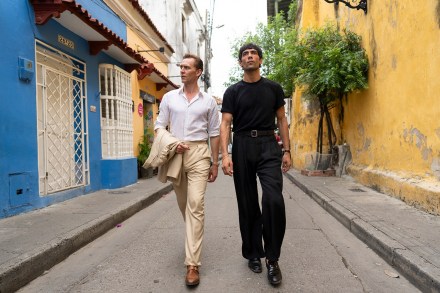
I have been having a John le Carré holiday. Five years after the great master of the spy thriller went to his final safe house in the sky, I spent chunks of the festive season watching two of his series on TV, and reading a slim volume called The Secret Life of John le Carré by his biographer Adam Sisman. Amazon Prime’s big New Year drama offering is The Night Manager, a sequel series to one of le Carré’s later stories, and simultaneously the BBC has been re-running le Carré’s 1970s masterpiece, the seven-part mole hunt Tinker, Tailor, Soldier, Spy, starring the late, great Alec Guinness as spymaster George Smiley. Sadly, on two successive nights I found myself falling asleep in front of the dramas.

mcnally

Keith McNally: ‘big-name’ stars are wrecking Broadway

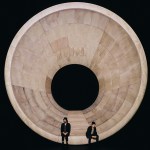
“WAITING FOR GODOT IS A RUBBISH PLAY.” So declared Keith McNally in an Instagram post that caught my eye. “I urge you not to see Waiting for Godot.” Accompanying the statement was an image of the two stars who headlined this fall’s production at Broadway’s Hudson Theater, Keanu Reeves and Alex Winter. The play is the latest in what regular theatergoers and visiting tourists may have started to recognize as a recurring theme in New York’s theater scene: an overwhelming number of big-name Hollywood screen actors dotting their playbills. These players are here to make their bones and increase their prestige as “true” thespians, often by attaching themselves to tired and familiar productions. This has certainly not been lost on McNally.

My Name is Orson Welles was illuminating

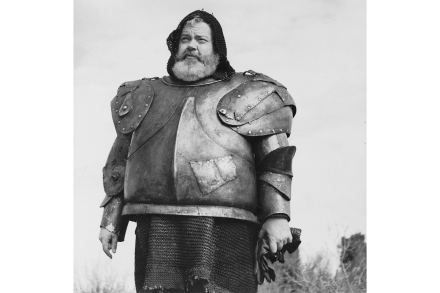
Orson Welles (1915-85) considered the notion of posterity vulgar, but he knew that he’d be loved once he was dead. That death came suddenly, just over 40 years ago, on October 10, 1985. There was a poignancy to the way death took him – sitting at his typewriter after appearing on Merv Griffin’s talk show. By then, the co-writer, director and star of the greatest film ever made, Citizen Kane (1941), hadn’t finished a film since 1973’s ignored but now quietly loved F for Fake. At the end of his life, he may have been better known as the guy in Paul Masson wine commercials than as a cinematic genius. To commemorate the 40th anniversary of his passing, Paris’s Cinémathèque Française last fall arranged the illuminating exhibition My Name is Orson Welles.

orson welles

Inside the mind of Cheryl Hines

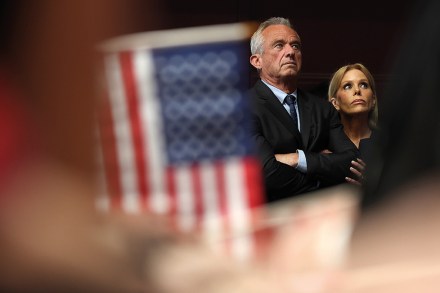
This book shouldn’t work. A memoir written by a 60-year-old actress – who, frankly, has never threatened to become a major movie star – hardly sounds promising. Then there’s the author’s personal baggage. Since 2014, Cheryl Hines has been married to Robert F. Kennedy Jr., the raspy-voiced Health and Human Services Secretary who served as one of Donald Trump’s chief surrogates during his last presidential campaign. Rarely has a book so straddled the worlds of Hollywood and conservative politics, let alone those embodied by the current administration. Yet, against all the odds, Unscripted is an enthralling read. To address the burning topic first: no, not all of Hines’s friends were entirely happy with her husband’s appointment, nor with his views on Dr.

Make mine a Moka pot

It’s strange the things that can trigger amity or affection. At the beginning of the capsule/pod coffee-maker craze, when George Clooney, with his come-to-bed eyes, was seducing the world with Nespresso machines, I bonded with my eldest daughter’s Italian boyfriend over the Bialetti Moka pot. Notwithstanding the expense and waste of the capsule coffee makers, I need at least three pods to get the lights on in my head in the morning. I’ve never had a good coffee from any of them. Contrast that with the cute, economical, environmentally friendly little Moka, the smallest of which – one cup – costs about $30 and, depending on the quality and freshness of the coffee used, makes a better cup than any café or restaurant.

Jane Austen: Rise of a Genius is projecting

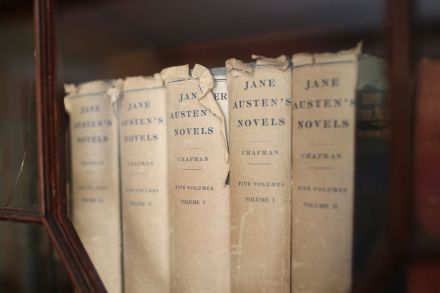
Which is your favorite Jane Austen novel? OK, maybe not a conversation prompt appropriate for every setting, but a reliable one, I find, to break the ice at DC dinner parties where I’m not well acquainted with my fellow guests but spy someone who seems likely to know her work. I also ask it of younger fiction writers who come looking for advice about plot construction. I once resorted to it with a stranger, a woman of a certain age, to distract me from my irritation, sitting on an Acela train inexplicably halted outside Wilmington, Delaware, for two hours. She chose Persuasion, Austen’s elegiac account of late-in-life love.

The secrets of Henri Rousseau

Henri Rousseau (1844-1910) was so earnest that it landed him in jail. When a former student asked him to use forged identity papers to open a bank account, Rousseau, who was then in his sixties, was happy to help out his old acquaintance. He seemed unaware that he was doing anything more than a favor, let alone committing fraud. To prove the painter’s innocence, his lawyer brought one of his canvases before the jury and declared: “You do not have the right to condemn a primitive.” The works that result from such legendary naivety are on view at the Barnes Foundation in Henri Rousseau: A Painter’s Secrets.

The Adventures of Elektronik is not your average children’s comedy

For people from the former Soviet Union, the holiday season brings with it two certainties: mayonnaise and movies. Mayonnaise, because no winter festivity is complete without the traditional mayo-infused salads with such evocative names as “herring under a fur coat” and “Olivier,” which are eaten for days straight. These calorific concoctions are best accompanied by a dozen or so cult films from around 1965 to 1985, which are ritually rewatched every year by Homo Sovieticus and his descendants. Of these classics, one of the most beloved is the musical The Adventures of Elektronik (1979). Adapted from the novels of the science-fiction writer Yevgeny Veltistov, the movie tells the story of a young robot named Elektronik.

How the West can win

It is no overreaction to look at the current state of western culture, through academia and the arts alike, and to feel that Rome has fallen all over again. Whether it’s a crowd chanting in support of terrorists at Coachella, or a horrific political assassination on a university campus, cheered by some, we are witnessing something far more sinister than a mere surge in political violence. We are watching the collapse of the fundamental preconditions that make civil society possible, as a civilization tears itself apart. Many are of the opinion that it is already too late: that the unique and unprecedented advances in western culture over the past three millennia cannot be furthered.

Jon Fosse’s Scandi-lit revival

Jon Fosse, the Norwegian novelist who won the 2023 Nobel Prize in Literature, has sat center stage in the recent revival of interest in Scandinavian literature. Fosse’s one-time creative-writing student Karl Ove Knausgård became the very definition of a publishing sensation when the first volume of his six-part memoir Min Kamp (“My Struggle”) – in which he dragged all his family skeletons out of the closet for all to see – was published in 2009. Danish novelist Solvej Balle’s seven-part On The Calculation of Volume, of which only the first three parts have been published in translation, has caused a similar stir in the past two years.

The great, underestimated Richard Yates

When the novelist Richard Yates, who was born in February 1926, was interviewed by the magazine Ploughshares in 1972, the conversation turned to the neglected writers of his generation. Yates, a man of remarkable acuity and taste, was typically incisive about the likes of Evan S. Connell, Brian Moore and Edward Lewis Wallant – and, just to show that he was no misogynist, he saluted Gina Berriault, saying that she was “an absolutely first-class talent who has somehow been left almost entirely out of the mainstream. She hasn’t quit writing yet, either, and I hope she never will.” If these words struck something of a cautionary note, then Yates’s conclusion was even more concerning.

George Clooney has been seduced by a French fantasy

Bonjour and bienvenue to the Clooneys. Gorgeous George, his wife Amal and their eight-year-old twins have been granted French citizenship. The Hollywood actor has long had a deep streak of Europhilia, owning luxury properties in Berkshire and Lake Como, Italy, as well as his pad in Provence. Located near the village of Brignoles, the Clooneys’ €9 million ($10.5 million) wine estate spans 425 acres, including an olive grove, swimming pool and tennis court. In an interview last month with a French radio station, 64-year-old Clooney declared (in English) that "I love the French culture, your language, even if I'm still bad at it after 400 days of courses." He also praised France’s privacy laws, citing them as the principal reason he and his wife want to raise their children there.

This Christmas, listen to Mary Did You Know?

A popular and poignant Christmas song, written late in the previous century for a church’s holiday program, incites passionate criticism from those who disagree with the way it phrases its message. Since first being recorded in 1991, “Mary, Did You Know?” has been performed by soloists and groups ranging from Carrie Underwood and Dolly Parton to Pentatonix, CeeLo Greene and Kathleen Battle. The lyrics are a series of questions to Mary, Jesus’s mother, asking whether she knew during his infancy about the profound impact he would make as an adult. Yet that powerful literary device annoys those who believe the song demeans its subject.

Does Spielberg’s new movie have real UFOs?

Steven Spielberg might be the most beloved and popular American director of the 20th century, but it is also unavoidably the case that, since 2005’s Munich, he has been on something of a disappointing run. While many of his films, not least The Fabelmans and West Side Story, have been critically acclaimed and Oscar-nominated, there is a growing sense that he has not made a really interesting or worthwhile picture in 20 years, with the partial exception of the enjoyable, quirky, Coen Brothers-scripted Bridge of Spies.

Have Americans lost their sense of humor?

Humor has become serious business. A nation of anxious primates trapped in a silicon casino of likes, retweets and dopamine-soaked drudgery, America is suffering from what the comedian Norm Macdonald called a “crisis of clapter.” Terrified of saying the wrong thing, needing punchlines to be spoon-fed – what was once the funniest place on Earth has become a tight-lipped, tongue-twisted society where jokes are rewarded with polite applause instead of genuine laughter. It’s the old stink of a well-mannered aristocracy, and very un-American indeed. From his beginning, the ugly American – wild-eyed and rabble-rousing – rankled the Old World.

humor
monuments

What monuments stand to teach Americans about themselves

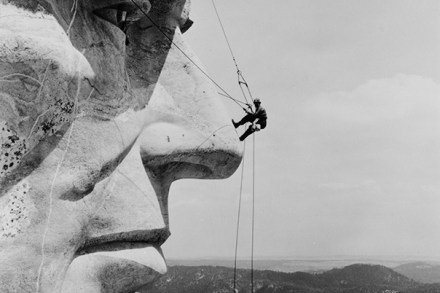
Why do we raise monuments? Why do we tear them down? These questions hover over MONUMENTS, now on view at Los Angeles’s Museum of Contemporary Art and the Brick. The premise is straightforward enough: gather the remains of America’s shattered sculptural conscience – decommissioned Confederate statues and their graffiti-marred plinths – and display them alongside contemporary works on racial topics. This comparison is supposed to reveal something about America’s nature and history, and it certainly does: it shows us just how attached we are to grievance. Both the raising and the destruction of monuments nourishes convictions on either side, ensuring that the argument can never end.

wikipedia

The Seven Rules of Trust sees Wikipedia as a blueprint

Everybody criticizes Wikipedia, but everybody uses it. Having spent my childhood cross-legged on my carpet reading dictionaries and encyclopedias, I found it a revelation and refuge from the get-go. Google could never emotionally compete. While some AI products have become useful knowledge tools, there is still nothing like Wikipedia’s hyperlink paradise, which allows nights to slip away as you click through slices of world history or science. Now its co-founder Jimmy Wales has written a book (with the help of author Dan Gardner) about what enabled this impossible project to become one of the world’s favorite utilities. When reading The Seven Rules of Trust, two things jump out at you.

louis ck

Louis C.K. fails to follow in Faulkner’s footsteps

The Great American Novel is a holy obsession – the Everest every writer dreams of summiting. For most, that dream begins and ends with William Faulkner, whose winding sentences and sunburned Southern landscapes birthed prose that seemed to breathe. His words marched; crookedly, yes, but always with purpose. Louis C.K., a would-be Faulkner disciple, trudges into the same swamp in Ingram, minus the map, the bearings and any sense of control. What was presumably intended to echo the Mississippian’s hypnotic disarray becomes instead a masterclass in incoherence. The story, told in long and sweaty first-person narration, follows a boy wandering through a Texan landscape of mud, hunger and half-formed memories. The intention is noble; the execution is catastrophic.

mitfordmania troublemaker

Mitfordmania in Carla Kaplan’s Troublemaker

I won’t attempt to explain Mitfordmania; we’d be here all night. Suffice it to say that fascination with the British sisters – Nancy, Pamela, Diana, Unity, Jessica and Deborah, born to the 2nd Baron Redesdale between 1904 and 1920 – shows no sign of waning. This year alone, the six have inspired Outrageous, a lavish (and fatuous) multi-episode television drama available on BritBox; The Party Girls, a play by Amy Rosenthal; and Do Admit: The Mitford Sisters and Me, a graphic novel by cartoonist and fangirl Mimi Pond. Now comes biographer Carla Kaplan’s Troublemaker: The Fierce, Unruly Life of Jessica Mitford. I did wonder if there was anything left to say. Famous for the muckraking classic The American Way of Death, Jessica also wrote two well-received autobiographies.

Why are Lawrence Osborne’s novels suddenly popular in Hollywood?

The film Ballad of a Small Player opens with a blast of classical music, a shot of the Macau skyline and Lord Doyle (Colin Farrell) waking up in a hotel suite littered with Champagne bottles, cigarette butts and designer loafers that are starting to show their wear. While he dresses and shaves, a voice-over informs us he has three days to live. A sharp observer might notice he seems to have considerably less than that. Either way, for the next 100 minutes, director Edward Berger (All Quiet on the Western Front and Conclave) treats us to a sumptuous vision of one English con man’s final spree before oblivion. It will take an even sharper-eyed observer to catch, as the final credits snap past, that they have just watched an adaptation of a Lawrence Osborne novel.