Culture

Culture

The good, the bad and the ugly in books, exhibitions, cinema, TV, dance, music, podcasts and theatre.

Candid camera | 28 May 2011

Opera

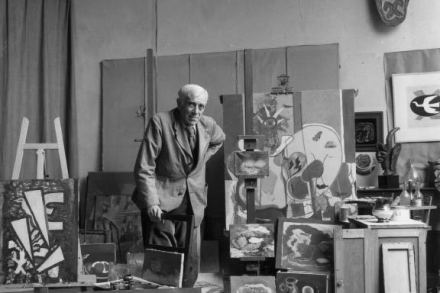
When the photographer Ida Kar (1908–74) was given an exhibition of more than 100 of her works at the Whitechapel Gallery in 1960, history was made. When the photographer Ida Kar (1908–74) was given an exhibition of more than 100 of her works at the Whitechapel Gallery in 1960, history was made. She was the first photographer to be given such an honour — a substantial solo show in a public gallery — and the presentation of her photographs was carefully considered. This set a precedent for subsequent photography exhibitions and brought the question of whether photography is art firmly to the forefront of debate. The person responsible for all this was the dynamic and innovative director of the Whitechapel, Bryan Robertson.

Master piece

Opera

Wagner’s Die Meistersinger von Nürnberg is one of the most taxing of all operas to stage, with a large cast, gigantic proportions and requirements of stamina, both musically and emotionally, such as very few works make. Wagner’s Die Meistersinger von Nürnberg is one of the most taxing of all operas to stage, with a large cast, gigantic proportions and requirements of stamina, both musically and emotionally, such as very few works make. Yet it has received two superb productions in the UK in the past 12 months, the second of which opened at Glyndebourne last Saturday, before an extraordinarily attentive and rapturous audience.

Spark of the divine

Opera

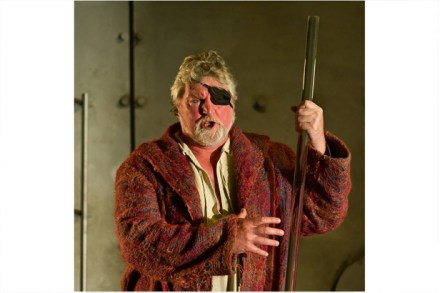
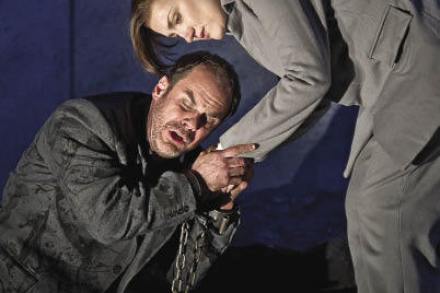
With its new production of Janácek’s last and in some ways most intractable opera, From the House of the Dead, Opera North shows once more that it is the most intelligently adventurous company in the UK, using its money where it is most needed: not on elaborate and perverse staging, but on high-class soloists and a small but excellent chorus, and an orchestra that can rival any in the country.

Berlioz traduced

Opera

After its brief detour into magnificence with The Return of Ulysses at the Young Vic, ENO has returned to its hell-bent form with, appropriately enough, a dramatisation of Berlioz’s The Damnation of Faust. After its brief detour into magnificence with The Return of Ulysses at the Young Vic, ENO has returned to its hell-bent form with, appropriately enough, a dramatisation of Berlioz’s The Damnation of Faust.

Breaking the spell

Opera

Fidelio, once regarded as an uncomplicated celebration of what its title suggests, and of freedom, especially political freedom, has become a problem work, and most productions of it amount to uninterestingly complicated attempts to circumvent issues which shouldn’t have been present in the director’s mind in the first place. Fidelio, once regarded as an uncomplicated celebration of what its title suggests, and of freedom, especially political freedom, has become a problem work, and most productions of it amount to uninterestingly complicated attempts to circumvent issues which shouldn’t have been present in the director’s mind in the first place.

Russian revenge | 23 April 2011

Opera

The Tsar’s Bride is Rimsky-Korsakov’s tenth opera, give or take various versions of some previous ones, but you’d never guess it. The Tsar’s Bride is Rimsky-Korsakov’s tenth opera, give or take various versions of some previous ones, but you’d never guess it. The production at the Royal Opera, which is exemplary in most respects, suggests a fairly talented newcomer to the genre, who isn’t yet in a position to boss his librettist around in the necessary ways. The Overture sets no scene, and is anyway tiresome and undistinguished; there are lots of stereotypical choral scenes; the central set of characters and their motivations sometimes get submerged in superfluous sidelines.

Short cuts | 16 April 2011

Opera

One of the troubles with opera is that since creating and putting one on involves so many people many composers write as if for eternity, or at least for a sizeable segment of it. It’s been a great boon in recent years that some companies, notably Tête-à-Tête, have encouraged the creation and production of operas-in-progress and of short pieces which enable composers and librettists, and the mainly young performers they recruit, to find out what they might be good at. It’s a great boost for the spirits of the opera-goer to realise that, if he is being bored rigid by a piece, there is only 20 or so minutes of it.

Lost in space

Opera

The opening performance of the Royal Opera’s first revival of Fidelio, in the production by Jürgen Flimm which was unwisely imported in 2007, was so dreary that it would be better not to comment on it, except that it seems worth separating the inherently feeble elements from the ones that happened to be present, and which may well have disappeared in later performances. The opening performance of the Royal Opera’s first revival of Fidelio, in the production by Jürgen Flimm which was unwisely imported in 2007, was so dreary that it would be better not to comment on it, except that it seems worth separating the inherently feeble elements from the ones that happened to be present, and which may well have disappeared in later performances.

Spellbound

Opera

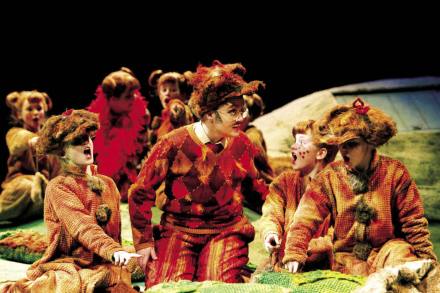
English Touring Opera continues to be the most heroic of companies. This spring season it is performing at 17 locations, from Exeter to Perth, Belfast to Norwich. And in the many years that I have been going to its productions, there has been no compromise in standards and absolutely no contraction of repertoire to the familiar and the safe, if anything the reverse. Last autumn it premièred Goehr’s tough Promised End, an immense artistic achievement. And now they are putting on Tobias Picker’s Fantastic Mr Fox, an operatic adaptation of Roald Dahl, with young children from each of the relevant towns playing the fox cubs — and having their names printed in the lavish accompanying booklet, with CD attached.

Verdi without the trappings

Opera

Scene: the Royal Opera House, last Friday, 10.35 p.m. In the last act of Aida, Amneris, in the formidable person of Olga Borodina, has just concluded her magnificent denunciation of priests: ‘Cruel monsters! You will always be thirsty for blood!’ and the final ten minutes remain, the exquisite scene in which the hero and heroine suffocate while singing their farewell to life. Scene: the Royal Opera House, last Friday, 10.35 p.m. In the last act of Aida, Amneris, in the formidable person of Olga Borodina, has just concluded her magnificent denunciation of priests: ‘Cruel monsters! You will always be thirsty for blood!’ and the final ten minutes remain, the exquisite scene in which the hero and heroine suffocate while singing their farewell to life.

Winning way

Opera

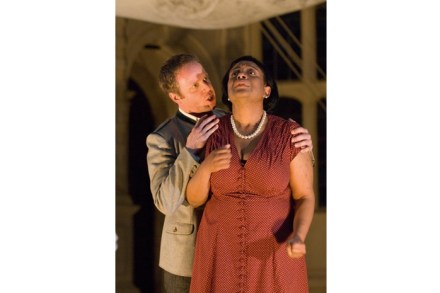
Two of the most popular operas in the repertoire, works which I adore, but which I’m almost always disappointed by productions of; yet on two consecutive evenings in the Wales Millennium Centre I gained intense pleasure from each of them. Two of the most popular operas in the repertoire, works which I adore, but which I’m almost always disappointed by productions of; yet on two consecutive evenings in the Wales Millennium Centre I gained intense pleasure from each of them. What went right? Both Il Trovatore and Die Fledermaus are works of overflowing tunefulness, with almost inscrutable plots.

Musical marvel

Opera

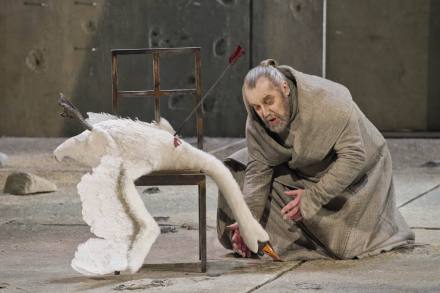
It is some time since any of the masterpieces of Wagner’s high maturity has been staged in London, so ENO’s revival of Parsifal was most welcome, despite memories of the irritations and worse of the production in 1999. It is some time since any of the masterpieces of Wagner’s high maturity has been staged in London, so ENO’s revival of Parsifal was most welcome, despite memories of the irritations and worse of the production in 1999. Since then it has toured the world, and achieved contemporary immortality on DVD, a performance recorded in Baden-Baden. The ENO revival is directed by Daniel Dooner, and is quite extensively revised, though not nearly extensively enough for my taste.

Touching the void

Opera

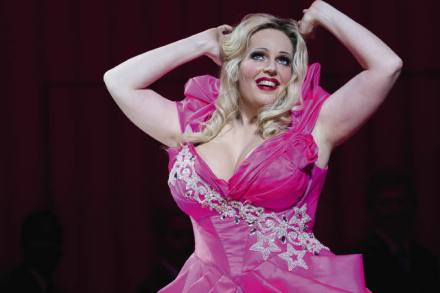
The Royal Opera has been both noisy and evasive about Mark-Anthony Turnage’s new opera, Anna Nicole, with words by Richard Thomas of Jerry Springer: the Opera notoriety. The Royal Opera has been both noisy and evasive about Mark-Anthony Turnage’s new opera, Anna Nicole, with words by Richard Thomas of Jerry Springer: the Opera notoriety. I have never seen and heard so much advance publicity, for any arts event whatever, and yet, apart from telling us that it was to be about the eponymous celebrity, there was very little about the piece that could actually be called information. There seemed something reflexive about the whole operation, endless articles and interviews, but a void at the centre, which is exactly and obviously what celebrity culture is.

Facing reality

Opera

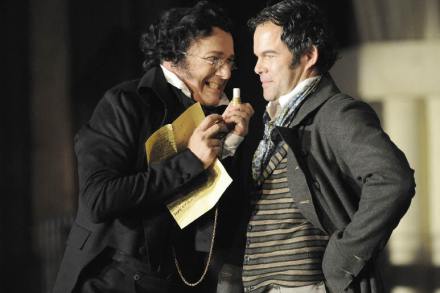
Artistic integrity is the subject of Mieczysław Weinberg’s opera The Portrait, as it is of Gogol’s short story from which it is adapted. Artistic integrity is the subject of Mieczysław Weinberg’s opera The Portrait, as it is of Gogol’s short story from which it is adapted. And whatever one might feel about the work — and I enjoyed it a lot more than most of my colleagues seem to have — Opera North is unquestionably demonstrating artistic integrity by staging relatively or very unknown operas in productions which don’t have as their main selling point that the director has never seen, let alone directed, an opera before.

Deriding Donizetti

Opera

Someone should write an opera about a once-great opera company, now in artistically suicidal decline. A few decades ago it had great productions and performances of the masterpieces of the repertoire, but it has been scared by successive governments warning about élitism, the need for attracting new, young, opera-hating audiences, and so on. So it has hired a succession of ‘directors’ (adopting the language of cinema), who have never seen an opera, to stage established works and mount new ones, making them look as much as possible like the eternally running musicals it eyes enviously.

Animal magic

Opera

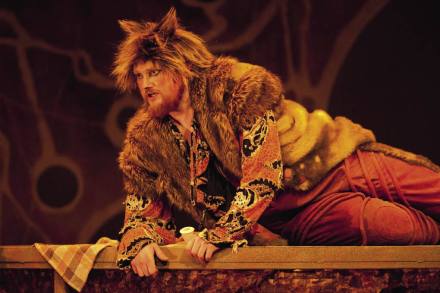
The annual collaboration between Scottish Opera and the Royal Scottish Academy of Music and Drama is, as the principal of the RSAMD writes, ‘a model...for partnership working between professionals and professionals-in-training’, and it is hard to think of any work more suitable for this partnership than Janácek’s The Cunning Little Vixen. The annual collaboration between Scottish Opera and the Royal Scottish Academy of Music and Drama is, as the principal of the RSAMD writes, ‘a model...for partnership working between professionals and professionals-in-training’, and it is hard to think of any work more suitable for this partnership than Janácek’s The Cunning Little Vixen.

No-hoper

Opera

As I sat fuming through the latest absurd production of Carmen, this one directed by the controversial Daniel Kramer for Opera North, it struck me that this opera, like one other of the trio of popular masterpieces set in or around Seville, Mozart’s Don Giovanni, suffers because its central figure leads a separate life of her or his own; though they are most famous in the context of these works.

Ruffled feathers

Opera

The Royal Ballet could not have timed better its new run of Swan Lake. Swans — and black ones, in particular — are all the rage these days. The Royal Ballet could not have timed better its new run of Swan Lake. Swans — and black ones, in particular — are all the rage these days. Unsurprisingly, the first performance played to a packed house, although the sell-out could not be entirely credited to the swan-o-mania prompted by Aronofsky’s movie Black Swan. Sarah Lamb starred in the demanding double role that the ballet is famous for and which the film focuses on. Not unlike the character portrayed by Natalie Portman, she is a diaphanous beauty, who knows how to turn into a splendidly vicious and irresistible seductress.

Gender problems

Opera

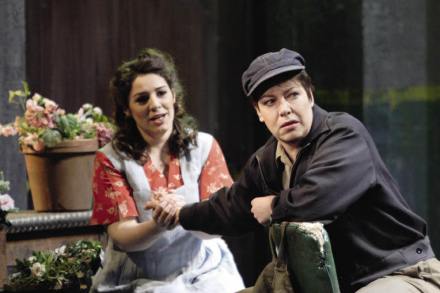
It’s sometimes intriguing to speculate, as you go to an opera in a fringe production of one kind or another, about how much messing around (used neutrally) this or that popular work can take. It’s sometimes intriguing to speculate, as you go to an opera in a fringe production of one kind or another, about how much messing around (used neutrally) this or that popular work can take. OperaUpClose scored an enormous success with its version of La Bohème in 2009/10 (though its claim to be the longest-ever run of an opera should be balanced by the fact that The Cock Kilburn could seat only about 40 people).

Witch craft

Opera

Is Humperdinck’s Hänsel und Gretel an opera for children of all ages, or for grown-ups and for children, or mainly for grown-ups? I went to the Royal Opera’s revival of it just after Christmas, to a 12.30 matinée (there were several), which I took to be for the benefit of children, as well as possibly being an unusual piece of thoughtfulness about transport on the part of the management. Is Humperdinck’s Hänsel und Gretel an opera for children of all ages, or for grown-ups and for children, or mainly for grown-ups? I went to the Royal Opera’s revival of it just after Christmas, to a 12.

Vapid Wagner

Opera

It is characteristic of Wagner’s operas, in their remarkable urgency and depth, that initially one thinks they are dealing with one or another opposition, for instance, Power versus Love in the Ring, only to find, as one gets further into them, that they are very much more complicated than that, and often that what seems to be their subject matter is not what actually is. It is characteristic of Wagner’s operas, in their remarkable urgency and depth, that initially one thinks they are dealing with one or another opposition, for instance, Power versus Love in the Ring, only to find, as one gets further into them, that they are very much more complicated than that, and often that what seems to be their subject matter is not what actually is.

Gruesome fun

Opera

Having been away, I only got to Alexander Raskatov’s opera A Dog’s Heart at its fifth performance by ENO, by which time everyone knew that it was brilliantly mounted, but not of much musical substance. Having been away, I only got to Alexander Raskatov’s opera A Dog’s Heart at its fifth performance by ENO, by which time everyone knew that it was brilliantly mounted, but not of much musical substance. Actually, you could say the same for most of the new operas that ENO has mounted over the past decade, and from composers much better known than Raskatov. I’d be happy to volunteer a list.

Interview: Semyon Bychkov: his own man

Opera

Semyon Bychkov has rather unspectacularly become one of the world’s most sought after conductors, and at present he is in London to conduct a series of performances of Wagner’s now least often staged canonical opera, Tannhäuser, at the Royal Opera House. Semyon Bychkov has rather unspectacularly become one of the world’s most sought after conductors, and at present he is in London to conduct a series of performances of Wagner’s now least often staged canonical opera, Tannhäuser, at the Royal Opera House.

Magnificent Mozart

Opera

The subtitle of Mozart’s Don Giovanni is ‘Il dissoluto punito’ (the rake punished), that of Rossini’s La Cenerentola is ‘La bontà in trionfo’ (goodness triumphant), while Monteverdi’s L’Incoronazione di Poppea might well be subtitled ‘Vice rewarded’. The subtitle of Mozart’s Don Giovanni is ‘Il dissoluto punito’ (the rake punished), that of Rossini’s La Cenerentola is ‘La bontà in trionfo’ (goodness triumphant), while Monteverdi’s L’Incoronazione di Poppea might well be subtitled ‘Vice rewarded’. They are the three operas that Glyndebourne is taking round the country this year, whether with moralistic intent I don’t know.

Conflicting passions

Opera

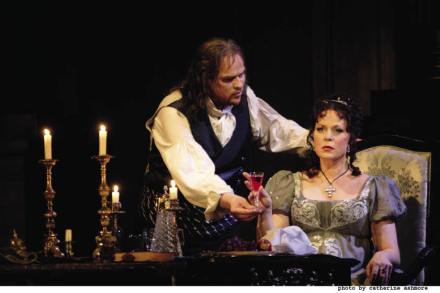
Francesco Cilea’s Adriana Lecouvreur, his biggest success, dating from 1902, leads a fringe existence, but it persists thanks primarily to the name role, dramatically meaty and not imposing too great a strain on the performer. Francesco Cilea’s Adriana Lecouvreur, his biggest success, dating from 1902, leads a fringe existence, but it persists thanks primarily to the name role, dramatically meaty and not imposing too great a strain on the performer. It has been mainly associated with singers at a fairly late stage — or thinking they were — of their career, Magda Olivero and Renata Tebaldi being the most notable.

Anthony Whitworth-Jones: Garsington on the move

Opera

When is a country-house opera not a country-house opera? When it no longer has a country house attached. This is what is about to happen to Garsington Opera, which is moving, lock, stock, barrel and picnic basket, from the exquisitely planned and intimate gardens of the Bloomsbury-redolent Garsington Manor near Oxford to the wide-open rolling hills of the Wormsley Estate in nearby Buckinghamshire. The move is a change and a challenge that the company’s general director, Anthony Whitworth-Jones, seems thoroughly to relish. ‘It’s enormously exciting,’ he says.

Mangled Mozart

Opera

Don Giovanni is an opera which gives plenty of scope for alternative interpretations, as has been very clearly demonstrated in the past 30 or so years, since directors took over as the determining force in productions. But there are certain basic features which any production, to be taken seriously, must respect. The two most obvious are that the Don must be a figure of riveting allure, and that social position is a key factor in the development of the action, at any rate until that gets dispersed in the ill-organised Act II.

Spellbound

Opera

Jonas Kaufmann’s ascent to the position of the leading German lyric-dramatic tenor has been surprisingly gradual. I first saw him in Edinburgh in 2001, giving a Lieder recital in the Queen’s Hall, and was immediately astonished that I hadn’t heard of him before. For the next few years, I heard him there in more recitals, and in concert performances of Der Freischütz, Capriccio and culminating as Walther in Die Meistersinger in 2006. Jonas Kaufmann’s ascent to the position of the leading German lyric-dramatic tenor has been surprisingly gradual. I first saw him in Edinburgh in 2001, giving a Lieder recital in the Queen’s Hall, and was immediately astonished that I hadn’t heard of him before.

Static and staid

Opera

The Royal Opera last revived its production of Gounod’s Roméo et Juliette ten years ago, with what were then known as the lovebirds, Gheorghiu and Alagna, who imparted their own kind of glamour to the work. The Royal Opera last revived its production of Gounod’s Roméo et Juliette ten years ago, with what were then known as the lovebirds, Gheorghiu and Alagna, who imparted their own kind of glamour to the work. Nicolas Joël’s production badly needs some pepping up, since it is a desperately static and staid affair, as revived by Stephen Barlow, with some hyperactive running around on the part of the principals, while the chorus remain rooted to whichever spot they are on.