Culture

Culture

The good, the bad and the ugly in books, exhibitions, cinema, TV, dance, music, podcasts and theatre.

Choral church music must be heard within the liturgy

Classical

Choral church music is at its most effective when it’s embedded in the liturgy as it was designed to be, rather than performed on stage in a concert. The Mozart Requiem works well in both situations; but if you happen to be in a pew, mid-mass, eyes closed and head in the praying position at the moment when the choir breaks into the ‘Lacrimosa’, the music will somehow be doubly powerful. Two annual summer festivals of music within the liturgy celebrate this truth. The first is the Roman Catholic St Birinus Festival, now in its fourth year.

Thank god for Jodie Foster

Cinema

A Private Life is a French film starring Jodie Foster as a psychoanalyst navigating what might be a murder mystery. It’s a psychological thriller (kind of), and a complex character study, and while it is très, très French, with elements that feel like a fever dream, Foster’s presence will keep you glued. She has a face you could watch for ever. It moves. It’s expressive. It captivates. She hasn’t meddled with it. ‘I don’t want to be some Botoxed weirdo,’ she has said. It makes such a refreshing change to see a 63-year-old woman who looks like a 63-year-old woman rather than a haunted doll. In fact, if it weren’t for her and Frances McDormand, it would probably be game over.

An entertaining Rheingold from Grange Park Opera

Opera

Grange Park Opera has acquired a new chandelier for its theatre at West Horsley; a jumble of foliage and fairy lights that ascends into the roof pre-curtain, like in The Phantom of the Opera. It’s a fun addition, and very on-brand. This stockbroker-belt festival knows its audience. It raises and splashes cash with equal gusto, and it doesn’t overthink things. A Ring cycle – opera’s ultimate status symbol – has been on the cards at GPO for a few years. Now it’s arrived and the opening gambit, Das Rheingold, looks and sounds impeccably high-spec. It’s designed and directed by Charlie Edwards, and the visuals are familiar but effective.

The glorious silliness of tribute band names

Notes on...

Seeing a tribute band can be a strange experience. There are your heroes on stage once more, magically rejuvenated and playing the music of your youth. You too feel briefly young again – until you notice everyone else at the gig is also at least 57. But as often as not the band is brilliant. They have lovingly tracked down the right guitars, effect pedals and amp settings in search of the perfect sound. They have styled their hair just so, applied the requisite tattoos and, at some obvious expense, commissioned perfect replicas of signature stage outfits. See Björn Again and the girls might come complete with the purple capes worn for Abba’s 1980 world tour before changing into the white-booted ‘SOS’ look.

A ballet masterpiece revived – but where’s the pony?

Dance

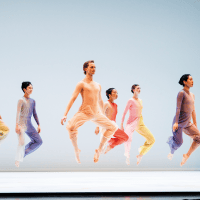
The choreographic partnership of Sol Leon and Paul Lightfoot has long been celebrated in mainland Europe: a new double bill presented by the Royal Ballet is the first time their work has been showcased for British audiences. The first-night reception to Covent Garden was rapturous, but I wonder how long the excitement will last. What an astounding masterpiece this ballet is. I adore it, who couldn’t? Leon and Lightfoot specialise in movement characterised by a nervous staccato, suggestive both of psychic anxiety and robotic precision: the dancers look demented or brain-dead, animatronically controlled. Black is the dominant colour (Leon and Lightfoot are often their own designers) and the lighting does more to shade than illuminate. It is all very chic indeed.

Toy Story 5 contains delicious touches

Cinema

Toy Story 5 – do we need it? One worries for the narrative integrity of characters when an IP is thrashed to death like this. The latest ​instalment, however, does address one of the most pressing dilemmas of modern childhood (screen time) and whether it will be the end of toys. (‘Extinction… Not again!’ cries Rex, the dinosaur.) It is timely, with some delicious touches – Woody now has a bald spot So it is timely, with some delicious touches – Woody now has a bald spot. And while it isn’t as entertaining as the first three and stumbles at the finishing line, it may be better than the fourth, with its horrible doll Gabby Gabby.

A play that shows Iranian society is like our own

Theatre

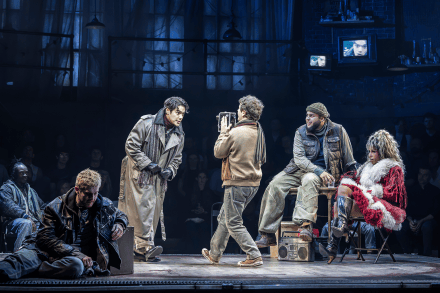
Under the Shadow is a timely drama set in Tehran in 1988 during the Iran-Iraq war. Saddam’s missiles are raining down on the city which puts an additional strain on the troubled marriage of Iraj and Shideh. Iraj is a doctor. Shideh is a part-qualified doctor. During quiet spells, they chat about humdrum stuff. Iraj wants Shideh to have another baby. Shideh prefers to leap around doing her Jane Fonda exercises. Her mother-in-law potters in and out and fusses over bits of crockery. Their daughter snuggles on a sofa with a rag doll. The low-energy dialogue flits from one issue to the next without any sense of direction. The characters tell each other jokes to pass the time.

Fresh, original Mozart

The Listener

Grade: A It’s spring in Vienna; well, OK, it’s early summer but it’s a grey day when Mozart doesn’t make you feel younger and I reckon this new release from Alim Beisembayev will do just that. In a world of infinite entertainment possibilities, Beisembayev has done the hard bit – the choosing – for you. Here we have two late piano concertos (Mozart wrote them between the ages of 30 and 32, as his own solo career wound down) charged with a grandeur, a playfulness and an endless smiling compassion that will come as a glorious corrective to anyone whose last experience of Mozart involved bodily fluids and confectionery in Sky’s hellish remake of Amadeus.

Spielberg fumbles his final sci-fi

Cinema

Steven Spielberg has said his latest film, Disclosure Day, is ‘the summation of my life in science fiction’, which began with Close Encounters of the Third Kind and ends here. (He is now 79.) I adored Close Encounters when it first came out in 1977 and still do – that final scene must be one of the greatest final scenes in cinema, greater even than The Terminator. But Disclosure Day is not its match, not nearly. What we have here instead is a forgettable action film with the bones of your average conspiracy thriller. There may or may not be life on other planets, but this poor Earthling felt the life drain from her at around ten minutes in.

The liberating delights of Aldous Harding

Pop

The first thing I did after getting home from the Barbican the other week was google ‘Aldous Harding neurodivergent’. It seems I’m not the only one: messageboard threads debate it; fans speculate. Once you’ve see her perform, you would know why: she twisted and contorted herself not like a dancer, but like someone trying to work out the kinks in her own physicality. She also barely spoke to the audience. Spot this kind of behaviour on the street and you’d walk on, pretending not to see. On stage, one had to look, and it was wholly compelling. Liberating even – especially if, like me, you are neurodivergent (look, I know everyone is now, but I do have an actual diagnosis). We were being forced to confront our own embarrassment. Forced to see someone being exactly who she was.

Another thriller, another teenage incel

Television

At just over two hours, Martin Scorsese’s 1991 remake of Cape Fear was 20 minutes longer than the 1962 original. It also added some moral complexity. Instead of a total psycho (Robert Mitchum) menacing a lawyer’s very nice family, we got a total psycho (Robert De Niro) menacing a lawyer’s slightly messed-up one. But how do you stretch the story to ten hours? That’s the challenge faced by Apple TV – and, after two episodes, the answer’s already clear: by throwing in any number of subplots, strenuously referencing as many contemporary anxieties as possible and not worrying too much whether some of the characters seem quite stupid in their willingness to ignore the obvious threat.

Delightful Rossini at Glyndebourne

Opera

It’s impossible to say what Rossini would have made of Glyndebourne’s production of Il turco in Italia, but you can bet on one thing – he’d have brought the mother of all picnics. His love of food and drink was heroic; it’s believed that more recipes have been named after Rossini than any other musician. He didn’t mess about, either, berating his Paris grocer when a promised consignment of Neapolitan macaroni turned out to be an inferior Genoese product. ‘If he knows as much about music as he does about pasta, he must be a great composer,’ commented the oblivious shopkeeper. Well, that’s the story, anyway (I thought the source was Stendhal but it turns out to be Ben Trovato).

What a rabbit hole this film takes you down

Cinema

Madfabulous is a biopic of Henry Paget, the fifth Marquess of Anglesey, who was probably mad and definitely fabulous. His prodigalities in jewels and clothing were enormous. He perfumed his automobile so it belched violets. He was partial to wearing women’s clothing. He set up his own theatre company to showcase his ‘butterfly dance’. Needless to say, he burned through his family’s fortune in a few short years. How could all this not be wonderful on screen? Who doesn’t wish for an automobile belching violets? Alas, the film leans towards the pedestrian but, still, it will send you down a most satisfying rabbit hole. Look him up. The spit of Frank Zappa, right? And this is the late 1800s we are talking about. Respect.

None of McCartney’s new songs will trouble his setlist for long

Pop

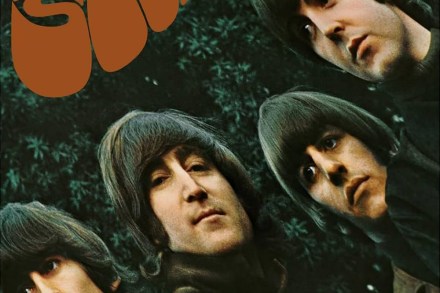
On 30 May 1966, the Beatles released ‘Paperback Writer’ – a fortnight after ‘Paint It Black’ by the Rolling Stones and only days before Bob Dylan released ‘I Want You’ as a single. Paul Simon wrote and recorded (with Art Garfunkel) ‘A Hazy Shade of Winter’ not long after. Yes, yes, what bliss it was in that dawn etc. But anyone predicting back then that, exactly 60 years later, all four artists would still be releasing new music and touring to large and appreciative audiences would have been laughed clean out of the Bag O’Nails. Even when glossy monthly music magazines such as Q started appearing in the 1980s, 40 was regarded as the dark side of the moon for the foundational pop stars of the 1960s.

Why I’m increasingly drawn to optimistic sci-fi

Television

You know you’re getting old when you see Geena Davis from Thelma & Louise cast as a granny sex symbol and Alfred Molina as a character so elderly you’re supposed to believe that he could drop at any time. This is one of the running gags of The Boroughs, a sci-fi/monster series set in an upmarket, Stepford Wives-esque desert retirement village, and clearly aimed at ageing farts like I very nearly am who imagine themselves to be much younger and groovier than they now are. ‘Don’t worry, wrinkly kids,’ the series reassures us. ‘By the time you hit your seventies you’ll be taking more drugs and having more sex – even crazy, orgy sex [note to squeamish viewers: this scene takes place off camera] – than ever before.

Are we ready for the truth about Judy Garland?

Theatre

End of the Rainbow feels like a prison drama set in London in 1969. Judy Garland is about to give a string of solo shows in the West End and she’s preparing at the Ritz under the supervision of her cruel boyfriend, Mickey Deans, who doubles as her publicist and drug dealer. Her British pianist, a friendly queen named Anthony, tries to protect her from Mickey’s manipulative bullying. Judy, the captive, forfeits our sympathy straight away by complaining about everything. Her suite is too poky. She’s desperate for liquor to improve her mood. And she reacts with outrage when the Ritz manager asks for payment in advance so she forces him to back down by threatening to commit suicide. She rehearses the stunt by standing on a balcony and daring herself to dive into the street.

A first-class production of Puccini’s Western

Opera

Nature smiled on the opening week of Opera Holland Park’s new season. There’s no better advertisement for semi-outdoor opera than an unseasonal heatwave, and it brought its own authenticity to Puccini’s La fanciulla del West, in a new production by Martin Lloyd-Evans. The wooden cabins and trestle tables of the set had a parched look and you could imagine the smell of pines and sagebrush as the evening grew dark in real time. And never more so than in the final scenes, where Puccini’s gunslinging heroine Minnie gets her man and the world flushes red and gold as they venture off into the sunset. True, you needed to factor out the squawking of the Holland Park peacocks – and the blizzard that Puccini specifies in Act Two – but the point stands.

Gentleman Jack is Northern Ballet’s finest work

Dance

Northern Ballet commits itself almost exclusively to dance as a storytelling medium, and its weakness historically has been to home in on surefire box-office titles such as A Streetcar named Desire, The Great Gatsby and Nineteen Eighty-Four, which lose more than they gain by being deprived of their words. But adapting the source of the popular BBC television series Gentleman Jack proves inspired: the result must rank as one of the best things the company has ever done. Anne Lister was a real figure, a moneyed gentlewoman in early 19th-century Yorkshire whose masculine demeanour, dress and behaviour gave rise to the moniker Gentleman Jack.

The appeal of doom, stoner and sludge metal

Pop

It was odd, walking around Camden Town during Desertfest – the annual weekend-long celebration of doom, stoner and sludge metal (we’ll come to what they all are later). Odd in particular to see so many men wearing tall, brightly coloured pointy hats: the kind your mum rolled and stapled for you out of a piece of card. While surveying the floor of the Electric Ballroom from the balcony, I eventually asked the chaps next to me what was with all the wizard hats. One looked at me as though I was an idiot. ‘They’re not wizard hats. They’re gnome hats.’ Oh, right. Why are they wearing gnome hats, then? Again surprise at my ignorance. ‘Because of the Belgian band. Gnome.’ Of course. Silly me. The sound of Desertfest would be cosily familiar to the parents of attendees.

Haphazard and bitty but Rosie Holt is superb: Churchill’s Urinal reviewed

Theatre

When Rachel Reeves became Chancellor she found a lavatory in her private suite which had been used by Churchill in the 1920s. She vowed to remove it. ‘Smashing glass ceilings and urinals’ was her policy. The actor, Rosie Holt, felt inspired by Reeves’s petulance and she wrote a satire about a female politician who sets out to refit the pipes at No. 11. The Chancellor sits in her office taking phone calls from a secretary, a spin doctor and a divorce lawyer who wants her to finalise a settlement with her awkward ex-husband. Her campaign to replace the loo sparks national outrage and her office is besieged by throngs of far-right agitators. All are men. The urinal itself, played by a Churchill lookalike, becomes a personality in the play and offers advice: ‘Stand your ground.

Thoroughly entertaining: Tuner reviewed

Cinema

I can’t see why anyone wouldn’t enjoy Tuner. It’s a heist caper as well as a romance and while it hits some familiar beats it hits them in new ways. Set in the piano-tuning world – which may be a first – it’s sound-driven (jazz, classical and more) and has something to say about music, identity, artistic envy. In addition it stars Dustin Hoffman and Leo Woodall, who have cracking chemistry. You will not have realised that bird song can hurt It’s a first feature film from Daniel Roher (otherwise an Oscar-winning documentary maker), who proves here that he has equal talent for fiction. Hoffman plays Harry, a New York piano tuner who once played jazz with Herbie Hancock and the like – although maybe he didn’t. (He seems to be slipping into dementia.

The joy of Martinu’s symphonies

The Listener

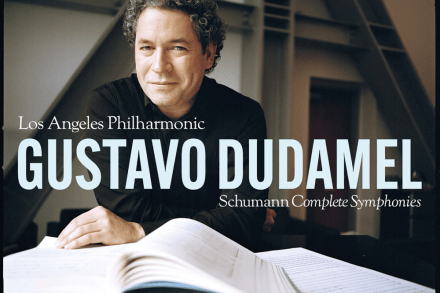
Grade: A– What, more Martinu? It feels like no time since the Pavel Haas Quartet was persuading us that there might, after all, be more than we’d suspected in the chamber music of this patchy but fascinating Czech composer. Now here’s the chief of the Royal Opera, Jakub Hrusa, with a symphony cycle, and it’s starting to look as if Martinu is having a moment. To older record collectors, there’s still something oddly authoritative about seeing the yellow Deutsche Grammophon cartouche above an earnest conductor photo. Stand up straight: it’s on DG. This is serious. Hrusa is certainly serious; very much the thinking man’s maestro, he’s even published a collection of essays on Martinu.

How the office has come to haunt us

Arts feature

Should we hop on a call? Let’s touch base. Let’s take this offline. Let’s circle back to your last slide deck. Let’s get those action items actioned by close of play. We need stakeholder buy-in. We need deliverables. We need to make sure you’re aligned with company culture. We’re concerned you’re not leveraging your core competencies. After careful consideration, management has made the difficult decision to terminate your contract. We’re committed to helping you with this transition. Corporate jargon is zombified language. These euphemisms and elisions are the soulless husks of words, meant to blunt the sharp edges of human emotion (sorry – ‘maintain professionalism’). And they often leave you feeling a sneaking sense of dread.

Derek Jacobi on playing Lucian Freud

Arts feature

Lucian Freud almost had a second career in the cinema. He acted as an extra in a couple of films during the early 1940s; the only one in which he made the final cut was a farce starring the ukulele-playing comedian George Formby in which his 19-year-old face can be seen peering out of the background in one scene. Years later, Lucian claimed, John Huston asked him if he’d like to play the part of his grandfather Sigmund in a biographical screen drama from 1962 entitled Freud: The Secret Passion (which had, at one point, a script by Jean-Paul Sartre). Eventually Montgomery Clift was cast instead, which was just as well because Freud was definitely an observer rather than a performer.

I’m done with Rivals

Television

Everybody has been raving about Legends, the Netflix series about undercover customs officers in the 1990s busting a heroin ring. But even though it’s ‘based on a true story’, there are times when it feels more like a histrionically implausible, over-reverential recruitment drive for HM Customs and Excise. ‘Thought they were just those men in white shirts embarrassing you at the airport by exposing the stash of cheap baccy hidden in your holiday underwear? Think again!’, you can imagine the tagline running. The model here, of course, would be Top Gun – the 1986 movie, heavily supported by the US military, which supposedly caused the number of men applying to become US Navy fighter pilots to increase by 500 per cent (a figure that’s since been debunked).