Culture

Culture

The good, the bad and the ugly in books, exhibitions, cinema, TV, dance, music, podcasts and theatre.

Why is this Tudor drama full of swearing?

Theatre

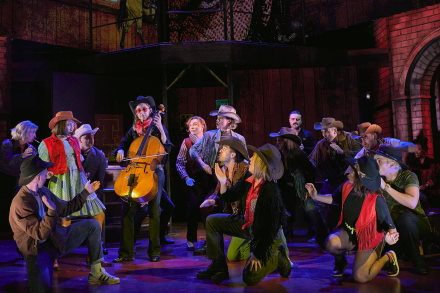
1536, by Ava Pickett, is set in a wheatfield near Colchester during the final months of Anne Boleyn’s life. Three peasant women, Jane, Mariella and Anna, meet to discuss the latest news as it trickles in from London. When Anne is imprisoned in the Tower, they try to imagine her state of mind. ‘Terrified,’ says Mariella. ‘Furious,’ says Anna. ‘Starving,’ says Jane. After her execution, Jane shrugs, ‘She deserved it.’ The others are more sympathetic but their commentary is hard to care about because they can’t influence the events they’re discussing. Nor does Anne’s experience affect their lives in any way so their chitchat is narratively pointless. They’re far more interested in two local lads, William and Richard, who represent the extremes of male behaviour.

Joy and melancholy from Tame Impala

Pop

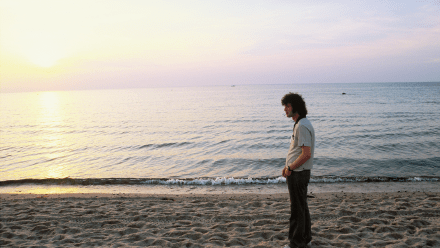
About 15 years ago, I spoke to a relatively unknown neo-psychedelic musician from Western Australia called Kevin Parker. It was shortly before the release of Lonerism, the second album by his one-man-band bedroom project, Tame Impala. Their previous album, Innerspeaker, had been acclaimed in Australia but had made relatively few inroads anywhere else. Parker seemed sanguine about it all. ‘In Perth being a muso is part of a whole lifestyle,’ he told me. ‘It’s a symptom of a directionless existence.’ Lonerism and its follow-up, Currents, shifted the coordinates. Parker’s (clearly very ambitious) dedication to turning an apparent lack of focus into genre-busting psych-rock grooves and sugar-sweet pop ensured that Tame Impala have become a very big deal indeed.

What have they done to Tom & Jerry?

Cinema

Time was you knew where you were with Tom and Jerry. He chases the mouse; catches the mouse; the mouse gets away; Tom is flattened, gets up dazed but determined; and then it’s back to the chase. The tone changed over time – Tom was originally more scary than he became later – but essentially the fun was in the rivalry that would never cease; the plot’s piquancy was that of David and Goliath, the little mouse always getting the better of the big cat. I can only hope the Chinese audience buys it because I couldn’t But the old Hanna-Barbera scenario that began in 1940 has evolved and the franchise has passed into new hands.

The Arts Council’s awful vision for the future of opera 

Opera

English National Opera’s first production created in Manchester is Angel’s Bone, a one-act opera by Du Yun and the librettist Royce Vavrek. It was premièred in 2016 in New York and subsequently won the Pulitzer Prize, but we shouldn’t hold that against it. Musically, at least, it’s certainly more interesting than recent US imports like Jeanine Tesori’s Blue – worthy, sub-minimalist Yankslop addressing the fashionable issues of the day. (It’s funny how the classical music world imagines that the way to reach British audiences in 2026 is to programme stuff that was relevant to Americans in 2016.) It was a pretty horrible experience nonetheless. Daytime TV-fixated suburbanites Mr and Mrs X.E.

Rosalia’s O2 show was a landmark concert

Pop

If Olivia Dean is the girl next door, Rosalia is the girl next planet. Their shows in successive weeks at the O2 – Dean had six nights, Rosalia two – were object lessons in presentation. Dean’s gig looked like some high-end light entertainment from the 1970s, Rosalia’s like something the National Theatre might dream up for a new revival of Murder in the Cathedral. Rosalia emerged in 2017 as the apparent saviour of flamenco – though flamenco traditionalists disagreed: she was Catalan, not Andalusian, and she wasn’t even a gypsy. Then across four albums, she travelled so far that it’s hard to categorise her extraordinary latest one, Lux: a heavily orchestrated, intensely dramatic reverie about the lives of assorted recondite saints.

The Trocks’ shtick is getting tired

Dance

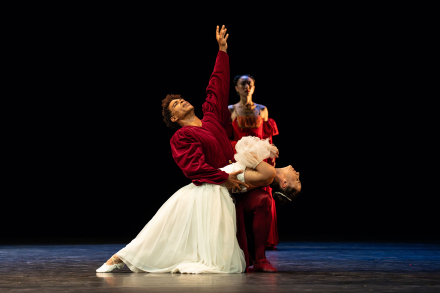
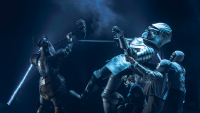
Les Ballets Trockadero de Monte Carlo were popular regulars at Washington’s Kennedy Center until Trump’s demented blast against decadent queerness. In truth the company is simply blameless pantomime, innocent fun for all the family. Based in the USA and clocking up 50 years tirelessly on the road, it consists of male dancers in drag gently parodying an art form deeply encoded in elaborate conventions that are ripe for mockery. The Trocks, as they are affectionately known, also draw on a now-forgotten phenomenon: the hand-to-mouth touring companies of the postwar years that themselves traded off the model of Diaghilev’s great enterprise.

The Christophers is delicious

Cinema

Steven Soderbergh’s The Christophers is a deliciously sly, twisty, darkly comedic take on the art world starring Ian McKellen who has never been better on film. (Let’s not mention 2023’s The Critic ever again.) The trouble with McKellen is that for some people  (i.e., me) it’s hard not to always see Ian McKellen, but that’s not the case here. Soderbergh is a big name (the Ocean’s trilogy, the Magic Mike trilogy, plus Traffic, Erin Brockovich and many more) but with this two-hander he’s gone small, pitting McKellen against Michaela Coel. She has the quieter role but more than holds her own. (I could look at the remarkable planes of her face all day.

The British modernist who was airbrushed from history

Classical

Elsewhere in British music in 1960: William Walton was writing his Symphony No 2, Benjamin Britten his opera on Midsummer Night’s Dream and Michael Tippett was about to start King Priam. Meanwhile in Cambridge, an ex-pat composer from Catalonia, Roberto Gerhard, was puzzling out how to knit together a new large-scale piece for orchestra and electronics. Simon Rattle and the London Symphony Orchestra are about to give that work, Gerhard’s Symphony No. 3, Collages, a rare outing at the Barbican on 21 May. It’s a mind-stretching piece, both very much of its time and of the future. Gerhard’s electronics gurgled, bleeped and cracked their knuckles, as he atomised the orchestra, finding a kaleidoscope of inventive ways to cement its working parts back together.

In defence of Hindemith

Classical

There’s a photo of Paul Hindemith with the pianist Artur Schnabel on hands and knees, surrounded by model railway track. Huge railway enthusiast, Hindemith, you see: he laid sprawling networks through the rooms of his Berlin apartment (before the Nazis drove him out), and organised marathon operating sessions with friends. Anyway, for various reasons, this knowledge makes me warm to him in a way that his music only erratically manages. It’s not that it’s impossible to like (although this is a man whose idea of a crowd-pleaser is called Symphonic Metamorphoses of Themes by Carl Maria von Weber). But there can be few composers whose effect is so hard to anticipate.

The return of orientalism

Classical

I’m bullish about AI. All aesthetic snobs should be. In the war on man-made slop – still the most pressing threat – algorithms are an ally. After all, how much of the output of Netflix, Hollywood or Sony will retain its allure once AI is ventriloquising it to perfection? The qualities that have made popular art popular – legibility, fluency, tidiness – will surely be fatally tainted, perhaps even start to repel us. What we will crave instead is for culture to look and feel weird – opaque, messy, frangible. The experimental might even become box office. Wishful thinking? Well if the Rewire music festival in The Hague is anything to go by – so rammed this year that it was actually rather unbearable – it might already be happening.

Compelling: Cowboy Junkies at Queen’s Hall, Edinburgh, reviewed

Pop

Anyone who was listening to independent music back in the 1980s and 1990s might find it surprising to learn which determinedly non-mainstream bands from that era resonate with the youth of 2026. My Bloody Valentine are selling out arenas. Cocteau Twins have influenced everyone from Chappell Roan to Wolf Alice. Mazzy Star’s dolorous ‘Fade Into You’ has now amassed more than one billion streams on Spotify. Cowboy Junkies divine better than most some dark heart of North American loneliness Cowboy Junkies could be forgiven for feeling aggrieved not to have picked up a little more of that kind of traction. Before Mazzy Star emerged with a somewhat more acid-fried take on hushed, spectral quietude, in 1988 Cowboy Junkies released the record which remains their Ur-text.

Riveting: Kokuho reviewed

Cinema

A three-hour Japanese epic about a classical performance art (kabuki) isn’t the easiest sell, I’ll grant you, but I’ll give it my best. Kokuho is multi-award winning. It is the highest grossing live-action film in Japan ever. It is sumptuously filmed. It is masterfully sweeping. The kabuki itself is stunning, so much so that you may one day wish to visit the kabuki theatre in Tokyo, although be warned: the shortest production is four hours. Some last all day. Looked at this way, you are getting off lightly here. I felt entirely immersed in a world I had known little about Directed by Lee Sang-il, and adapted from Shuichi Yoshida’s two-part novel, the film is a drama spanning 50 years.

A spring mood lifter: Tales of Love and Loss at the Linbury Theatre reviewed

Classical

This year’s Jette Parker Artists showcase is a triple bill of modern-ish operas; a cleverly assembled trittico of one-acters, linked by a theme of bereavement. That sounds bleak until you consider that Puccini’s Trittico was originally inspired by The Divine Comedy, and who bothers about that today? Anyway, the three operas that make up Tales of Love and Loss are far from dispiriting in their overall effect. Like Puccini, Talia Stern – who directs all three – has gone for two tragedies plus a raucous, palate-cleansing comedy. And like Gianni Schicchi, the final laugh-fest (Elena Langer’s Four Sisters) plays out around a barely cold corpse and sends you into the night feeling uneasy, but undeniably entertained. The Puccini parallels stop there.

What have they done to The Devil Wears Prada?

Cinema

The Devil Wears Prada (2006) is one of those films which, if chanced upon when flicking television channels, I will always stick with for a bit. It has zing. It has bite. It has memorable lines that I can remember without having to look them up. (‘Are we going to a hideous skirt convention?’) But mostly it has Meryl Streep as Miranda Priestly, the wonderfully toxic editor-in-chief of Runway fashion magazine. She is still terrific. But while the landscape has moved on, the characters have remained the same and halfway through I started to drift. Another blow is that it’s become more sentimental and less satirical. In other words – and I hate to be the one to say it – it’s not as good as the original. Where are we, 20 years on?

The magic ears of Hyperion

Classical

How do we evaluate Hyperion’s Romantic Piano Concerto series, which over a period of 35 years recorded more than 200 works for piano and orchestra? Was it one of the glories of the catalogue or a repository of works whose ambitions exceeded their achievement? The answer, of course, is that it was both. The paradox is unavoidable. You can’t assemble a giant collection of mostly forgotten concertos on the assumption that they all deserve to be famous – which, to be fair, Hyperion doesn’t claim: the liner notes often concede that a piece ‘perhaps understandably failed to secure a place in the repertoire’ or some such euphemism. But they may deserve to be recorded. Keyboard pyrotechnics can be their own reward, compensating for vapid melodies or structural lumps.

Big Thief is this generation’s R.E.M.

Pop

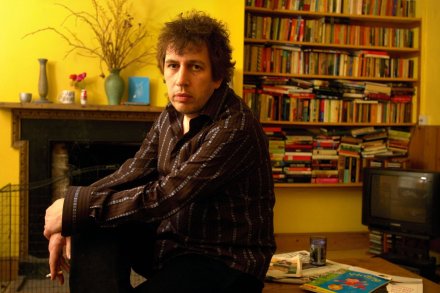
By the time Adrianne Lenker of Big Thief was born in 1991, Kim Gordon had already released seven albums with Sonic Youth. It’s not that there were no women in bands in the 1980s but there were few enough that the concept of the ‘Women in Rock Special’ was very familiar to desperate music journalists. It was also still the case that, within bands, women were seldom granted centre stage – unless they looked extraordinary or ran the band. That meant Gordon, and Kim Deal of Pixies, were more celebrated than any male bassist of a 1980s indie band. (Keith Gregory of the Wedding Present, for example, was never considered brain-meltingly cool simply for existing.

Why actors love to play lunatics

Theatre

One Flew Over The Cuckoo’s Nest, adapted from Ken Kesey’s book by Dale Wasserman, is exactly like the movie but without Jack Nicholson’s star power. The cast have to impersonate lunatics for 150 minutes and they clearly love their job. Playing madmen comes naturally to actors and it’s an easy task because no creative discipline is required. Lunatics are capable of anything so the actor needn’t feel anxious about making a false move or indulging in an improbable gesture. Anything goes. The result is a hectic display of lazy, unfelt, superficial and repetitive caricatures. One actor holds a toolbox in his lap like a pet dog. Another jerks obsessively. A third leans against a pillar with his arms held out, dribbling and twitching.

Is this the missing link between Bach and Haydn?

The Listener

Grade: B ‘Is that Haydn or Mozart? One can’t always be sure,’ remarks Kenneth Clark in the 18th-century episode of Civilisation, and there’s the British intelligentsia’s relationship with music, right there. Imagine saying that about any other art form, and still passing as a connoisseur. ‘Rembrandt or Poussin? Not much in it, really.’ ‘Michelangelo or Raphael? I can’t honestly tell.’ Don’t be like Kenneth. Brush up on your 18th-century idioms, and rediscover the qualities that make Mozart and Haydn so great – with regular dips into the also-rans of the classical era.

How good is Wayne McGregor?

Dance

‘Professor Sir Wayne McGregor CBE’ runs the headline to a biographical essay in the programme for the Royal Ballet’s triple bill of his recent work. Knighted and honoured at the heart of the dance establishment, McGregor has a solid reputation as the trusty insider who is also a radical outsider. What a dangerous place for an artist to be. Yet he is without question someone of considerable stature. With intelligence and persistence, he breaks through barriers and dares to do things differently. Adept at establishing creative partnerships, he moves tirelessly across all forms of dance, from manipulating the avatars for the Abba light show to inspiring the young at his east London dance school and directing the dance biennale in Venice.

How good are the Rolling Stones’ alter egos, the Cockroaches?

Pop

Would you pay a tenner on the door to see the Cockroaches, the Fireman, Patchwork, the Network and Bingo Hand Job play your local pub? This unpromising line-up becomes a little more appealing (perhaps) upon learning that these are pseudonyms used by, respectively, the Rolling Stones, Paul McCartney, Pulp, Green Day and R.E.M. over the years. Pop stars spend the first part of their careers trampling over their grandmothers in the unseemly rush to demand the world take notice of who they are, and the second part whining about being pigeonholed. The only thing harder to escape in the music industry than your name is your original haircut. Hence, the pseudonymous offshoot, offering a degree of separation with very little sense of jeopardy.

Terrifically atmospheric: Rose of Nevada reviewed

Cinema

Rose of Nevada is the third film in Mark Jenkin’s Cornish trilogy and if you have seen the first two (Bait, Enys Men) you will have booked your cinema ticket already. Rooted in characters shaped by the histories and tensions of Cornwall’s fishing folk, Jenkin’s film-making is uniquely tactile, textured and sensory. It has been said you can’t watch one of his features without feeling the rust on your hands and the salt in your hair. I would even add that it may be a while before you find your land-legs again.

The artistic collapse of Welsh National Opera

Opera

On the first night of Welsh National Opera’s new Flying Dutchman, the company’s co-directors walked on stage to salute their departing music director Tomas Hanus. There were cheers, of course; Hanus has been a courageous MD and his Wagner was thrilling. But no one has been appointed to succeed him, and that morning WNO had announced a 2026-27 season that amounts to a near-total artistic collapse, with just two full-scale operas. A major international company has been reduced to a community arts provider, and a Pollyanna press release announcing ‘a powerful statement of renewal’ did nothing to quell the feeling that the lights are going out on Cardiff Bay. It’s not just Cardiff, either.

The perfect game for any thwarted sadist

More from Arts

Grade: B+ Some of us lost a lot of our early twenties to a god-game called Dungeon Keeper, in which you built and maintained a dungeon and filled it with tricks, traps and monsters to kill the goody-two-shoes heroes who periodically tried to invade it. Minos is a descendant of that game, and a welcome one. Similar isometric projection, similar vibe, similar moral outlook. You control the minotaur (not very bull-like, is this Asterion, though: more of a faun as imagined by a thirsty anime fan) and, with the help of Daedalus, prepare your labyrinth to see off successive waves of invaders who pour in without so much as a by-your-leave.

Excruciating tedium from Pina Bausch

Dance

You’re never too old to dance we are told nowadays. This encouraging injunction has been taken up by everyone from the likes of Mikhail Baryshnikov and Alessandra Ferri, who have found wondrously creative ways to compensate for their declining virtuosity and stamina, to septuagenarians who insist on bopping to Abba at their grandchildren’s wedding parties. I confess that in the interests of research I took to ballet classes when I was well into middle age: it was not a pretty or edifying sight. There is a lot to be said for oldies sticking to the military two-step. The Australian choreographer Meryl Tankard has a different view of the matter. Kontakthof is the work of the sainted Pina Bausch, dating from 1978.

The joy of Belle and Sebastian

Pop

Do Belle and Sebastian have the most polite audience in pop? Normally when a pop singer leaves the stage to promenade through the audience, they are besieged. Even in seated venues most stars ​will make sure to take a security guard with them. I once saw bouncers drag women in red dresses away from Chris de Burgh at the Royal Albert Hall. Not with Belle and Sebastian. When Stuart Murdoch stepped off the stage, barely anyone even stood up. One chap had a little dance with him but no one reached out for a touch of his hand. He climbed from the arena floor to the stalls that circle it, and made his way into a row, where everyone swivelled their seats to let him pass. Yet as soon as he gave them permission, dozens of them were up on stage dancing with this joyful band.

Glenrothan is painfully bad

Cinema

Glenrothan is Brian Cox’s directorial debut and I wish there were a nicer way of putting it but, Brian: please, please, don’t give up the day job. The screenplay, meanwhile, is by David Ashton, whose only previous film credit seems to be Freddie as F.R.O.7  (1992), a James Bond spoof starring a six foot animated frog voiced by Ben Kingsley. (‘Toadally awful’ is the first comment on IMDb.) The only thing that might actually make you laugh is the foreshadowing The film stars Cox and Alex Cumming as estranged brothers Sandy and Donal and here’s what you need to know about the pair: 40 years ago Donal left Sandy and the family business (a whisky distillery in Glenrothan) for America and hasn’t been in touch since.

Heart-melting loveliness from John Rutter

Classical

Anyone for a spot of acoustic science? Apparently the distinctive colour of a musical note is concentrated almost wholly in the attack: the first split-second; the beginning of the sound wave. Obscure or somehow cut off, that first bite of a note or chord and what’s left sounds – well, not the same as everything else, exactly, but a great deal more samey. It’s like wine-tasting while holding your nose. Everything becomes neutral, and suddenly it’s remarkably easy to fool the senses. The Italian composer Salvatore Sciarrino seems to enjoy playing these games. In Le voci sottevetro (1999) – four arrangements of works by the homicidal madrigalist Carlo Gesualdo – a quick splash of tuned percussion does the job of hiding the start of a line.