Culture

Culture

The good, the bad and the ugly in books, exhibitions, cinema, TV, dance, music, podcasts and theatre.

The British modernist who was airbrushed from history

Classical

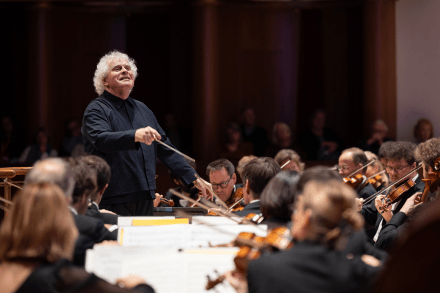
Elsewhere in British music in 1960: William Walton was writing his Symphony No 2, Benjamin Britten his opera on Midsummer Night’s Dream and Michael Tippett was about to start King Priam. Meanwhile in Cambridge, an ex-pat composer from Catalonia, Roberto Gerhard, was puzzling out how to knit together a new large-scale piece for orchestra and electronics. Simon Rattle and the London Symphony Orchestra are about to give that work, Gerhard’s Symphony No. 3, Collages, a rare outing at the Barbican on 21 May. It’s a mind-stretching piece, both very much of its time and of the future. Gerhard’s electronics gurgled, bleeped and cracked their knuckles, as he atomised the orchestra, finding a kaleidoscope of inventive ways to cement its working parts back together.

In defence of Hindemith

Classical

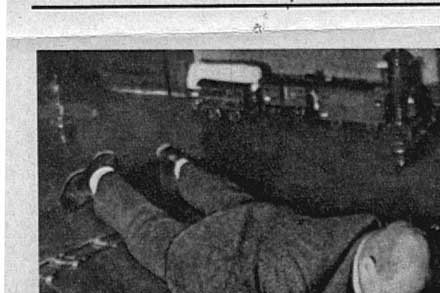
There’s a photo of Paul Hindemith with the pianist Artur Schnabel on hands and knees, surrounded by model railway track. Huge railway enthusiast, Hindemith, you see: he laid sprawling networks through the rooms of his Berlin apartment (before the Nazis drove him out), and organised marathon operating sessions with friends. Anyway, for various reasons, this knowledge makes me warm to him in a way that his music only erratically manages. It’s not that it’s impossible to like (although this is a man whose idea of a crowd-pleaser is called Symphonic Metamorphoses of Themes by Carl Maria von Weber). But there can be few composers whose effect is so hard to anticipate.

The return of orientalism

Classical

I’m bullish about AI. All aesthetic snobs should be. In the war on man-made slop – still the most pressing threat – algorithms are an ally. After all, how much of the output of Netflix, Hollywood or Sony will retain its allure once AI is ventriloquising it to perfection? The qualities that have made popular art popular – legibility, fluency, tidiness – will surely be fatally tainted, perhaps even start to repel us. What we will crave instead is for culture to look and feel weird – opaque, messy, frangible. The experimental might even become box office. Wishful thinking? Well if the Rewire music festival in The Hague is anything to go by – so rammed this year that it was actually rather unbearable – it might already be happening.

A spring mood lifter: Tales of Love and Loss at the Linbury Theatre reviewed

Classical

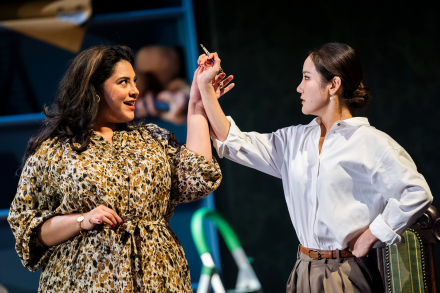
This year’s Jette Parker Artists showcase is a triple bill of modern-ish operas; a cleverly assembled trittico of one-acters, linked by a theme of bereavement. That sounds bleak until you consider that Puccini’s Trittico was originally inspired by The Divine Comedy, and who bothers about that today? Anyway, the three operas that make up Tales of Love and Loss are far from dispiriting in their overall effect. Like Puccini, Talia Stern – who directs all three – has gone for two tragedies plus a raucous, palate-cleansing comedy. And like Gianni Schicchi, the final laugh-fest (Elena Langer’s Four Sisters) plays out around a barely cold corpse and sends you into the night feeling uneasy, but undeniably entertained. The Puccini parallels stop there.

The magic ears of Hyperion

Classical

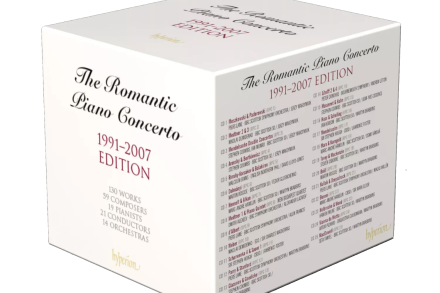
How do we evaluate Hyperion’s Romantic Piano Concerto series, which over a period of 35 years recorded more than 200 works for piano and orchestra? Was it one of the glories of the catalogue or a repository of works whose ambitions exceeded their achievement? The answer, of course, is that it was both. The paradox is unavoidable. You can’t assemble a giant collection of mostly forgotten concertos on the assumption that they all deserve to be famous – which, to be fair, Hyperion doesn’t claim: the liner notes often concede that a piece ‘perhaps understandably failed to secure a place in the repertoire’ or some such euphemism. But they may deserve to be recorded. Keyboard pyrotechnics can be their own reward, compensating for vapid melodies or structural lumps.

Heart-melting loveliness from John Rutter

Classical

Anyone for a spot of acoustic science? Apparently the distinctive colour of a musical note is concentrated almost wholly in the attack: the first split-second; the beginning of the sound wave. Obscure or somehow cut off, that first bite of a note or chord and what’s left sounds – well, not the same as everything else, exactly, but a great deal more samey. It’s like wine-tasting while holding your nose. Everything becomes neutral, and suddenly it’s remarkably easy to fool the senses. The Italian composer Salvatore Sciarrino seems to enjoy playing these games. In Le voci sottevetro (1999) – four arrangements of works by the homicidal madrigalist Carlo Gesualdo – a quick splash of tuned percussion does the job of hiding the start of a line.

Why the Goldberg Variations fill me with dread

Classical

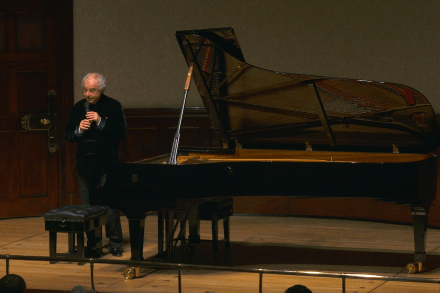
Is Sir Andras Schiff becoming the Ken Dodd of the piano? In his later years, you’ll recall, the Yorick of Knotty Ash took to delivering marathon one-man routines that finished long after midnight. A couple of years back, Schiff expressed a similar wish: why should he have to tell us in advance what he was going to perform? And fair enough, because even with no advertised programme, the Wigmore Hall was sold out. Clearly, a lot of people will gladly pay to hear Schiff play anything at all, and part of me hoped he’d launch into Chopsticks or Richard Clayderman’s Ballade pour Adeline. But no, Schiff had a far crueller joke up his sleeve. He walked out without a word and began the ‘Aria’ from Bach’s Goldberg Variations. A purr of happy recognition ran through the room.

Recordings have stunted us

Classical

Bring me my bow of burning gold; or failing that, the opening notes of Elgar’s Second Symphony. That’s how I’ve always imagined them anyway, those three swelling B flats –  a mighty drawing back of the bow before Elgar propels his arrows of desire into the restless heart of this greatest of British symphonies. Thinking back, though, I’m not sure I’ve ever felt quite that tension in a live performance – not from Pesek in Liverpool or Barenboim at the Proms, and not from this most recent encounter, with Mark Wigglesworth and the Bournemouth Symphony Orchestra in Bristol. So where am I getting it from? Recordings, presumably, and the long-embedded imprint of two boyhood idols, John Barbirolli and Vernon ‘Tod’ Handley.

A playful, big-hearted, intelligent new opera

Classical

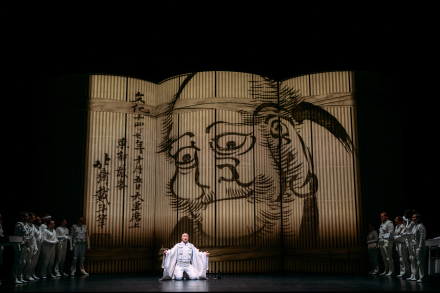
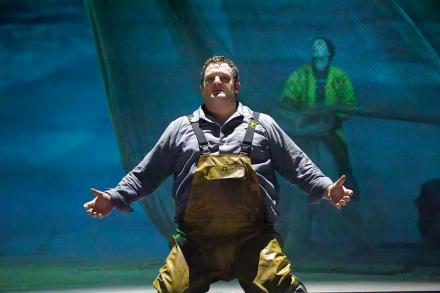
Some people like art to have a message. So here’s one, delivered by Katsushika Hokusai near the end of Dai Fujikura and Harry Ross’s new opera The Great Wave. ‘Remember art won’t change the world,’ sings the great painter (as incarnated by the baritone Daisuke Ohyama), and for that line alone I’d gladly have given the show five stars, if the Spectator did anything as barbaric as award stars. Words to live by, at least if you’re an artist; and the very private bliss of a life devoted to creativity is the heart, mind and dramatic engine of The Great Wave. Is that enough to sustain a full-length opera?

What a masterpiece. What a man: Borodin at the Barbican reviewed

Classical

Gianandrea Noseda conducted the London Symphony Orchestra last week in a programme of Stravinsky, Chopin and Borodin. The Stravinsky was a relative rarity – the divertimento from The Fairy’s Kiss – and Chopin’s F minor concerto was played by Seong-Jin Cho, a pianist with a large following and a soaring reputation. Full disclosure: I was there for the Borodin, his Second Symphony of 1877. What a masterpiece, and what a man! Alexander Borodin was a scientist of international standing and a campaigner for women’s rights. Deeply in love with his wife, and an inveterate rescuer of stray cats, he was, he confessed to Liszt, ‘only a Sunday composer’. ‘But after all,’ replied the wizard of Weimar, ‘Sunday is a special day.

The early-music movement is ageing well

Classical

The early music movement: it’s grown up so quickly, hasn’t it? The Orchestra of the Age of Enlightenment is 40 years old in 2026 and if you can remember its debut, back in the 1980s when Beethoven on period instruments was pretty much the wildest thing going, you’re going to feel terribly, terribly old. Right from the start, the OAE was in the vanguard of the second wave. As late as 1978, the gut-strings and Bach brigade had assumed that Mozart was beyond them. The newly founded OAE was straight out of the traps with Weber, Mendelssohn and Schubert – halfway down the 19th century without drawing a breath.

Richard Jones’s Boris Godunov feels like a parody

Classical

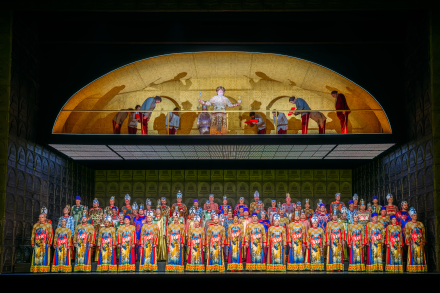
Mussorgsky’s Boris Godunov is back at Covent Garden, and there are ninjas. This isn’t a spoiler. There hasn’t been a note of music at this point, and it’s almost the first thing you see. A ginger child in a weird mask is playing with a spinning top when the black-clad assassins stalk on and slit his throat. Cue gasps. Well, the director is Richard Jones, after all; quirky, garish and occasionally macabre is what he does. And the (alleged) murder of a child pretender to the Russian throne is the horror that drives the entire plot, at least in the first (1869) version of the opera, which is what we’re given here.

The Neapolitan Horowitz

Classical

‘You play Bach your way, and I’ll play it his way.’ That remark by the Polish harpsichordist Wanda Landowska is often described as an ‘infamous put-down’, but it was really just a playful quip directed at Pablo Casals after they disagreed about trills. Anyway, the line has been running through my head all week because I’ve been listening to a recording of the Goldberg Variations – Wandowska’s signature piece – by a pianist who was quite determined to play them her way, not Bach’s. Maria Tipo was born in 1931 and died last year – the same dates as Alfred Brendel, though it’s hard to think of two pianists with less in common. In her heyday she was promoted as ‘the Neapolitan Horowitz’.

Rattle’s glorious Janacek

Classical

The Czech author Karel Capek is probably best known for his plays: high-concept speculative dramas such as R.U.R. and The Insect Play, bristling with wit and ideas. But he paid his bills as a newspaper columnist, and he seems to have been pleasantly surprised when Janacek approached him about turning his ‘conversational, fairly unpoetical and over-garrulous play’ (Capek’s words) The Makropulos Affair into an opera. Capek licensed Janacek to adapt it as the composer saw fit, in words that have the authentic ring of the working journalist – ‘because I simply wouldn’t get round to revising it myself’. No fear on that count. The Makropulos Affair is a brisk, nervy play but Janacek, at 69 (there’s hope for us all), was an old theatrical hand.

This Royal Opera Traviata is no ordinary revival

Classical

First opera of the year, first night back in London, and the jolly old metrop was already springing surprises. A hulking pink Rolls-Royce was parked on Bow Street – a real oaf of a car, the lumpish nepo-baby of a Humvee and Lady Penelope’s Fab 1. And as we stood outside the Royal Opera House, cooling off from Act Two of La traviata, a large fox came jogging out of Broad Court and urinated against the front tyre before sauntering off in the direction of Aldwych. Pure magic. You should never take the capital for granted, just as you should never assume that a mid-season revival of a standard repertoire opera in a 32-year old staging will ever – necessarily – be routine.

The magnificence of Beare’s Chamber Music Festival

Classical

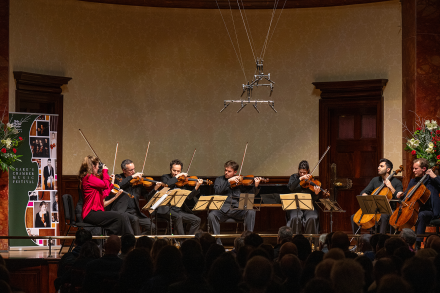
The quartet is the basic unit of string chamber music. Two violins, a viola and a cello: subtract any one of those, and you’re walking a tightrope. Add further players and the issue is redundancy: you’d better know precisely what you want to do with those additional voices, because otherwise they’ll congeal like cold gravy. When it comes to the string octet – two string quartets fused together – only the 16-year-old Mendelssohn really cracked it, going all out for transparency, daring and youthful verve. The Romanian George Enescu took the opposite approach. His Octet of 1900 is chamber music as epic construction project, wrought from steel, not spindrift.

The joy of composers’ graves

Classical

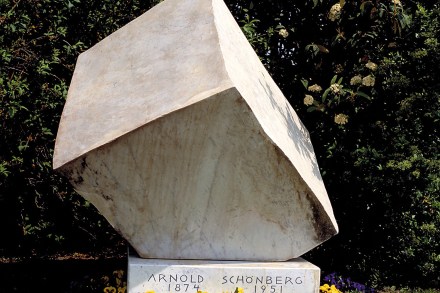
I called on Hugo Wolf the other week, and he didn’t look too great. He wouldn’t, of course; he died in a mental asylum in 1903 after suicide attempts, professional disappointment and the slow poison of tertiary syphilis. His face gazes glumly out from his monument in Vienna: above him, a single laurel branch, beneath him an eternal flame. But at least he’s not alone. A muscular youth, semi-ripped, looks away at one side. And on the other, a naked couple clinch in a passionate embrace. Talk about rubbing it in. It’s not that I make a habit of hanging around composers’ graves, you understand. But somewhere along the way I seem to have notched up an awful lot of these posthumous courtesy calls. With the big beasts – Beethoven, Mahler and co.

Intoxicating Elgar from the London Phil

Classical

By all accounts, the world première of Elgar’s Sea Pictures at the October 1899 Norwich Festival made quite a splash. Elgar conducted, and the soloist was the 27-year-old contralto Clara Butt – dressed in a silky, sinuous number which drew gasps in those corseted late-Victorian days. Elgar thought she looked ‘like a mermaid’; the critics, of course (of course!) confined themselves to the music. They reported that Elgar and Butt were called back four times, and the second of the five songs – the delicate ‘In Haven’, to words by Elgar’s wife Caroline Alice – was singled out for particular praise Interesting how tastes change.

Bruckner on Ozempic – and the première of the year

Classical

Bruckner at the Wigmore Hall. Yes, you heard right: a Bruckner symphony – his second: usually performed by 80-odd musicians – on a stage scarcely larger than my bedroom. How? Welcome to Anthony Payne’s very smart 2013 chamber arrangement. Bruckner on Ozempic. Composition is an Alice in Wonderland activity. A key duty is mastering how to make things bigger and smaller, how to stretch and compress and bend – time and space and sound. Bruckner understood this well. If you know anything about his symphonies, it’s that they’re vast – and that critics are mandated to compare them to cathedrals or mountain ranges. What survives after such an extreme trim? More than you expect. The long sightlines remain; paradoxically, the reduced forces sharpen the sense of depth.

Evgeny Kissin’s stand-in brings the house down

Classical

It was such an enticing programme, too. The Philharmonia had booked Evgeny Kissin, the last great piano prodigy of the Soviet era and one of the superstars of the late 1980s and early 1990s. And then there was the music: three Russian showpieces, including Rimsky-Korsakov’s enchanting and almost unplayed (in the UK, anyway) single-movement Piano Concerto. Better still, Kissin was down to perform Scriabin’s youthful Concerto in F sharp minor, a private passion that I’ve heard live only twice in four decades. Imagine a Russian Chopin, if Chopin knew how to orchestrate. Gilltburg has the agility and power of an old-school keyboard lion, though he uses it with Bach-like objectivity Too bad.

The orchestra that makes pros go weak at the knees

Classical

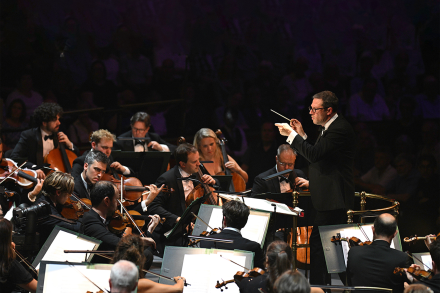
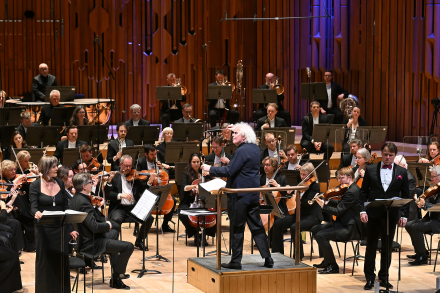
Stravinsky’s The Firebird begins in darkness, and it might be the softest, deepest darkness in all music. Basses and cellos rock slowly, pianissimo, in their lowest register; using mutes to give the sound that added touch of velvet. Far beneath them rumbles the bass drum: a halo of blackness, perceptible only at the very edge of the senses. In Liverpool Philharmonic Hall, with Sir Simon Rattle conducting the Bavarian Radio Symphony Orchestra, you felt your hairs tingle before you discerned a note. Seconds later, the very air within the hall seemed to be quivering with sensuous, engulfing bass warmth. You can be sure that Rattle anticipated that sensation; planned for it, in fact, from the moment that he confirmed this short British tour with his new orchestra.

My unofficial music teacher

Classical

In the early 1970s my father moved offices and I was plucked out of my cosy prep school in Surrey to land in the eccentric surroundings of Presentation College. My new school’s modern block was surrounded by decaying Edwardian villas occupied by Irish teaching brothers with impenetrable accents. There was a broken aeroplane on one of the lawns; I never found out how it got there. Talk about a culture shock. Already I was besotted with classical music; to say that the brothers didn’t share my enthusiasm is putting it mildly. There wasn’t a flicker of interest in eight years – something that puzzled me until I read Thomas Day’s book Why Catholics Can’t Sing, which argues that, in the Irish diaspora, highbrow music stirs folk memories of English colonial occupation.

The mind-bendingly creative works of Louis Couperin

Classical

The French lutenist Charles Fleury, Sieur de Blancrocher, is one of those unfortunate historical figures who are chiefly remembered because of how they died. He was climbing the stairs to his apartment near the Louvre after a court dinner in November 1652 when he slipped, fell head over heels and was dead a few hours later. We don’t know, though people have wondered, whether the wine was to blame. Only one piece of music by him survives, and he would probably be forgotten if he hadn’t been memorialised in several tombeaux – slow memorial dances – by royal composers, one of whom was a young harpsichordist whose genius is only now being fully recognised. Louis Couperin (c.1626-1661) will always be overshadowed by his nephew François (1668-1733).

Pure feelgood: ENO’s Cinderella reviewed

Classical

‘Goodness Triumphant’ is the alternative title of Rossini’s La Cenerentola, and you’d better believe he meant it. Possibly my reaction was coloured by last week’s experience with the weapons-grade cynicism of Stephen Sondheim’s Follies, but honestly – it’s just so sweet. A gentle, put-upon girl gets her fairy-tale ending in the face of stepsisters and a stepfather who are basically buffoons rather than outright villains. We’re in the realm of panto, or children’s TV: nothing really dark can happen here and the only sorcery is worked by Rossini, whose fountain of laughing, crystal-bright invention is as life-affirming as Haydn, if he’d been born 50 years later and in Italy. Pure feelgood, then, for kids of all ages.

Huge Fun: Le Carnaval de Venise reviewed

Classical

Summer’s lease hath all too short a date, but there’s still time for one last opera festival. Vache Baroque popped up in 2020 during that weird first release from lockdown, but to be honest, if you were starting a new festival, late August is probably the best part of the calendar to colonise. The big boys (even Glyndebourne) have left the stage, Edinburgh is done and the Proms are the only game in town. And the place to do it would be within easy reach of the capital: in this case, a fold of the Chilterns just off the rural top end of the Metropolitan Line. Anyway, Vache Baroque seems to have made a name very quickly, and like the more established opera startup at Waterperry, it still has that youthful, hands-on energy: let’s do the show right here!

A revelation: Delius’s Mass of Life at the Proms reviewed

Classical

Regarding Frederick Delius, how do we stand? In the 1930s, Sir Henry Wood believed that Proms audiences much preferred Delius to Holst, and most critics back then would have described him as a major British composer. Times change: if you took your music GCSE in the late 1980s, you’ll have sensed that the Bradford lad was no longer quite up there. But you might well have been taught by people who still remembered him as a giant, and there was also the legacy of that greatest of composer biopics, Ken Russell’s Song of Summer, in which Delius’s music explodes in sunbursts of passion and colour against Russell’s austere black and white cinematography.

The rise of cringe

Classical

No one wrote programme notes quite like the English experimentalist John White. ‘This music is top-quality trash,’ proclaims his 1993 album Fashion Music. ‘We kindly ask the users of this CD to play it at the volume of a suburban Paris soundmachine or a London underground discman earphone as used by the kid next door.’ Track titles included ‘Epaulette’ and ‘Latin Flutes’. From what I remember – my copy vanished a long time ago – the music was cheap and very funny: tinny and dumb. I was reminded of White recently because trash is back. Everywhere I go, I find composers producing shamefully terrible music. Some deliberately, some inadvertently. What flavour of terrible? Not ugly or discordant. Not camp. More tonal and naff: works woven from the worn-out and iffy.

The excruciating tedium of John Tavener

Classical

The Edinburgh International Festival opened with John Tavener’s The Veil of the Temple, and I wish it hadn’t. Not that they were wrong to do it; in fact it was an heroic endeavour. Drawing on three large choirs, members of the Royal Scottish National Orchestra and a sizeable team of soloists, this eight-hour performance was the sort of occasion that justifies a festival’s existence – the kind that, done well, can transform your perceptions of a work or a composer. It was certainly done well, and it certainly transformed mine. I’d never much minded the music of John Tavener. By the fifth hour of The Veil of the Temple, I was beginning to detest it.

Three cheers for the Three Choirs Festival

Classical

The Welsh composer William Mathias died in 1992, aged 57. I was a teenager at the time, and the loss felt personal as well as premature. Not that I knew him; and nor was he regarded – in the era of Birtwistle and Tippett – as one of the A-list British composers (John Drummond, the Proms controller of the day, was particularly snobbish about Welsh music). But Mathias was a composer whose music I had played; whose music, indeed, me and my peers actually could play. His Serenade was a youth orchestra staple. It felt good to know that its creator was alive and well and working in Bangor, and when he wrote his Third Symphony I listened to the première in my bedroom, live on Radio Three. Like I say, it felt personal.