Culture

Culture

Going Greco-Roman in Boston

In a way it felt like a walk around campus on graduation day: one last stroll through the Museum of Fine Arts, Boston before the mayor’s medically nonsensical, legally dubious, morally atrocious mandates force museums, restaurants, gyms and more to oblige entrants to prove that they’re vaccinated against Covid-19. I could comply, but I will not. “There’s nothing more American than coming together to ensure we’re taking care of each other,” said our unctuous new mayor in her typical passive-aggressive fashion. Perhaps, but there’s nothing less American than commanding such sentiments from City Hall and punishing us who see through the ruses of power. The commencement, then, was that of a new relationship between your reporter and his adopted city’s art holdings.

Boston

Swing for me

Lots of folks go to swingers’ parties; fewer go by accident. I achieved this distinction, once — and in my defense, I will plead only that my ignorance of the situation was so extreme, my credulity so extensive, that it took my asking one couple, in complete earnest, the most hilarious and incidentally incisive questions a person in my situation could ask — “How did you two meet?” and “How do you know the host?” — in order to set the record straight. To the first, the one said that the other’s husband had introduced them. The answer to the second was the old chestnut about “college roommates,” et voilà! At parties nowadays, I just ask people what they do for work.

company

Naples and nurture

The climactic scene in the Italian director Paolo Sorrentino’s latest film, The Hand of God, finds the teenaged Sorrentino stand-in, Fabietto, being verbally attacked by an aging director named Capuano, the seaside at their backs. At this point in the film, the young Fabietto (Filippo Scotti), a sullen mama’s boy searching for meaning, has suffered an immense tragedy and is looking for answers. Enter the wise man. The scene, like many in The Hand of God, is on the nose and borders on the melodramatic, but when Capuano (Ciro Capano) yells “how does this city not inspire you?” at Fabietto, he reveals the film’s emotional core. The Hand of God, like Sorrentino’s previous work, is highly stylized and aesthetically beautiful — a true visual feast.

hand of god

Witches brew

Since its initial publication in the legendary 1623 First Folio, Shakespeare’s Macbeth — one of the Bard’s late tragedies, and among his greatest — has been reimagined in countless ways. By the late seventeenth century, it had already been updated by Sir William Davenant to meet changing tastes. It was supposedly restored (though still thoroughly altered) by David Garrick in the eighteenth; and it was further “cleaned up” by Thomas Bowdler (which gave us the term ‘bowdlerized’) for his Family Shakespeare collection in the nineteenth century, an era that also brought us Verdi’s enthralling operatic version.

Macbeth

American celebrity culture has become exhausting

How was your Super Bowl party? I spent mine investing all my money in crypto and then blowing it on Peacock subscriptions. For once it was the commercials that were the most memorable part of the game — not Matthew Stafford's lightning arm, not even 50 Cent entering the halftime show upside-down like a bat. And that was because every ad was a broadside of celebrities. Not a fan of Bud Light Seltzer? Wait until it's pitched to you by Guy Fieri and a race of Eloi-like doppelgangers (spoiler: you still won't be a fan of Bud Light Seltzer). And how can I not order Uber Eats after watching Gwyneth Paltrow smell her own vagina candle while Trevor Noah eats deodorant? I'm old enough to remember when movie stars starred in movies; now they're hawking Doritos and cheap flights to Istanbul.

celebrity

When did pop culture stop being fun?

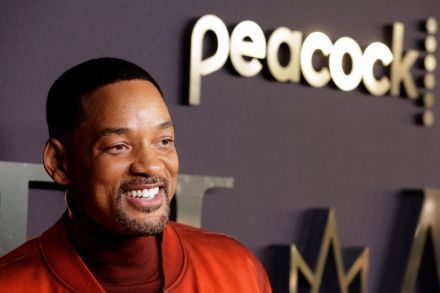
In 2019, the aspiring filmmaker Morgan Cooper had a clever idea. He took the cheery early Nineties Will Smith comedy The Fresh Prince of Bel-Air and reimagined it as a gritty social realist drama, even making a low-budget trailer for his idea. It went viral, and the streaming service Peacock turned it into a series, now titled Bel-Air. The protagonist (still named Will Smith) is again removed to his aunt and uncle’s care after getting involved in gang tensions in West Philadelphia, but the show is largely devoid of jokes. Instead, it tries to offer a serious look at the young African-American experience in the contemporary United States, complete with Instagram influencers as supporting characters. It is not much fun. Television dramas reinvented as comedies are nothing new.

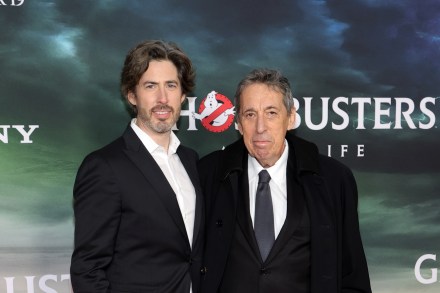
Ivan Reitman wasn’t afraid of no ghost

The death of filmmaker Ivan Reitman was announced early on Valentine’s Day, which seems grimly appropriate. Although Reitman was not exclusively a director of romantic comedies, his films all had a cheerfully good-natured quality that generally made them significant box office successes. From his debut proper, the Bill Murray comedy Meatballs, to his final film, the Kevin Costner sports drama Draft Day, his films tended to celebrate the warmer and happier aspects of life. You might even call them Capra-esque, although Frank Capra never made a picture in which a giant, phantasmal marshmallow terrifies New York City. One-nil, Reitman.

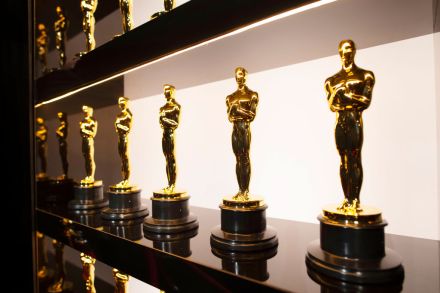
The Oscar noms are out but does anyone care?

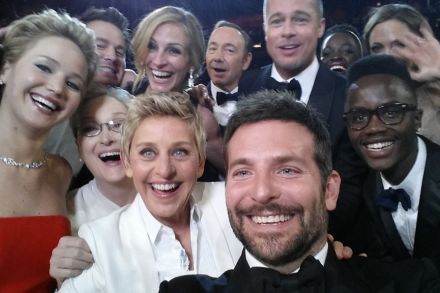
Lady Gaga fans, unite in grief. Their idol — who was widely expected to win the Best Actress Oscar this year for her performance as the murderous Patrizia Reggiani in Ridley Scott’s House of Gucci — has not even been nominated for the award. In her place are Kristen Stewart, Jessica Chastain and Nicole Kidman — who are recognized for playing real people, respectively Princess Diana, Tammy Faye Messner and Lucille Ball — as well as Oscar stalwarts Olivia Colman and Penélope Cruz. Any of them stands a decent chance of winning now that the Gaga threat has been removed. But this still represents the greatest volte-face in what is otherwise a largely predictable set of Academy Award nominations.

Is Euphoria too bleak to be good?

DARE is concerned about Euphoria. The anti-drug campaign put out a PSA recently warning that the show “chooses to misguidedly glorify and erroneously depict high school student drug use, addiction, anonymous sex, violence and other destructive behaviors as common and widespread in today’s world.” Considering the prevalence of drugs (snortable, swallowable, injectible), drug dealers (lovable, despicable), and drug-laced dream sequences on Euphoria, it would seem you can’t blame the group for being concerned. But it’s also hard to watch Euphoria and not think it's a cautionary drama on the dangers of drugs that could have been created by a group like DARE itself.

Will the real Pamela Anderson please stand up?

The new and thoroughly adult-oriented miniseries Pam & Tommy tells the tale of the relationship between the musician Tommy Lee and the actress Pamela Anderson. It is interspersed with the narrative of the notorious theft and subsequent internet leak of their Nineties sex tape that has occupied a near-iconic place in popular culture ever since it occurred twenty-five years ago. Pam & Tommy was initially announced as a James Franco project in 2018, for him to both direct and star as Lee, but Franco’s current status as persona non grata saw him replaced by Sebastian Stan.

pamela anderson

J.P. Morgan and our gilded age

John Pierpont Morgan is the glowering face of the Gilded Age. He may have glowered at pesky men with cameras because he was too busy to sit still, but he was also self-conscious because his nose was deformed from rhinophyma. He liked beautiful things, and he was not beautiful. Born into banking family, Morgan rose to become the greatest financier of his time, building much of his empire on railroads. But he was far more than a shrewd businessman. Fluent in French and German and holding a degree in art history, he became a prodigious collector of books and art, a large portion of which were kept at his house on Madison Avenue and 36th Street — what is now the Morgan Library & Museum.

john pierpont morgan library

The Gilded Age is a Bridgerton-esque disappointment

I am on record as being somewhere between weary and terrified of the threatened arrival of Downton Abbey 2 in our movie theaters imminently. But this is also tinged with sadness. When Julian Fellowes emerged with his screenplay for Robert Altman’s Gosford Park in 2001, it fizzed with wit and imagination. Now, he has seemingly become the go-to chronicler of English upper-class life, churning out increasingly nonsensical variants on the same story with greatly diminishing returns. So how does he fare when he turns his attention to American upper-class life? The new HBO series The Gilded Age attempts to answer this question. It primarily concerns two New York figures in the 1880s, who are schematically represented as "snobbish Old Money" and "arriviste New Money.

Don’t cancel Damon Albarn for attacking Taylor Swift

Public fallouts between major music stars are far from unheard of, but the speed and ferocity of the recent contretemps between Damon Albarn and Taylor Swift is a reminder that, in this social media age, arguments can go viral in seconds. The initial cause of the row was an interview that Albarn gave to the Los Angeles Times. The Blur and Gorillaz star, presenting himself as an elder statesman of the industry, decried Swift as one of a breed of artists who use "sound and attitude" to conceal thin songwriting. For good measure, he then alleged that these songs were not even written by Swift. After the interviewer suggested that Swift wrote or co-wrote all her songs, he said, "That doesn’t count. I know what co-writing is. Co-writing is very different to writing.

Hogarth framed

Visiting public art galleries has become a dangerous undertaking — at least if one wishes not to be accosted by ludicrously woke signage and unnecessary trigger warnings. In the past, one might have, justifiably, seen warnings before entering a room exhibiting, say, the garish and pornographic sculptures and photos of Jeff Koons going hard at it with Hungarian-Italian “actress” and part-time politician Ilona Staller, aka Cicciolina. Today, such warnings are found outside galleries exhibiting not such ephemera but the greatest works in the Western canon. Last autumn’s Titian show at the Isabella Stewart Gardner Museum in Boston warned visitors before entering that “Titian: Women, Myth and Power explores themes of sexual assault and violence.

Hogarth
Richard

Serve and volley

Richard Williams, the mercurial father of the tennis superstars Venus and Serena, is the subject of the wonderful new biopic King Richard, starring Will Smith in an Oscar-worthy performance. Williams is a fascinating figure who, as longtime tennis fans know, planned out the careers of his daughters before they were even born, telling anyone who’d listen that the Compton-bred girls were destined for superstardom. It was a preposterous statement, all the more so since it was made by a man who knew next to nothing about tennis. Yet as we now know, Williams’s vision became reality.

doubtfire

Nanny bait

Was Mrs. Doubtfire a children’s movie? You might think so after seeing the new musical version, which opened at the Stephen Sondheim Theatre in early December. The 1993 Robin Williams classic hails from that glorious era of made-to-end-up-on-TV blockbusters at the end of the twentieth century — the movies that so many millennials first came to know piecemeal, catching a scene or two with dad while mom clucked disappointment from the other room. In films like these, each scene is designed to stand on its own, which may explain why the creators of the Doubtfire musical thought they could drop so many of them, barely laundered, right onto the stage.

gigs

Returning to live gigs

Gigs. Remember them? They were awful. You’d get to some dump of avenue, in a bad part of town (if a small capacity) or out in some apocalyptic wasteland (if an enormo-dome). You’d arrive too early and have to try and dodge some mediocre support band (who’d bought their way on to the tour) or queue for seven hours for a beer in a plastic cup. If you dared to speak while some awful act was plodding away, some goody-goody would hold a finger up to their lips, glare and shoosh you. An hour and a half later in the back of the venue, you’d stand gratefully nearer to death’s beckoning cold hand. “Ever get the feeling you’ve been cheated?” Yes. When Covid rampaged through the world like a Viking raid of death-cult realtors, the world was suddenly shorn of live music.

symphony

Get with the program

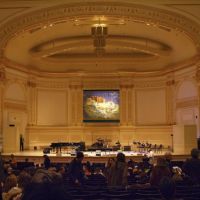
It was Rust Belt versus Sun Belt. Over the holiday season, I visited Pittsburgh’s Heinz Hall, located in the heart of the city, and Miami’s New World Center, a concert hall in South Beach. The former, a one-time movie theater built in 1927, looks like an oversized jewel box stuffed with red velvet chairs and glitzy chandeliers. The latter, a spectacularly intimate venue designed by Frank Gehry, serves as the home of the New World Symphony, a local outfit that operates as a final training ground for musicians who have graduated from conservatories and want to go on to play in major orchestras. In their own way, each of the carefully executed performances underscored that the obituaries repeatedly pronounced for classical music as a preserve of elitist white males are so much bosh.

Hollywood awards shows have become boring

Recently, the Golden Globes were handed out in the most low-key fashion imaginable. Gone are the days of glitzy, alcohol-laden bashes, complete with Ricky Gervais making near-the-knuckle digs at Hollywood icons, who look as if they’d happily knock him down. Instead the results this year were announced in that most pandemic-friendly of ways: via the Hollywood Foreign Press Association’s social media feed. It was socially distanced, devoid of any potential for gossip or scandal — two qualities forever associated with the Globes — and deeply boring. The results themselves were mainly sensible.

A fond remembrance of Meat Loaf

The death of the singer and actor Meat Loaf at the age of seventy-four may not have been wholly unforeseen, but it has nonetheless led to great sadness. The artiste born Marvin Lee Aday engendered enormous affection from both his peers and his millions of admirers. His music and outsized stage persona had a heroically go-for-broke quality that was mirrored in his offstage existence by bankruptcies and a rollercoaster career. But his records sold millions, and, almost as an afterthought, he appeared in some of the major cult films of the twentieth century. A music journalist once christened him "the uncoolest man in the universe" for releasing the album Bat Out Of Hell, a collaboration with Jim Steinman, in 1977.

Where does Joss Whedon go now?

This summer will mark the tenth anniversary of The Avengers, the superhero mash-up film that arguably kicked off the endless rolling shenanigans that now dominate our multiplex screens year after year. Nonetheless, it remains one of the more entertaining examples of its kind, thanks to its witty script by writer-director Joss Whedon. One might expect to find Whedon and company reunited for various examples of backslapping bonhomie over the next few months, except that the filmmaker is now persona non grata to the highest extent. The stories about his downfall are well known, and include allegations of bullying, sexual exploitation and general maltreatment of colleagues and former employees alike.

Writing and the conservative impulse

Radicals often think of writing primarily as an act of provocation — a bullet in the chest of the bourgeoisie. No doubt, writing can provoke, and one doesn’t need to be a radical to know this, as any reader of Tom Wolfe will tell you. But to provoke in writing, particularly literary writing, is at once to provoke and to conserve a provocation. To write is a tacit acknowledgment that something is worth keeping. Otherwise, one could simply shout. What else does writing conserve? All sorts of things, of course, but in literature, it conserves feelings, perceptions, the lives and actions of people or a way of life. It conserves ideas that one hopes won’t be burned to a crisp on the streets of Avignon.

The joie de vivre of Emily in Paris

The hit series Emily in Paris is being eviscerated by the media. Despite labeling it “Netflix’s most-hated show,” “a catastrophe of culture,” and “inedible tripe,” high-minded critics sure are spending a lot of time and website space talking about it. I am all about scrutinizing art (if we can call Emily “art”) to extract something meaningful. But in the following analysis, I will argue why we should absolutely stop analyzing Emily in Paris. First of all, I don’t understand why critics are disappointed not to find the answer to some weighty Descartian theory in a show whose descriptor reads: “After landing her dream job in Paris, Chicago marketing exec Emily Cooper embraces her adventurous new life while juggling work, friends and romance.

Thanks for the laughs, Bob Saget

He was in living rooms across America dishing out fatherly advice. He had a cheery disposition while watching people bite the dust or get socked in the groin. He was a phenomenal comedian. He was Bob Saget. The Philadelphia native and comedy icon passed away unexpectedly on January 9 and left the country stunned. Bob was a figure you always thought would be around forever. There were so many nights we spent watching Bob as Danny Tanner navigate the seemingly impossible job of single fatherhood. For nine years, we watched him and his TV family grow up. We grew with them. Memories of Full House are burned into the minds of all who watched and loved him. He was a big part of so many American families' bonding experiences, which is one reason his death was so devastating to so many.

If Hamilton is cringe, then America is done for

I’ve been reliably informed that Hamilton is now cringe. Constance Grady of Vox explains, drawing on a scene from the recent reboot of Gossip Girl: “You know, I saw Hamilton… before it went on Broadway,” brags one of the teens, hoping to impress his cool new girlfriend Zoya. “You into that play?” Zoya, the wokest of the group and the one with the most sophisticated literary taste, sighs deeply and rolls her eyes. “No doubt it’s a work of art,” she allows. “But …” Zoya doesn’t finish her sentence.

Sidney Poitier refused to be defined by race

The actor Sidney Poitier, who has died at the age of ninety-four — a month shy of his ninety-fifth birthday — has justifiably been celebrated as one of the last remaining actors from "Old Hollywood." Poitier continued to act until 1997, with his final role being a somewhat anti-climatic appearance as an FBI director in the indifferent remake of The Day of the Jackal. But his heyday came in the Fifties and Sixties, when he established himself as the first bona fide African-American box office draw and a performer of rare force and charisma.

Sidney Poitier

‘Don’t Look Up’ and Hollywood virtue-signaling

I sat down to watch Adam McKay’s Netflix comedy Don’t Look Up over the Christmas break with an unusual burden of expectation. Half the people I’d known who had seen it — admittedly, mainly those on the right — had denounced it as unfunny, heavy-handed agitprop, whereas their politically opposed brethren praised it as "timely," "inspiring" and "important." Would I finish watching it and sign up for a series of Greta Thunberg podcasts, or smash my television in and take to the streets, hollering? To be honest, the film is neither offensive nor clever enough to arouse such strong opinions.

Kandinsky’s colors

The paintings of Vasily Kandinsky (1866-1944) have never looked quite as good as they do, right now, at the Solomon R. Guggenheim Museum in New York City. It’s worth mulling why that is. I mean, Kandinsky is old news, right? He’s a mainstay in the common consciousness of those who make art their livelihood, and the paintings remain on view at any institution that presumes to untangle the story of Modern art. Given the current vogue for politics and inclusivity, Kandinsky seems an unlikely figure for reappraisal: he’s a tough nut to enlist for this or that cause. As for excluding him from the canon — forget it. Dead white male though he may be, Kandinsky is immovable. Granted, his status as the first abstract painter has been called into question.

kandinsky