Elle Gyges

Why Kevin McCarthy is winning the debt ceiling battle

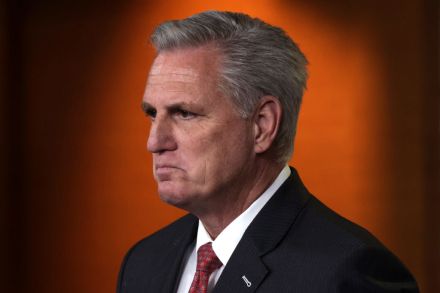
Tick. Tick. Tick. That’s the sound of the clock as the United States approaches the limit of its borrowing power. Tick. Tick. Tick. It’s also the sound of the US debt clock. Actually it's more of a whoosh as it tries to keep pace with the sheer clip of the national debt, which totals some $31.7 trillion or over $240,000 per taxpayer. For fiscal hawks, these two measurements have set the tempo for a seemingly endless set of battles over the nation's debt ceiling and financial footing. To be clear, the government already hit its debt limit. That was back on January 19, a mere twelve days after Kevin McCarthy survived his bid to claim the speaker’s gavel.


debt ceiling

A love letter to Philadelphia

In the run up to the Super Bowl, writers were tripping over themselves trying to capture the essence of the Philadelphia Eagles Fan™. Most of these observations focused on the degenerate behavior of a few diehards after key games, or the nonsensical yet diverse array of superstitious traditions (looking at you, guy who runs into the underground pillars on the Broad Street Line on purpose). Some dug up the old chestnut about Santa Claus getting pelted by snowballs at an Eagles game — ignoring that many of the fans responsible for that misadventure died without ever seeing the Birds win a ring.

Biden and Congress toss the debt ceiling hot potato

Earlier in the week, Speaker of the House Kevin McCarthy gave an evening address about the urgency of raising the debt ceiling and cutting federal spending. Technically, the government has already taken on the amount of debt it’s allowed to carry. The Treasury Department is employing “extraordinary measures” to shuffle money around to service the national debt and make government payrolls. But these measures can’t keep the government afloat forever. Hence the need to raise the debt ceiling or risk catastrophic default some time in the summer. The timing of the speech — one day before President Biden's third State of the Union address — was conspicuous.

Why the fight against Kevin McCarthy was necessary

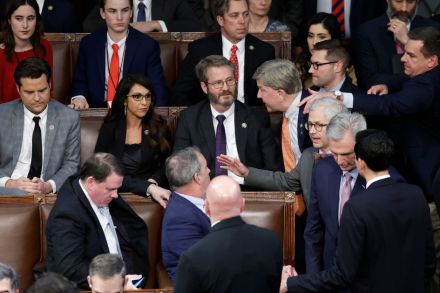
Ugly. Chaotic. Disruptive. These and other pejoratives graced headlines last week as House Republicans wrestled with the question of who would be the next speaker of the House of Representatives. One missing descriptor? Necessary. After five days of push and pull between different factions of the Republican House majority, Kevin McCarthy of California won his long-sought post as speaker. But as the negotiations wound down and McCarthy inched close to the gavel, he and his allies pivoted their narrative from anger to aspiration. We started to hear: “this is what democracy looks like” and “it’s not always pretty.

The Freedom Caucus wins the vote for House speaker

Would-be speaker Kevin McCarthy walked onto the House floor this week with a diminished hand. Before starting the new year, he’d already agreed to restore the motion to vacate the chair in the House rules package. This was a significant win for the House Freedom Caucus, and a major concession for McCarthy. Yet it still wasn’t enough to avoid this week’s floor fight. Cable news pundits have tried to sum up the drama as a tug-of-war between MAGA Republicans and ultra-MAGA Republicans, but this lazy explanation gives Donald Trump too much credit. (In fact, Trump’s recent statements backing McCarthy didn’t move the needle at all.

Kevin McCarthy is damaging the House speakership

If there was any question as to how tenuous would-be Speaker of the House Kevin McCarthy’s grasp would be on the gavel, then what happened on New Year’s Day should remove all doubt. On Sunday, the House Republican leadership team unveiled significant changes to the House rules in advance of the official swearing-in and start of the 118th Congress. Many of the changes are aimed at improving transparency and governance. But one rule change that could be far more significant was the restoration of the “motion to vacate the chair.” Under the proposed rules package, five members of the majority conference can band together and force a vote of no confidence in the speaker.

Kevin McCarthy’s party games

All that Republican Leader Kevin McCarthy wants for Christmas is the four votes he needs to hold the gavel as speaker of the House of Representatives. But at this point it looks like it will take a Christmas Miracle™. This past week, five members of the contrarian House Freedom Caucus restressed their antipathy for McCarthy. Representatives Andy Biggs, Ralph Norman, Matt Gaetz, Bob Good and Matt Rosendale have promised as a bloc to vote against McCarthy, denying him the 218 votes he needs to become speaker. Biggs ran against McCarthy for Republican majority leader after November’s lukewarm midterm elections — and lost. He knows he is playing spoiler. But what then?

kevin mccarthy

The emerging bipartisan consensus on weed

With the make-up of Congress still taking shape after the midterms, perhaps the last thing anyone expected was any kind of bipartisanship. Yet despite a contentious campaign where rising crime featured prominently in attack ads, the first order of business in both the House and the Senate was a provocative move on marijuana. In the House, Democratic congressman Jamie Raskin and Republican congresswoman Nancy Mace cohosted a hearing on how state cannabis laws have developed and what reforms the federal government might yet undertake. The hearing was surprisingly friendly, save for an outburst from Texas congressman Pete Sessions who in a rambling monologue compared legalizing pot to profiting from slavery.

marijuana cannabis

Kevin McCarthy’s Faustian bargain

If the returns from Tuesday are any indication, most American voters are breathing a sigh of relief. Thanks to split-ticketing, third-party candidates and some abstentions, the forecasted Red Tsunami seems to have been more of a mild upswell. Yes, poll workers are still counting votes in some races — and Georgia’s Senate runoffs will extend past Thanksgiving. But it seems Americans have once again voted for divided government by giving Republicans a slim majority in the House of Representatives. Victorious politicians often talk about “trusting the voters,” but this time the voters really seem to have had a sense of humor. Just as they are deposing House Democrats, they are also tying would-be speaker Kevin McCarthy to the whipping post.

The debt ceiling battle lurking after the elections

Though many pundits may not be able to see past Tuesday’s midterm elections, as soon as the voters decide which party will hold the reins of Congress, the country will witness its first reminder that elections have consequences. The 2022 contests will have a near-instant effect on US fiscal policy. At some point between mid-December and January, the United States will hit its credit limit and need to either increase it or risk defaulting on its financial obligations. Since the Barack Obama years, Republicans in Congress have turned what used to be a pro-forma vote on the debt ceiling into a political cudgel.

Ben Sasse gets trapped between MAGA and woke academia

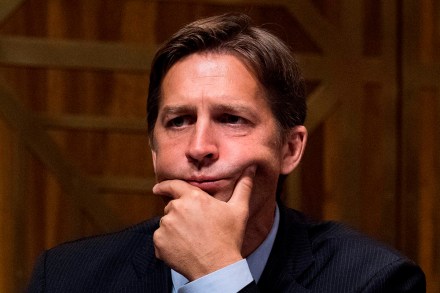
The 2022 midterm elections are less than a month away. And while the focus will be on the winners and losers, perhaps the more important story will be about the lawmakers who dodged the ballot entirely. Already this cycle, we’ve seen a remarkable number of retirements. Republican Senators Roy Blunt (Missouri), Rob Portman (Ohio), Richard Burr (North Carolina), and Pat Toomey (Pennsylvania) have all announced they will not seek reelection. Those familiar with the Senate will recognize these as some of its more bipartisan members. Earlier this month, another senator joined them: Ben Sasse from Nebraska. Yet his move is more provocative: he has four years left in his six-year term.

ben sasse

There is no pro-life Senate candidate in Georgia

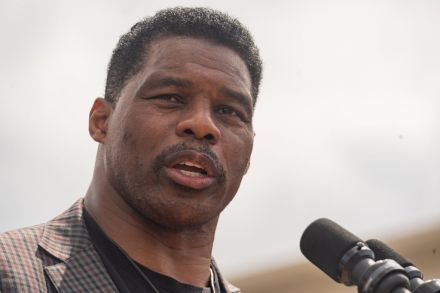
With the 2022 midterms now only a month away, there isn't a candidate anywhere who can avoid fielding questions about abortion. The issue is fair game thanks to the Supreme Court overturning Roe v. Wade in its recent decision in Dobbs v. Jackson Women’s Health Organization. And all the more so because, at least in theory, Congress could act to either federally legalize abortion or federally ban it. So it is that abortion has become a major topic of conversation in the US Senate campaign in Georgia, where NFL legend Herschel Walker and incumbent Senator Rafael Warnock are locked in one of the most pivotal races this year.

The Republican ‘Commitment to America’ feels like a Hail Mary

Last week, with fewer than 50 days to go before the midterm elections, House Minority Leader Kevin McCarthy put it bluntly: elect Republicans to save what's good about America. McCarthy introduced the Commitment to America, a policy plan he insists will put the country back on the right track. In doing so, McCarthy was looking to former speaker of the House Newt Gingrich, hoping to recreate the magic of the 1994 Contract with America, which crystallized America's then-conservative movement. The Contract with America has a mythical quality in the minds of most pundits. It’s often credited as the reason behind the Republican Revolution of 1994, which saw Republicans gain control of both houses of Congress for the first time since 1953.

Don’t cancel Russian culture

In the three weeks since Vladimir Putin launched his shocking invasion of Ukraine, the West has surprised the world with the severity of the economic sanctions it's imposed. No one has been more surprised than Putin himself, who believed the West too soft and his own nation’s oil too crucial to the global economy. How the West can further support Ukraine — while also avoiding the not-insignificant risk of a nuclear war — is a complex question. It will not be answered, however, by indulging in ugly prejudices or shunning Russian culture writ large. Since the war began, vandals have targeted businesses that are Russian-themed or owned by Russian expatriates.

What Mitch McConnell knows about January 6

For a party that claims it wants to move on, the Republicans are doing a remarkable job of turning the national spotlight back onto one of the worst days in their history. Last week, the GOP returned to its circular firing squad, issuing a statement that censured Representatives Adam Kinzinger and Liz Cheney, the only two Republicans serving on the House January 6 Committee. At the same time, it suggested that the actions of rioters who stormed into the Capitol constituted “legitimate political discourse.” Such a statement from a national political party is unusual. Almost as unusual as Senate Minority Leader Mitch McConnell issuing a rebuke of his own party apparatus.

January 6 and the coddling of the conservative mind

There are very few uncontroversial takes on what happened on January 6, 2021. Perhaps the only one is that that tumultuous day gave Americans a rare glimpse into what their republic looks like when its institutions fail. On the right, this would be taken to mean that the US election system, made up of fifty different state election regimes, failed to secure the ballot and that the mainstream media refused to report on obvious issues with the franchise. Even the judiciary, flush with judges appointed by President Trump, didn't hear the people. On the left, the same events are evidence that elections ought to be federalized to protect the vote, and that the Fourth Estate as a pillar of democracy requires buttressing against “disinformation” and outright sedition.