Culture

Culture

The good, the bad and the ugly in books, exhibitions, cinema, TV, dance, music, podcasts and theatre.

Awe and gratitude

More from Arts

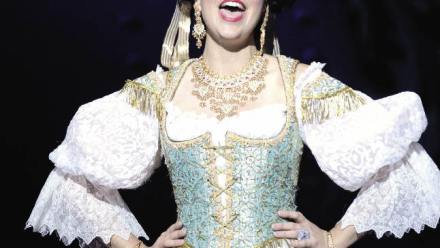
Die Meistersinger Welsh National Opera, Cardiff and touring Welsh National Opera’s new staging of Die Meistersinger von Nürnberg is a triumph. Not an unqualified one — I doubt whether there has ever been such a thing — but enough to leave the audience feeling that mixture of glowing wellbeing and sadness that this work alone engenders. WNO has a distinguished history of Wagner productions, thanks above all to the close relationship which it had with Reginald Goodall in the late 1970s and early 1980s, and which resulted in the most inspired performances of Tristan und Isolde that I have ever attended. By then Goodall had had his say with his great, enormous accounts of The Mastersingers with ENO a decade before, and the Welsh company moved on with him to Parsifal.

True blues

More from Arts

Talk of blues music and you’re likely to think of Muddy Waters, B.B. King and Howlin’ Wolf, but most of these guys actually learnt their craft from women like Memphis Minnie, Sister Rosetta Tharpe and Precious Bryant. Talk of blues music and you’re likely to think of Muddy Waters, B.B. King and Howlin’ Wolf, but most of these guys actually learnt their craft from women like Memphis Minnie, Sister Rosetta Tharpe and Precious Bryant. In Lady Plays the Blues on Saturday, Cerys Matthews (who usually DJs on BBC 6 Music) took us to the Mississippi Delta to talk to people who knew these extraordinary female singers and guitarists.

Character building

More from Arts

Years ago, not long after Tony Blair’s first landslide, I was asked by London Weekend Television to co-write a sitcom. Years ago, not long after Tony Blair’s first landslide, I was asked by London Weekend Television to co-write a sitcom. The idea was to satirise New Labour, and it was cunningly set, not in the Houses of Parliament, but in a flat nearby shared by three Labour MPs. It was a sort of political version of Craggy Island, as in Father Ted. There was the MP who didn’t give a damn and regarded loyalty to the party line as the sign of a wimp — he was loosely based on Bob Marshall-Andrews. There was a young woman loosely based on another Labour MP whom I won’t name; she was a slavish follower of whatever the leadership wanted her to say, do or think.

Made of Glass

Philip Glass doesn't approve of intervals. Last week, at Yale University's Sprague Memorial Hall, the prolific composer gave a preview of what audiences in Dublin, Edinburgh and Cork could expect from his piano performances a few days later. He starts by declaring that pauses in performance "damage the concentration" - and he ended it in front of an audience both entranced and exhausted by the musical equivalent of an optical illusion. For ninety minutes, Glass barely allowed a moment of silence to indicate where one piece ended and another began. His performance stands in a long East Coast tradition of using smaller towns - in his case New Haven, Connecticut - as a testing ground before performance on grander venues.

‘Everyone must have a voice’

Arts feature

Marianne Gray talks to the down-to-earth Oscar nominee Brenda Blethyn about her latest film Brenda Blethyn doesn’t really understand why people continually ask her why she plays dowdy, often downtrodden characters, like Cynthia, the despairing mother in Secrets & Lies, or James McAvoy’s heartbroken mother in Atonement, or Mrs Bennet in Pride and Prejudice, who horse-trades her daughters. Or, indeed, like her latest role, the anxious Elizabeth, an ignorant, conservative, prejudiced woman, in London River. ‘I just don’t see it like that,’ says Blethyn, who has made a brilliant career out of playing understated, restrained women. ‘Everyone must be portrayed. Everyone must have a voice, even the flawed ones. I don’t try to smooth out the edges.

Kaleidoscopic vision

More from Arts

The Summer Exhibition Royal Academy of Arts, until 22 August The Weston Room is packed with prints as usual, but also features five display cases of artists’ books, including work by such masters of the genre as Ron King, Ken Campbell and Ian Tyson. Among the prints I particularly liked Bronwen Sleigh’s hand-coloured etching, Terry New’s digital print, Cornelia Parker’s etched worry lines, the screenprints of Stephen Chambers, Eileen Cooper’s linocuts, Ivor Abrahams’s ‘Suburban Totem’ and etchings by Paula Rego, Frank Auerbach, John Carter, Peter Freeth and Eileen Hogan (a pale beauty of Bryanston Square). The Small Weston Room is a typical feast of tiny paintings, and supremely popular with the buying public.

Curses and blessings

More from Arts

Idomeneo ENO, in rep until 9 July Lohengrin City of Birmingham Symphony Orchestra Mozart’s Idomeneo remains, despite the best efforts of its proselytisers, a connoisseur’s piece. For all its beauties and its emotional power, it is a predominantly static work, and one in which one can’t really care all that much about what happens to the central sympathetic characters — think of the Da Ponte operas and of Die Zauberflöte, by contrast, and the point is made. Katie Mitchell, who directs the new production at ENO, ‘places Idomeneo’s timeless dilemma in a contemporary context’, according to the programme. She would. One wonders, first, if Idomeneo’s dilemma is timeless.

Thrill seekers

More from Arts

Through a Glass Darkly Almeida, until 31 July After the Dance Lyttelton, in rep until 11 August Ingmar Bergman wrote his first film aged 24. It was called Torment and he continued to entertain audiences in similar vein for the rest of his career. That an artist is easy to satirise is no proof of inadequacy, of course. MC Hammer was easy to laugh at too, and look how brilliant he was. But Bergman is the most austere and humourless of dramatists. He was so dry the ink wouldn’t flow from his pen but spilled out in dusty granules. Through a Glass Darkly, the only one of his films he permitted to be adapted for the stage, comes from the starchier end of the spectrum. It’s August.

Disputed paternity

More from Arts

Apart from Punishment Day, Beating Day, and Kill-One-Of-The-Pets-To-Teach-’Em-That-Life-Is-Harsh-Random-And-Unfair Day, I’m generally not one of those fathers who goes in for cruelty and neglect of his children. I’m too busy working my arse off to feed, clothe and educate the ungrateful sods, that’s probably why. Apart from Punishment Day, Beating Day, and Kill-One-Of-The-Pets-To-Teach-’Em-That-Life-Is-Harsh-Random-And-Unfair Day, I’m generally not one of those fathers who goes in for cruelty and neglect of his children. I’m too busy working my arse off to feed, clothe and educate the ungrateful sods, that’s probably why.

Digital deadline

More from Arts

It was such a shock. At first I couldn’t understand what was going on. Why were they all talking about Sid as if he was in the past? It was such a shock. At first I couldn’t understand what was going on. Why were they all talking about Sid as if he was in the past? I’d only been away for a few days. Surely nothing really major could have happened in Ambridge in the meantime? And especially not to Sid, who as far as I knew was safely ensconced in New Zealand on the trip of a lifetime to meet his new grandson. I listened to the next episode and still had no clue. A party for Sid? But he’s not around. Jolene in tears? But she’s usually such a toughie. A very nasty trick has been played on us by the scriptwriters.

Picasso: angel and monster

Arts feature

Andrew Lambirth talks to John Richardson, biographer and friend of the artist John Richardson has spent a lifetime in the company of great art and artists, and is justly celebrated for his ability to evoke, explain and evaluate their work in beautiful prose. Best known as the biographer of Picasso, he has written about many other artists, including Manet and Braque, and has curated a number of seminal exhibitions since the Picasso retrospective he staged in New York in 1962. For the past 50 years he has lived in New York, though born in England in 1924. He was in London recently for the installation of his major new curatorial excursion, Picasso: The Mediterranean Years 1945–62 at Gagosian Gallery (6–24 Britannia Street, WC1, until 28 August).

Molière with a US accent

More from Arts

Matthew Warchus tells Henrietta Bredin why he is directing an American play inspired by Molière Rehearsing is an extraordinarily intensive, exploratory, deeply engaging business and director Matthew Warchus, emerging from a long day’s work on his new production of La Bête, by David Hirson, takes a while to change gear, blinking slightly dazedly as we walk towards the Old Vic in search of somewhere quiet to talk. ‘It’s a slippery play, this one,’ he says. ‘The text is so dense and highly wrought and it’s changing shape as we go along. The acting of it creates dimensions that just aren’t apparent on the page.

The axeman cometh

More from Arts

Maria Stuarda; Rusalka Opera North, in Leeds and on tour until July Carmen Royal Opera House, until 26 June Donizetti’s Maria Stuarda is most celebrated for the apocryphal meeting of Mary Queen of Scots and Elizabeth, in which Mary descends to some coarse insults, backed up, in Antony McDonald’s new production for Opera North, by the use of a riding whip — Elizabeth has one, too, and the two queens do get quite physical. The drama here is stronger than the music, though, which is as perfunctory as most of the score, and only rises to an impressive level for the long monologues for the central characters, and especially the final scene — a very slow walk to the scaffold, inevitably.

Lesson from Venezuela

More from Arts

The idea that one can take guns and syringes out of the hands of disaffected youths and replace them with musical instruments, which they then delight to play, is so utopian that most people’s reaction was to laugh it off. The idea that one can take guns and syringes out of the hands of disaffected youths and replace them with musical instruments, which they then delight to play, is so utopian that most people’s reaction was to laugh it off. Yet, as everyone knows, this is exactly what has been happening in Venezuela since 1975, and is still happening. The lives of many young people have been improved by the opportunities offered by El Sistema, and no doubt the mood in society as a whole has been vastly improved.

Changing minds

More from Arts

‘Do you remember listening to the radio for the very first time?’ asked David Hendy at the beginning of his thought-provoking series of late-night essays on Radio 3 (which you should still be able to catch on Listen Again). ‘Do you remember listening to the radio for the very first time?’ asked David Hendy at the beginning of his thought-provoking series of late-night essays on Radio 3 (which you should still be able to catch on Listen Again). His question was not intended to conjure up memories like my own glimpse back to the draughty kitchen of the vicarage where I grew up when Uncle Mac announced on Children’s Favourites my brother’s request for ‘Greensleeves’.

Game for a laugh

More from Arts

In spite of the hype, I enjoy the World Cup. But I don’t enjoy the omnipresent James Corden, who played the clingy, footie-loving, curry-scoffing, lager-glugging, belly-baring, deeply annoying best friend in Gavin and Stacey. In spite of the hype, I enjoy the World Cup. But I don’t enjoy the omnipresent James Corden, who played the clingy, footie-loving, curry-scoffing, lager-glugging, belly-baring, deeply annoying best friend in Gavin and Stacey. That was funny. Bringing the same persona into his World Cup Live programmes (ITV, too often) is just embarrassing. Corden is from that school of comedians who think that laughing a lot is, in itself, funny.

‘Take risks and be exciting’

Arts feature

Lloyd Evans talks to Michael Attenborough, whose star at the Almeida is the theatre itself The back office of the Almeida Theatre in Islington could do with a major refit. Dowdy, open-plan and scattered with Free-cycled furniture, it looks like the chill-out room of a student bar or the therapy suite of some underfunded weight-watch clinic. The tin chairs are arranged around elderly coffee-tables. The walls have been painted with the ramshackle expediency of a squat — a blue stretch here, some scarlet columns there, a few purpley flourishes. Beneath the roof eaves a beer gut of damp and crumbly brickwork bulges outwards precariously. I’d give it three months, maybe six, before it collapses.

Glastonbury is for middle-aged masochists

Features

Europe’s biggest musical festival is now just a massive authoritarian pigpen, says Brendan O’Neill. No wonder the young are staying away Most people, when they hear the word Glastonbury, think of mud, drugs, drunkenness, moshing, free love, the lighting up of spliffs, and generally harmless experimentation in a field. Well, they’re right about the mud. Yet far from being a site of hippyish self-exploration, the Glastonbury music festival has become a tightly regimented gathering of middle-class masochists who don’t mind being bossed around by nosey cops and kill-joy greens for three long days.

Conversation piece

More from Arts

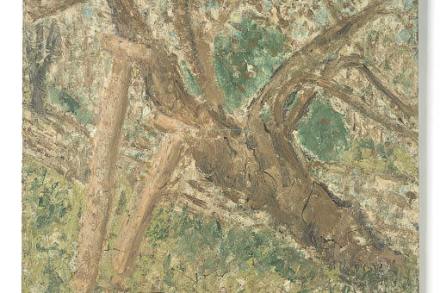
Another Country: London Painters in Dialogue with Modern Italian Art Estorick Collection, 39a Canonbury Square, London N1, until 20 June In recent years there has been something of a vogue for encouraging contemporary artists to respond to particular works by artists of the past, and to make paintings as part of that response. The prime example of this curatorial trend was Encounters: New Art from Old, staged by the National Gallery in 2000, and including such painters as Balthus, Patrick Caulfield, R.B. Kitaj, Cy Twombly and Euan Uglow.

Miller masterpiece

More from Arts

All My Sons Apollo, booking to 2 October Shrunk Cock Tavern, until 12 June It starts softly, in a dream of American contentment. A country house nestles in the lap of its lush and blossoming garden. The sun shines. Birds sing. Green foliage drips with the rain from last night’s storm and Joe Keller, a prosperous manufacturer in his early sixties, potters about the lawn reading the newspaper and cracking jokes with his neighbours. His son Chris has returned home and plans to marry Ann, the girl next door. But there’s a snag. In fact, there are two. Ann was engaged to Chris’s brother, a navy pilot who went missing in the war a couple of years earlier.

Secret admirer

More from Arts

When life becomes slightly too challenging, I’m sure I’m not alone in leaning towards comfort music. When life becomes slightly too challenging, I’m sure I’m not alone in leaning towards comfort music. You don’t want anything too jagged, or awkward, or dissonant, or glum. Nothing that makes the veins in your forehead throb. It needs to be something you know backwards but, ideally, haven’t played for years and years. And it might be something you will only consider playing when everyone is out, curtains are drawn and all covert listening devices have been safely neutralised. We are speaking, obviously, of Dire Straits’ ‘Sultans of Swing’. This is a generational thing, I understand.

The need to know

More from Arts

Simon Cowell spent the weekend bemoaning Britain’s lack of talent. Simon Cowell spent the weekend bemoaning Britain’s lack of talent. He obviously doesn’t listen to Radio 4. As Cowell should know, there are other kinds of talent, more useful in these gloomy economic times and more durable, which have no requirement to cake on tubloads of fake tan and sing along to Celine (or Whitney). What about our engineers and R&D cohorts, for example? We also have more than our fair share of extraordinary scientists, thinkers and communicators of big ideas.

History like it used to be

More from Arts

Because I was taught history properly by my prep-school teacher Mr Bradshaw, my head is full of easily accessible dates which I know I’ll never forget. Because I was taught history properly by my prep-school teacher Mr Bradshaw, my head is full of easily accessible dates which I know I’ll never forget. Obviously, I know Crécy (1346) and Agincourt (1415), but I also know one or two more obscure ones like those of Blenheim, Ramillies, Oudenarde and Malplaquet. This is because of a cunning acronym Brad taught me — a phone number BROM 4689 — which I dare say I remembered mainly because at the time I lived in Bromsgrove. According to the new history-teaching orthodoxy, of course, dates are an unwelcome imposition on a child’s creative spirit.

Contrasting characters

Arts feature

Mary Wakefield talks to Roger Allam and discovers that he thinks acting is only a game As I meet Roger Allam’s eye, in the bar area of Shakespeare’s Globe, I feel a lurch of dread. I love Roger Allam. I’ve held a torch for him since the mid-Eighties, when he starred in Les Mis as the original and best Inspector Javert — but the look in his eye today is one of profound boredom. It bodes badly. You must be in the middle of rehearsals [for Henry IV Part 1] I say, brightly. ‘Yes.’ He looks out of the window at the glittering Thames. It must be difficult to do interviews then — do you still feel in character as Falstaff? ‘No. Not really.’ Roger Allam is, everyone says, a nice man.

Drawing for drawing’s sake

More from Arts

Fra Angelico to Leonardo: Italian Renaissance Drawings British Museum, until 25 July The latest exhibition in the Round Reading Room is an awe-inspiring collection of Italian Renaissance drawings, the kind of display likely to be seen only once in a lifetime. It is a large show of relatively small things, offering 100 examples of the finest drawings made between 1400 and 1510, entirely selected from two collections: the Gabinetto Disegni e Stampe degli Uffizi in Florence, and the British Museum itself. Here we see the birth of drawing as an independent art form, and not simply as a preliminary study for a painting.