Zionism

Why I’m a proud Zionist

The bomb shelter reserved for ‘volunteers’ at Kibbutz Dafna near the town of Kiryat Shmona in northern Israel was definitely substandard. It was damp and smelly, more like a lavatory than a fortified bunker, and not considered fit for the kibbutzniks: a pampered species compared to us. But when the Soviet-built ordnance started raining down on us, it did its job. We emerged, unharmed, the following morning, blinking into the dawn light. The terrorists had not succeeded in hitting the kibbutz with a single Katyusha rocket. No, I’m not embedded with the Israel Defence Forces on the Lebanese border, although the area surrounding Kiryat Shmona was under fire from Hezbollah earlier this week. This was in 1981 and I was just 17.

My battle to buy pierogi might end up in court

From our US edition

I have been going to the farmers market in Martha’s Vineyard for nearly half a century. I buy corn, tomatoes and homemade products. Until last week every vendor at the market treated me with respect and loved to have my business. I spent about $100,000 on farm and home products over the years, so I was shocked when one vendor refused to sell me their pierogi. It turns out that this particular vendor, Krem Miskevich, doesn’t approve of Zionism – that is support for Israel’s right to exist as the nation-state of the Jewish people. To be a Zionist does not require agreement with Israel’s policies or actions – just its right to be. I strongly believe in Zionism. It is an essential aspect of my religion.

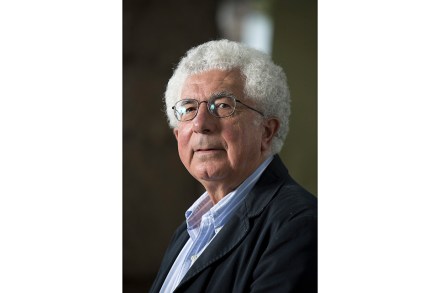
Alan Dershowitz

What does Gaza have to do with the Los Angeles fires?

From our US edition

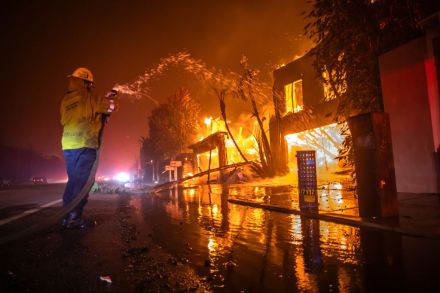
The insanity displayed by the pro-Hamas crowd never ceases to amaze. But the latest salvo feels extreme even by the extremist standards that have come to define the global political climate post-October 7. According to some of the most vocal online anti-Zionists, the raging inferno now overwhelming much of Los Angeles is not the result of government neglect or poor urban planning or even climate change. No, the thousands of homes and tens of thousands of acres now destroyed across Southern California are the handiwork of Jews and Zionists and Israel.  There are many streams leading to this nonsensical conclusion — all rooted in time-worn tropes of nefarious Jewish alliances and global domination.

Choosing mob rule at UCLA 

From our US edition

A big part of the social contract for a modern society is an agreement that citizens will grant the state a monopoly on the use of legitimate violence in exchange for that state protecting its subjects, including from mobs within the state and other illegal behavior. The expectation is that the rules will be enforced fairly and equally, or the contract loses legitimacy.  The United States has a First Amendment that protects speech to a level that doesn’t exist in other countries, including speech that is openly supportive of terrorism and mass murder. In this regard, the groups organizing campus protests are putting on a fine civics lesson for everyday Americans exhibited by the main groups behind many of the current college protests we are witnessing.

ucla

A shocking claim about the Baghdad bombings of 1950 and 1951

Avi Shlaim’s family led the good life in Baghdad. Prosperous and distinguished members of Iraq’s Jewish minority, a community which could trace its presence in Babylon back more than 2,500 years, they had a large house with servants and nannies, went to the best schools, rubbed shoulders with the great and the good and sashayed elegantly from one glittering party to the next. Shlaim’s father was a successful businessman who counted ministers as friends. His much younger mother was a socially ambitious beauty who attracted admirers, from Egypt’s King Farouk to a Mossad recruiter. For this privileged section of Iraqi society, it was a rich, cosmopolitan and generally harmonious milieu. And for the young Shlaim, born in Baghdad in 1945, these were halcyon days.

Light and shade in the Holy Land – a century in spectacular images

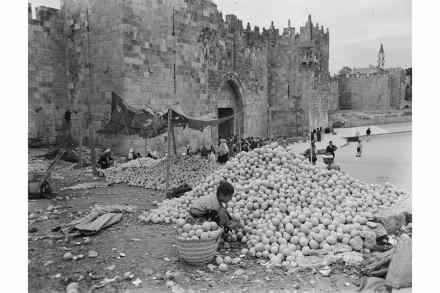
Roger Hardy is a romantic. That much I deduce from the language he uses to describe how photographers were drawn to the special quality of light in Palestine. Their images, he writes, ‘capture the play of light and shade on the limestone walls of Jerusalem’s Old City, the glistening watermelons on sale at open-air markets, the white apartment blocks of the new metropolis of Tel Aviv, the dusty rubble of houses blown up by soldiers during the rebellion of the 1930s’. The last few words reveal a steely realism, too, a quality developed, no doubt, during the more than 20 years he worked as a Middle East analyst for the BBC World Service.

Political arguments are now over words, not things

There is a picture book, by the excellent David McKee, of which my youngest child was very fond. It’s called Two Monsters, and its protagonists are, as promised, two monsters. The blue one lives on the west side of a mountain, and the red one lives on the east side of the mountain. They communicate verbally but never see each other. It all kicks off when one evening the blue monster calls: 'Can you see how beautiful it is? Day is departing.' The red monster shouts back: 'Day departing? You mean night arriving, you twit!' Cantankerous words are exchanged before bedtime and both sleep badly. The following morning the blue one shouts: 'Wake up, you numbskull, night is leaving.' Red responds: 'Don’t be stupid, you peabrain! That is day arriving.

Seth Rogen’s Jewish problem

From our US edition

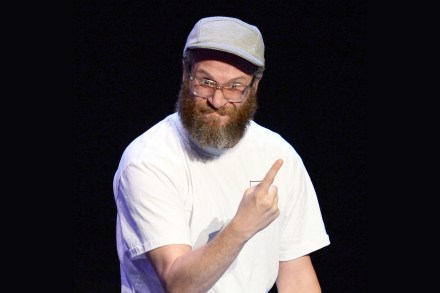
The discourse has reached a sufficient pitch of sophistication that in order to comprehend the state of Jewish life in the US — and that means the state of anti-Semitism in the US — we must consider the thoroughly modern morality tale that is the story of Seth Rogen, Eve Barlow and the ‘fart’ emoji. Those fortunate enough to be spared a daily bath in the sewers of Twitter may need to be filled in. Seth Rogen is to comedy as Chapo Trap House is to Henry Kissinger: a kind of stoned, dirtbag antidote to adulthood. He specializes in depicting that saddest of American male specimens, the pot-smoking, pot-bellied, moob-stricken man-child.

seth rogen

A campus novel with a difference: The Netanyahus, by Joshua Cohen, reviewed

Dr Benzion Netanyahu’s reputation precedes him. ‘A true genius, who also happens to be a major statesman and political hero,’ writes one former colleague in a letter of recommendation. Unhelpfully, another letter follows where a different former colleague describes him as a ‘prolific rabble-rouser’, with ‘a history of inciting terrorist violence’. These letters land in the pigeonhole of Ruben Blum, a historian at sleepy Corbin College in upstate New York. Ruben, the first and only Jew on the faculty (it’s 1959), is to interview Netanyahu for a position. Netanyahu is a revisionist Zionist; Ruben has carved a quiet patch in taxation studies.