Yemen

Why Trump’s Muslim Brotherhood crackdown is long overdue

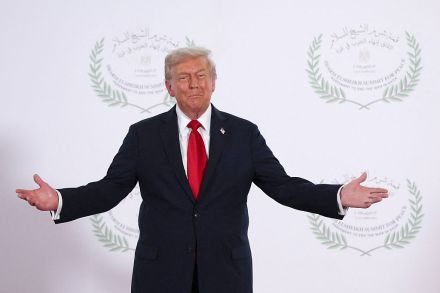
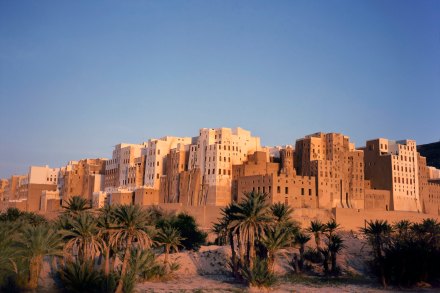
Donald Trump has begun the process of banning the Muslim Brotherhood. The President asked his officials last week to investigate whether certain chapters of the group should be classed as foreign terrorist organizations, which would result in economic and travel sanctions. Some are portraying this as a reckless lurch into Islamophobia. In fact, it is overdue by at least a decade. The Muslim Brotherhood is not a benign religious association. It is a disciplined ideological movement with a century-long record of exploiting political systems. Its explicit objective is to work towards the establishment of a global caliphate – only by gradualist means, rather than the reckless confrontation and brutality favored by its distant offshoot, ISIS.

muslim brotherhood

How an international community of do-gooders made the US lose the plot in Yemen

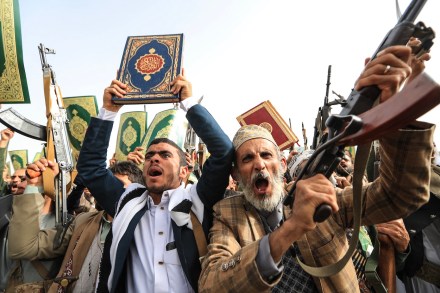
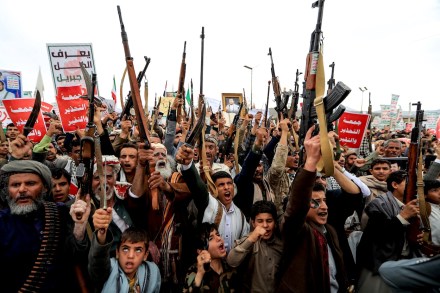
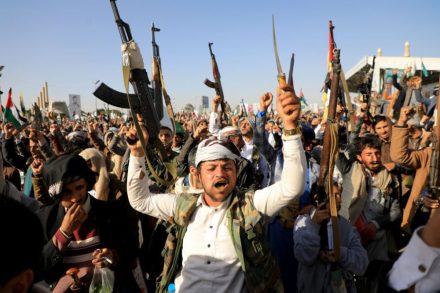
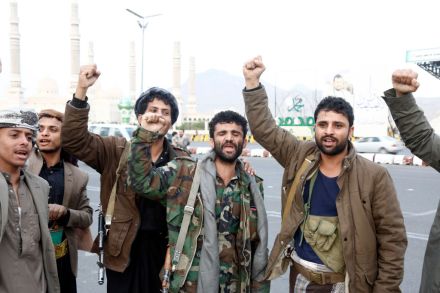
As British Ambassador to Yemen from 2015 to 2017, and later in counterterrorism roles at the UN, I watched with growing frustration as Washington, despite its early clarity, lost the plot in Yemen – with consequences that are now rippling across the Red Sea and into Israel. In 2014, the international community got it right. UN Security Council Resolution 2140 blamed the right culprits: former President Ali Abdullah Saleh and the Houthi leadership. The Houthis, a small sectarian militia allied with Saleh, were trying to hijack Yemen’s democratic transition – and the world recognized that.

Yemen

I Dream of Lamu

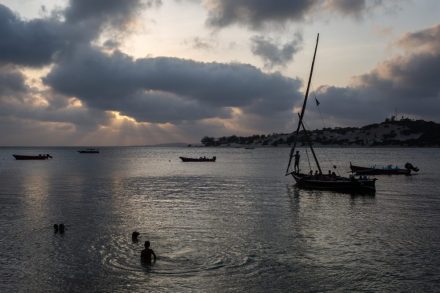
An hour after the propeller plane lifts away from Wilson, Nairobi’s regional airport, it is arching over the blues and greens of the Lamu archipelago; a pattern of islands that extend 130 kms to the Somali border. Views of Lamu, which is also the name of the island and the stone town, have the dreamlike quality of an acid trip; the candy-pink minaret of the main mosque rising over coralline houses in the oldest, continuously inhabited, settlement on Kenya’s Swahili coast. And beyond the hazy shoreline, confetti-scatterings of white are the dhows that powered the fortunes of this former hub and deep-sea port. These criss-crossed the Indian Ocean on seasonal monsoon trade winds swapping ivory and slaves from the African hinterland for silks and spices from India, Yemen and Oman.

Did Kamala Harris ‘stun’ at the Met Gala?

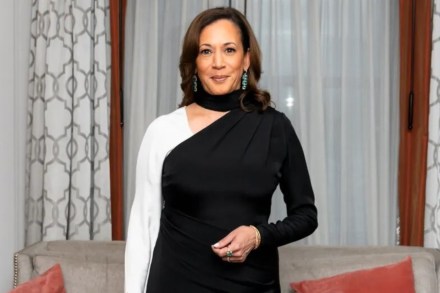
Met Gala turns @TheDemocrats into @PopCrave Celebrities from the music industry, the NFL and Hollywood joined Kamala Harris at the annual Met Gala fundraiser for the Metropolitan Museum of Art’s Costume Institute. In an embarrassing tweet emulating viral celebrity accounts such as @PopCrave, @TheDemocrats (yes, the official social media account for the entire Democratic party) wrote, “Kamala Harris stuns at the Met Gala.” The defeated presidential candidate wore a black and white dress in a possible homage to Cruella de Vil. Despite the online slavering at DNC HQ, Emily Smith notes elsewhere in The Spectator that Harris’s audience might have been on the other coast.

kamala harris met gala

Which member of the ‘Houthi PC small group’ chat are you?

Most people use groupchats to share memes, organize brunch or gossip. The Trump administration plans air strikes. After Atlantic editor-in-chief Jeffrey Goldberg was inadvertently included in the "Houthi PC small group" Signal chat by National Security Advisor Mike Waltz, administration officials were eager to stress that no classified information was included in the unofficial chat. As a result, Goldberg published screenshots of the full conversation this morning. The messages offer a glimpse into not just the views of various cabinet members on foreign affairs; they reveal the texting styles of some of the most consequential government officials in the world. Some are relatable. "Having read thru the full Houthi PC small group logs, I've come to the sad realization that I'm the J.D.

houthi

Mike Waltz claims he has ‘never met’ Atlantic editor

National Security Advisor Mike Waltz spoke to the press this afternoon for the first time since the Atlantic editor-in-chief Jeffrey Goldberg described how Waltz had inadvertently added him to a Signal groupchat in which air strikes on Yemen were planned. Waltz claimed that he'd “never met, don’t know, never communicated with” Goldberg. The only problem: Goldberg says in his report that the pair has met before. So who's lying? The Atlantic reported Monday how Goldberg was granted access to “precise information about weapons packages, targets and timing” from Secretary of Defense Pete Hegseth, two hours before the US attack on Yemen targets on March 15. “There are a lot of lessons,” Waltz told the press while meeting with President Donald Trump and US ambassadors.

waltz

The ‘government by groupchat’ scandal should cost Mike Waltz his job

Blimey! Atlantic editor Jeffrey Goldberg has written a fresh exposé that should result in the immediate resignation or firing of National Security Advisor Mike Waltz. His story is called “The Trump Administration Accidentally Texted Me Its War Plan.”  In calm and lucid prose, Goldberg explains that he was initially suspicious of his inclusion in a text chain about a potential American military attack on Yemen on the encrypted app Signal. Various Trump national security officials, ranging from Vice President J.D. Vance to Defense Secretary Pete Hegseth, appeared to be in the chat with him.

waltz groupchat

Why air strikes on the Houthis will fail

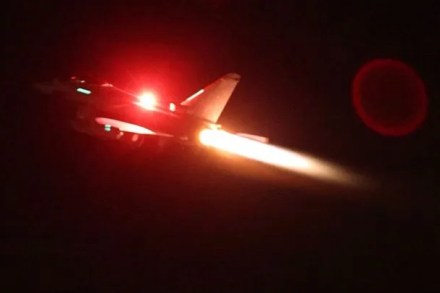
The United States has begun what may well prove to be a long — and likely doomed — campaign of airstrikes against Ansar Allah, also known as the Houthis, in Yemen. For a year and a half since October 2023, the Houthis have been highly successful in disrupting shipping in the Red Sea, launching missiles and drones at cargo ships, oil tankers, and passenger vessels — hitting some, sinking fewer, and inconveniencing millions. Every conflict the US has engaged in since 2001 has ended before America achieved its objectives. While few ships have been hit, even fewer have been sunk, and fewer still have resulted in casualties, the numbers speak for themselves.

Houthis

Trump has elevated the Houthis as an opponent

So much for President Donald J. Trump’s serial vows to extricate America from the Middle East’s seemingly endless wars and feuds. His bombing on Saturday of numerous targets in Yemen has further enmeshed it in them. Several weeks of bombing loom as Trump vows to crush the Iranian-backed Houthi militia and warns Tehran that it might be in for similar treatment.  His statement was unequivocal: “To Iran: Support for the Houthi terrorists must end IMMEDIATELY! Do NOT threaten the American People, their President, who has received one of the largest mandates in Presidential History, or Worldwide shipping lanes. If you do, BEWARE, because America will hold you fully accountable.”  Whether the Iranian mullahs will be impressed by Trump’s fulgurations is an open question.

houthis

Iran attacks Israel: what does it mean and what happens next?

A few hours before Iran launched missiles at Israel, America’s spy satellite saw Iran moving the weapons onto their launching pads. They told Israel (and leaked to the media) that an attack was “imminent.” They were right. Within hours, several hundred Iranian missiles were flying toward the Jewish State, just as they had in April. The earlier attack caused little damage — most of the missiles were intercepted — and early reports are that the recent attack met the same fate. Israel’s success shooting down the missiles is crucial, not only because it saved lives but because it does not require Israel to launch a full-scale counter-attack. Safety from the missiles did not protect all Israelis, though.

The US is unwise to lift restrictions on the sale of bombs to Saudi Arabia

To the extent Joe Biden had anything to say about Saudi Arabia during the 2020 presidential campaign, it largely centered on shaming the oil-rich monarchy into changing its ways. Coming off the 2018 state-sponsored murder of Washington Post columnist and former royal court insider Jamal Khashoggi in a Turkish consulate, Biden aired numerous complaints about Saudi crown prince Mohammed bin Salman. He pledged to make the kingdom a pariah state during a Democratic presidential debate, accused the Saudi air force of killing children in Yemen — it wasn’t as much an accusation as a fact — and committed himself to reassessing US arms sales to Riyadh. The Saudis didn’t like what they saw during the Biden administration’s opening months.

saudi

Waging war through poetry

Poetry is politics in the Yemen. When the last imam of Yemen, who was also the hereditary ruler, was deposed in a coup in 1962, it was a local poet who announced the change of regime on the radio, in verse of course. And the current al-Houthi regime in the north of the country, like all its predecessors, asserts its legitimacy, confounds its enemies and rallies its supporters through poetry. As an aspect of their cause, they have consciously avoided high-Arabic poetry — a literate, urban cultural form — and have made use of the zamil tradition, which immediately speaks not of the palaces of emirs and princes, but takes the listener to sit beside the farmers and Bedouin shepherds in the villages and hills.

poetry

The UN’s constant famine crisis problem

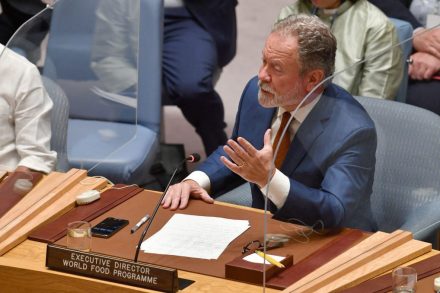
David Beasely, head of the UN’s World Food Program, has said that 350 million people are at risk of hunger and 50 million are “knocking at famine’s door.” Cockburn sees this as a serious humanitarian issue, which is why he is also concerned about the UN’s growing messaging problem. For years, the UN has raised the alarm about impending famines, but in most cases — either because of its efforts or other factors — such catastrophes have not yet come to pass. This is excellent news, and speaks to the skill and dedication of aid workers both in the UN and beyond — but it also risks creating the false impression of crying wolf. Since the US withdrew in 2021, Afghanistan has been in a dire state.

un world food famine crisis

Don’t expect much from Biden’s Middle East trip

It took Barack Obama less than three months to fly to the Middle East for a visit, landing in Iraq to visit the tens of thousands of US troops stationed there at the time. Donald Trump’s first overseas trip as president was to the Kingdom of Saudi Arabia (also three months into his tenure), where he basked in the limelight, watched in awe as his face was plastered on buildings in Riyadh, and hovered over a glowing orb with King Salman. Now, eighteen months into his presidency, Joe Biden will be spending a few days this week in the region, making stops in Israel, the West Bank, and Jeddah, Saudi Arabia, for a summit of the Gulf Cooperation Council.

‘America or chaos’ is a false choice

There is an age-old dogma in the US foreign policy establishment: when America pulls back, chaos ensues. Like an anti-inflammatory that keeps arthritis under control, Washington’s presence in this or that region keeps enemies cowed, partners reassured, and the barbarians at the gates. Of course, just because an argument is popular doesn’t mean it’s accurate. There are several problems with the “America must be everywhere, at all times” line of thinking, the most poignant of which is that it turns the US military into an agency of global rent-a-cops.

Washington’s dirtiest war at last goes silent

Something strange, but miraculous, is happening in Yemen right now: no bombs are falling from the sky. According to the Yemen Data Project, an independent group keeping track of the violence in the Arab world’s poorest country, there hasn’t been a single Saudi coalition airstrike over the last week. This is the first time since Yemen’s civil-turned-proxy war began that an airstrike hasn’t been recorded, an unprecedented and welcome development for the millions of Yemenis who have lost so much as their rich Saudi neighbors seek to drive the Houthi-led rebel movement to the negotiating table.

What’s the difference between Yemen and Ukraine?

Millions of innocent civilians uprooted from their homes. Residential areas turned into dust, rubble and wire. Thousands of people killed in errant airstrikes. Store shelves emptied of basic staples. A humanitarian crisis dominating the everyday lives of a large swath of the population, who just want to escape the shelling and the fighting. This is the scene the world now equates with Ukraine, which has been subjected to a barbaric war of choice courtesy of Russian president Vladimir Putin. Yet for one poverty-stricken nation more than 2,400 miles to the south, this has been the grim reality for years.

yemen

The decline of drone killings

On the very same day that Joe Biden was inaugurated, he imposed an order on the national security bureaucracy that received little attention at the time: drone strikes in Yemen and Somalia were to be curtailed until further notice. If American commanders wanted to strike a target in those countries, they would have to bring the request directly to the White House for debate. The new, temporary guidelines would be in place until the Biden administration completed its inter-agency review on America's policy of targeted killings. That review is still in the process of being finalized. And while we don’t necessarily know what the Biden administration’s new rules and procedures will be, we do know that the White House is ramping down the pace of drone strikes.

The dark Prince

‘No modern US war would be complete without the involvement of Blackwater founder Erik Prince,’ wrote journalist Jeremy Scahill in his seminal book Dirty Wars. That was back in 2013. Since its founding in 1997, Blackwater, Prince’s private military outfit, has been reincarnated several times under different names. But Prince has stayed the same. Iraq, Afghanistan, Libya, Somalia — Prince, a very 21st-century mercenary, has wreaked havoc in all these places. He comes, he spoils, he leaves a mess that is impossible to clear up. Take Libya.

prince

How drones are dramatically changing warfare

The attack on Saudi Arabia’s oil facilities by Houthi rebels using a fleet of 10 drones loaded with explosives has caused serious damage and will result in a global production cut of around five percent. The Houthi strike was the second aimed at Saudis oil facilities after a previous effort last month resulted in minimal damage. The Houthi drones were likely supplied by Iran, which has a large drone fleet and has been arming the rebel group in Yemen for years. Saudi Arabia is likely to launch retaliatory strikes against both the Houthis and Iran. Drones have become a new frontier in warfare allowing activist groups and nations access to a potent weapon that can be used for surveillance or as a remotely piloted bomb.

drones oil saudi arabia