Xi jinping

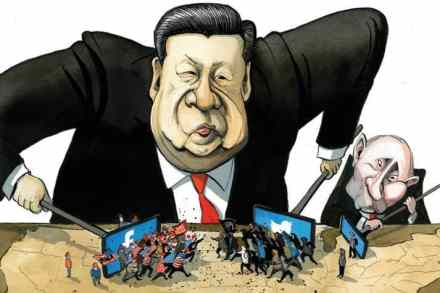
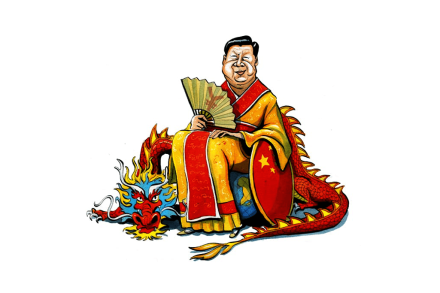
There is no Russia-China axis

From our UK edition

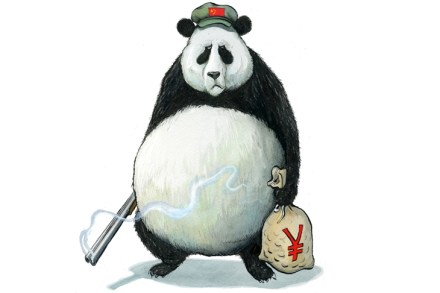
You should be careful what you wish for, because you might just get it, so the old cliché goes. In diplomacy at the moment, it seems you should be careful of the threats you prepare for, because you may end up producing them. There is a growing trend in the West towards treating Russia and China as some single, threatening ‘Dragonbear’ (a reference to the two countries' national animals). This underrates the very real tensions between Moscow and Beijing, but risks pushing them even closer together. The most recent case in point was Nato secretary-general Jens Stoltenberg’s interview in the Financial Times, in which he criticised ‘this whole idea that we either look Russia, or to China… because it goes together.

Xi threatens Taiwan because he’s weak

From our UK edition

Over the weekend, China sent waves of warplanes racing towards Taiwan in numbers not seen before, forcing the democratic self-ruled island to scramble fighters and ready its air defence missiles. The United States says it is ‘very concerned’ by Beijing’s ‘provocative’ actions and reiterated Washington’s ‘rock solid’ commitment to the island. According to Taiwan’s defence ministry, 38 Chinese aircraft, including nuclear-capable bombers and J-16 fighter jets, entered its air defence identification zone on Friday, and another 39 did so again on Saturday — the largest incursion to date. Some 16 more were sent on Sunday.

How China’s economic revolution created billionaires overnight

From our UK edition

In the winter of 1992, the retired octogenarian Deng Xiaoping toured China’s southern coasts. From there he gave a spirited warning to his communist successors: ‘Whoever doesn’t reform will have to step down! We must let some people get rich first!’ These words were the starting-gun for the country’s opening, and its intense economic reform. In the decades since, Chinese cities have never stopped hungering for more space, with new suburbs swallowing up old villages and steel skyscrapers growing ever higher. Even taxi drivers lose their way. One sheepishly explained to me: ‘That road never used to be there.

How ‘Xi Jinping Thought’ is taking over China’s classrooms

From our UK edition

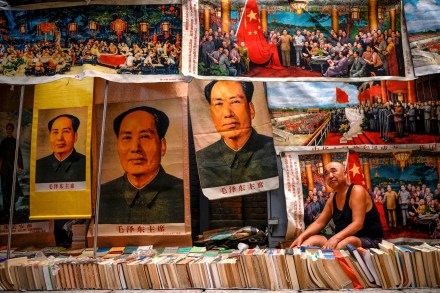
From this month, in an extension of a personality cult not seen since Mao Zedong, ‘Xi Jinping Thought’ is being incorporated into China’s national curriculum. School textbooks are emblazoned with Xi’s smiling face, together with heartwarming slogans telling readers as young as six that their leader is watching over them. ‘Grandpa Xi Jinping is very busy with work, but no matter how busy he is, he still joins in our activities and cares about our growth,’ reads one. ‘Xi Jinping Thought’ must be taught at all levels of education, from primary school to graduate programmes, and there is special emphasis on capturing the minds of the youngest children.

Did Chinese fentanyl kill Michael K. Williams?

From our UK edition

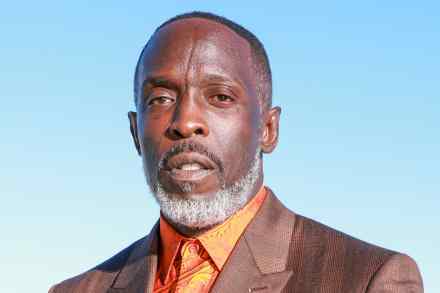
Did Chinese-manufactured fentanyl, a synthetic opioid, kill Michael Kenneth Williams, the man who played ‘Omar’ in The Wire? Within minutes of his death being announced yesterday, speculation was circulating on Twitter. New York Police Department sources have told the Daily Mail they suspect fentanyl was involved. The world only seems to notice when a celebrity overdoses. In 2016, Prince's death from a cocktail of fentanyl and other substances was an important milestone in awakening America to the horrific opioid drug epidemic that had crept up on the country since the 1990s. But lots of non-famous people are dying all the time because of fentanyl from China, which has flooded the US criminal scene in recent years.

What kind of empire is China building?

From our UK edition

As Britain’s small fleet, headed by HMS Queen Elizabeth, cruises towards the South China Sea, there remains a question over the nature of China’s geopolitical ambitions. When Xi Jinping came to power in 2013 it was assumed that China would follow the relatively unthreatening path begun by Deng Xiaoping. But Xi was intent on following a different agenda. Xi’s brutal clampdown on corruption showed that there was a new sheriff in town. High profile politburo members were imprisoned. Such was the scale that Qincheng Prison began to run out of cells. Expensive wristwatches suddenly disappeared from the arms of modestly paid bureaucrats. The West applauded.

Wang Huning: the man behind Xi Jinping

From our UK edition

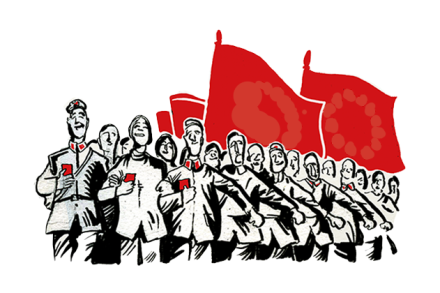
At the height of the Cultural Revolution, over a billion copies of Mao’s Little Red Book were distributed across the People’s Republic. This small pocket-sized collection of quotations provided the scaffolding for an era of communist purges. Utopians need theory. And while the Maoist orthodoxies of the last century have faded, China's need for a solid intellectual foundation is as strong as ever. Xi Jinping Thought on Socialism with Chinese Characteristics for a New Era is that new theory. But it is written not by the General Secretary himself but by an unassuming 65-year-old: his supreme theoretician. Wang Huning has quietly shaped China over the last three decades, despite the fact that few of his countrymen could pick him out of a line-up.

trumpism

Why Trumpism won’t outlive Trump

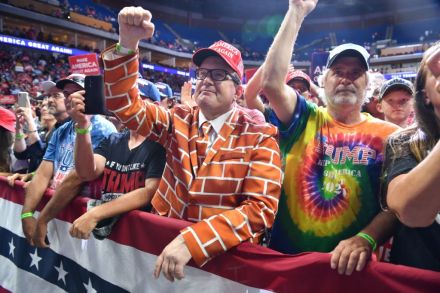
Trumpism is, according to its adherents, meant to replace Reaganism, the political doctrine that has dominated the Republican party and the conservative movement since Ronald Reagan left office. Reaganism is identified by a commitment to free market economics, internationalist foreign policy, strong national defense and an open door to immigration.But then Reaganism and its British version, Thatcherism, have also been associated with an intellectual revolution that swept the West in the 1970s and that was headed by Nobel Prize-winning economists like Friedrich Hayek and Milton Friedman, and driven by think tanks like the Heritage Foundation, the American Enterprise Institute, the Cato Institute and the Center for Policy Studies that transformed the political discourse worldwide.

Is critical race theory in the US military ‘dangerous’?

After renewing their Cold War-era alliance earlier this week, Beijing and Moscow challenged the US military hegemony by claiming American global dominance was 'over' and threatening to strike back if any 'boundaries are crossed.' GOP lawmakers on the House Armed Services Committee told The Spectator that the Defense Department's focus on critical race theory under the Biden administration is ‘stupid and wacko’ while the Sino-Russian powers are on the march. Xi Jinping and Vladimir Putin met Monday during a virtual summit to extend their cooperation treaty between their respective countries, both of which have strained their ties with the US ever since the treaty was initially signed 20 years ago.

armed services critical race theory

Has Xi Jinping overplayed his hand?

The Chinese Communist party’s origin story, like so many of its official lines, appears to be an apocryphal tale. But a month-long patriotic extravaganza leading up to its centennial celebration has featured military parades, skyscrapers emblazoned with hammer-and-sickle decor and propaganda blitzes on TV. None of the agitprop raised eyebrows as much as the main speech delivered by the Chinese president and general secretary of the party, Xi Jinping, in which he marked the milestone and praised China’s ‘tremendous transformation’ and the historical inevitability of its ‘national rejuvenation’.

xi jinping

Prepare for China’s nationalist turn

From our UK edition

In recent days, it has been striking how many people in Westminster and Whitehall now think the lab leak theory is the most plausible explanation of Covid’s origins. China’s apparent success last year at stamping out the virus at home — with technological competence and sheer brutality — while cases spiked in the West, created a fear that the future belonged to Beijing.  But, as I say in the magazine this week, the growing plausibility that the virus leaked from a lab highlights the Achilles’ heel of the Chinese system: its lack of a mechanism for error correction. It is not that a lab leak couldn’t have happened in the democratic world, but it is far harder to imagine it being covered up here.

What China wants from Britain

From our UK edition

What are we to do about China? To turn a phrase beloved by the Chinese Communist party (CCP) on its head, Beijing is increasingly ‘interfering in our internal affairs’. Yet if you hoped to answer that question by reading the recent integrated review of defence and foreign policy, the most you would find is that China is a ‘systemic competitor’. But recognition is not a strategy; at best, the review indulged in ambiguity, or perhaps obfuscation. The Prime Minister wants good relations with China. Who doesn’t? Certainly, a new Cold War would be disastrous, for us and for the CCP.

The fightback: it’s time for the West to take on China

From our UK edition

Boris Johnson says it is a mistake to ‘call for a new Cold War on China’. Yet China is, in many ways, a more formidable foe than the Soviet Union ever was. It is more integrated into the world trading system and its economic model is less flawed. This gives it a commercial pull in the West that the USSR never had. Its purchase over businesses and institutions goes some way to explaining why there is such reluctance in the UK, and the West more broadly, to take a tougher line on Beijing. ‘It’s the money, there wasn’t that complication in the Cold War,’ laments one cabinet minister. Yet in the past year China has made a series of tactical missteps.

China vs America: the struggle for south-east Asia

From our UK edition

Is Antony Blinken, President Joe Biden’s secretary of state, preparing to abandon Barack Obama’s powder-puff Asian foreign policies? It is now widely agreed that Obama, under whom Blinken served as deputy secretary of state, ceded to China uncontested control of the South China Sea. Obama’s so-called ‘pivot to Asia’ was all talk and no trousers. Blinken, who believes that diplomacy must be ‘supplemented by deterrence’, may be about to implement a more aggressive foreign policy in south-east Asia and elsewhere. In his first speech as general secretary of the Communist party in 2012, Xi Jinping made his intentions clear.

Buying power: how China co-opts the UN

From our UK edition

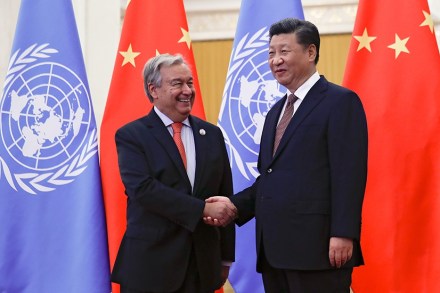
It was one of those forgettably historic moments at the United Nations. The year was 2015, the UN’s 70th anniversary, and China’s President Xi Jinping was in New York, speaking in person to the UN General Assembly. In festive spirit, Xi announced that China would set up a $1 billion trust fund to be dispersed over ten years to ‘support the UN’s work’ and ‘contribute more to world peace and development’. So began the Peace and Development Trust Fund, one of China’s more insidious projects to co-opt the UN, its logo and its global networks.

The high cost of Beijing’s demands for uniformity

Last month, the Vatican and the Chinese Communist party announced the renewal of a two-year agreement on the appointment of bishops in China. Under the deal in 2018, the Catholic Church lifted the excommunication of bishops hand-picked by the atheist CCP and formally recognized them. Besides interfering in such appointments, Beijing subjects Chinese Catholic congregations to state regulation and the reeducation of what it considers insubordinate priests. These methods are evidence of the party’s efforts to cull Catholicism of the traditions, doctrines, and practices that have defined the faith for millennia.  Anyone who prizes religious freedom worldwide should be disturbed. Why is Beijing so hostile toward those looking to practice their faith according to their conscience?

ccp

Xi’s world: Covid has accelerated China’s rise

From our UK edition

Back in February, the Chinese state appeared to be in trouble. A terrifying virus had infected thousands of people and the country’s social media exploded in anger against the authorities faster than Chinese censors could scrub away the critical comments. Like governments elsewhere, the Chinese Communist Party (CCP) turned to the emergency analogy of choice, the second world war. Channelling Mao Zedong’s guerrilla campaign against the Japanese in the 1930s, state media declared that China was fighting a ‘people’s war’ against the virus. As in that earlier war, China’s conflict with the virus has shifted from a defiant retreat to a declaration of victory. Nor is this just bluster.

How liberal globalism went bankrupt

When future historians chronicle the period after the Cold War, the rise of China will dominate their accounts. Beginning in the 2000s, China unleashed a flood of state-sponsored manufactures, many of them produced by western multinational corporations using Chinese labor on Chinese soil. This impoverished much of the already pressured industrial working class in the US and Europe, triggering populist revolts in rustbelts like the American Midwest, the north of England and eastern Germany. The recycling of profits from China’s chronic trade surpluses through the global financial system enriched western financial interests and helped to inflate bubbles in the real estate and stock markets. These burst in 2008, causing the Great Recession.

china

The ill-timed revelations of John Bolton

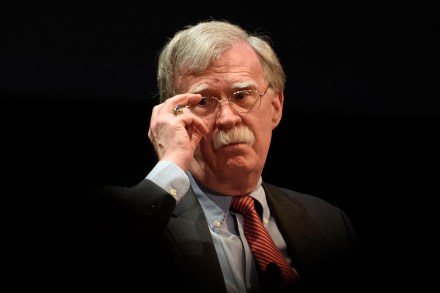
It’s starting to look as though the question isn’t who Donald Trump asked to assist him in his 2020 bid but who he didn’t. Former national security adviser John Bolton reports in his forthcoming 592-page memoir, The Room Where It Happened, that Trump seems to have asked Chinese President Xi Xinping to lend him a hand during a summit dinner last year. Add that to the 'favor' he asked for from Ukraine and you have a portrait of a President who was desperate for help wherever and whenever he could find it. Maybe Trump had it right: if his current prospects are anything to go by he could definitely use a lift from abroad. Was this his personal version of what international law calls 'anticipatory self-defense?

john bolton

How Xi Jinping plans to crush Hong Kong

From our UK edition

The Hong Kong government has recently extended its Covid regulations banning gatherings of more than eight people until 4 June. How convenient. Last year, according to organisers, 180,000 people gathered to commemorate the anniversary of the Tiananmen massacre on 4 June 1989. In future, being an organiser may well land you in court under a new national security law, which Beijing announced last week at its annual National People’s Congress. Perhaps we should have expected it. After all, the Basic Law, Hong Kong’s ‘constitution’, lays down that the Hong Kong government should enact such a law, and the big party meeting in October told us that the ‘legal systems and implementation mechanisms for protecting national security’ would be set up.