Dylan Levi King

Dylan Levi King is a writer and Chinese translator based in Tokyo.

Has China got over the Japanese invasion?

From our UK edition

39 min listen

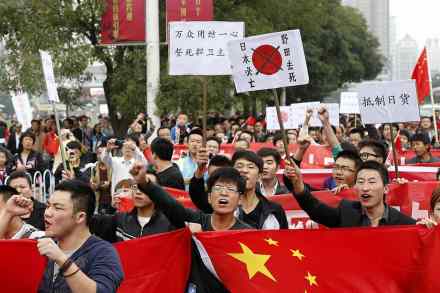
For China, WWII started in 1937 with the Japanese invasion, two years before Hitler invaded Poland. Japan would occupy China until its surrender in 1945, in the process committing atrocities like the rape of Nanjing. This was the second Japanese invasion in fifty years. Yet decades after the war, when I grew up in Nanjing, Japanese food was all the craze and it was Japanese anime that kids watched and Japanese fashion that teenagers craved. So has China got over its wartime hatred of Japan? On this episode, I’m joined by the Tokyo-based Chinese translator Dylan Levi King, who you might remember from our previous conversation on ketamine use in China.
China’s war on effeminate men

From our UK edition

A rectification notice from China’s state censor earlier this month included a peculiar admonition to ‘resolutely oppose’ effeminate men on television. The note stood out in the otherwise dry document. Its other targets — people with ‘poor morals’ or ‘lacking solidarity with the party and nation’ — make sense within Beijing’s authoritarian logic. But it’s hard to conceive of pretty boys in eyeliner joining the party’s long lists of revolutionary enemies. The term used for effeminate men in the notice — niangpao — is vague, but the National Radio and Television Administration is counting on its broadcast partners to know what it means.

Ketamine in China: has the country got over the opium wars?

From our UK edition

23 min listen

It might be an understatement to say that China has a difficult relationship with drugs. Most infamously, the opium wars of the 1800s saw British soldiers fight against the Qing dynasty to protect the British right to sell opium to China. When the Qing lost, it wasn’t just the sobriety of their people that they lost – but a series of ports, concessions and reparations signed away in so-called ‘unequal treaties’. Hong Kong was lost to the British at this point, and it’s where the Chinese mark the start of the century of humiliation. The memory and trauma of opium addiction is still bound up with national decline in the Chinese conscience.

Wang Huning: the man behind Xi Jinping

From our UK edition

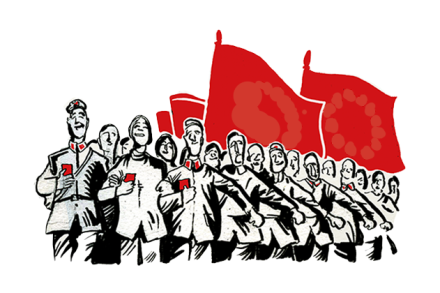
At the height of the Cultural Revolution, over a billion copies of Mao’s Little Red Book were distributed across the People’s Republic. This small pocket-sized collection of quotations provided the scaffolding for an era of communist purges. Utopians need theory. And while the Maoist orthodoxies of the last century have faded, China's need for a solid intellectual foundation is as strong as ever. Xi Jinping Thought on Socialism with Chinese Characteristics for a New Era is that new theory. But it is written not by the General Secretary himself but by an unassuming 65-year-old: his supreme theoretician. Wang Huning has quietly shaped China over the last three decades, despite the fact that few of his countrymen could pick him out of a line-up.