Xi jinping

Putin needs Xi more than China needs Russia

On May 9, Vladimir Putin had been due to review a parade of troops and military hardware on Red Square alongside Xi Jinping and Emmanuel Macron. Russia’s coronavirus lockdown forced Putin to cancel the elaborate celebrations of the 75th anniversary of the end of World War Two in Europe — as well as to postpone a national referendum that would have extended his personal rule until 2036. But though Putin and Xi have been deprived of the opportunity to make a show of solidarity amid the sea of Soviet flags that bedecks Moscow annually for Victory Day, the coronavirus crisis promises to throw Russia and China closer together than they have ever been. China needs friends; Russia needs money.

putin xi

Our toothless response to China is embarrassing

From our UK edition

If you have been troubled by the government’s failure to get tough on the country responsible for our present malaise, never fear. The Foreign Office has issued a joint statement with ten EU members warning this regime of ‘grave consequences’ for its ‘standing in the international arena’. That’ll put Beijing in its place. Well, not quite. The statement wasn’t directed at China and the deadly pandemic it has unleashed upon the world. It was another scolding for the Israelis, this time over plans to apply sovereignty to West Bank settlements in line with the Trump peace plan. With 250,000 fatalities and the world economy on a ventilator, it’s about time someone stood up to the real global menace: organic date-growers in the Jordan Valley.

Chinese diplomat’s Covid-19 PR exercise backfires

From our UK edition

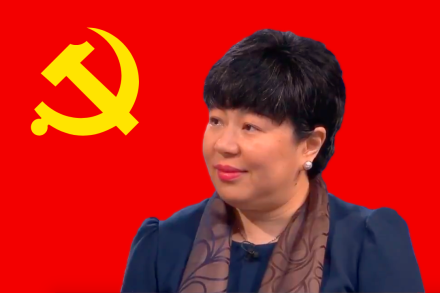
As countries around the world try to work out a way to live with coronavirus, there's a growing hostility towards China. In order to remedy any such thoughts, this week Beijing sent the Chinese embassy's second in command to face something unheard of in her homeland – public scrutiny. Chen Wen, a London-based diplomat for the totalitarian state, took the BBC's World at One programme on Friday to defend the Chinese Communist record on Covid-19. During the extensive interview, she declared that when it come to the global pandemic, which originated from China, the world should 'appreciate' the efforts of the Chinese state rather than criticising its failings.

Half of Americans want their state to sue China for coronavirus damages

Public opinion is rapidly turning against China as intelligence agencies have exposed the full extent of the communist state’s coverup of the novel coronavirus outbreak. US intelligence has determined that China has underreported total cases and deaths, and dragged its feet in telling the rest of the world about the seriousness of the virus. A Trump administration official told The Spectator earlier this month that the US response was delayed by at least a month due to China’s lack of transparency. Americans are angry at China’s deception: a majority of them polled at the end of March and in early April said they agree with President Trump referring to COVID-19 as the ‘Chinese virus’.

wuhan sue china

‘You are endangering the world’: German tabloid goes to war with China

From our UK edition

Could China have done more to prevent the coronavirus pandemic? One tabloid editor in Germany certainly thinks so and an extraordinary bust-up has broken out between the Chinese government and his newspaper as a result. The row kicked off last week when Bild – the best-selling paper in Germany – published an editorial entitled 'What China owes us', calling for China to pay reparations of £130 billion for the damage done by the outbreak of the virus.  Later that day, the Chinese embassy in Berlin then responded with an open letter saying ‘we regard the style in which you 'campaign' against China in your current report on page two as infamous...

The global politics of a pandemic

From our UK edition

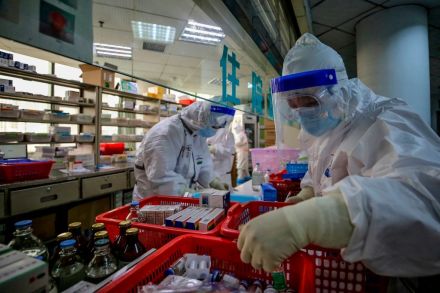
The Great Game of the 21st century is upon us and as ever it’s a scramble for resources. This time, though, the thirst is not for land or diamonds or gold. Personal protective equipment has become the oil of the contemporary moment: desperately needed by a world that is strafed by coronavirus. Britain has its own urgent PPE supply problems. But what about the broader international struggle? The answer to this question offers the clearest glimpse of how our post-pandemic global politics is likely to look.   At the top of this scramble stands China. Ahead of the curve (for obvious reasons), it imported about 2.5 billion healthcare items between 24 January and 29 February, thereby denying vital equipment to other countries.

Who will win the corona wars?

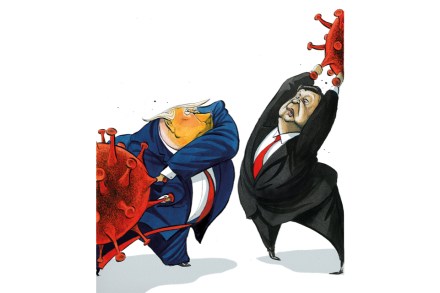
The COVID-19 pandemic came along just as Cold War Two was getting under way between the United States and the People’s Republic of China — the superpowers of our time — with the European Union and a good many other US allies quietly hoping to be non-aligned. Far from propelling Beijing and Washington towards détente in the face of a common enemy, the new plague has only intensified the Cold War. For the first time, China’s campaign of disinformation has been on a Russian level, with wild anti-American conspiracy theories being disseminated by senior Foreign Ministry officials.

corona wars

Curbing China’s rise should be America’s top priority

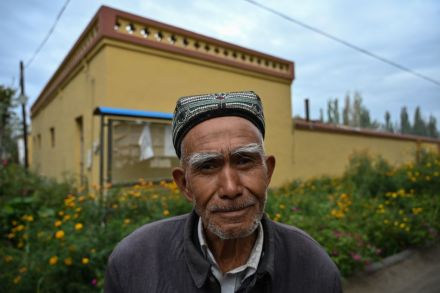
My first personal encounter with victims of a modern authoritarian government came last October, when I sat down with Zumret Dawut and Mirighul Tursun, two Uighur women who survived China’s so-called 're-education' camps in Xinjiang. I was particularly struck by one story from Ms Tursun:'She endured several days of beatings and electrocution. Her torturers mocked her when she called to Allah.'Then they ask me, "Where is your God? You say God, where is your God? Tell him, if he is stronger than me, to help you,”’ said Tursun.'Your god is Xi Jinping,' the guards told her.It is not enough for Chinese authorities to repress faith; they must also replace it with a secular, party-approved deity.

china uighur

The coronavirus is springing the Thucydides trap

The first casualty of informational war is truth. The first American casualty of COVID-19 was the myth that the United States can ‘manage’ the rise of China as a world power through mutual interest. That mutual interest was only ever economic. Naturally, most of our politicians, business leaders and commentators explained it as strategic too: as technocracy calls GDP the index of human happiness, so it identifies strategic interests with economic ones. The coronavirus crisis has, however, exposed an essential strategic antagonism between the United States and China.'‘What made war inevitable was the growth of Athenian power and the fear which this caused in Sparta,’ Thucydides wrote in History of the Peloponnesian War.

thucydides

Xi’s dictatorship is a tragedy, not a farce

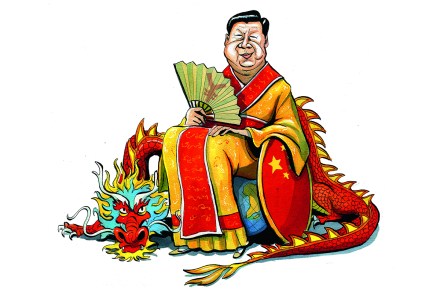
A successful dictator has to have ruthlessness, control, influence and competence. So how does China’s leader, Xi Jinping, rate as a dictator? Xi has been in power since 2012 and thus has enough of a track record to judge.On ruthlessness, he ranks highly. The concentration camps he has created for China’s Muslim minority in Xinjiang and the suppression of the movement in Hong Kong — in violation of the 1984 agreement with the UK — are the most tangible examples. The November 2019 leak of the 'Xinjiang Papers', more than 400 pages of internal Chinese documents, to The New York Times provided an unprecedented documentation of the origins and implementation of crackdown against Muslims of Xinjiang.

xi

The Chinese trade deal is a Christmas gift to Xi

If Donald Trump wanted to deliver a seasonal gift to his ‘good friend’ Xi Jinping, the ‘Phase One’ trade deal reached this weekend fits the bill pretty well.  From the viewpoint of the Beijing leadership, it vindicates the Chinese refusal to budge during the long months of trade negotiations despite the threat of escalating duties. What has resulted is less the kind of overall trade agreement originally aimed at by the Trump administration and feared by China as interference in its economy —  and more of a purchase agreement accompanied by reduced tariffs.

xi

Michael Bloomberg’s Chinese appeasement

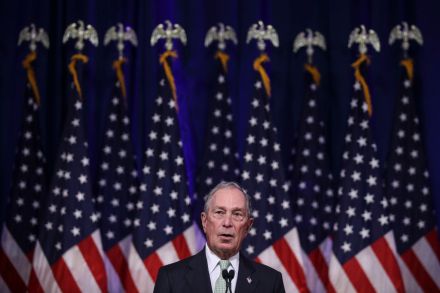
Michael Bloomberg’s entry into the race for the Democratic nomination for president has been underwhelming so far. As the race tightens, one of myriad problems for the candidate will be his close ties to the major national security threat posed by the US’s strategic rival — China under the leadership of the Chinese Communist party (CCP).Bloomberg panders to the CCP and to its leader, Xi Jinping, recently labeling him 'not a dictator' but rather just a politician, like any other duly elected leader, who has to satisfy his constituents. When challenged, Bloomberg stressed the point, saying 'no government survives without the will of the majority of its people, OK?' Xi, like all leaders, 'has to deliver services'.

michael bloomberg

Trump’s economic nationalism is an effort to save capitalism

This article is in The Spectator’s November 2019 US edition. Subscribe here. Elizabeth Warren looks like a deadly serious prospect for the Democratic presidential nomination. Bernie Sanders may never make it to that promised land, but there is no question that his spirit is still moving the Democrats toward democratic socialism. The party’s activist base and youth wing grow more anti-capitalist by the month. It’s enough to turn many a libertarian or Chamber of Commerce conservative into a Trump supporter, despite the president’s own defiance of free-market orthodoxy on trade. Yet the president might as well be Milton Friedman compared with some on the right who are, if anything, outflanking the left in their critiques of capitalism.

capitalism

Will China meddle in the 2020 election?

This article is in The Spectator’s inaugural US edition. Subscribe here to get yours. Vladimir Putin, as we all know, has become chief electoral strategist in the western world. When he wanted Donald Trump president, he merely set his army of trolls to action and the American public was fooled into backing a candidate who would never have got anywhere near the White House otherwise. That is what the media has been telling us since 2016, anyway. But the idea that Russia can swing a sophisticated electorate of 300 million people with the aid of a fake-news tweet factory in St Petersburg was always fantastical. Even the Mueller inquiry could not prove it — not for want of trying.

china 2020

The ur-Trump has re-emerged at last

Is Donald Trump bonkers? In the past few days, the notion that Trump is not all there has been picking up steam. His references to what would amount to a divine mandate — 'I am the chosen one' — or eager embrace of his putative status as King of the Jews have prompted more than a little head shaking in the media. Perhaps the most vociferous member of the Trump-as-nutcase brigade is his aggrieved former aide Anthony Scaramucci who most recently likened the president to Rev. Jim Jones. Trump has reciprocated Scaramucci’s concern about his mental health by deeming him, in turn, a 'nut job.' But it is Trump’s actions today that have his detractors sounding fresh alarms. After Federal Reserve chairman Jerome H.

donald trump

America should view China as a hostile, revolutionary power

Much has been made of the return of great power competition. In truth, it never went away, although the great game was so one-sided for a time that almost everyone in the West tuned out, assuming the match was over in perpetuity. It was too boring to contemplate and so attention drifted to other concerns and second- and third-order problems. China’s attention did not deviate, and once again it is a great power. Like cholesterol, great powers can be good, in that they accept the present international order, or bad, in that they do not. China does not, and seeks to overturn the contemporary order the West created.  This is the source of what is already the great conflict of 21st century. China is not a status quo great power.

xi jinping power

China will be the AI superpower

As President Trump settles in for a long trade war with China, he ignores a far more serious crisis in China relations. At stake is not just the size of a trade deficit, but the future of America’s position as a superpower. China has made clear its determination to lead the world in Artificial Intelligence by 2030 and to become the world’s sole AI superpower by 2050. To achieve these goals, China is aggressively investing tens of billions of dollars in future technology including robotics, surveillance, and data analysis. This state-controlled effort unites both the public and private sectors for a single purpose: world domination.

AI

How I learned to stop worrying and love Trump’s trade war

Alarmist news reports and panicky stock sell-offs. A threat to impose tariffs on US goods in retaliation for President Trump’s threatened levies. You’d think that Beijing had just ruthlessly shut down a major engine of American growth. But the truth is that tariff fear-mongering reveals the gulf between America’s financial markets and its real economy that provides everyday goods and services. The Chinese economy has grown spectacularly since Beijing turned away from Maoism in the 1980s. It’s true that major American industries from aircraft to agriculture have profited handsomely from supplying Chinese demand. The offshoring model supercharged by China’s admission to the World Trade Organization (WTO) in 2002 has been especially lucrative.

donald trump trade war

Our real problem with China: Xi Jinping

At the last minute the Chinese Communist Party chief Xi Jinping vetoed the trade deal with the United States, after his representatives had negotiated and agreed to it. Xi claimed that he will take the responsibility for ‘all possible consequences.’ This left President Trump no choice but to impose higher tariffs on some Chinese imports. This battle over trade marks only the early rounds of the US struggle with China. China’s economic success was achieved in large measure by taking advantage of the working people of both China and the US. It was made possible because the US allowed it to enter the world’s free trade system. Because China entered the West’s economic ecosystem a generation ago, it has flourished.

xi jinping

The US and China are headed for a showdown. Do the American people care?

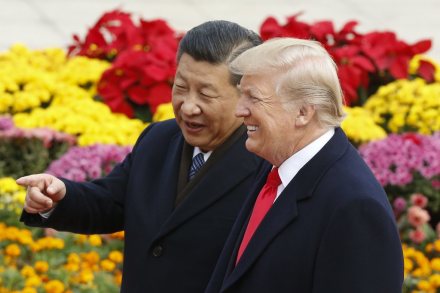
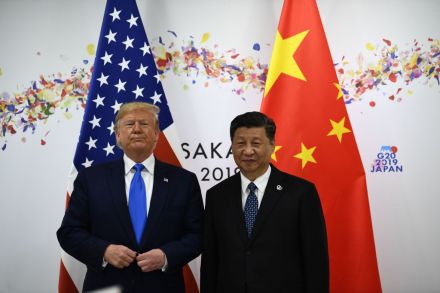
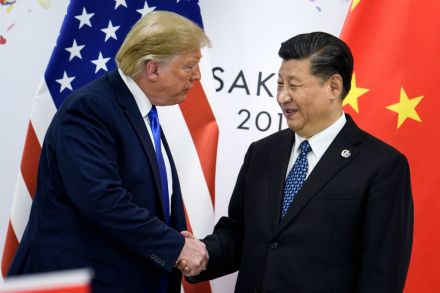
Know this: It doesn’t matter what happens during what can only be described as ‘dinner diplomacy’ between Donald Trump and Xi Jinping at the G20 — good, bad or breakthrough. That’s because the course of US-China relations — a complex relationship that blends cooperation, competition and geopolitical slugfest — is set in stone. The reasons are obvious. From tensions all around China’s near seas, to the final status of Taiwan, to the flow of hundreds of billions of dollars in trade to an arms race in Asia that will soon feature sci-fi like hypersonic weapons the future is frighteningly clear.

donald trump xi jinping showdown