Xi jinping

Is China riding for a fall?

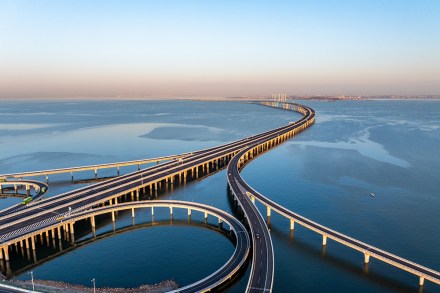
The West gets China wrong. Spectator readers know the country as a vampire state feasting on foreign intellectual property and spewing out phony economic data in its thirst for wealth and power. It certainly is these things – but it also isn’t. It is more complex, and telling only half the story is ultimately self-defeating. While there is plenty to appal us about modern China, there is also much that we can learn from it. In Breakneck, Dan Wang reveals both sides of the ledger. ‘Too many outsiders see only the enrichment or the repression,’ he complains. His ‘big idea’ is that China is an engineering state, building at breakneck speed, whereas the United States is a ‘lawyerly society’ that has forgotten how to get stuff done.
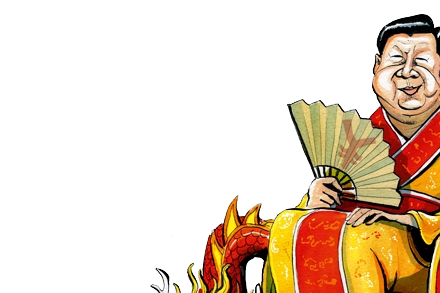
Fragile China: who’s really in charge?

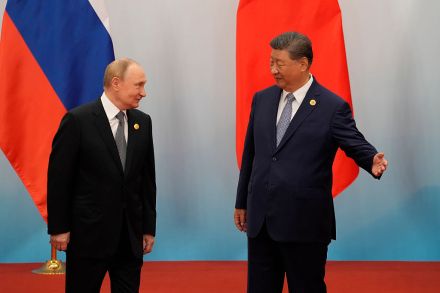
Xi Jinping effectively vanished in July and the first half of August. Some China watchers speculated that his unexplained absence was a sign that he was losing his grip on power. But he has since reappeared and been very visible again. At the end of last month, he visited Tibet, then indulged in a high-profile, back-slapping meeting with Vladimir Putin and the Indian Prime Minister Narendra Modi in Tianjin. He capped off his busy fortnight with the 3 September military parade in Beijing and a second meeting with his star guest Putin, this time accompanied by Kim Jong-un. So, a great triumph for the neo-Maoist leader and the new Axis of Evil? Not so fast. The lessons to draw from these three events are a sight more nuanced. Here are five take-aways from Xi’s last few weeks. 1.

How powerful is the China-Russia alliance?

From our US edition

This summer’s big security summit in Tianjin, followed by the military parade in Beijing on September 3, has been widely interpreted as a sign of a new global realignment. At a time of growing friction within the US alliances in East Asia and Europe, President Xi Jinping of China, President Vladimir Putin of Russia and about 20 leaders mostly from Central Asia have not just reaffirmed their nations’ close ties. They sought to strengthen the emerging multipolar system, which they see as a rejection of the US-dominated global order. This idea is hardly new.

China

The Art of the Dealmaker-in-Chief

From our US edition

Who really thought Donald Trump’s America was about to join the stampede of first-world powers promising to recognize Palestine at the United Nations?  "Wow!" He exclaimed this morning on Truth Social. "Canada has just announced that it is backing statehood for Palestine. That will make it very hard for us to make a Trade Deal with them."  All over the world, commentators convinced themselves that Trump’s expression of concern on Monday about "real starvation" in Gaza meant he was pivoting with global opinion and against Israel.  It turns out, however, that Team Trump is not for turning when it comes to the Middle East. Marco Rubio, the US Secretary of State, has accused the countries now embracing Palestinian statehood of falling for "Hamas propaganda".

Trump deals

What’s next for Taiwan?

When Portuguese traders sailed past a verdant, mountainous land on the fringe of the Chinese empire in the mid-16th century, they named it Ihla Formosa – ‘beautiful island’. But Kangxi, the third emperor of the Manchu Qing Dynasty, was less impressed when his naval forces captured it in 1683, scoffing: ‘Taiwan is no bigger than a ball of mud. We gain nothing by possessing it, and it would be no loss if we did not acquire it.’ Beautiful or not, Taiwan was a pirates’ lair, inhabited by tattooed head-hunters and best left alone. Yet the Qing clung on to Taiwan for two centuries, with Chinese settlers gradually displacing the indigenous Austronesian population.

Is Xi Jinping’s time up?

Stories about Xi Jinping’s father, Xi Zhongxun, are blowing up on social media. He died in 2002, so why the interest in him now? The weird fact is that Xi Zhongxun is being talked about in the West because he is not being talked about in China. Omission is the perverse way that one learns about what is really going on in the opaque world of Chinese Communist party (CCP) politics. China-watchers live on scraps. Xi Zhongxun was a big cheese in his own right. Born in the north-west’s Shaanxi province, he was an early member of the youth league of the CCP. After meeting Mao Zedong at the conclusion of the Long March, which ended up in his home province, he quickly rose through the party ranks.

Why Washington should make Latin America a priority

From our US edition

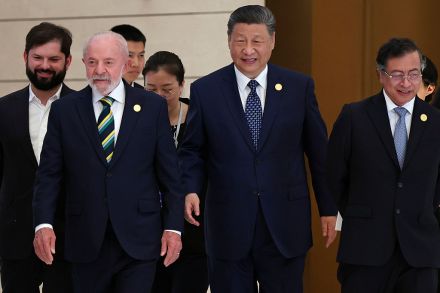
As American eyes remain fixed on the Middle East — understandably so — China has been rolling out the red carpet for Latin America, and we have barely noticed. While Xi Jinping welcomes Colombia, one of Washington’s historically reliable allies, into the controversial Belt and Road Initiative, he’s also introducing visa-free entry for South America’s largest economies and greeting regional leaders in Beijing with billion-dollar credit lines and lavish, all-expenses-paid political junkets. Washington, meanwhile, was… busy. If this sounds familiar, it’s because it is. The US has been snoozing through Latin America’s strategic realignment for years, occasionally waking up to mutter something about narcos or illegal migration, then hitting the snooze button.

washington

Chicago at a crossroads

From our US edition

America’s incoming border czar, Tom Homan, is already taking his job more seriously than his predecessor ever did. Unlike Kamala Harris, Homan does not need to be goaded into doing the job assigned to him by the president. Homan, the former director of US Immigration and Customs Enforcement, is already hitting the trail, telling prospective illegal immigrants to turn the caravans around and warning America’s bluest cities that a new sheriff is coming to town. During a swing through Chicago, Homan told the Windy City’s residents that “your mayor sucks and your governor sucks.” Both Chicago mayor Brandon Johnson and Illinois governor J.B. Pritzker have suggested that they plan to resist President-elect Donald Trump’s broadly popular immigration plans.

chicago

Corruption, power and the truth about my wife’s disappearance – with Desmond Shum

43 min listen

In the early 2000s, Desmond Shum and his wife, Whitney Duan, were among the richest people in China, with fingers in various real estate, infrastructure and hospitality projects. They also had some of China’s most powerful people on speed dial – including the family of then-premier Wen Jiabao. But that all changed in 2017 when Whitney was disappeared by the Chinese state. Desmond now lives in the UK where he published a memoir in 2021, Red Roulette, and is now an analyst and commentator on Chinese politics. On this interview, we discuss why Shum thinks Whitney was the victim of a power struggle involving Xi Jinping, the reality of politics and corruption in the China of the 2000s, and how Xi has destroyed the economic trajectory of the once-booming People’s Republic.

The new alliances dedicated to destroying democracy

After staging a failed coup and going to prison, the Venezuelan army officer Hugo Chavez ran to be president in 1998, campaigning against corruption and offering revolutionary change. His nation was seen as a prosperous beacon of stability, built on its great oil wealth, envied by many people elsewhere in the region. He won by promising to tackle the inequality that scarred it so badly and take on the oligarchs enriching themselves through favours and nepotism. Western celebrities, journalists and politicians, from Sean Penn through to Jeremy Corbyn, started flocking to South America to hail their new progressive hero supposedly fighting for social justice.

What Xi wants in Europe

On a quiet street in Belgrade, a bronze statue of Confucius stands in front of a perforated white block, the new Chinese Cultural Centre. This is on the former site of the Chinese embassy which in 1999 was bombed by US-led Nato forces during the Kosovo war. Three Chinese nationals were killed. The Americans said the bombing was an accident, but the deaths allowed China and Serbia to share a common anti-Nato grievance. This week, timed to coincide with the 25th anniversary of the bombing, Xi Jinping visited Belgrade and talked about the Sino-Serbian ‘bond forged with the blood of our compatriots’. He had been expected to visit the embassy site but seems to have decided that that would be too provocative against Washington.

The Xi files: how China spies

Most states spy. In principle there’s nothing to stop them. But China’s demand for intelligence on the rest of the world goes far beyond anything western intelligence agencies would typically gather. It encompasses masses of commercial data and intellectual property and has been described by Keith Alexander, a former head of America’s National Security Agency, as ‘the greatest transfer of wealth in history’. As well as collecting data from government websites, parliamentarians, universities, thinktanks and human rights organisations, China also targets diaspora groups and individuals. Chinese cyber intrusions have targeted British MPs and stolen population-level data from the UK Electoral Commission database.

Lessons from costly wars past

From our US edition

Money is often a substitute for strategy in US foreign policy. We spent $2 trillion in Afghanistan, only to lose the country the minute our troops began to pull out. How much will it realistically cost, then, to beat Russia in Ukraine? Will the next $100 or $200 billion do the trick? This is not a question that supporters of war-spending ask themselves. As in Afghanistan, spending is a way to defer thinking about actually winning — or facing the serious possibility of losing. Our aid buys delay, not results. Ironically, while the specter of World War Two is invoked every time there’s a conflict, our experience then teaches the same lesson as recent attempts to purchase victory.

wars

Biden and Xi will resolve nothing in San Francisco

From our US edition

A year ago today, President Biden and Chinese President Xi Jinping shook hands with each other on the sidelines of the G-20 Summit in Bali, Indonesia, in an attempt to reset the world’s most important bilateral relationship. The two men, who knew each other during their previous encounters at the vice presidential level, hoped to exploit their familiarity with one another to bring US-China relations onto a more productive plane. And for a moment, the Bali talkathon seemed to have that effect.

xi

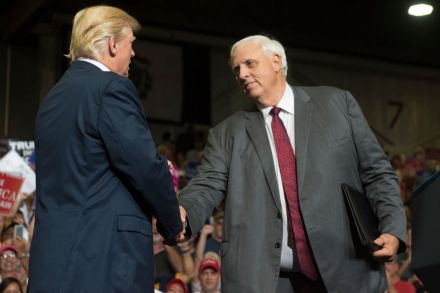
Senator Jim Justice? Don’t be so sure…

From our US edition

Immediately after longtime West Virginia senator Joe Manchin bowed to political reality and called it quits on his re-election, Republicans celebrated that it virtually guarantees their party an elusive win next year.  In fact, some were already proclaiming that the state’s First Pup, Babydog, and her owner, Governor Jim Justice, are cruising to victory next November.  But that’s not necessarily the case — it’s not next November that Justice should be concerned with, but rather next year’s GOP primary. Justice, who finally secured Donald Trump’s valuable endorsement, faces Congressman Alex Mooney and a field that may now swell given the GOP’s virtual certainty to pick up the seat.

california governor gavin newsom

Is California the new China?

From our US edition

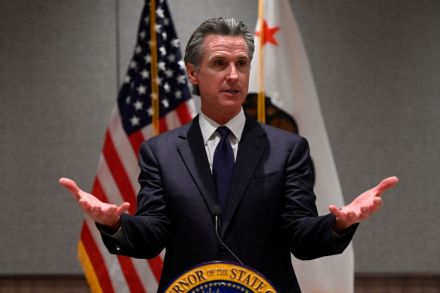
Recently, Gavin Newsom, the greasy-haired governor who may or may not run for president, made a trip to Beijing to meet with Xi Jinping. It went swimmingly, according to various reports.  When it comes to US-China relations, “divorce is not an option,” Newsom, who divorced from Kimberly Guilfoyle in 2005, told CNN on November 8. America’s answer to Justin Trudeau argued that the US and China must “reconcile our strategic red lines.” The idea of being cozy with China, a country that actively uses cyber espionage to undermine the US economy, may strike many as odd, even dangerous — but not Governor Newsom. In fact, according to reports, he is so inspired by his trip to China, that he now wants to bring a CCP-like “social credit system” to the Golden State.

Why Taiwan’s defense is in the American national interest

From our US edition

Just 38 percent of Americans “support deploying US troops to defend Taiwan from a military attack by China” according to a Reuters/Ipsos released this week, with 42 percent opposing and 20 percent unsure. Vivek Ramaswamy, among the top contenders for the 2024 GOP nomination, also recently said that the US should only defend Taiwan until “we have semiconductor independence.” Add to this the Biden administration’s unwillingness to spend what is needed to build up the Taiwanese military and its failure to adequately support Ukraine — and anyone who values a safe, free, prosperous and stable world should be concerned. Because defending Taiwan from a revanchist, imperialist and brutal Chinese Communist Party is at the heart of America’s national interest.

taiwan

The Supreme Court is under fire — again

From our US edition

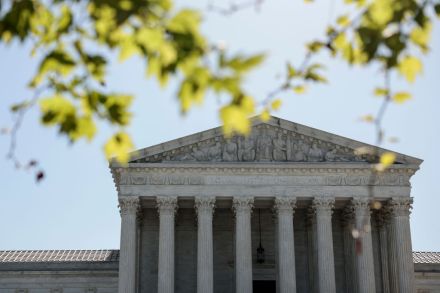
Some weeks it feels like the line between politics and the law has all but vanished. From Hunter Biden’s plea deal and Donald Trump’s ongoing criminal woes to the brouhaha surrounding gifts accepted by Supreme Court justices and John Durham’s appearance before the House Judiciary Committee to defend his report on the FBI and Russiagate, this is one such week.  For more on the Hunter story, check out my colleague Ben Domenech’s latest. Meanwhile, a fresh row about the Supreme Court bubbled up in an unusual way overnight.

Xi Jinping is acting like Stalin

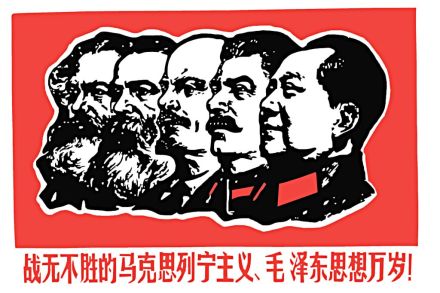
The General Secretary of China’s Communist Party is a different kind of leader. Now in his third five-year term, Xi Jinping believes that time is running out for him to secure his legacy as Mao Zedong’s true successor. He spent a decade dismantling the technocracy and politburo consensus government ushered in by Deng Xiaoping after Mao’s death, rolled back the authority of local party nomenklatura in favour of more centralised control from Beijing, and worked to subordinate China’s economy to the Communist Party’s (meaning Xi’s) political priorities. In abandoning the ‘to get rich is glorious’ social contract of the post-Tiananmen Square era, Xi has come to bury Deng and not to praise him.

Is it too late to save America?

From our US edition

Regular readers may recall how fond I am of a mot from the British diplomat, author and art collector Edgar Vincent, the first (and, as it happened, the last) Viscount d’Abernon: “An Englishman’s mind works best when it is almost too late.” When I first encountered Lord D’Abernon’s saying, I was impressed by its slightly disabused cheerfulness. “Whew,” I thought. “As usual, some impending disaster was neatly avoided at the last moment by the wit and pluck of the doughty Brits.” The drama of the near-escape added to the sweetness of relief. Surely we Yankees — most of whom, until recently, were basically displaced Brits — could also be counted on to display the requisite derring-do at the critical moment. Could we though? “Almost too late.

america