World war two

Lamb is making a comeback on our barbecues

More and more Americans are turning to the barbecue pit when it’s time for holiday gatherings. Some eschew the oven and cook a pork shoulder or turkey on a backyard smoker or grill. Others outsource the work and bring home takeout trays from a local barbecue restaurant. A whole smoked brisket or pork shoulder makes for an impressive centerpiece, but this year I have a different suggestion. How about barbecued lamb? Bear with me. Lamb was once among the most popular barbecue meats. But after World War Two it all but disappeared from American pits. Over the past two decades, as aspiring backyard chefs have acquired ever-fancier offset smokers and pellet cookers, they’ve set their sights on mastering brisket, ribs and Boston butts. Lamb almost never makes it onto the menu.

lamb

Nuremberg and the overpowering greatness of Russell Crowe 

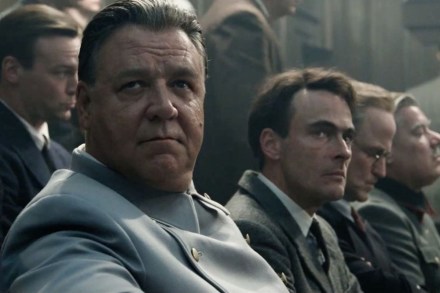
Nuremberg, the latest film by James Vanderbilt – yes, the writer-director is a scion of that distinguished East Coast dynasty – contains two lead performances by Oscar-winning actors. One is extraordinary, and the other is extraordinarily bad. Yet it is a sign of how Russell Crowe and Rami Malek’s respective careers have developed over the past few years that were you invited to pick which actor is capable of greatness, and which one has descended into bizarre self-parody, it would not necessarily be easy to pick which one was which.   I shall put you out of your misery.

nuremberg Hermann Göring

How Jeannette Rankin became the first woman in Congress

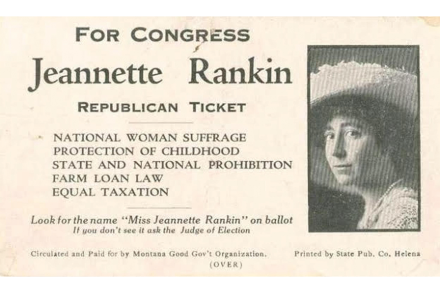
Susan B. Anthony and Elizabeth Cady Stanton; Alice Paul and Sojourner Truth; Ida B. Wells and Carrie Chapman Catt. They may not be household names, but to anyone with a passing interest in US women’s history, they’re hardly obscure. They’re widely associated with America’s fight for women’s suffrage: a tribe of trailblazers who’ve made it into history books and onto overpriced tote bags. Some were popularized by the Tony Award-winning musical Suffs. Three are immortalized as statues in New York’s Central Park. But behind the scenes of their various campaigns, another woman charted her own course for the same cause.

rankin

The sinister rise of Churchill revisionism

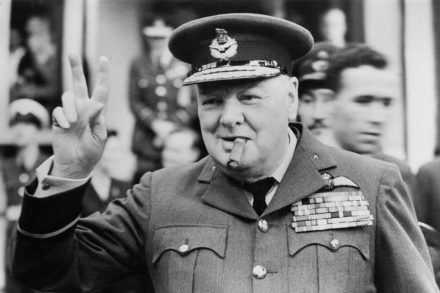
Winston Churchill is one of Britain’s enduring symbols. His relentless drive, deep conviction and steadfast leadership means that he remains admired by millions around the globe. Yet for years, the political mainstream has been compelled to defend his memory from spurious attacks from the left, such as the British politician John McDonnell calling him a “villain.” Depressingly that threat – and the same pernicious desire to denigrate one of the West’s greatest heroes – can now be found on the right. Spawned from a sinister fringe of the ultra-MAGA movement, these views have been propagated to millions. Tucker Carlson hosted the pseudo-historian Darryl Cooper on his podcast in an episode that has attracted over 33 million downloads.

winston churchill

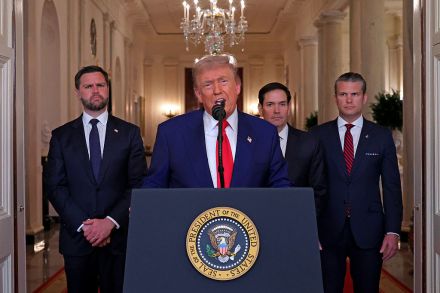
Trump plays battleships

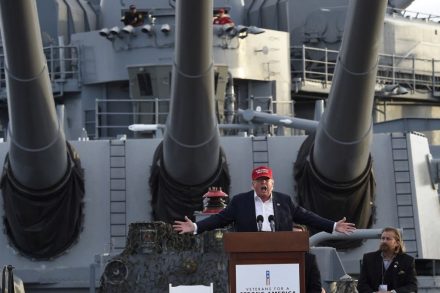
The US Navy retired its last battleship 19 years ago, the grand warship’s devastating firepower deemed surplus to requirements in the new war on terror. But the era of Great Power conflict has now returned with storm clouds gathering between the US and China. And with them the old warhorse bristling with guns, the battleship, is facing a call back to action. President Trump has said the battleship will come back as the centerpiece of his new Golden Fleet – a cadre of warships designed to equip our navy to face the challenges of the future, not the past.In a speech to the nation’s top military brass, Trump said:“I think we should maybe start thinking about battleships, by the way.

Trump battleships

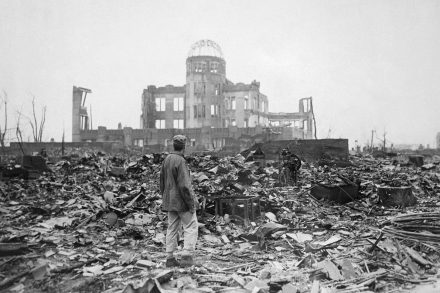
Beware the Nagasaki and Hiroshima revisionism

2025 is the 80th anniversary of the end of World War II, the most calamitous conflict in history. The victory over Nazism in Europe is universally fêted, but the triumph over Japanese militarism receives far less celebration. The atomic bombing of Japan, which forced unconditional surrender, has long been criticized by revisionist historians as unjust, unnecessary and morally depraved; that narrative has been absorbed as the truth of the matter. Decades of liberal education have shifted opinions massively, with only 35 percent of Americans believing the bombings were justified as compared to 85 percent in 1945. Those younger than 50 oppose the bombings by significant margins.

Hiroshima

Why Trump stopped calling on Iran to ‘surrender’

When Donald Trump called on Iran’s Ayatollah to “surrender” during Israel’s recent war the word struck many as jarring – almost antiquated. No major global leader has used that language publicly since the unconditional surrenders of Nazi Germany and Imperial Japan in 1945.But Trump’s invocation, intentional or not and soon abandoned by his call for a “ceasefire,” points to a deeper issue: Are the rules that governed mid-20th century warfare still relevant in the 21st century? Why has “surrender” disappeared from the language of modern warfare? And what, exactly, do today’s ever-growing humanitarian laws offer nation-states forced to operate under them, in a world that looks nothing like the one left smoldering in 1945?

Trump

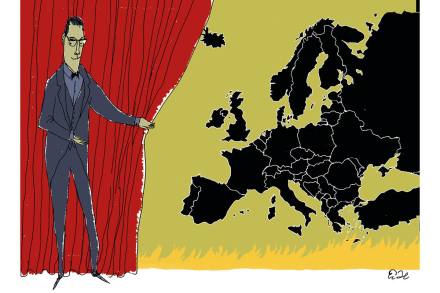
How America enfeebled Europe

Fighting to “rebalance” NATO, American leaders now look on the old continent with dismay. Europe cannot seem to muster the physical resources — and, still more, the cultural ones — to provide for its own defense. Even American liberals now mark this down to a late social democratic decadence, or civilizational ennui. To a certain kind of Elon Musk outrider, “Europe is cooked,” or, “Europe is a museum.” The go-to explanation is that America has spoiled these countries rotten for too long. Sheltering under Article 5 of NATO, European nations were able to run down military budgets and use the dividend to pay for generous welfare states. US overspending had allowed Europe to live in a post-historical dreamworld, but reality would have to intervene sooner or later.

europe museum america

The powerful, brutal story of Polish resistance fighter Elżbieta Zawacka

In May 1942, Agent Zo was in the home stretch after a long and risky mission that had placed her in Berlin, at the heart of Nazi Germany. As usual, she picked up a small stone and threw it at the second-floor window of her sister’s apartment in a grimy industrial city in occupied Poland, south of Warsaw. But no one in the flat turned on a light, the agreed signal. She threw another. Nothing happened. With a mounting sense of unease, she knocked at the door of a first-floor apartment, and a pallid face appeared. The terrified neighbor told her that the Gestapo had appeared two days ago and arrested the occupants. “Get away, by God. They are here!” she urged.

Zo

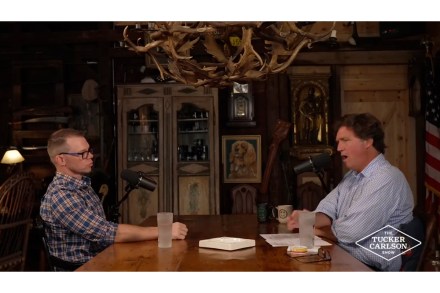
Tucker Carlson is just asking questions

Tucker Carlson is just asking questions. Questions like: what if Andrew Tate’s camgirl harem is actually the height of masculinity? And: isn’t the Russian grocery equivalent of Aldi absolutely incredible, just as the Moscow train station is perhaps the most beautiful thing mankind has created? And this week: why don’t we fully appreciate the total bind Adolf Hitler was in when he had just so many prisoners of war thanks to German success on the battlefield? The decisions Carlson has made in the past several months have struck his former friends and ideological allies as veering in the space between the eccentric and the outrageous.

tucker carlson Martyrmade

Nick Lloyd takes you through the horrors of the Eastern Front

Ten years ago David Cameron, as the British prime minister, pledged $65 million for the centenary of World War One. The focus was on “capturing our national spirit in every corner of the country, something that says something about who we are as a people.” Beyond a celebration of the Tommy on the Western Front and a belated acknowledgement of colonial Britain’s sacrifice, it was a missed opportunity. There was little attempt to better understand the region where the war began — and where, according to Nick Lloyd’s exhaustive The Eastern Front, it never really ended.

Lloyd

Why America has more lawyers per capita than any other country

Despite the sharp polarization of American politics, there is surprising agreement on what went wrong with capitalism. Whether the writer or politician is coming at this question from the left or right, the blame often falls on four decades of “small government” ideology and free market orthodoxy since Ronald Reagan and Margaret Thatcher. Whether the flaw in question is slowing productivity growth, the rise of oligopolies, the export of jobs, or income and wealth inequality, its source is traced to excessive faith in the “magic of the market.” Capitalism’s flaws are “market failures.” The problem: this narrative is wrong on the facts.

lawyers

This Memorial Day, reflect on your freedom

Last summer, I spent some time in and about Port-en-Bessin-Huppain in Normandy. The little fishing village and its surrounding towns on the English Channel (“La Manche,” “the sleeve” en français) is delightfully picturesque in that rugged, elemental way that proceeds from the collision of tempestuous sea and commanding headland. Expansive fields of corn and other crops ripened fast, orderly in their serried, midsummer ranks. Orange-red poppies punctuated the grassy, flower-strewn verge and complicated the landscape, heavy with age and history. Poppies are for remembrance — and there’s a lot to remember in these parts.

d-day memorial day

My father’s trunk reminds me of one of my earliest Memorial Days

Perhaps we all have our first memories of celebrating Memorial Day. Mine comes from 1945 when my father returned from the Pacific Theater of World War Two. I was only two. My father didn’t have to go to war as he had a family and was “safe” from the draft. Nevertheless, he volunteered after being recruited by the newly founded OWI, or Office of War Information. The OWI wanted men and women, like my father, whose graphic, photography, writing and communication skills at J. Walter Thompson, the worldwide advertising agency, had been noted and would help defeat the Japanese. He felt it was his patriotic duty and was buoyed, no doubt, by having close friends with families who had volunteered.

Trump’s Reich stuff

Former president Donald Trump’s social media account shared a video Monday that sparked a Blitzkrieg among his harshest critics. The video featured hypothetical news headlines about Trump winning the November election, overlaid on newspapers with smaller, less visible headlines. One of those other headlines touted a “unified reich,” which was too perfect for some Trump haters to resist. Trump shared a Nazi-esque headline on his own social media account? Pounce and seize, friends! “This man is a stain, a Nazi, a pure a simple garbage of a human being. And ANYONE who supports him now will be ASHAMED to ever admit they did someday,” former congressman Adam Kinzinger wrote. The president responded to the incident as well.

Republican presidential candidate Donald Trump gives two thumbs up (Photo by Chip Somodevilla/Getty Images)

Masters of the Air is an old-fashioned TV masterpiece

The greatest show of the "new” TV era is probably Better Call Saul. It’s introspective and cynical and novelistic — and even the “good guys” aren't good guys; they’re just flawed rather than evil. Among those who’ve sold their souls, and others who never had them, our charming lead, Jimmy McGill is working to get his back, having pawned it off. It’s the best storytelling and characterization that the current style of TV can produce, and a triumph for the medium. Masters of the Air is a very different beast. It has the young rising talent of today — notably, Austin Butler and his Elvis voice, alongside Saltburn’s Barry Keoghan and the always excellent Callum Turner — and a bloated 2020s TV budget.

masters of the air

War hero, bon viveur, Japanese spy: Frederick Rutland wore many masks

It is early in the morning on the “day of infamy,” Sunday, December 7, 1941. Two hundred and fifty miles north of Hawaii, six Japanese aircraft carriers are preparing to launch more than 350 aircraft in a surprise attack on the United States Pacific Fleet at Pearl Harbor. The fleet’s commander-in-chief, Admiral Husband E. Kimmel, had told a reporter the day before that the Japanese would be “damned fools” to attack the United States, ignoring the warnings that war was imminent. Around 7:30 a.m., the lead Japanese pilot fires a single flare, giving the pilots the “final go” signal. “Within an hour... the US Pacific Fleet was in ruins.” The American public, writes espionage historian Ronald Drabkin in Beverly Hills Spy, quite rightly demanded: “Whose fault was it?

rutland

A history of intellect

It has it been widely noted that, as Western culture generally has grown steadily more materialistic in its values and interests (as if it were ever anything else, ungenerous critics might suggest) over the past half-century, it has become simultaneously more abstracted in its mental habits and orientation? Chesterton described a paradox as truth standing on its head to draw attention to itself. In this instance, we have an obvious example. But it’s a good question how this particular one came to be. Ancient Greece was an intensely intellectual world of ideas that were firmly grounded in empirical reality and in observed and confirmable truth.

intellect

The atomic bomb saved Japanese lives, too

It’s August 6, which means that it is the anniversary of the atomic bombing of Hiroshima.   Every year at this time there are a spate of articles about that horrific event. Some of the articles are condemnatory; some hand-wringing; some are defiantly supportive.  This year, the recent release of Christopher Nolan’s new movie about J. Robert Oppenheimer and the making of the atomic bomb has given the controversy over the development and deployment of that awesome weapon a new urgency.   Something else that has contributed to the fraught atmosphere is the war in Ukraine. After all, one side in that conflict, Russia, controls the world’s largest arsenal of nuclear weapons, more than 6,000 warheads. My friend Roger L.

hiroshima atomic bomb japanese

The advent of AI-piloted planes

The US Air Force conducted the first flight test of the XQ-58A Valkyrie drone, from Kratos Defense and Security Solutions, piloted by artificial intelligence, on July 25. The test was part of a years-long effort headed up by the Air Force Research Lab designed to integrate advanced technology into the Air Force’s arsenal. The lessons learned and data gathered from the test will be applied to the Collaborative Combat Aircraft program, which seeks to procure an unmanned combat drone capable of working — collaborating — with manned systems, like a traditional fighter jet.  Bringing AI into the fold offers numerous benefits to the modern warfighter.

The Kratos XQ-58 Valkyrie ai drones