Wine

Fetterman blasts Dr. Oz for drinking wine at a football tailgate

From our US edition

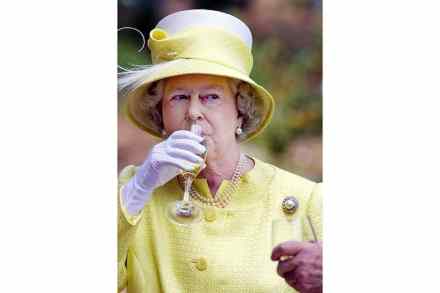
John Fetterman has prompted a fierce debate in the hotly contested race for Pennsylvania’s US Senate seat (the Cook Political Report just moved the race from “leans Democrat” to “toss-up”) by attacking his opponent, Dr. Mehmet Oz, for drinking wine at a Penn State football tailgate: https://twitter.com/JohnFetterman/status/1577304936345387009 Pennsylvania natives quickly came to Oz’s defense. The American Thinker compiled a list of spot-on responses, including one “Pennsylvania regular” who said she would totally drink wine because “Beer makes me have to pee.” Others pointed to the fact that Pennsylvanians are, in fact, normal people, and drink wine like those from other states. They even have wineries in Pennsylvania — 400 of them!

football

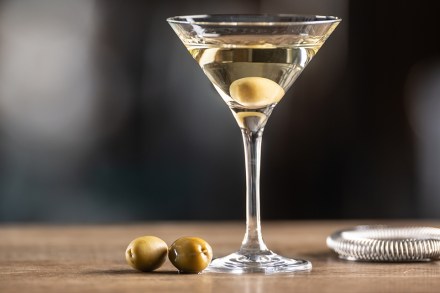
Why the dry martini is the finest cocktail of all

We were discussing bourbon and whether American whiskey could ever rival Scotch. I recalled the first time I ever tried the transatlantic spirit. It was more than 50 years ago, in an undergraduate room in Oxford. The occupant was an ingenious fellow. At the beginning of one term, he wrote to Jim Beam, the whiskey makers. He informed them that he had discovered their wonderful product in the States, but it appeared to be impossible to come by in Oxford, which was a pity, because it deserved to be better known (in truth he had never tasted it and had never been to the US). A case shortly arrived, followed by another at the beginning of next term, and so on. He sent enthusiastic letters of thanks, assuring the Beam-ites that his friends were developing a lifelong taste for the stuff.

A toast to absent friends

There have been few more momentous weeks in British history, or indeed in world history. This commentator must plead guilty. To draw on George Bush Jr, I mis-underestimated Liz Truss and appear to have made the same mistake about Ukraine. That said, we should all be relieved when the war is over on favourable terms, and tactical nukes have remained an item in Russian military doctrine, without becoming part of military practice. Another mis-underestimation has now been corrected, one hopes permanently. Though I was never guilty, the former Prince of Wales had not received the respect that was his due. That is not true of King Charles III. Throughout the United Kingdom, his first coronation has already taken place, in his loyal subjects’ hearts. The Queen is dead.

A toast to the field marshals

August may not be the cruellest month but it is often the most dangerous one. Now that it is over, and rosé is giving way to grouse, we can console ourselves. There has not been a world war. We merely face a number of middle--ranking crises. Over fortifying bottles, I was chatting about such matters with friends who had known the late Peter Inge, a dominating figure even by field marshal standards. It was said that in his company, brigadiers’ coffee cups would rattle with tension. I once taxed him with the contrast between his reputation as a martinet’s martinet and his geniality in private life.

In praise of liquor stores

From our US edition

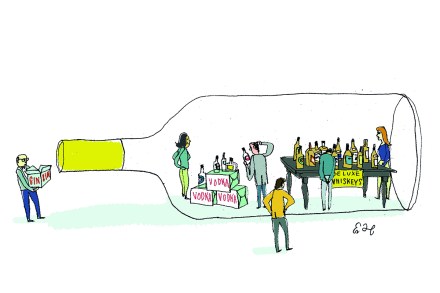
Pennsylvania’s liquor laws are... vintage. But not in a single-malt Scotch kind of way that means they improve with age. The state legislature did move the needle to the right side of draconian in 2016, but the Philadelphia Inquirer’s 1983 assessment of “Pennsylvania’s backwardness” being “a hangover from the administration of Republican governor Gifford Pinchot, who was elected on a ‘dry’ platform in 1930,” remains accurate. The Inquirer reported that after Prohibition was abolished in 1933, Pinchot led a special session to establish the Pennsylvania Liquor Control Board and “state stores” to make the purchase of alcoholic beverages “as inconvenient and expensive as possible.

liquor
Beaujolais

The bucolic Beaujolais

From our US edition

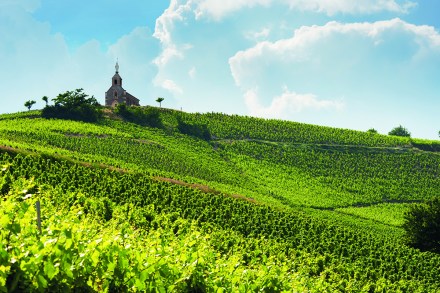
To every thing, saith the Sage of Ecclesiastes (and Pete Seeger), there is a season. There is a time for white tie and tails, footwear by Lobb, and the impeccably tailored business suit or long satin frock with appurtenances from Tiffany. There is also a time for lounging about in loose-fitting cotton trousers and boat shoes. You have on your artfully battered panama hat and sunglasses, and that book you are reading, while full of pictures and conversations, as Alice would have demanded, boasts charm, not charts or spreadsheets. Its story will not be on the test. It’s the same with wine. There is a time for the exquisite Montrachet or Cheval Blanc, the Bollinger RD, Krug, or Dom Pérignon.

The complicated history of English wine

Hugh Johnson’s classic World Atlas of Wine, first published in the early 1970s, is now up to its eighth edition. My edition, the sixth, was published in 2007. It is 400 pages long and has exactly one page devoted to the wine of the United Kingdom. The latest edition is 16 pages longer but it, too, devotes only one page to British wine. Wine has a long history in the British Isles. Like so many good things (q.v. Monty Python’s Life of Brian), wine was brought by the Romans, who planted vines wherever they could grow (and some places they couldn’t). The Domesday Book, William the Conqueror’s big tax-planning guide, lists 40 vineyards in England.

At least we still have wine

Even in recent heat, the English summer can be magical. As long as there is shade, a pool and a steady supply of cooling wine, there is so much to enjoy. Trees, flowers, songbirds, butterflies: dolce far niente works here too. But thinking can be the snake which insinuates itself into Eden. Susan Hill’s Simon Serrailler books are always excellent train reading and the latest was no exception, even if the principal character always puts one in mind of Turner’s supposed reply to someone who said that they had never seen a sunset like the one which he had painted. ‘But don’t you wish you could?’ It is hard to believe that there are many actual policemen like Simon Serrailler – more’s the pity. There are other reasons for pity.

Should you really pair Pimm’s with oysters?

Imagine a camel train, crossing the great desert. The remaining water is rancid; the beasts’ humps are shrunken. Death looms. Then suddenly, there is the sound of a fountain plashing and the scent of sherbet. Old Abdullah, who has done the journey often, as he has been reminding everyone for ten days and making his companions increasingly homicidal, is vindicated. The oasis is at hand. Although Londoners, afflicted by heat, may feel affinity with those sons of the desert, our conditions are not so dire. For a start, there are many more oases, in the form of bars or clubs. That brings us to Pimm’s, that admirable method of rehydration. According to the sources, Mr Pimm invented the drink to accompany oysters. Eh?

Think pink: there’s no shame in quaffing rosé in England

In the battle of ideas, it is sometimes necessary to make a tactical withdrawal. That is now the case over climate change. This should not be confused with a full retreat. But in the circumstances, those who insist on the need for lifestyle changes have a point, at least when it comes to wine. Some time ago, I propounded a dictum. Rosé should only be drunk south of Lyon. One could start quite early – 10.30 perhaps, opening the first bottle while brushing away the final crumbs of croissant. Apart from a very few serious wines, it would not matter if the stuff were cooled to ice-lolly temperature. But in this heat, there is no shame in quaffing rosé in England. Other wines can be problematic. Freedom and whisky gang thegither.

Tolosa Winery: my latest discovery

From our US edition

Writing about and — the necessary preliminary — drinking wine is a voyage of discovery. I won’t say that any new vineyard has made me feel quite like “stout Cortez” who, according to Keats, “star’d at the Pacific — and all his men/ Look’d at each other with a wild surmise—/ Silent, upon a peak in Darien.” But wine is in a deep sense about more than the fermented juice of the grape. It is about place — terroir, of course, but also place in a larger sense: place as habitation, place as community, which means place as the stage whereon manners, romance, technique and custom perform for the gods of pleasure. It is also about history and personality and their distillate: money, which ushers in snobbery and its accoutrements.

tolosa

My memorable night at the Carlton Club

‘Club’ is a four-letter word. Whenever a club is mentioned in the press, it will inevitably be portrayed as a sinister meeting place where men gather in secret to plot against the common weal. If only. The main point about all clubs is that they are fun. That is true in St James’s. It is also true in the working-men’s clubs of the north and Midlands. That said, the Carlton Club could claim to be a special case, although anyone entering its portals in the hope of coming across louche behaviour would be disappointed (almost always). But it could be regarded as a trustee of the Conservative party. As such, it has provided the setting for crucial events, most notably in 1922.

A voyage through fine wine off Sardinia

One could get used to this. I come from seafaring stock, albeit distant. ‘Anderson’ suggests Viking antecedents, especially as my forebears came from the Shetland Islands. Yet there must have been something wrong with the first Anderson. Other Vikings reached Normandy, Sicily, even Byzantium. At the very least, they found the odd monastery to plunder. Later, their Norman descendants compensated for cultural destruction with cultural creation. But to endure the rigours of crossing from Norway and then disembark on Shetland? Was my remote ancestor seasick, or mutinous, or did he rape the cabin boy? We will never know. A millennium or so later, life at sea was rather different. We were on a yacht, cruising between Sardinia and Corsica.

My approach to wine? Wishful drinking

I fancy myself as a bit of an oenophile and during the lockdowns, when my local branch of Majestic was forced to close, I joined The Wine Society and started buying wine from a variety of online sellers such as Vivino and Goedhuis & Co. The upshot is that I get three or four emails a day from these companies and have become an expert in deconstructing their sales patter. The common theme is to coddle the self--deception of the buyers that they aren’t full-blown alcoholics – heaven forfend! – but are obsessed with wine for some other, entirely respectable reason. For instance, Goedhuis is currently promoting a ‘platinum selection for the Jubilee weekend’ on the assumption that its customers are going to be hosting garden parties this bank holiday.

The perfect pairing of books and wine

In the West End of London there is an alley which insinuates its way between the Charing Cross Road and St Martin’s Lane. It is called Cecil Court, and the Salisbury pub is close at hand. Those are clues. The area around Cecil Court has been owned by the Salisbury branch of the Cecil family since the 17th century. For a long period, it was not a salubrious area. At least one local was hanged. Others were transported. There may have been a whorehouse or two. The ambience resembled a cross between Fagin’s kitchen and Mistress Quickly’s Boar’s Head, with Doll tearing the sheets. Then everything changed, thanks to Victorian morality and political pressure. The Third Marquess of Salisbury was a devout churchman as well as a prime minister.

The lost art of drinking wine with Coca-Cola

Mixing red wine with Coca-Cola would have the great Roger Scruton turning in his grave. He wrote the wonderful book I Drink Therefore I am: A Philosopher’s Guide to Wine about the purity and life-enhancing joy of drinking wine properly. 'It enacts for us the primal unity of soul and body—the heart-warming liquid stirs us to meditation, seeming to bring with it messages that are addressed to the soul,' argued Scruton. Indeed, as I learned on my Camino through the vineyards of Spain and Portugal, imbibing for 11 months endless variations of remarkably affordable quality wines across the Iberian Peninsular, we are truly blessed to have wine. It was, after all, the centre piece of Jesus's first miracle at the marriage ceremony in Cana.

A taste of la dolce vita in Tuscany

Amid the grandeur of old Edinburgh, in the lee of the castle, is one of the finest buildings in Scotland: George Heriot’s School. But Heriot’s is more than an architectural gem. It is an epitome of Scotland as it used to be, before the Scottish esprit de corps succumbed to kailyard grievance-mongering under the rule of Sturgeon the tricoteuse and her Nationalist administration. George Heriot, ‘Jingling Geordie’ as he was nicknamed after the coins supposedly jingling in his pockets, was one of many Scotsmen who went south to make their fortune after the Union of the Crowns in 1603. ‘The noblest prospect a Scotsman ever sees is the high road… to England’ applied then as well as in Dr Johnson’s time.

Bargain Brazilian wines

From our US edition

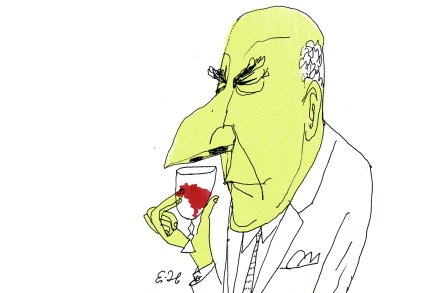
Some people think that wine is a serious business. I am often tempted to think that myself, but then I remember an amusing cartoon by James Thurber called “The Wine Snobs.” It shows four people sitting around the dinner table, each holding up a glass of wine. There is an air of resigned dubiousness emanating from the table as whole. But the W.S. himself sports a big smile and says enthusiastically “It’s a naive domestic Burgundy without any breeding, but I think you’ll be amused by its presumption.” Been there, done that. We’ve tasted some pretty fancy wines together in this column, and I hope there will be plenty more to come. At the end of the day, though, wine for most of us is chiefly about pleasure and camaraderie, not connoisseurship.

brazilian

The wine of the Wild Geese

The Irish rarely understate their achievements. Yet there is one exception. Over the centuries, the links between Catholic Ireland and the Bordeaux wine trade have been fruitful. O’Brien (Pepys’s Ho Bryan, now Haut Brion), Lynch, Barton and many other names: these are enduring memorials to a fruitful relationship. But the best-known Hibernian exiles were warriors. From the 16th century onwards, Irish soldiers served with distinction in continental armies. Their numbers increased after the Battle of the Boyne. London wanted to break the power of Gaelic, Catholic Ireland for all time, and one way of doing so was to expropriate the native landowners. Many of them decided to repair their fortunes elsewhere. They became known as the Wild Geese.

War, wine and the brilliance of Beychevelle

If only toasts and good wishes were weapons of war. At every serious repast I have attended since the invasion began, someone has raised a glass to the heroes – and heroines – of Ukraine. The rest of us have responded with a blend of solemnity and moist-eyed emotion. One’s emotions are strange. I can read about the deaths of warriors on the battlefield, now riding with the Valkyries on their way to Valhalla, and merely respond with a dry-eyed salutation.