Wine

The difference between American and French wine-drinkers

Is it safe to visit the continent? On the one hand, abroad is likely to be less crowded this August than in normal years. As for the virus, if one miscalculated, could that lead to lockdown in France profonde, or dolce far niente Tuscany? Hardly the worst outcome. Or would it mean cancelled flights, hours in airports, and then house arrest back in London? As government ministers do not appear to know the answer, how should the rest of us decide? While considering the options, I have consoled myself by remembering previous trips, stimulated by some recent tastings. When it comes to claret, I am very much on the left — of the Gironde, that is. Cabernet sauvignon stimulates the intellect as well as making demands on the palate.

A lament for the foreign correspondent’s house – and his hospitality

Provence-Alpes-Côte D’Azur Until January the foreign correspondent lived in a late-18th-century house with a vineyard, olive grove and vegetable garden close to the village centre. You’d go through a gate, then another gate, and find yourself suddenly in the countryside and being yapped at by Mary, the most spoilt and spherical spaniel in Christendom, and then the foreign correspondent himself would appear in front of his lovely old house with arms open to welcome you. Usually the first thing he would say was that he was thinking about having a drink and why didn’t he go and fetch a bottle and glasses.

The hunt for a Test-class claret

In one respect, there has been a reassertion of normality, though this is nothing to do with the virus. Although the recovery was almost sabotaged by young Mr Archer’s bêtise, the problem long antedates Covid-19. But it now seems that once again, the West Indians are a formidable Test side. This is wonderful news, for world cricket has not been the same without them. Cricket is a game of paradoxes, a symphony of beauty and brutality: a cross between a vicarage tea party and Hemingway’s Death in the Afternoon. Facing a fighting bull or the fearsome West Indian fast bowlers of yesteryear — they are both supreme tests of manhood, in which a balletic athleticism has to conquer fear in order to be transfigured into courage.

A guide to Greek eats – from souvlaki to spanakopita

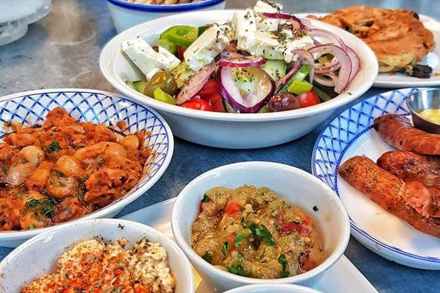
The legacy of Greek antiquity extends to the country’s cuisine. One eats there as the Ancients would have done—Greek yoghurt and honey for breakfast, simply-cooked fish and cold wine for lunch and supper—as one reclines languidly on the klinai couch, grapes dangling from the mouth, like Dionysius and Adephagia. Greek food can sometimes be disparaged as crude and one-dimensional: the runt of the Mediterranean litter, overshadowed by the glorious culinary traditions of France and Italy. But, for me, its beauty lies in its simplicity. And while it is often familiar it is simultaneously unexpected: fat olives in spectacular Greek salads, but also acerbic caper leaves. Feta crumbled atop everything, but baked too with aubergines and peppers.

The best wine since incarceration

The woodpecker jinked across the lawn like an especially cunning partridge. Its goal was a skilfully constructed bird table with wire surrounds, to provide safe feeding for finches, tits, woodpeckers and other small birds, while denying access to corvids, grey squirrels and raptors. A sparrow hawk regularly sweeps across the garden. The ‘sparrow’ element is misleading. This is an avian pocket-battleship, with not a molecule wasted in the pursuit of lethality. Sparrows? I have seen it feasting on a pigeon. It is a pity that real-life nature offers so little scope for sentimentality. Magpies are handsome creatures, but if you want songbirds, you will need a Larsen trap to control numbers. Cats seem at least as worthy of sentiment as dogs or children.

Born Toulouse: varietals, vermouth and verse

From our US edition

I like vintners with a sense of humor. When Vern and Maxine Boltz retired — he from the Oakland Fire Department, she from flying the friendly skies of United — they decided to try their hands at making wine. That’s intrepid, not necessarily funny. But in 1997 they found a sweet parcel of 160 acres above the Navarro River in the Anderson Valley of Mendocino County and started planting. ‘Go forth and multiply,’ they said to the grapes and the grapes (Pinot Noir, mostly) did just that. In 2002 they produced 400 cases for sale and Toulouse Vineyards was launched. ‘Toulouse’? Yes, they reasoned, ‘What to do we have to lose?’ Fair warning: their publicity deploys variations of that homophonic witticism early and often.

toulouse

Two bottles to help eradicate cabin fever

The virus is in retreat, the lock-down is crumbling, the sherbet dispensaries will shortly reopen and there is a second spike of summer. Every prospect pleases, and only demonstrating man is vile. In London, we have been subjected to the most ridiculous public protests since the Gordon riots or the agitation in favour of Queen Caroline. During the latter follies, Wellington, riding back to Stratfield Saye, found his way blocked by a crowd of yokels who declared that they would not let him pass until he had toasted the Queen. ‘Very well, sirs, if you will have it so, God bless Queen Caroline and may all your wives be like her.’ He then spurred away, leaving open mouths in his wake. In recent weeks, it has been less about open mouths, more a matter of empty minds.

Cellar’s market

From our US edition

I met Kingsley Amis only once. It was in the bar of the Garrick Club at about three in the afternoon. He had clearly been there for some time. I was with a friend who knew him, so cadged an introduction. I cannot say that we had a truly meaningful exchange. More like 1 Corinthians 13:12: ‘through a glass, darkly’. But the encounter did put me in mind of General Principle Number 1 from Amis’s amusing book on drink, candidly titled On Drink. ‘Short of offering your guests one of those Balkan plonks marketed as wine,’ he advises, ‘go for quantity rather than quality.’ If you had asked my opinion about that advice a couple of months ago, I might have demurred.

cellar lockdown billecart

Bitter memories: my craving for a pint

It is enough to drive a man to drink. The most glorious weather, so suitable for white Burgundy on a picnic in a meadow-full of wild flowers, for rosé almost anywhere: above all, for beer. A few weeks ago, I wrote longingly about the thought of a pint of beer. Time has passed; the craving has intensified. Nor am I alone. Chatting to a friend about fine vintages being used as palliatives — these bottles I have shored against my lockdown — we agreed that there are moments when a foaming beaker of English wallop would hit the spot more satisfyingly than the most awe-inspiring bottle from Bordeaux or Burgundy. In my youth, there was a jingle about a pub with no beer. We little thought that it would turn into a prophecy.

The best New Zealand wine I’ve come across

I was once invited to the Cheltenham races and found the experience underwhelming. Everything was too respectable: not nearly Hibernian enough. I had expected to see Blazes Boylan, Flurry Knox, the Joxer and Christy Mahon, propping each other up in a determined attempt to drink the west of England out of Guinness. The reality was much tamer. But there was one source of amusement. By halfway through the afternoon, undeterred by their skill in dispensing losing tips, a lot of my journalistic colleagues had become equine experts. The previous day, these chaps would not have known the difference between a foal and a fetlock. Yet here they were, insisting that there was not enough stamina in the dam’s bloodline, and so forth. Just as well that they did not run into Flurry Knox.

Clarets to see in the summer

This April was indeed the cruellest month, at least for those of us banged up in cities. From the country came reports of overflowing asparagus beds, the elfin splendour of the bluebell woods, precocious roses: the drinking of rosé, in England, at Easter. Now that we have the prospect of an end to the most onerous restrictions, what is going to happen to the weather? The British approach summer in the same way as the English approach cricket: with mistrust. Glorious days may occur, but there is no faith that they will endure. English cricket and the British climate could share a motto: sic transit. Yet there are ways of coping with April’s taunting sunshine. The great Falkland used to say that he pitied unlearned men on a rainy day.

Wine is for lovers: mein Gott and yours

From our US edition

Ovid’s little how-to manual, The Art of Love, is full of good advice. Let’s say you are interested in a girl. Take her to the games. Sit close to her. If a speck of dust falls on her lap, ‘flick it off with your fingers. If none falls, flick off — none.’ The Art of Love is full of such useful tips, elegantly expressed. Practical chap that he was, Ovid knew that even so subjective a pursuit as love could be helped along by the mastery and deployment of certain techniques. Among the many impressed by Ovid’s handbook was the German Renaissance humanist Vincent Obsopoeus. In 1536, he published De Arte Bibendi (The Art of Drinking), an allegro poem deeply inspired by Ovid’s Ars Amatoria.

joel gott cabernet sauvignon

I’m drinking half as much as usual – with no ill-effects

I cannot remember a prettier Easter, or a more frustrating one. This was no time to be in town. But there is a way of strangling self-pity at birth: military history. That brings a sense of perspective. Better to be locked-down in a London flat than charging across a D-Day beach. Bulletins from those lucky enough to be rusticated all make the same point: how well everyone is behaving. Over most of the countryside, there seem to be more volunteers than there are duties to perform. When the call came in Dorset, one mildly octogenarian Brigadier sprang into action. Appointing himself GOC North Dorset, he chose his battalion commanders and staff officers while instructing his wife to repair any ravages his uniform had suffered from the young at fancy dress parties.

Cab and conversation

From our US edition

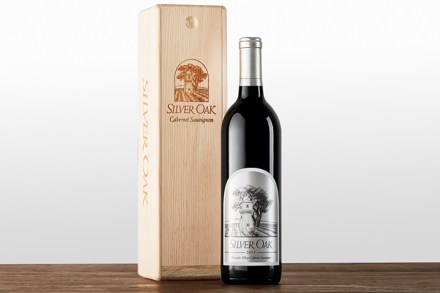
This article was originally published in The Spectator’s UK magazine. Subscribe to the US edition here. I had to go to Hillsdale, Michigan, home of Hillsdale College, to make my first visit to Healdsburg, the Sonoma County town that is the epicenter of about 100 California wineries and tens of thousands of vineyard acres. On this first, virtual trip, I dipped my toe into the Alexander Valley, the region north-northwest of Healdsburg. There are more than 40 vineyards in the Alexander Valley and I sampled two of the best, Silver Oak and Jordan. At least since Plato’s Symposium (Greek for ‘drinking party’), it has been understood that the essential accompaniment to wine is not food, though that is nice, but conversation.

silver oak alexander valley

8 wine delivery services to use during lockdown

Not only are the supermarkets running out of bread, bananas and bog roll, the wine is taking a pounding too. And if you want anything delivered, well, good luck with that. Early May is probably the soonest you’ll get a slot. Let us wine lovers thank heavens, then, that the independents are showing true Blitz spirit and are delivering across the UK every day during these strange times. Tom Ashworth of Yapp Bros tells me that they’re up 200 per cent on this week last year and are busier in the warehouse than they were at Christmas.

The virtual pub: how to share a digital pint with your friends

The coronavirus lockdown means we’re under strict orders from the Prime Minister not to head down to our local for a pint and to avoid social get togethers wherever possible. So why not start a new trend and share a digital drink with your friends? Here’s how to pull it off: 1. Get online Google Hangouts is great for group video calls, as is Zoom (free for the first 45 minutes) or, if you have access to it through work, Microsoft Teams. New app Houseparty is also a popular choice with young people and has been picking up users very quickly since lockdown was announced. Simply agree a time, send out the invites and off you go.

No blues, just reds and whites: the Oxford vs Cambridge wine-tasting

The cellar room is almost silent save for the sound of slurping and spitting and the odd gentle sigh. One woman has her head buried in a bucket, while a chap lays his on the desk before raising a hand and asking for a refill. It has the air of a rather polite orgy, only everyone is fully dressed. Welcome to the 67th blind wine-tasting Varsity match. The 14 men and women in the basement of Berry Bros & Rudd in St James’s have the most educated palates in Oxbridge. They know their D’Arsac from their Albariño. Unlike in the Boat Race, there are no blues on offer, just reds, whites and the chance to win a trip to Maison Pol Roger in Epernay where they will compete against the champion student wine-tasters of France. Aux armes! Or at least aux verres.

The Spanish winemakers with a missionary zeal

It is time to begin with an apology, and hope. In the course of these columns, I have already admitted to a deplorable ignorance of Spanish wine, including sherry. The finest sherries are subtle, complex, powerful — and excellent value. The same is increasingly true of other Spanish wines and there again, I am lament-ably ill-informed. There have always been serious Riojas. But a couple of decades ago, the late Bron Waugh lamented the fact that most Riojas left a hint of eggshell on the palate. In those days, he had a point. The principal Spanish grape is Tempranillo, which also produces excellent reds from the Ribera del Duero. There, the climate is harsher than in the rest of the Rioja vineyards.

Vintage Brooklyn: the wines of Red Hook

From our US edition

Close your eyes and think about the word ‘winery’. What image comes to mind? I’m guessing you will say, ‘A large stone pile from the 17th century or before surrounded by lovingly tended gardens and row after row of neatly staked vines.’ That is not wrong, but it is incomplete. There are plenty of wineries in France and elsewhere that feature modernist architecture. And there is one in Brooklyn, New York at 175 Van Dyke Street, towards the end of Pier 41 at the old Navy Yard. With a spectacular view of the Statue of Liberty and the New Jersey waterfront, Red Hook Winery — a retail tasting room in front, barrels and vats in the back — occupies a fetching but improbable spot. Red Hook was started in 2008 by Mark Snyder.

red hook winery

California bound

From our US edition

This article is in The Spectator’s February 2020 US edition. Subscribe here. I think it was from the late Roger Scruton, back when he was writing about wine for another magazine, that I learned the importance of being a terroiriste — not, nota bene, a terrorist. That, as Qasem Soleimani learned to his sorrow, is something else entirely. No, what Sir Roger had in mind was the importance of environment to the production of delicious wine. Terroir means the composition of the soil, yes, but it also means so much more. One dictionary sums it up as the ‘complete natural environment in which a particular wine is produced, including...the soil, topography, and climate’.

Award winning bottles of wine