Whitechapel gallery

Brooklyn’s answer to Nathan Barley has struck gold

I was on the way to Cecily Brown’s exhibition at the Serpentine last week when I heard that Kensington Gardens had been locked down. Word was that terrorist drones armed with ‘radioactive material’ were on course to blitz the Israeli embassy, presumably taking out a large part of west London with it. Scary though this was, it was also –  as far as I’m aware – a wholesale fiction: an elaborate psy-op some would-be jihadist had staged to convince us that, yes, it could happen here. That it didn’t, and probably couldn’t, was irrelevant; what struck me was the fact that the security services didn’t consider it wholly improbable.
Fails to dispel the biggest myth of all: Whitechapel Gallery’s A Century of the Artist’s Studio reviewed

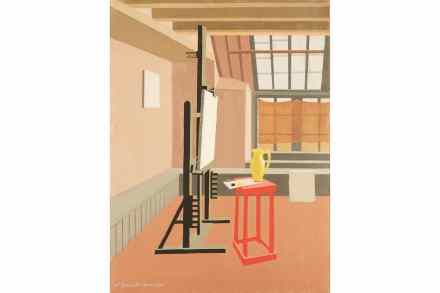
Picture the artist’s studio: if what comes to mind is the romantic image of a male painter at his easel in a grand interior with an admiring audience and a nude model at his elbow, you’re in the wrong century for the Whitechapel Gallery. Its new exhibition, A Century of the Artist’s Studio, runs from 1920 to 2020, and there’s precious little romance about it. To be honest, the studio was never that romantic; Gustave Courbet’s ‘The Artist’s Studio’ (1855), the main source of the stereotype, was itself a send-up. The Whitechapel’s show sets out to complete Courbet’s work, dismantling the myth cliché by cliché.

Rich and strange: Eileen Agar at Whitechapel Gallery reviewed

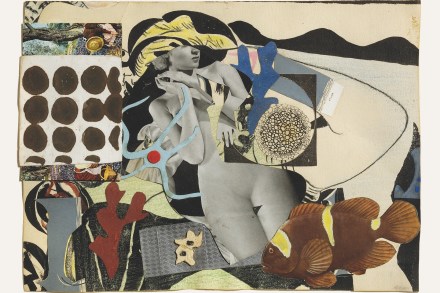
Heads turn, strangers gawp, matrons tut or look in envy. A man doffs his bowler hat knowing when he is outdone. The model walking imperturbably along a London street is Eileen Agar, her headwear the ‘Ceremonial Hat for Eating Bouillabaisse’, encrusted with crustaceans, spangled with starfish. If the Little Mermaid,in her leggy period, had been invited to Ascot, she might have worn something like this. A British Pathé newsreel of Agar wearing the same hat plays on a loop in the Eileen Agar: Angel of Anarchy exhibition at the Whitechapel Gallery. (You can also see it on YouTube.) About 50 seconds in you catch her trying not to smile. ‘Life’s meaning is lost without the spirit of play,’ Agar wrote in one of her notebooks.

Figurative painting is back – but how good is any of it?

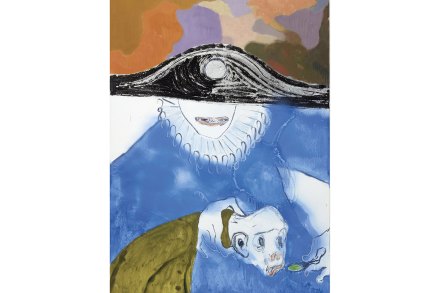
An oxymoron is a clever gambit in an exhibition title. The Whitechapel Gallery’s Radical Figures: Painting in the New Millennium is designed to trigger the reaction: ‘Radical? Figures?’ before revealing quite how radical the figure can be. But like all good marketing, it is deceptive. Figurative art may have been consigned to history by Clement Greenberg 80 years ago, but history since — neo-romanticism, school of London, neo-expressionism — has repeatedly proved him wrong. The ten painters in this exhibition aren’t a school: the only thing their work has in common is its statement-making scale.