Werner herzog

A century of movie magic: how cinema has changed the way we think

The making of films is a process often on an industrial scale, and among the thousands of professionals contributing there are dozens whose practice might constitute a solid history of the artform. The great stars and directors are the usual routes into the history of film; but the roles of studio executives, producers, costume designers (Edith Head! Givenchy!), composers of scores, cinematographers and editors would make compelling narratives, too. A history of cinema audiences could also be interesting – ranging from those who are supposed to have fled in terror as a filmed express train came hurtling towards them in the 1890s; to the yobs who slashed the seats in cinemas showing 1950s rock’n’roll movies (but why?
Mad, bad and brilliant: Jesus Christ Kinski by Benjamin Myers, reviewed

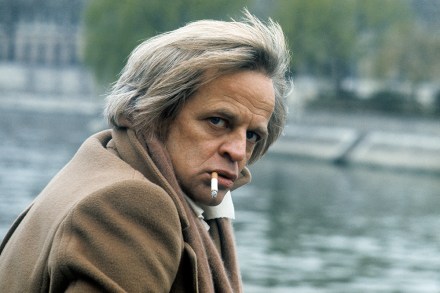
Klaus Kinski was one of Germany’s most celebrated postwar actors. Although he appeared in more than 130 films, including five for the director Werner Herzog, he began his career on the stage, returning in 1971 to perform a monologue, Jesus Christus Erlöser, before an audience of 6,000 in West Berlin. Benjamin Myers has long been fascinated by the surviving footage of Kinski’s performance and, in his latest novel, Jesus Christ Kinski, he attempts to recreate it on the page. He divides the book into two ‘acts’. The first consists of Kinski’s interior monologue as he struggles with both his own demons and an increasingly hostile audience.

The joy of volcano-chasing

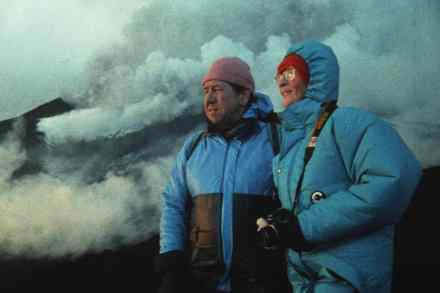
Katia and Maurice Krafft were both born in the 1940s in the Rhine valley, close to the Miocene Kaiser volcano, though they didn’t know each other as children. They met on a park bench when they were students at the University of Strasbourg, and from that moment on, according to their joint obituary in the Bulletin of Volcanology, ‘volcanic eruptions became the common passion to which everything else in their life seemed subordinate’. They married in 1970, formed a crack team of volcano-chasers, équipe volcanique, and set off to get as close as they possibly could to the very edge of every fiery crater, to collect samples and data and just to be there, ecstatic with the enormity of it all, like a pair of mad moths drawn into a candle flame.

Carry on regardless

From our US edition

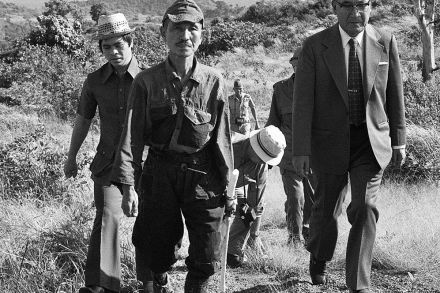
The director Werner Herzog’s first novel, The Twilight World, occupies quintessential Herzogian territory. Those familiar with his films will recognize the themes: man’s insignificance in the face of a totally implacable nature and his overweening ambitions to surmount this failure. Futility and pride are locked together in hallucinatory, self-destructive cycles. His film Fitzcarraldo, for example, demonstrated the real-life attempts of a rubber baron to transport a steamship over a mountain in Peru. Grizzly Man, meanwhile, documented the sad life of a man who had made his home among bears. It doesn’t end well. (Those readers who haven’t the time to get to know his work may wish to find “Werner Herzog” reading Curious George on YouTube — a delightful parody of his style.

herzog

Fascinatingly weird – but not satisfyingly weird: Herzog’s Family Romance LLC reviewed

In the past Werner Herzog has given us a man pushing a ship up a mountain, a 16th-century conquistador going mad in Peru, Timothy Treadwell being eaten by a bear (who isn’t still recovering from that one?) and the 3-D documentary on cave paintings that ended with albino alligators, so there is never any saying what his next film will be about. Only that it’s likely to be quite weird. And Family Romance is quite weird. It’s real but fake (or vice versa) and filmed on the fly in the Japanese language even though Herzog doesn’t speak Japanese. And there’s more, so much more. It’s fascinatingly weird for sure. Even if, ultimately, it’s not satisfyingly weird. It’s fascinatingly weird for sure.

The unstoppable rise of television-rewatch podcasts

Talking Sopranos — a new weekly podcast which launched this month— is another example of a seemingly unstoppable sub-genre occupying an ever-growing slice of the podcast market: the television-rewatch podcast. The format is simple: take any much-loved yet expired television series (the kind usually prefaced by words like ‘I can’t believe you haven’t seen…’) and scan the cast list until you find some former stars willing to work for an affordable rate. Record them giving an audio commentary on each episode and, bingo, you’ve got yourself dozens of hours of podcasts — and a massive fan base waiting to be converted to listeners.