Washington

The uncertainty principle: The Interpreter’s Secret, by Andrew Rosenheim, reviewed

You can’t really make this stuff up any more, political reality having long since outpaced fiction, but thank goodness there are people who continue to try. Recent history has supplied more than enough intrigue, misinformation, diplomatic doublespeak and sheer zone-flooding mad shit to challenge even the most inventive writer of political thrillers, but fortunately Andrew Rosenheim is more than up for it.
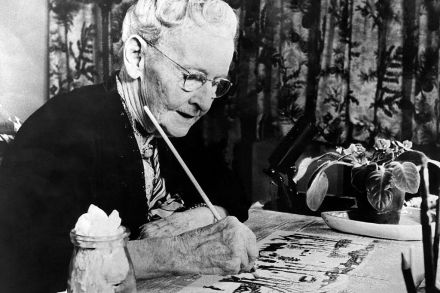
How Grandma Moses’s art shaped American history

From our US edition

Growing up on the border of Pennsylvania and Ohio, I am well acquainted with a good country fair – that uniquely rural convergence of rodeo games, fried food, barnyard smells and arts and crafts. Washington DC too is now relishing the American-ness of state fairs by hosting the Great American State Fair in the weeks leading up to the semi-quincentennial. And the Smithsonian American Art Museum has prepared a temporary exhibition celebrating a quintessential American artist who first debuted her works at state fairs in rural New York. That gallery is Grandma Moses: A Good Day’s Work, a collection of 88 paintings which will be in DC until July 12, and then heads on tour.

Grandma Moses

The inverted imperialism of the royal visit

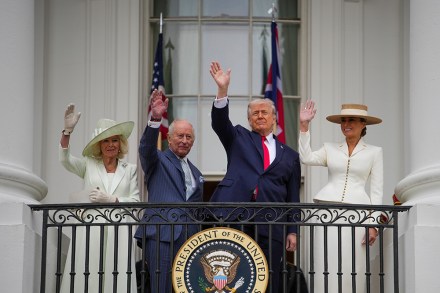
It’s hard not to feel sorry for Christian Turner, the UK's new ambassador in Washington. He’s only been in post three months, yet he’s already had to handle a string of bilateral crises – none his fault. US-UK relations are under intense strain over Iran, Ukraine and now the Falklands. And the Jeffrey Epstein stench still lingers thanks to his predecessor, Peter Mandelson. The King’s visit was meant to gloss over all that unpleasantness. Word went round last week that a grateful Donald Trump would pack King Charles and Camilla off and promptly declare the US-UK trade deal had been finalized. Then, on Tuesday, the first morning of the visit, news broke of a leaked tape.

What I heard inside the White House Correspondents’ Dinner

From our US edition

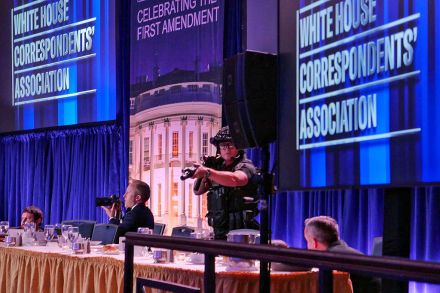
The evening had started pleasantly enough. The most alarming thing about the party I was attending in the Hilton Hotel where the Washington Correspondents’ Dinner was being held were the $18 martinis. Those, and the woman in the nice black dress screaming “criminals” at the police as they dragged her out the door as I arrived. Protesters had gathered outside. They chanted indiscriminately at guests filing through the entrance, calling for an end to the war in Iran and to free Palestine. I was one floor above the main dinner at a party hosted by ABC, engaged in the kind of self-congratulatory socializing this weekend was designed for, when heavily armed police officers started moving through the room. First one, then several – and they wouldn't explain why.

Correspondents

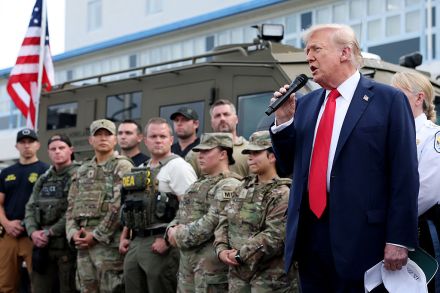
Trump blames Biden for shooting of National Guardsmen

From our US edition

In response to the attack on Thanksgiving eve by a suspected Afghan national upon two West Virginia National Guardsmen, President Trump demanded a renewed effort to expel illegal immigrants. During a brief and uncompromising address from West Palm Beach that bore the rhetorical fingerprints of White House advisor Stephen Miller, Trump ripped into illegal immigration and former president Joe Biden. The President deemed the influx of refugees from Afghanistan and elsewhere the “single greatest national-security threats” facing America. Biden was a “disastrous president.” Trump reserved special scorn for his detractors who he said purport to protect constitutional liberties but are leaving America exposed to rampant criminality.

The Spectator state of mind

It is party time in New York as we toast the launch of The Spectator’s swish new office on Fifth Avenue. The building, an art deco number originally designed by George F. Pelham, thrusts skywards, just a few blocks from the Empire State Building – and we’re right at the top. The Spectator State of Mind. The office is a work in progress: walls half-demolished, wires hanging out, plaster on show. Yet even in its unfinished state, it looks beautiful. We spend the day getting the place in shape for our ‘hard hat party’, improvising with gaffer tape and a few well-placed lamps to conjure up a vibe. I lay out the napkins, each printed with amusing quotes about the magazine. My favourite? ‘You can go to hell – you and your irrelevant rag’: Sebastian Gorka.

The devil over Washington

From our US edition

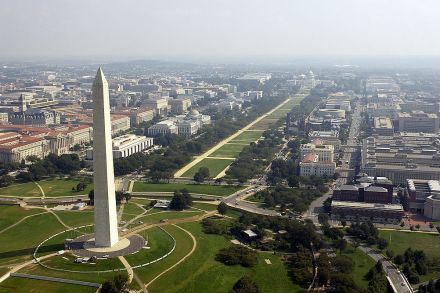
It is difficult to romanticize the political theater of Washington, DC, when you live so close to it. The absurdity feels routine after a while. You grow desensitized to the Machiavellian scheming, the name-calling, the ceremonial outrage. News outlets blast cinematic plot twists to the American public while quieter forces go unnoticed. With September growing late and the humdrum heat and headlines of Washington refusing to break, I turned to film in an attempt to re-enchant myself with the city in which I live. I rewatched two movies which capture its deeper moods. In spite of their tonal differences, both struck me in their portrayal of life just apart from the curtain – Washington not as the center of power, but as a place shadowed by it.

Washington

The pace is quickening in DC

From our US edition

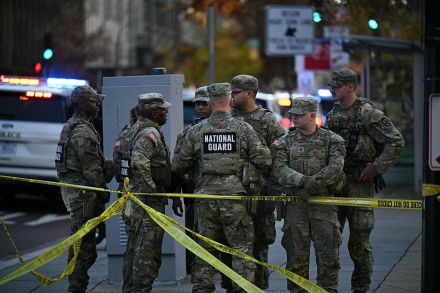
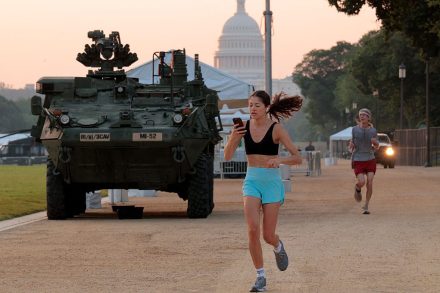
September in DC is the real new year. The heat hasn’t broken, but the air feels heavier. Congress regroups, summer travelers return to the city and the Hill drones descend on the cafés in their blazers and button-ups, sweating through 80-degree weather. A distinct tension hangs in the air, a carryover from late summer. Donald Trump’s declaration of a crime emergency last month transferred control of the local police to federal authorities, and now, as I make my way down 14th Street, I regularly shoulder past protesters and pass clusters of National Guard soldiers milling beside the wine bars and coffee shops where my friends and I still meet. Couples walk past without breaking stride, avoiding eye contact. I, too, avert my gaze.

DC

Even now, Nick Clegg offers too little too late

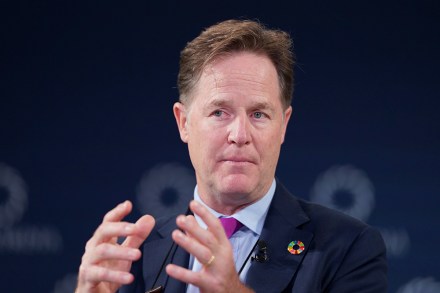
Earlier this year a former staffer of what was then Facebook, now Meta, wrote a gossipy tell-all memoir about her time in the office there. It was a huge hit – especially after the company’s chief global affairs officer Joel Kaplan secured a ruling to prevent its promotion. Careless People, by Sarah Wynn-Williams, proved that there was a considerable appetite for anything that describes what it’s like to work for big tech. All of which boded well for Nick Clegg, who was Kaplan’s predecessor as the public face of Meta to governments across the world – until his departure was unceremoniously announced a few days before Donald Trump’s return to the White House.

We should rejoice in Trump’s military parade

From our US edition

Today, you can choose to follow your inner adolescent and search for one of the Soros-funded “No Kings” protests cropping up wherever the number of Democrats is high and the collective IQ is low. Alternatively, you can pop down to the draining swamp of Washington, DC and watch the United States Army commemorate its 250th anniversary with a snazzy military parade among patriotically inclined Americans.If you think I have loaded the dice somewhat with charged rhetoric, you’re right. The whole “No Kings” wheeze is just anxious left-wing grandstanding that is as desperate as it is ineffectual. There is no Saint George Floyd around to act as a pretext this time.I have no doubt that those protests will be lavishly covered by the Irrelevant Media Complex.

Parade

Randi Weingarten’s anti-Trump national uprising sounds ‘mostly peaceful’

From our US edition

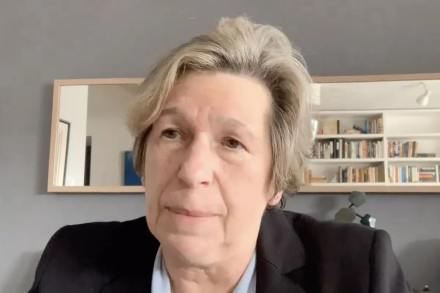
“Authoritarianism can be stopped,” Randi Weingarten, head of the American Federation of Teachers, was saying, even though Weingarten was a prime mover, if not the prime mover, behind years-long Covid-era school closures that crushed education opportunity for an entire generation. But we’ll stop this particular round of authoritarianism, she said, with our voices and our bodies: “We have to be on the streets in a very, very public way.” This was on an AFT organizing call yesterday evening for No Kings, a massive nationwide protest taking place this coming Saturday, which had been scheduled long before last weekend’s Battle of Los Angeles.

randi weingarten image

How an international community of do-gooders made the US lose the plot in Yemen

From our US edition

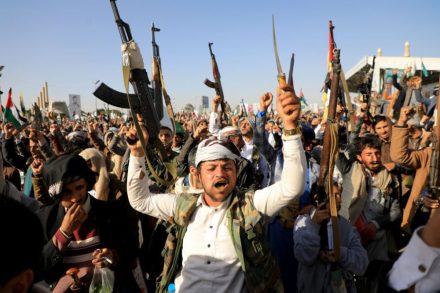
As British Ambassador to Yemen from 2015 to 2017, and later in counterterrorism roles at the UN, I watched with growing frustration as Washington, despite its early clarity, lost the plot in Yemen – with consequences that are now rippling across the Red Sea and into Israel. In 2014, the international community got it right. UN Security Council Resolution 2140 blamed the right culprits: former President Ali Abdullah Saleh and the Houthi leadership. The Houthis, a small sectarian militia allied with Saleh, were trying to hijack Yemen’s democratic transition – and the world recognized that.

Yemen

Israeli Embassy terror suspect formed by hard-left and BLM

From our US edition

The murder last night of two young Israeli embassy staffers, Yaron Lischinsky and Sarah Milgrim, on a street in Washington, DC was horrifying, but not surprising. The couple was gunned down outside the Capital Jewish Museum. A suspect then walked into the building, accepted water from those who thought he was a victim, and began chanting “Free Palestine.” He pulled a red keffiyeh from his pocket and invoked the old rallying cry: “There is only one solution. Intifada revolution.” The man now in custody, Elias Rodriguez, was once associated with the Party for Socialism and Liberation, a hard-left political group whose slogans echo in anti-Israel demonstrations across the country. In the hours before the shooting, the group posted: “End the genocide. Israel out of Gaza now.

Elias Rodriguez

My high-speed bus chase

My youngest daughter and her husband moved to New York last October. Three days after they arrived, she tripped on a step and broke her ankle. ‘So annoying, I was wearing such a good outfit, Mumma.’ They didn’t know anyone. In a boot and on crutches she tackled umpteen flights of stairs in search of permanent accommodation, avoided crazy people in the street and faced up to taciturn bank and phone-shop employees. The unfriendliness of the city upset her more than the pain and inconvenience of the break. I couldn’t afford to visit then – so when a friend, American Cathy, who’s got a second home near me in Provence, offered to buy flights and organise a trip for me and my daughter to visit her in D.C. last month, I accepted.

How successful was Keir Starmer’s visit to Washington?

25 min listen

Freddy is joined by The Spectator World’s deputy US editor, Kate Andrews, and The Telegraph columnist, Tim Stanley, to talk about Keir Starmer’s much-anticipated meeting with Donald Trump in Washington. Across the board, it has been read as a success – at least domestically, that is. The victories include movement on the Ukraine backstop, some positive discussions around the UK avoiding tariffs, and a second state visit is on the horizon as well. The biggest win, though, was the number of compliments that the president gave Starmer, including – puzzlingly – about his accent. The Spectator World’s Ben Domenech secured an interview with Donald Trump after the Starmer meeting, in which he was similarly effusive about the PM: ‘I thought he was very good.

Splitsville: separatist movements are gaining steam in blue states

From our US edition

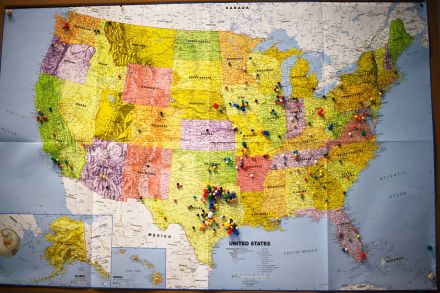
Matt McCaw doesn’t want to live anywhere but in Oregon. But during the pandemic he felt like he was living under tyrannical rule imposed by the state’s progressive majority in metro Portland. The school that his six children attended closed for more than a year due to a state mandate — and they received just four hours of online instruction per week. His church was forced to close, and his business selling textbooks suffered because school districts were buying online curricula, not physical books. Mask and vaccine mandates were ubiquitous; McCaw couldn’t even take his wife out to dinner to break the monotony, because all the restaurants were takeout-only. “I thought there would be a huge political backlash against all that,” he says.

separatist

I was censored from talking about Chinese influence in Latin America

From our US edition

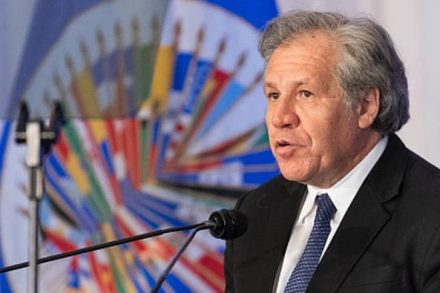
I represented the United States at the sixth Youth and Democracy in the Americas Summit at the Organization of American States, or OAS, last month. Most Latin Americans know this organization well, though most here in the US don’t. It is the premier regional political forum, the region’s European Union, a sort of mini-UN. When tyrants steal elections and jail journalists, the OAS becomes the center of the spectacle.  It has a reputation for defending liberty. But when it comes to China, matters get murky. So much so that the organization is willing to censor American voices that tell the truth about China’s regional ambitions. The appointment of Florida senator Marco Rubio as secretary of state may augur a new era of US focus on its hemispheric neighbors.

China

How Tommy Tuberville’s lonely stand rocked Washington

From our US edition

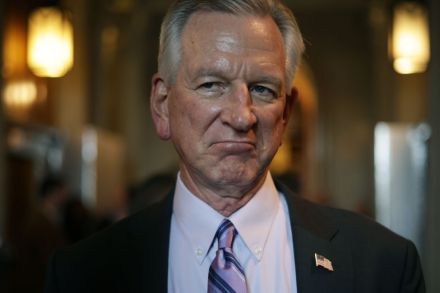
Sometimes the true power of someone new to politics is that they don't arrive in Washington with any of the preconceived notions about the possible. In a political moment that is decidedly post-norms, that's what made Alabama senator Tommy Tuberville's stance against an array of foes, including many on his own side of the aisle, so impressive. Tuberville came to Washington as a cipher. He was a Republican, certainly, and a conservative endorsed by Donald Trump by dint of the failure of Jeff Sessions's brief tenure as attorney general. But it was convenient to think of him as a former football coach who viewed being one of the hundred members of the United States Senate as a step down from the task of raising up some of the most talented athletes in the nation.

tommy tuberville

Washington’s yes-men in Japan

From our US edition

It was nighttime in Davos, 8:31 on January 18 to be exact. Japanese journalist Ganaha Masako had been standing out in the cold for three hours near the entrance to a building which, she had heard, was being used as a venue for a World Economic Forum event that evening. Ganaha had picked up on some additional chatter. Klaus Schwab, the head of the WEF, was rumored to be inside. It was a long shot, but Ganaha wanted to ask Schwab some questions about globalism. And then, suddenly, Schwab appeared. Fleshy cheeks jiggling slightly as he shuffled along the snow-dusted sidewalk, he stepped cautiously out of the WEF event forum with a few handlers. Ganaha pointed her camera at Schwab and asked him for an interview. He ignored her and kept shuffling along.

Will Biden finally go to Ukraine?

From our US edition

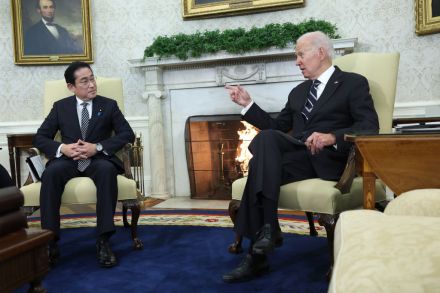
President Joe Biden’s administration has announced that he will be crossing the pond to Poland on February 20 through 22, just days before the one-year anniversary of Russia’s Ukraine invasion. Cockburn finds the dates curious — and wonders if the president will make a surprise visit to the epicenter of the conflict on the anniversary itself. The scheduled trip looks like it will already be a busy one, meeting with American allies in the region and reasserting Washington’s “unwavering support for the security of the Alliance.” The real kicker will be if Biden makes his way to Kyiv and meets Zelensky, ending the unfortunate distinction of him being one of the few Western leaders yet to travel to Ukraine.

biden blinken blob war syria iran ukraine hamas