War

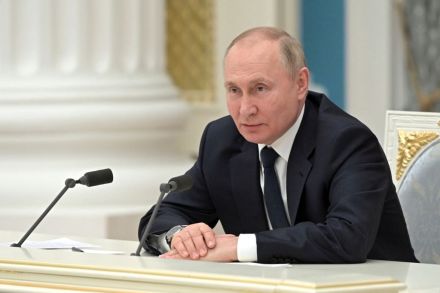
Putin will escalate

“I can’t tell you how this ends. All I can tell you is that I just hope millions of people don’t die, or that both Ukraine and Russia aren’t both destroyed in some way thanks to this war.” Those words, spoken to me on an encrypted smartphone app yesterday, are from a Ukrainian commander actively fighting Russian soldiers that I have known for years thanks to wargames I helped organize that brought together national experts, military officials, and policymakers from around the world.
Ukraine and the art of viral war

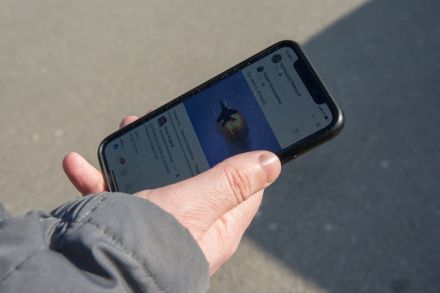
The sky is dull and gray, the sun obscured by clouds. The camera pans down past some desolate Soviet housing blocks. Some wintry, apocalyptic trees line a road. It could be Kyiv, it could be Bucharest, it could be any city where the residents liberally pepper their words with the -sky suffix. Suddenly, a flash of metal across the sky, a fighter plane roars into shot, then out again. The caption proudly declares, “This is the Ghost of Kyiv, the bravest fighter pilot in the Ukrainian Air Force. He has downed six Russian planes just today.” You don’t know that much about Ukrainian fighter pilots, but placed among a million other viral clips of heroic Ukrainians fighting against Goliath, you think it seems believable enough. You retweet it. You send it down group texts.

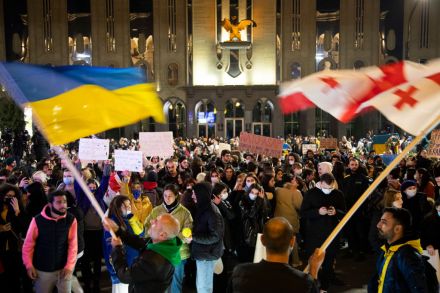
Pro-Ukraine citizens clash with authorities in Georgia

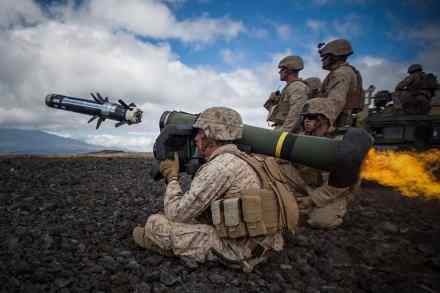
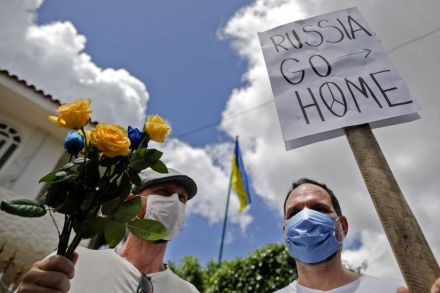
Tbilisi, Georgia After one week of fighting, Russia's invasion of Ukraine has already caused far-reaching geopolitical consequences, most of which point to gross miscalculation from the Kremlin. Following an arguably hesitant start, the Western world has united to provide Ukraine with lethal and non-lethal aid, as well as economic and humanitarian support. In addition, despite Putin ostensibly launching his war to prevent Ukraine from becoming a NATO member and curtail the alliance's easterly expansion, Kyiv's relations with the West have ironically become closer. Both Sweden and Finland appear to be closer than ever to considering joining NATO.

georgia

My oncologist has a new weapon in his arsenal

From our UK edition

‘We’re at war!’ said the taxi man as I installed myself for the long drive to Marseille. I put a fist to my mouth and tooted my imaginary bugle. But world war three – as he saw it – was no joking matter. My tootling bugle irritated him and his voice rose by a querulous octave. Didn’t I realise? Everything has changed since this morning! European politics had changed! French politics had changed! Who was now going to vote for a political novice like Zemmour, for example? Horizontal in its dashboard holder, his smartphone was showing a three-cornered TV debate on a rolling news channel. He turned up the volume. Everyone was yelling at once, including the presenter. He turned the pandemonium down a bit.

The Ukraine invasion is nothing compared to Iraq

Of the war in Ukraine, New York Times columnist Thomas Friedman writes, “Our world is not going to be the same again because this war has no historical parallel.” In the very next sentence, he describes the Russian invasion of Ukraine as “a raw, eighteenth-century-style land grab by a superpower,” thereby acknowledging that the episode actually has innumerable historical parallels — just not ones that Friedman cares to acknowledge as legitimate. Friedman figures prominently among those claiming to have divined the essential character of the present age. His key finding: tech-driven globalization has rendered old-fashioned power politics obsolete. The rules of the game have changed irrevocably. Practically speaking, nations have no choice but to submit.

invasion iraq

Ilya Kaminsky’s poetry in a time of war

There is currently a poem going viral on Twitter. “We Lived Happily During the War” is by the Ukrainian-American poet Ilya Kaminsky, and it is the first poem of his prize-winning collection Deaf Republic (2019). It is easy to see why it feels particularly relevant: Kaminsky was born in the former Soviet city of Odessa, which is now under attack from Russia. The poem opens: “We Lived Happily During the War” And when they bombed other people’s houses, we protested but not enough, we opposed them but not enough. It is a heart-breaking meditation on the way normal life continues despite crises. The speaker describes how “I took a chair outside and watched the sun.” But he ends with a plea: “we (forgive us) / lived happily during the war.

llya Kaminsky

Let Russia choke on Ukraine

At least for the moment, it looks like Russian president Vladimir Putin is intent on conquering Ukraine, a nation he's never believed has the right to exist. While the fog of war always limits accurate real-time military analysis, it seems for now that Russia has committed to annexing at least large sections of Ukraine and is winning the day militarily with ease. Of course, the media has predictably gone into overdrive, warning of World War Three, gas prices that will stay high for years and perhaps even Putin attacking NATO and nuclear war. But let’s put away the hysterics for a moment and think about the here and now. Russia’s goal in Ukraine has always been clear and does not involve war on NATO or even conquering Ukraine in its entirety.

ukraine

The unthinkable horror of a Russia-Ukraine war

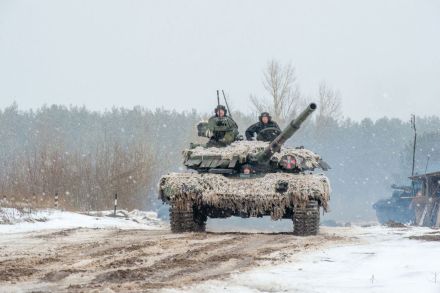
In the coming days, if intelligence assessments are accurate, the world will watch the unfolding of a bloody war between Russia and Ukraine. It will make history for all the wrong reasons, as the largest armed conflict since World War Two. And while Moscow would almost certainly defeat Kyiv on the battlefield, the real story will be the horror unleashed by the first modern war fought between nations of real consequence in decades. Such a war would showcase military modernizations that, while well-known, will still shock most Americans and change our perception that war in the twenty-first century is anything but cost-free. Worst of all, there's chance that a Russia-Ukraine war might not be contained to just those two countries, sucking in America in the process.

Will Armen Sarkissian save Armenia?

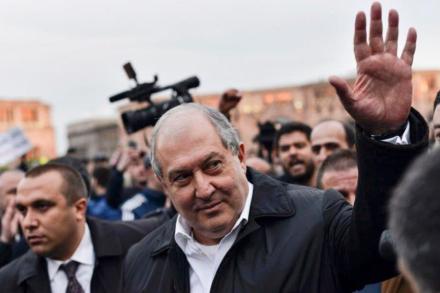
Yerevan, Armenia Armen Sarkissian, the president of Armenia, is incandescent with rage. “Five thousand brave and selfless Armenian soldiers were killed in this war,” he tells me at his office, referring to last year’s conflict with Azerbaijan and Turkey. “There must be accountability for their deaths.” Sarkissian strikes me as the only Armenian politician whose anger comes with a constructive program of national revival. The man once described by Zbigniew Brzezinski as the “Vaclav Havel of the Caucasus” radiates no grievances against foreign powers.

The war on Christmas comes home

America's longest war has just come home. Last week, Fox News’s All-American Christmas Tree, standing merrily outside the channel's headquarters in New York, was set on fire and destroyed. The arsonist was quickly arrested upon which he was subjected to the fearsome rigor of our justice system: released without bail as he cussed out reporters. We should pause here to note just how banal and predictable much of the late-night jesting about the blaze has been. It isn't that the likes of Trevor Noah and Stephen Colbert shouldn't joke about the fire — crack all you like, and the Daily Show's "Pine Eleven" was pretty funny.

christmas

Britain is finally remembering its forgotten soldiers of empire

From our UK edition

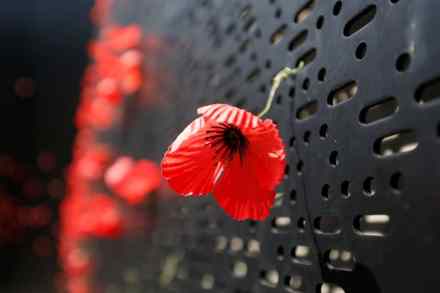
Each year, flowers of remembrance are left on the tomb of the unknown soldier in Westminster Abbey. The memorial marks the resting place of a nameless British soldier who fell on the battlefields of Europe during the First World War. But this hero is far from alone in his identity being lost to history. More than a century on from the end of the Great War, the contribution of half-a-million Punjabis who fought has been all but forgotten. The Punjab, or ‘land of the five rivers’ – a region now divided between what is post-partition India and Pakistan – remarkably provided more soldiers (Sikhs, Muslims and Hindus) towards the allied war effort than Australia. Yet until now, this contribution has gone largely unnoticed. Is this now about to change?

Don’t fear North Korea’s recent missile launch

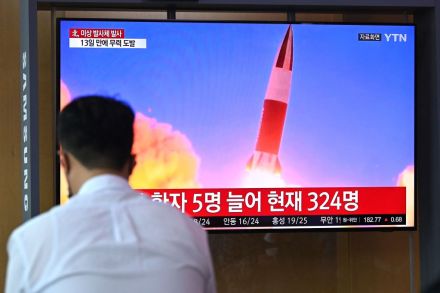
Let’s be honest. If North Korea didn’t have nuclear weapons and missiles to carry them to targets as far away as the US homeland, you would not be reading this article. In fact, the national security establishment would most likely consider North Korea, a nation that can no longer feed itself with a GDP smaller than Rhode Island's, to be a joke. And yet the so-called Democratic People’s Republic of Korea (DPRK) keeps cranking out ever-more advanced weapons platforms that drive headlines and clicks the world over. North Korea’s most recent test, a submarine-launched ballistic missile, seems at least on the surface to be pretty threatening. Yet a more sober analysis suggests that such a weapon, at least by itself, is no major threat to anyone, and for the foreseeable future.

north korea

Taiwan could spark a war between America and China

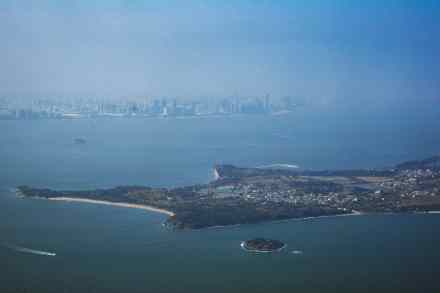
Some time between now and the next 10 years war between the United States and Communist China is certain. The only questions are when and how it will start — and how many millions of people will die. Why would I dare make such a bold prediction? Simple. History has conspired to create the perfect mix: trillions of dollars in trade up for grabs, a geopolitical rivalry, military tensions, bad blood, competing national egos and a quest for tech dominance. Washington and Beijing seem on the way to a world war the likes of which mankind has never before seen. And the most likely spark for this war is Taiwan.

taiwan china

The myth of the good Afghan war

There’s a disgusting scene I can’t stop thinking about. It comes about midway through This Is What Winning Looks Like, a 2013 VICE documentary about America’s efforts in Afghanistan you can watch for free on YouTube. The film switches between the documentary footage itself and a sort of metafilm in which the filmmaker, Ben Anderson, discusses aspects of his work with Eddy Moretti of VICE, with Anderson’s footage from his time overseas frozen on a computer monitor behind them. The scene in question starts at 51:00 in the YouTube cut, was filmed around 2012, and involves a series of horrific murders. These were perpetrated not by the Taliban, but by America’s supposed allies: the country’s nascent police force.

afghanistan

Would Japan defend Taiwan from a Chinese attack?

From our UK edition

In a parliamentary debate in early June about Covid, Japan’s prime minister Yoshihide Suga said that Australia, New Zealand and Taiwan had been 'imposing strong restrictions on privacy rights.’ Whether by mistake or on purpose, Suga had crossed the Rubicon of acceptable China-Japan diplomatic language by implying that Taiwan was a country. If it was a mistake, it was one he repeated several times. China’s response was immediate. A foreign ministry spokesman, Wang Wenbin, accused Suga of a flagrant breach of ‘the Sino-Japanese Joint Statement and its solemn and repeated commitment of not seeing Taiwan as a country.

After Afghanistan

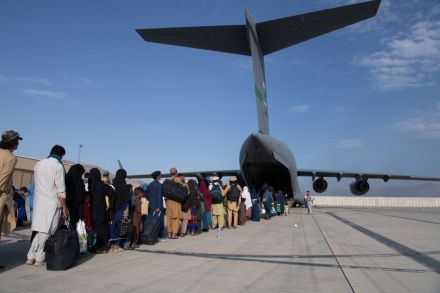
The 20th anniversary of 9/11 will come in a matter of days. It will be marked by the victory of the Taliban in Kabul and the humiliation of America. The war in Afghanistan was one of the largest-ever undertakings of any major country, in any era. Adjusted for inflation, the Apollo Moon landing program cost the United States close to $300 billion. The Manhattan Project cost $30 billion. The Interstate Highway System, about $500 billion. Those three mammoth projects are dwarfed by the cost of 20 years fighting in Afghanistan, which will well exceed a trillion dollars when all is said and done. The amount spent on Afghan nation-building surpassed the cost of the Marshall Plan in 2014 and kept rising inexorably for seven years more.

9/11

How America squandered its moral authority in Iraq

Day by day, you could almost see America’s moral authority draining away in Iraq. The weapons of mass destruction that the US had invaded the country to find didn’t exist. And it sometimes seemed as if a monstrous trick had been played on American troops: they were promised a welcome with ‘flowers and sweets’; they got roadside bombs and suicide attacks. In 2004, a year after the invasion, a 19-year-old Marine — outside the US for the first time in his life — looked up at a minaret sounding the call to prayer and asked me: ‘What are they saying? “Kill Americans?

iraq

Homeric levels of misery: Paradise, at the Olivier Theatre, reviewed

From our UK edition

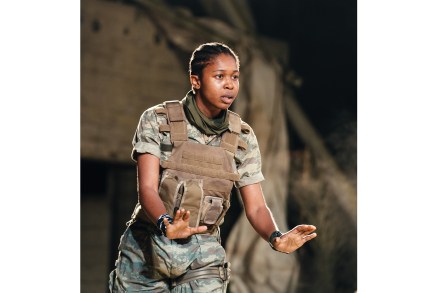
The National Theatre has given Sophocles’s Philoctetes a makeover and a new title, Paradise. This must be ironic because the location is hell on earth. The action starts in a dirt circle sprawling with smashed military gear where a group of plump female vagrants are waking up in a clutch of filthy old tents. They’re living on a Caribbean island which also houses a prison for migrants. In a nearby cave dwells an exiled Homeric archer, Philoctetes, who survives by eating squirrels which he kills with his handmade bow. A committed anti-vegan, Philoctetes shuns the plentiful rice, garlic and mangos that grow naturally in the tropics. Enter two British soldiers in contemporary battle fatigues, who want to track Philoctetes down. The Brits are called Odysseus and Neoptolemus.

Joe Biden’s short walk in the Hindu Kush

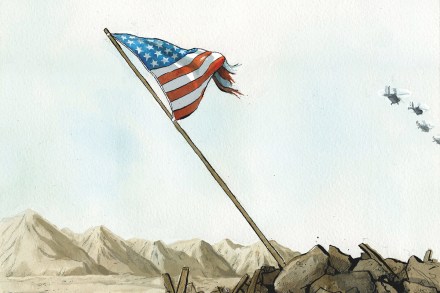
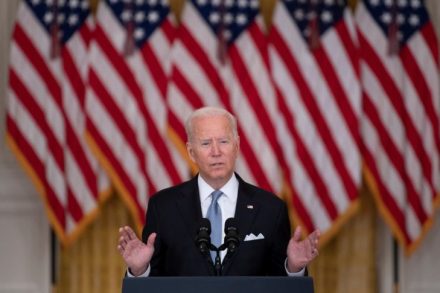
'There is no light in the bazaar. The Americans brought the light when they came to build the great dam . . . but when they left the took the machine with them and now there is no more light.’ — Eric Newby, A Short Walk in the Hindu Kush There really isn’t much that is amusing about Afghanistan. There never has been. But Eric Newby wrote a most amusing book about his trek through the Hindu Kush in the late 1950s. These days, when the Americans decamp from Afghanistan they leave behind tons — literally tons — of lights, not to mention munitions of various sizes and lethality, roads, buildings, communication devices of all sorts — you name it. A few days ago, we were told that the Afghan government might fall within 90 days to the newly resurgent Taliban.

Biden

How the US military got rich from Afghanistan

The departure of American troops from Afghanistan is being lamented (or hailed — see the Chinese press, passim) as a defeat. But this is a shortsighted attitude, at least from the point of view of the US military and the multitude of interested parties who feed at its trough. For them, the whole adventure has been a thumping success, as measured in the trillions of taxpayer dollars that have flowed through their budgets and profits over the two decades in which they successfully maintained the operation. The truth of this was forcefully brought home to me once by a friend of mine who, as a mid-level staffer, attended a conclave of senior generals discussing Donald Trump’s Afghan mini-surge back in 2018.

afghanistan military