Vietnam war

How to lose friends and alienate people

From our US edition

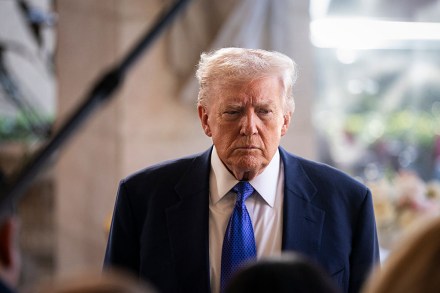
After two deadly shootings in confrontations between Donald Trump’s Immigration and Customs Enforcement agents and the activists obstructing them, Minneapolis was starting to remind people of Kent State. By “people” we mean progressive baby boomers, inclined to make the Vietnam War the measure of all things. For them, the massacre of four student protesters by a nervous detachment of Ohio national guardsmen in 1970 alerted parents to the war’s inhumanity. It started the groundswell against Richard Nixon that would force him to exit the war three years later – and the White House the year after that. The analogy is a bad one. Trump’s position differs a lot from Nixon’s. It’s stronger politically.
Did Robert McNamara know Vietnam was unwinnable?

From our US edition

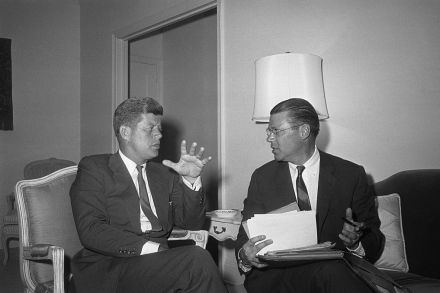
Former US defense secretary Robert McNamara was known in Washington as a relentless, humorless taskmaster or even “a computer on legs.” Then on February 9, 1962, a little over a year after taking office, McNamara made headlines when he danced the twist with Jackie Kennedy at a White House party. A few days later, the then-first lady sent by hand to McNamara a lighthearted Valentine collage she had made from the news coverage of their dance. After her husband’s assassination, their friendship deepened. Jackie’s opposition to the Vietnam War grew, as did her conviction that McNamara secretly opposed it.

mcnamara

The dog that haunts Russ Benzin

From our US edition

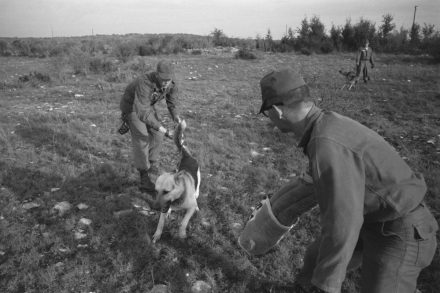
Batavia, New York Fifty-five years after his Vietnam-era military service ended, Russ Benzin remains haunted. Not, thank God, by memories of the state-sanctioned mass murder that is war, but by a seemingly intractable and feral military dog he came to love. I met Russ years ago in the third-base bleachers at Dwyer Stadium, where we whiled away many summers watching a set of trained canines – the Batavia Muckdogs of the (now defunct or, rather, exterminated) New York-Penn League. In the manner of ballpark friendships, ours developed over the years: from nodding acquaintance to grumbling exchanges (“why the hell didn’t the third-base coach send that guy?”) to friendship.

dog russ benzin

Are we losing the American dad?

From our US edition

Over the past weeks, a cadre of young men has spent their days marching across the quad, demanding an end to a justifiable, nay honorable, Israeli war on amoral terrorists. An overlapping segment has donned their rainbow buttons and profile-art propaganda to honor the sexual proclivities of their fellow man. They scream borrowed sentiments in all caps, tapped self-righteously into the iPhones their parents have surely furnished. They take over streets and public spaces, inconveniencing the world around them. Their posters, wearing whatever slogan trends on social media, may as well say, “Look at me, world… but let me put the right filter on first.” These are the men of their generation. These are the next generation of American fathers.

father dad

Viet Thanh Nguyen: A Man of Two Faces

43 min listen

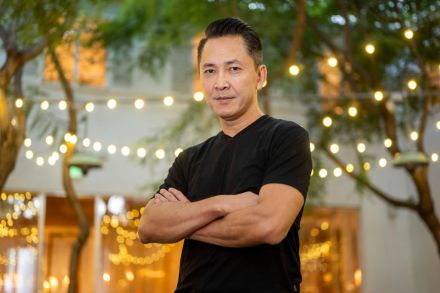
In this week's Book Club podcast my guest is the Pulitzer prize winning novelist Viet Thanh Nguyen, whose new book is the memoir A Man of Two Faces. He tells me about the value of trauma to literature, learning about his history through Hollywood, falling asleep in class... and the rotten manners of Oliver Stone.

Drew Gilpin Faust, a rebel with a cause

From our US edition

In 1957, when Drew Gilpin Faust was nine years old and growing up in the Shenandoah Valley, she learned from the car radio that in Virginia, black children were forbidden by law from going to school with white children. Disturbed by this egregious instance of Jim Crow segregation, she sent a letter to the president. “Please Mr. Eisenhower,” she wrote, “please try and have schools and other things accept colored people.” Young Drew’s sense of what was and wasn’t fair lay at the heart of her childhood rebelliousness, as well as her battle, as a young woman coming of age in the 1960s, against unjust social hierarchies.

faust

Autopsy of a failed war

From our US edition

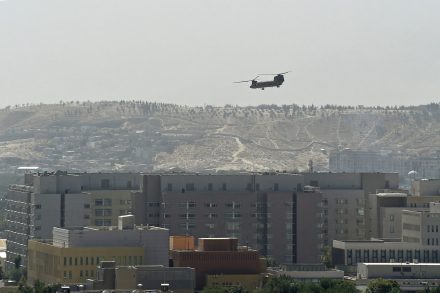
‘Your country just betrayed us.’ So Haji Sakhi, a resident of Kabul, recently remarked to a New York Times reporter. ‘Look at what they brought on us,’ the 68-year-old Afghan continued. ‘They lost the war and just fled the country.’ His they refers to us — the United States of America. Haji Sakhi’s unsparing judgment deserves sober consideration. Kabul is about to fall to the Taliban, faster than even the most gloomy experts predicted. Our nation’s ‘longest war’ is now ending in abject failure. How are Americans — at least those few of us who attend to such matters — to apportion responsibility for the outcome? Who or what is to blame for ‘losing’ Afghanistan? Was it ever ours to lose in the first place?

war

Not just a trolley dolly: the demanding life of an air hostess

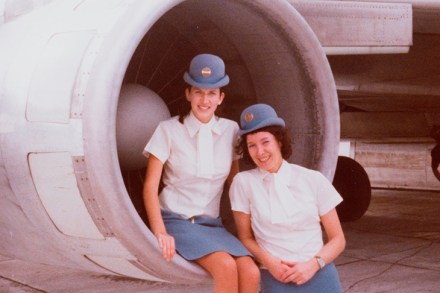
Come Fly the World is not the book I thought I was getting. The slightly (surely deliberately) pulpy cover — a glamazonian stewardess, her mirrored cat-eye sunglasses reflecting a runway — promised a Mad Men-era history of silver service and highballs at 30,000 feet, glamour, frocks and sexual shenanigans. Admittedly, deprived of the quixotic delights of a Ryanair snack pack shared with a fractious toddler on a delayed 5 a.m. flight to Alicante at the moment, I ignored the subtitle: ‘The Women of Pan Am at War and Peace.’ That sets the tone more accurately.

Out of Nam’s way

From our US edition

When I was a teenager whiling away the endless hours with VHS video rentals, Vietnam movies were pretty much the only game in town. I must have watched The Deerhunter a dozen times, and the scene in the rat-infested river cage well over a hundred times. Even now, I can’t watch it without being surprised at how De Niro manages to pull off that extraordinary escape stunt. My, how I covet those tiger-stripe Special Forces camouflage fatigues. The problem is, The Deerhunter has loads of boring non-war stuff either side of the good bits. That’s why I much prefer Platoon — controversial choice, Oliver Stone being a pinko — all of which takes place in-country.

nam

Messy but absolutely necessary: Da 5 Bloods reviewed

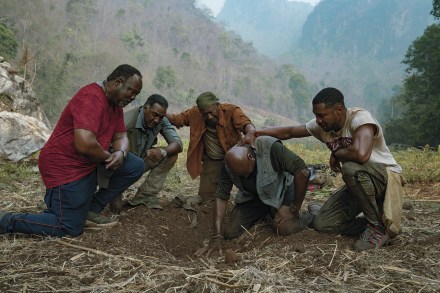
Spike Lee’s Da 5 Bloods is about four African-American vets who return to Vietnam to locate the body of their fallen squadron leader, retrieve the gold they buried (hopefully), reflect on fighting for a country that didn’t care about them — ‘we fought an immoral war for rights we didn’t have’ — and avoid descending into madness and despair (also, hopefully). Lee and his co-writers have said they were inspired by the classic films The Treasure of the Sierra Madre, Apocalypse Now and Bridge on the River Kwai and this does feel like several films in one. Oh, we’re in that film now, you may think to yourself. But even when Lee is all over the place he’s more interesting than many other filmmakers, and this is certainly of the moment.

How to end endless wars

From our US edition

This article is in The Spectator’s January 2020 US edition. Subscribe here. ‘Great nations do not fight endless wars,’ President Donald Trump declared in his 2019 State of the Union address. Simultaneously benign and radically subversive, this simple statement may well qualify as an important moment in the Trump era. Here was a notably dishonest president calling attention to a truth that the political establishment appears intent on ignoring. Any objective look at the record of US military actions since 9/11 would reach similar conclusions. The politicians ordaining our wars have been reckless and incompetent. The soldiers sent to fight are brave but badly misused. And the people in whose name these wars are waged are oblivious to what has occurred.

endless