Usa

What the US really thinks about Europe (and why it might help push reform)

From our UK edition

Whether it wants to or not, Washington has a role to play in the UK's EU debate. Eurosceptics and Europhiles constantly wrangle over what the US position is on Brexit, splitting hairs interpreting State Department officials' carefully worded remarks in order to claim victory for their side. The latest episode in this running saga sees the sceptics feeling vindicated by Washington's exasperation with the EU. Assistant Secretary of State (for European Affairs no less) Victoria Nuland appears to have landed herself in some rather hot water - both diplomatic and political. In a reportedly leaked phone call to the US ambassador to Ukraine, Nuland is heard unceremoniously blasting the EU and pushing the UN to take over in mediating the escalating crisis in Kiev.

Meritocracy doesn’t work. It’s in the Left’s interest to recognise this

From our UK edition

At the end of Coming Apart Charles Murray mentions, rather enigmatically, that our assumptions about society will soon be blown out of the water by new discoveries about human nature. I imagine he’s talking about genetic discoveries, in particular about the human brain. One of our current assumptions is meritocracy, and the idea that we can produce a fair society in which the most talented and energetic rise to the top. This is sometimes what people mean when they talk of the ‘American Dream’, a term that seems to be used more now that social mobility in that great country is fading and inequality rising. That is why The Son Also Rises, a study of social mobility by Gregory Clark, will surprise and also alarm some people.

America’s war on sleep

From our UK edition

 Fredericksburg, Virginia Ask an American to name the author of the line ‘Sleep, that knits up the ravelled sleeve of care’, and he will promptly reply ‘Shakespeare’. It’s pure guesswork but we always credit the Bard with anything that sounds like a literary quotation, so he inadvertently gets it right. But if you recite the rest of the passage and ask what it means you will draw a blank. The American mind will not spark until it hears ‘Macbeth hath murdered sleep’, which sets off a cascading display of audience-identification fireworks, and visions of a new American production in which Macbeth is renamed Big Thane and cast as the hero of the play. Americans are so afraid of sleep that we see nothing wrong in murdering it.

The Spectator on the assassination of JFK and how to remember the president

From our UK edition

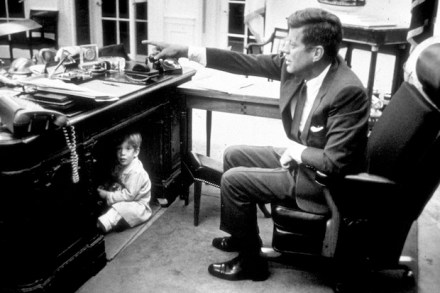
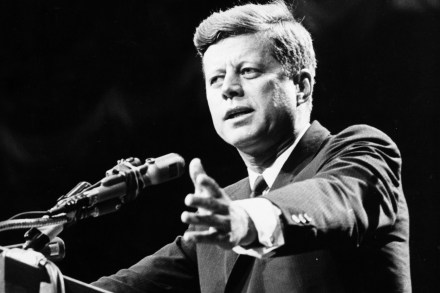
6 December 1963 …That we here highly resolve that the dead shall not have died in vain... Lincoln, a hundred years ago at Gettysburg. And President Johnson, in his noble speech to Congress, echoed the words in tribute to John Fitzgerald Kennedy. Earlier in November we in this country had been wondering how long Remembrance Sunday could remain. Wondering whether the poppy symbolism of the First World War meant very much to those who fought in the Second, the youngest of them now moving towards their forties. That President Kennedy should have become the spokesman of those who fought in war and yearned for peace was natural. But he became also a symbol of youth and hope to a whole generation that was too young to fight and that also yearned for peace.

American Smoke, by Iain Sinclair – review

From our UK edition

If you have read Iain Sinclair’s books you will know that he is a stylist with a love of language. You will also know that he has opinions to express and projects to promote or destroy: London’s Olympic park was one of his targets. He has lived in Hackney for much of the past 40 years and his previous book of that name was so provocative that Hackney council tried to ban him from giving a reading at a local library. He can be digressive to an extent that becomes challenging, as you would expect from a writer who long ago rejected the need for anything as banal as a narrative. And of the 41 earlier works of ‘documentary’, fiction and poetry listed on the flyleaf of this volume, many have been set in the UK, specifically London.

John F Kennedy was one of the nastiest presidents in American history

From our UK edition

The fiftieth anniversary of John F Kennedy's assassination is, of course, an occasion for a fresh outbreak of the virulent hagiography that has corrupted the memory of his actual record. The New York Times, a paper that should know better by now, published an article this week that repeated the old lie that somehow right-wing hysterics in Texas were the people really responsible for Kennedy's murder. A theory inconvenienced only by the fact Lee Harvey Oswald was a pro-Castro leftist. But never mind that. Better to reframe the assassination as a part of America's culture wars. And we know who the guilty men are in those, don't we? American history is a quilt of many myths but few are so exasperating, perhaps even so pernicious, as the myth of Camelot.

The painter of poetry

From our UK edition

The famous court case in which Ruskin accused Whistler of ‘flinging a pot of paint in the public’s face’ continues to rumble through the public response to art in this country. The man in the street, the man on the Clapham Omnibus and most of the men who drive black cabs all like their art to be recognisable. (Perhaps women are less hidebound.) Their definition of skill is the ability to paint with photographic fidelity, and they prefer art to tell a story. James Abbott McNeill Whistler (1834–1903), leading exponent of ‘art for art’s sake’, painted pure visual poetry rather than the hard facts of detailed realism. His paintings are supremely atmospheric: subtle and allusive, they suggest rather than state, evoke rather than describe.

Celia Walden’s diary: Have I finally caught my husband in an affair?

From our UK edition

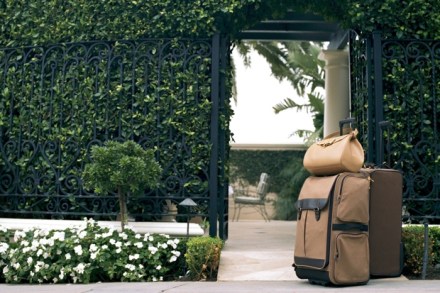
For a minute I just stood there with my back against the wall, staring at the credit card receipt. Then I slid down into a crouching position on the kitchen floor. ‘So this is it,’ I thought to myself. ‘This is really going to be how I find out.’ I’d found the receipt in the front pocket of one of my husband’s suitcases on Tuesday morning. It was for dinner for two at the Four Seasons Hotel in Santa Barbara — a place he’d told me he’d never been. He’d had the Merlot and the rib-eye; she’d had the cucumber martini and a Caesar salad. I’m guessing that she waived the dressing. I’m already working out the logistics by the time my husband gets home from work.

Ed’s love for Bill de Blasio runs deep

From our UK edition

The court of Ed has a new hero. Francois Hollande, who was credited with ‘turning the tide’ of austerity by taking a ‘different way forward’, has been usurped by Bill de Blasio, the Democrat Mayor-elect of New York, who Team Ed credit with a ‘different kind’ of politics. Ed’s greybeard Lord Wood has penned a gushing paean to de Blasio in today’s Telegraph. Wood applauds de Blasio’s ‘Disraelian theme: “One New York, Rising Together”’. Mr S can’t see all that much of Disraeli in de Blasio’s mundane slogan — the word ‘one’ seems to have assumed mythic proportions in the minds of Ed’s counsellors.

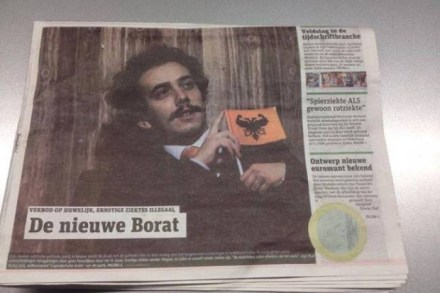
Visar Arifaj is Kosovo’s answer to Borat and Beppe Grillo – only funny

From our UK edition

Kosovo held regional elections over the weekend...and it rather looks as if the Serbs in the north of the country, in Mitrovica, stayed away in droves, notwithstanding the instructions from Belgrade that they should participate in the elections. The Serbian government stance is in turn dictated by Coffee Housers' favourite EU politician, Britain's own Cathy Ashton. She has intimated that Serbia's bid to join the EU will depend on its support for the elections, which in turn is linked to the implementation of her EU plan for a Serbia-Kosovo deal.

Convince me that Aaron Alexis, the mentally ill Washington shooter, should have been allowed to buy guns?

From our UK edition

Is it only the mentally ill who are allowed guns in the USA, or is it only the mentally ill ones that we hear about? Aaron Alexis, responsible for shooting dead 12 people within a military base in Washington DC, had a bunch of exciting guns with him, including an AR 15 semi-automatic rifle, which seems to be the weapon de jour for homicidal mentalists. Alexis also was in possession of voices in his head, apparently, and was paranoid and possibly schizophrenic to boot. Quite soon, in your newspapers, someone from a mental health charity will tell you that statistically speaking crossing the road is far more dangerous than a schizophrenic person and that they are normally charming, courteous and members of various pacifist and anti-poverty pressure groups. I’m sure that’s true.

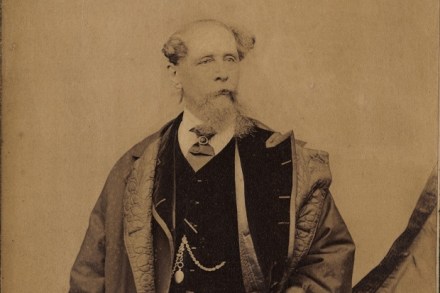
‘A banishment’ – Gloria Deak describes the visits of celebrated Victorians to America

From our UK edition

No, they decidedly did not like us — this is true at least for the majority of the nineteenth-century British travelers to the New World. They came out of a sense of wonder, somewhat akin to the reaction of Thomas More who declared in his sixteenth-century Utopia that ‘nowadays countries are always being discovered that were never in the old geography books.’ Over the next few centuries, perhaps no emerging country west of the Atlantic would excite as much curiosity as the vast expanse of territory that would become known as the United States. It soon became manifest that, in expanding her geographical borders, the United States had staked out a new social order.

Signifying Rappers, by David Foster Wallace – review

From our UK edition

Since his suicide, David Foster Wallace has made the transition from major writer to major industry. Hence this UK issue of a slender work of music history got up for a small US press in 1990 by a young Wallace and his college friend Mark Costello. The premise: it’s the early days of rap, and two overeducated white kids who like it produce a sampler considering What It’s All About. That it’s dated doesn’t matter much. That it’s juvenilia does. Its cleverness is that of a writer in possession of an immense talent but not yet remotely in control of it: a learner driver doing doughnuts in a powerful car. Almost every sentence is arch or overwrought.

Interview with a writer: Jhumpa Lahiri, author of Booker longlisted The Lowland

From our UK edition

The Lowland is the magnificent new novel by Jhumpa Lahiri, which has been longlisted for this year's Man Booker prize. It tells the story of two brothers, Subhash and Udayan, who come of age in Calcutta in the late 1960s. ‘Subhash was thirteen, older by fifteen months. But he had no sense of himself without Udayan. From his earliest memories, at every point, his brother was there,’ writes Lahiri. This was the beginning of a troubled period in West Bengal, as a radical communist movement known as the Naxalite cause swept through the region, inciting idealistic young men, in particular, to violence and acts of terror.

Does Syria mark the end of American world dominance?

From our UK edition

Will historians see the Syrian war as 'the start of the historic American retreat'? Syrian media seems to think so, and they’re not the only ones; there’s a big market in 'America is doomed' literature, although the fact that lots of people are out there buying books suggests it maybe isn’t yet. I’m sure that, within weeks of the British victory of 1759, some miserablist pamphleteer was saying that Britain won’t last the century. Yet just because doom-mongers have been wrong in the past, they could still be right now – I call it Weigel’s law. And America has big problems, on top of the fact that China will soon overtake it as the world’s largest economy.

The Interestings, by Meg Wolitzer – review

From our UK edition

Thick, sentimental and with a narrative bestriding four decades, Meg Wolitzer’s The Interestings feels above all like a Victorian novel, one which finds itself as comfortable in our time as it would have been 150 years ago. It’s an American story ruled by classic English themes. Fate, coincidence, class and envy are what bind — and in some cases disperse — the six central characters. It begins in the mid-1970s, in Spirit-in-the-Woods, a summer camp for young people interested in the performing and visual arts. Run by a couple of bohemians, the camp is supposed to be an approximation of utopia, or, as one character remarks, the opposite of Lord of the Flies.

Losing Your Mind – The Novel That Induces Insanity

From our UK edition

Nobody wants to go mad. We try to live healthy lives so that we won’t die slowly of lung cancer or quickly from a heart attack. But what we let ourselves worry about less – because there is so little we can do to protect against it – is living long enough to have our minds cruelly betray us, leaving us trapped in bodies that still work but in a world that no longer makes sense. In Lore Segal’s Half the Kingdom dementia has become an infectious disease amongst the elderly, with every patient who checks into a certain Manhattan clinic developing what “the hospital’s spokesperson, for lack of a diagnosis, is calling ‘copycat Alzheimer’s.’’ It’s a chilling concept, but unfortunately the contagion spreads beyond the page.

The week in books – a 19th century career woman, the courtesan of the camellias, Vasily Grossman and why France is turning into the USA

From our UK edition

The forecast is bad. Football is back. Gloom strikes. Cure the malaise by reading the book reviews in this week’s Spectator. Here's a selection: Richard Davenport-Hines introduces the celebrated American novelist and businesswoman Willa Cather to a British audience: ‘Cather was a pioneering career woman who in the late 1890s supported herself as a magazine editor and then as newseditor at the Pittsburgh Leader — an unprecedented post for a woman. She was later a successful managing director ofMcClure’s Magazine. With her gumption and vitality, she was a stalwart among women facing the ‘rough-and-tumble’ of competitive work.

Chris Christie lays down a marker for the 2016 US presidential election

From our UK edition

Ties between the Tories and the Republicans have rarely been weaker than they are today. The hiring of Jim Messina, Barack Obama’s campaign manager, is another sign that the Tories are more interested in the technical effectiveness of the Obama machine than they are in anything that the Republicans are producing. I suspect that the Republican most likely to revive Tory interest in the GOP, its idea and its electoral strategy, is Chris Christie, the governor of New Jersey. Christie is neither a southern Republican nor a Tea Party man. Rather, he’s a north eastern Republican with a more emollient attitude to government. Christie is up for re-election in New Jersey this autumn, a contest that he’s expected to win easily.

Glorious Misadventures, by Owen Mathews – review

From our UK edition

So: Russia’s imperial possessions on the Pacific North West of America. Remember those? No. Me neither. Something vague about the Russians flogging a bit of Alaska to the United States in the middle of the 19th century perhaps. But until I’d read this book I didn’t know that at one point Continental Russian America, not counting the Aleutian Islands, stretched 1,400 miles from its Eastern Tip (today called Cape Prince of Wales, by little Diomede Island in the Bering Strait) to its southwestern boundary near Sitka. If laid on top of the Continental United States, the territory — which closely corresponds to the modern state of Alaska — would stretch from California to Florida.