Usa

The Spectator at war: Stiff upper lip

From our UK edition

From The Spectator, 10 October 1914: American visitors have been surprised at the apparent absence of emotion in England at such a crisis as the present. They can see, they say, no signs that we realize the tremendous nature of the points at issue. The English people, they think, are not taking things seriously. Yet all the time there are signs, if they knew where to look for them, that we are moved as we have never been moved before. "If we let anybody, even our nearest and dearest, know what we feel, we may be unmanned. We must keep a tight hold, and especially on ourselves, or we may lose control." It is not indifference, but grim determination, which makes England so quiet.

In praise of Den-zel

From our UK edition

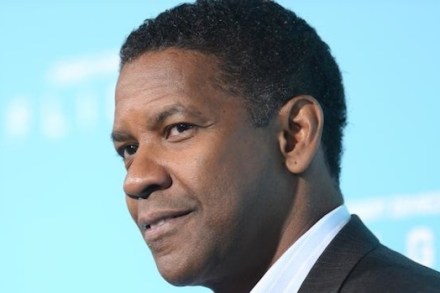
His Christian name is only two syllables, with the stress (following the African-American pronunciation) on the second. Two syllables that are a byword for urbane cool. A mellifluous shibboleth - the quintessence of all that is decent and upstanding. You see, I've grown up on Denzel’s films. From boyhood to manhood, from teenage recalcitrance to adult responsibility, he has accompanied me on my life’s journey like a Virgil to my wayfaring Dante. As father figure, older brother, man of probity and moral rectitude, Don Juan and all round Mister Nice Guy, he has been my consummate companion. Many men of a certain age will have derived much of their moral compass from Denzel’s protagonists.

The Spectator at war: A word to America

From our UK edition

From The Spectator, 12 September 1914: WE desire to address a word to the American people, a word which must be spoken, though we are fully aware that it will be liable to misunderstanding and misconstruction, and is certain to be distorted by those whose business it is to exercise pressure upon American opinion in the German interest. First, in order that we may as far as possible minimize such misrepresentation, let us say quite clearly what we do not ask the American people to do. We do not ask them to come to our assistance, either directly or indirectly. The notion of trying to involve them in our wars and our difficulties is one which we have never entertained for a single moment.

Spectator letters: India’s forgotten soldiers, James Delingpole’s happy father, and a defence of public relations

From our UK edition

Worth the candle Sir: I was saddened by Charles Moore’s account of the Westminster Abbey candlelit vigil marking the centenary of the start of the first world war (The Spectator’s Notes’, 9 August). At each of the four quarters of the Abbey (representing the four corners of the British Empire), he notes, there was one big candle and one dignitary assigned to snuff it out. He was ‘niggled’ to be in the South Transept, where ‘our big-candle snuffer was Lady Warsi’. Baroness Warsi had been chosen to represent the upwards of one million men from the Indian subcontinent who took part in the Great War. The Indian army was possibly the largest volunteer army in the world at the start of the war.

Julian Assange is a narcissist and a nut — and if America comes for him we should take his side

From our UK edition

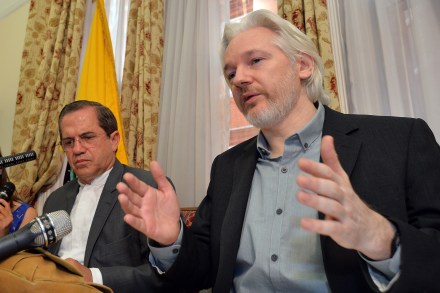
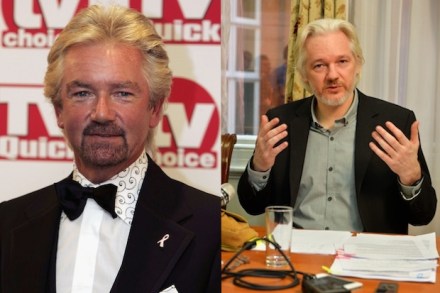
Poor Julian Assange. Call me a contrarian but I’m genuinely starting to feel sorry for the guy. He’s just made such a mess of his life, hasn’t he? And with such promise. Only a few short years ago he was the world’s most prominent anti-everything activist, with hair like an indie guitarist, feted and worshipped wherever you might find hot Scandinavian revolutionaries, smug old men who work for ‘theguardian’ and Jemima Khan. Now he’s a hermit with hair like Noel Edmonds who lives in a cupboard. It’s a hell of a fall. Most crushingly, he’s become a figure of fun. Perhaps you noticed him holding a press conference last week, to announce that he might soon leave the Ecuadorian embassy but probably wouldn’t, or something.

Julian Assange is a narcissist and a nut. But if America comes for him we should take his side

From our UK edition

This is an extract from Hugo Rifkind's column in this week's Spectator, out on Thursday Poor Julian Assange. Call me a contrarian but I’m genuinely starting to feel sorry for the guy. He’s just made such a mess of his life, hasn’t he? And with such promise. Only a few short years ago he was the world’s most prominent anti-everything activist, with hair like an indie guitarist, feted and worshipped wherever you might find hot Scandinavian revolutionaries, smug old men who work for ‘theguardian’ and Jemima Khan. Now he’s a hermit with hair like Noel Edmonds who lives in a cupboard. It’s a hell of a fall. Most crushingly, he’s become a figure of fun.

America’s racial tensions are on show for the world to see in Ferguson

From our UK edition

Washington, D.C. Week two of the crisis in Ferguson, Missouri and peace is nowhere in sight. The problems began on Saturday 9th August when Michael Brown, an 18-year-old African American, was shot by white police officer Darren Wilson. For a week few details about the incident were made public, creating a cauldron of rumours and fury. We now know that Wilson shot Brown six times, including twice in the head. The question of why Brown was shot remains unanswered. Maybe it was in relation to the theft of a box of cigars, or maybe not. The police force has obfuscated in its responses during press conferences, leaving the people of Ferguson confused. What caused a shooting in a small town (population 21,203) to erupt into successive evenings of violence?

Don’t listen to the hawks — the west should leave Iraq alone

From our UK edition

This is a preview from this week's Spectator, available tomorrow: Peering down from the Olympian heights of the New York Times, the columnist David Brooks writes that “We are now living in what we might as well admit is the Age of Iraq.”  There, in the Land of the Two Rivers,  he continues, a succession of American presidents has confronted the “core problem” of our era:  “the interaction between failing secular governance and radical Islam.

The Spectator at war: An American joins the fight

From our UK edition

A letter from the 15 August 1914 Spectator: SIR,- As an American, I venture to point out that England’s decision to live up to her implied promises to France, as put forward for so many years, nearly concerns the self-respect of one hundred million Americans and British Colonials, as well as Englishmen. For no English-speaking person could any longer cite the quality of his race, or show his face in Europe, had England taken the course so vigorously urged by her puling intellectuals and certain of her newspapers.

Obama moves against ISIS. This time, it’s a war worth fighting

From our UK edition

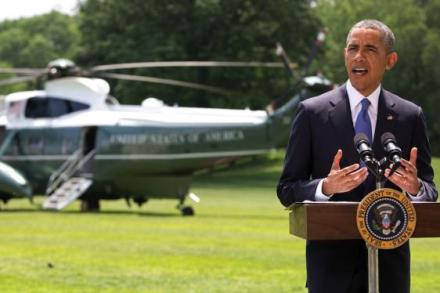
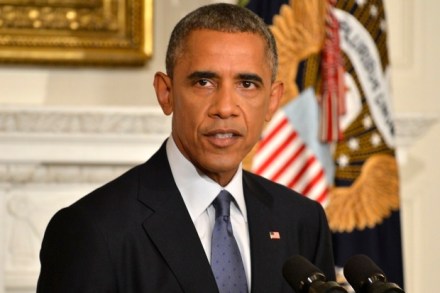
Back to Iraq, then. President Obama's announcement last night that America would intervene militarily in defence of the Kurds is by any standards a stunning development. The President, whom hawks loathe for being a ditherer and a peacenik, has turned into action man, albeit still rather a cautious action man.

A world crisis with no world leader

From our UK edition

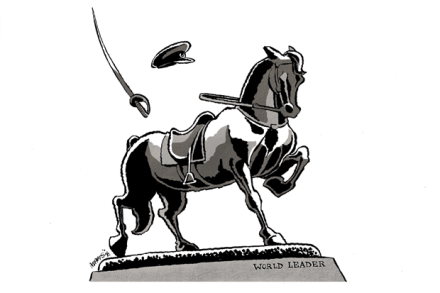
There was a time when having almost two hundred of your citizens blown out of the sky was a big deal for a western democracy. But when Malaysian Airlines flight MH17 was shot down over Ukraine last month, killing 193 Dutch citizens and a couple of dozen other Europeans, the response was conspicuous public mourning, some mild objections, a soupçon more sanctions, but otherwise nothing. Everyone knew which government might have handed powerful surface-to-air missiles to eastern Ukraine’s rebels. But nobody seemed willing or able to do anything much about it. There was also a time when whole swaths of the map being overrun by Islamic groups who make al-Qa’eda look like Quakers would have caused concern to the civilised world.

‘Tolerance’ is the last thing gays need

From our UK edition

There I was flexing my defensive muscles, waiting for the tsunami of hatred to come my way once my new book hit the shelves, when I discovered that not only did I have some great reviews for Straight Expectations (which rails against the complacency and conservatism of today’s gay rights movement), but the book has an American sister. Perhaps the timid capitulation to straight folk is about to turn, both here and in the US, the birthplace - and now perhaps the graveyard - of the gay liberation movement? The Tolerance Trap, by US academic and political activist Suzanna Walters, has ‘disappointment’ running right the way through it. But Walters does not complain, rather she offers a way forward.

Why is The Daily Dot, smooth and sassy website of ‘the internet community’, publishing racist nonsense?

From our UK edition

The Daily Dot, founded less than two years ago, is best read while sipping the flattest of flat white coffees. I love it, even though it's not pitched at me: most of its 11 million monthly unique visitors are 'millennials'. No UK site integrates tech news into the broader culture so expertly. This is what you can find on the Daily Dot home page right now: 'A guide to Silicon Valley's top political donors'; 'How the paleo diet developed into a cult of nonsense'; 'Anonymous goes to war with Israel'; 'Jennifer Aniston and Adam Sandler freaked out by giant reporter'. Those headlines were brewed by some of the world's best digital baristas.

Ed Miliband comes to Washington — and nobody here notices

From our UK edition

Washington, D.C. Ed Miliband met with Barack Obama yesterday, haven't you heard? The British press covered the visit with their usual gusto but the visit barely registered on the radar of American outlets. Out of the country’s most influential papers, neither the New York Times nor the Wall Street Journal wrote a single word about the potential next prime minister of the United Kingdom meeting the president. Miliband wasn't covered on any of the blogs or TV stations either. Only one US paper said anything about the visit.

Video – The leader of ISIS makes his first public appearance

From our UK edition

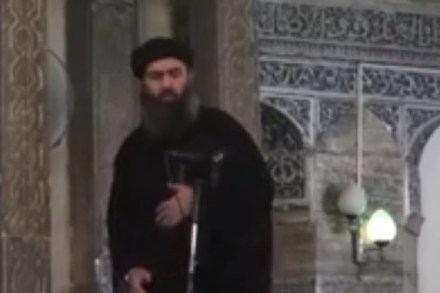
A video has just emerged of the new 'Caliph', otherwise known as the leader of the Islamic State (aka ISIS). Abu Bakr al-Baghdadi is shown leading Friday prayers earlier this week at the Great Mosque in Mosul. For all those people who think that American power is the problem in the world, or that everything would be better if only America kept out of things, this is a nice taste of the future. Here's what the world looks like without America.

From jailbird to social butterfly – the return of Conrad Black

From our UK edition

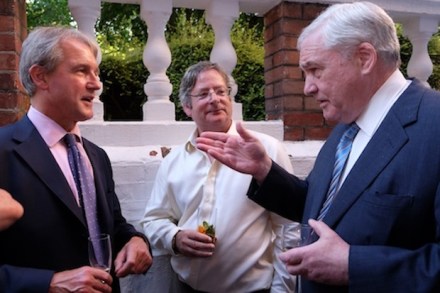
The former proprietor of this magazine, Conrad Black, is in London at the moment with his gorgeous wife Barbara, and I’ve got very bad news for those of his enemies who predicted that he’d be a social pariah when he got out of jail. At lunches, parties and dinners I’ve attended this week in his honour, he and Barbara have been feted by the leader of one of Britain’s largest political parties, a household-name supermodel, a former foreign policy adviser to a revered prime minister, members of the royal family, a senior industrialist, a former Commonwealth prime minister, a former British foreign secretary, several House of Lords colleagues of his and Britain’s most respected publisher, and that’s even before he arrives at the Speccie party this week.

Will America take up the job of whack-a-mole in the Middle East?

From our UK edition

President Obama said recently that the United States cannot simply play ‘whack-a-mole’ in the Middle East. The only appropriate response to which is to say, ‘Yes you can.’ We can all understand why the President might be feeling a little tired over all this. For nearly six gruelling years he has been calling the troops home and declaring that the war is over. Making that speech repeatedly, with the facts so continuously contradicting it, might get to anyone. The successful raid on the bin Laden compound in Pakistan was meant to have put an end to al-Qaeda. Iraq was meant to have been solved when President Obama ordered US troops out of the country. And that iteration of the ‘a decade of war is over’ speech was one of his best.

Tony Abbott, the Prime ‘Nerd’ of Australia

From our UK edition

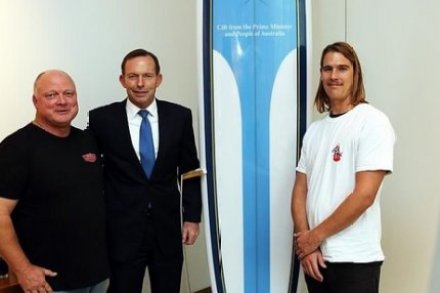
There are two types of Australian male: the ‘julios’, a modern import who likes soft drinks and hair product, and the ‘nerds’, the traditional breed who like beer and Sheilas. Tony Abbott is a nerd. On his recent visit to America, Abbott could not have done less to counter national stereotypes. The customised surfboard he gave to ‘the dude-in-chief’, President Obama, could only have been bettered in the nerds’ catalogue by a crate of 4X and a cork hat. Mr S is looking forward to the White House releasing pictures of the board in action.

Elliot Rodger and the Hollywood ending

From our UK edition

I’ve found myself strangely drawn to the videos made by the 22-year-old assassin Elliot Rodger just before he went on his killing spree in his university town of Santa Barbara, California, last week. In a series of stabbings and drive-by shootings Rodger killed seven people, including finally himself, and wounded 13 more. The son of a film director, he had spent the first few years of his life in England, moving to America at the age of four. Rodger had been preparing for his murderous spree and made a series of videos, many of which are accessible on the internet as I write. The last was recorded by himself the day before his attack. He sits parked in his car, arranged so that the sun, low in the sky, spotlights his face in an orange glow.

A truth too tender for memoir

From our UK edition

It has been 14 years since Akhil Sharma published his first, widely acclaimed novel, An Obedient Father. Though its subject matter is very different, Family Life more than fulfils the expectations raised by that grim but compelling story of financial, political and moral corruption in India. Growing up in Delhi in the 1970s, the eight-year-old Ajay Mishra believed that his father ‘had been assigned to us by the government. This was because he appeared to serve no purpose.’ Everything changes when Mr Mishra leaves for America in 1978, followed a year later by Ajay, his 12-year-old brother Birju, and their mother.