Usa

The California spree killer: why is that loser’s face all over the media?

From our UK edition

Last Saturday a young man in southern California murdered six people. I’m not going to name him or link to his picture because you would have probably seen it anyway, and he does not deserve to be remembered except by his family. He achieved nothing. One of the depressing inevitabilities of such atrocities is the eagerness with which people in the media jump to some sort of political explanation; since many of these killers are men hateful of women or other people generally, and are obsessed with guns, some commentators put this in a wider context of political conflict where scant evidence actually exists.

P.J. O’Rourke interview: ‘Telling jokes and lying about politicians – what’s the difference?’

From our UK edition

P.J. O'Rourke’s chickens are giving him trouble. ‘Two of them aren’t laying eggs right now,' he explains. But he doesn’t know which ones. ‘I’m not sure who’s the guilty party.' We’re driving to the field where his trees are harvested for timber and where he and his father-in-law have built a one-hole golf course. ‘How to Drive Fast on Drugs While Getting Your Wing-Wang Squeezed and Not Spill Your Drink’ this isn’t.

The Abu Hamza case shows that Britain has outsourced terrorism trials

From our UK edition

It must seem awfully peculiar to Americans that it should take their courts to convict Abu Hamza on terrorism charges, including a kidnapping he orchestrated in Yemen which resulted in the deaths of three British citizens. Both the Home Secretary and Prime Minister have welcomed yesterday’s verdict. Yet, to listen to them is to forget that it has taken more than 15 years and a foreign court to hold Abu Hamza to account for these crimes, circumstances which should be the cause of outrage – not celebration. This merriment is indicative of a discrete policy now being pursued by the Coalition which effectively outsources terrorism trials. In some cases there are legitimate reasons to extradite suspects, such as Abu Qatada who has charges to answer in Jordan.

Why I’m sending my new comic to Washington DC

From our UK edition

When I was eight years old I had the Stars and Stripes hanging up in my bedroom. This isn’t especially strange, of course, except that I wasn’t American and actually grew up 5,000 miles away in a small industrial town in Scotland. Having the flag of a foreign nation draped over your bed is slightly eccentric, like a kid in China having a life-size poster of Greek President Karolos Papoulias on the wall. But such was the power of the American brand that I had to be a part of it. America was where Superman and Batman lived, and as soon as I was old enough I planned to go and work there. Flash-forward three decades and I do.

America’s Left is just as ‘eccentric’ as its Right

From our UK edition

Rory Sutherland writes in this week’s magazine that the Mozilla/Brendan Eich affair has finally put him off his dream of moving to the United States, quoting Andrew Sullivan that ‘The whole episode disgusts me – as it should disgust anyone interested in a tolerant and diverse society.’ The issue of gay marriage has changed politics in the English-speaking world in a way that perhaps people didn’t expect – breaking the liberal-Left’s final link with the ideal of John Locke that permitting something did not mean approving of it. This notion has been coming under pressure for some years, especially with discrimination laws, but SSM has snapped it. (Brendan O’Neill has written about this extensively for Spiked and Telegraph blogs.

Why I no longer want to live in America

From our UK edition

A few years ago I would have quite liked to live in America. I’m not sure now. For one thing, most of the things perfected by Americans (convenience, entertainment, technology, a very small bottle of Tabasco to accompany your breakfast) very soon make their way over here. On the other hand, the things Europeans do well (cathedrals, four weeks’ annual holiday, more than two varieties of cheese, general all-round classiness) don’t travel in the other direction. In fact, once the right-hand-drive version of the Ford Mustang reaches the UK in 2015, it is hard to think of any remaining reason to emigrate at all. Besides, the political scene over there is just too absurd. The US has always been oddly polarised in lots of ways, not only politics.

How to shop for the apocalypse

From our UK edition

 New York City An architect friend who usually designs Manhattan skyscrapers was recently asked to pitch for a far more interesting project. The client, a senior partner at Goldman Sachs, wanted him to design a family house in upstate New York with a difference. It wouldn’t just be completely ‘off the grid’, with its own power and water supplies, but — and there isn’t yet an architectural term for this — it would be post-apocalypse. The conventional house would be mirrored below ground with pretty much identical living quarters that would be completely secure and so self-contained that there would be facilities to hydroponically grow plants and vegetables without soil.

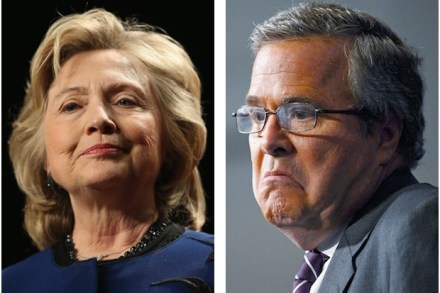
Clinton vs Bush — again

From our UK edition

[audioplayer src="http://traffic.libsyn.com/spectator/TheViewFrom22_24_April_2014_v4.mp3" title="John Rick MacArthur and Freddy Gray discuss Clinton vs Bush" startat=929] Listen [/audioplayer]America is much less threatened by right-wing extremists than by the oligarchic rule of the two major political parties. The mainstream right, however, is wedded to the absurd notion that the Democrats are a party of the ‘left’ that is in authentic ideological competition with ‘conservative’ Republicans. Meanwhile, the orthodox left clings to the equally absurd belief that Barack Obama really means to reform the United States and redeem it from the sins of slavery, genocide against the Native Americans, and God knows what other crimes against humankind and nature.

The Mozilla controversy suggests that the sexual revolution is getting ugly

From our UK edition

If you’re reading this on Firefox, you can rest assured that your custom is not going towards any hateful, disgusting, evil people who might disagree with you on something. Not now that Mozilla boss Brendan Eich has been forced to quit for supporting Proposition 8, the Californian bill opposing gay marriage. According to the BBC: ‘Mozilla's executive chairwoman Mitchell Baker announced the decision in a blog post. "Mozilla prides itself on being held to a different standard and, this past week, we didn't live up to it," she wrote. "We know why people are hurt and angry, and they are right: it's because we haven't stayed true to ourselves. "We didn't act like you'd expect Mozilla to act. We didn't move fast enough to engage with people once the controversy started.

The minimum wage is broken – here’s how to fix it

From our UK edition

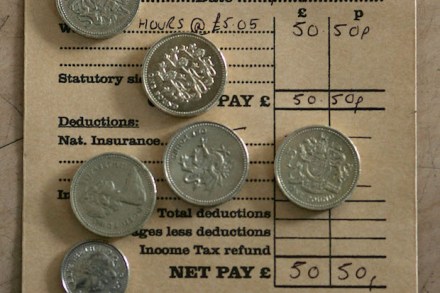
While welcoming George Osborne’s emphasis this week on raising employment, I have some caveats about his target – to have the highest employment rate in the G7. This isn’t hugely challenging. Those in employment currently amount to 71.2 per cent of the UK population of working age, well ahead of Italy (55.5 per cent), France (64.1 per cent) and even the USA (67.4 per cent). Germany, at 73.5 per cent, is the current table-topper and the one Mr Osborne aims to overtake. Aggregates like this, though, are dodgy to interpret and are affected by differences in age cohort size and other factors.

Silk vs The Good Wife

From our UK edition

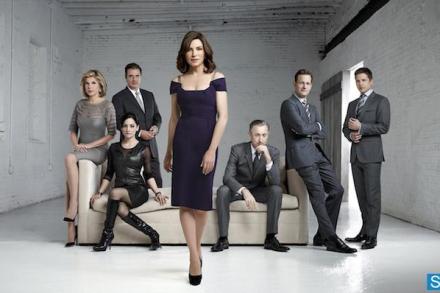
American TV drama trumps British TV drama – it’s a well-worn but unfair cliché. It’s not that British drama is necessarily bad – some of it is very good – it’s that American drama is often better. Compare and contrast Silk (BBC One) and The Good Wife (CBS/More4). Neither show is a blockbuster. Both are law/political office dramas: a staple of TV networks down the years, from the dog days of Judge John Deed all the way back to the glories of Rumpole. Viewers love the format of these wig and gown shows: a question is raised and resolved in every episode, while a wider, character-driven drama rumbles on for years. Each generation adds its own factors to the basic equation: Silk and The Good Wife are concerned primarily with female lawyers.

Vladimir Putin’s right about one thing: the West doesn’t observe its own rules

From our UK edition

Congratulations to Stephen Glover for writing perhaps the only sensible piece about the Crimean crisis. There is a certain force, too, to Putin’s charge that the West believes itself a chosen people to whom the normal moral rules do not apply. We have meddled, frequently with the help of military might, to spread our own creed of liberal evangelism across the world, regardless or not as to whether the people to whose aid we have come actually share our aspirations. It has been a staggeringly unsuccessful policy. Look at Iraq. Look at Syria. Look at Afghanistan. I wonder too about the way the media reports these crusades.

Should we make Magna Carta Day our national holiday?

From our UK edition

I know there are probably more important things in the Budget, but I for one (and probably, literally, the only one) am won over by the government’s decision to spend £1 million to celebrate the Magna Carta anniversary next year. As I’ve written before, there’s a strong case for making Magna Carta day, June 15, our national holiday: the other choice, St George’s Day, is too close to Easter and May Day and in any case too meaningless; all we get on April 23 are a load of tortured essays in the press about what Englishness means and its invented traditions, which has sort of become a tradition in itself. Magna Carta does mean something, however.

Lost Kerouac that should have stayed lost

From our UK edition

In 1944, when he was 22, Jack Kerouac lost a manuscript — in a taxi, as he thought, but probably in Allen Ginsberg’s room at Columbia University — and it stayed lost until 2002, when it was auctioned at Sotheby’s. Now it has been published, all 70 pages of it, together with some youthful sketches and some letters between Kerouac and his father, in an edition by a professor at Lowell, Massachusetts, Kerouac’s home town. The Haunted Life is billed as a novella, but turns out to be the first part — ‘Home’ — of a projected novel, to be completed by ‘War’ and ‘Change’. Set in 1941, it is a coming-of-age story.

Our own folly may yet lead us to a second dishonourable Yalta

From our UK edition

'He was back after less than two years’ pilgrimage in a Holy Land of illusion in the old ambiguous world, where priests were spies and gallant friends proved traitors and his country was led blundering into dishonour.' Those words are taken from Officers and Gentlemen, the second volume in Evelyn Waugh’s Sword of Honour, his trilogy about the second world war. The words describe the disillusion of the protagonist, Guy Crouchback, as Britain sides with Soviet Russia to defeat Hitler: an alliance with an atheist tyranny to defeat an atheist tyranny, an alliance that led to the betrayal – perhaps necessary – of Eastern Europe at Yalta.

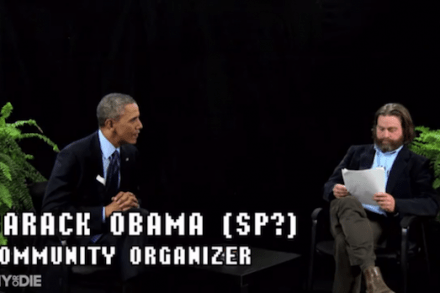
Isn’t Obama’s Two Ferns interview just a bit crap?

From our UK edition

Have you seen Barack Obama's appearance on the satirical interview show Between Two Ferns? What did you think? According to some pundits, it is amazingly funny. Obama is the 'best Between Two Ferns guest ever', says Oliver Franklin at GQ. I must be missing something, because I found it painful and somewhat depressing. There a couple of quite good moments, granted - such as when Obama is busy plugging Affordable Healthcare and the host, Zach Galifianakis, says 'Is this what they mean by drones?' - but the rest is just a bit crap. It is weirdly off, too. At times Obama, trying to be dead pan, just seems to miss the point, and in some moments it looks as if he is having a sense of humour failure. I do get that the key to Two Ferns is that it is awkward.

Europe’s ‘new world order’ is letting Vladimir Putin run riot

From our UK edition

[audioplayer src="http://traffic.libsyn.com/spectator/Untitled_2_AAC_audio.mp3" title="John O'Sullivan discusses why we shouldn't be so afraid of Putin" startat=1088] Listen [/audioplayer]If Vladimir Putin’s invasion and occupation of the Crimea brings to an end the Pax Americana and the post-Cold War world that began in 1989, what new European, or even global, order is replacing them? That question may seem topical in the light of Russia’s seemingly smooth overriding in Crimea of the diplomatic treaties and legal rules that outlaw aggression, occupation and annexation. In fact, it is six years behind the times. To understand the situation in the Ukraine, we need to go back to the Nato summit in Bucharest, in April 2008.

Vladimir Putin is a reactionary autocrat, not a conservative

From our UK edition

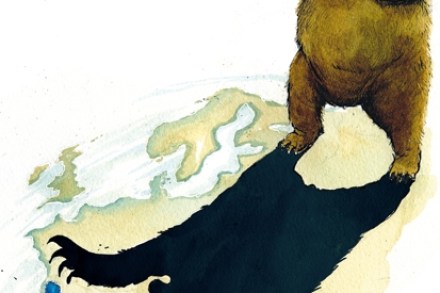
Apparently the new Muppets film features Russians as the baddies, a sign of the times as we increasingly draw into a new ideological cold war with the old enemy. Or perhaps a hot, ethnic war, if events in Crimea get any worse, events which raise questions about western foreign policy. Why are we getting involved in this country ‘steeped in blood and carpeted with unquiet graves’, as Peter Hitchens calls it? Another paleocon type, the Telegraph’s semi-deprogrammed former leftist Tim Stanley, says that by provoking Russia into a direct confrontation we look foolish and weak. The ideological cold war was the subject of last week’s cover story, in which Owen Matthews argued that, as in tsarist days, Russia is setting itself up as the leader of reaction.

You, too, can be a shale profiteer

From our UK edition

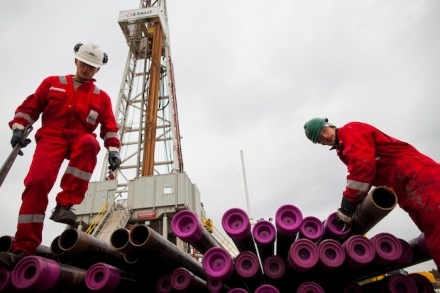
It might not be something you want to mention in the Half Moon Inn in Balcombe, or around any of the other communities where people are getting anxious about shale gas explorers ripping up the countryside with their drills and pipelines. But if shale is the tremendous source of wealth that David Cameron insists it can be for this country, how do you go about investing it? After all, if there are fortunes to be made, there is no reason not to claim your share. There is no longer any question that shale gas is a major industry. In the US, where it is most advanced, it is already worth $76 billion annually, according to its trade association, and by the end of next year that will have grown to $118 billion.

Shirley Temple, 1928 – 2014, remembered in The Spectator

From our UK edition

Shirley Temple has died in California at the age of 85. She was known as America’s little darling after she appeared in her first film at the age of three. Later in life she moved into politics, running for Congress and joining the diplomatic corps. Henry Kissinger, she said, was surprised she knew where Ghana was, but she became ambassador to Ghana and later to Czechoslovakia.