Usa

The Saudis are playing a clever game with oil supplies. Here’s how to understand it

From our UK edition

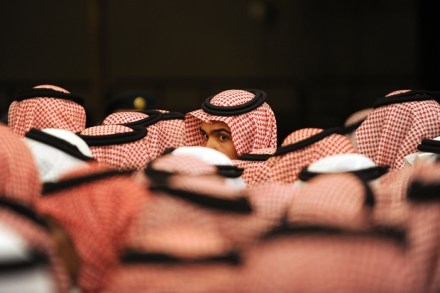
As oil prices continue to plummet, the rather sterile debate over Saudi intentions drags on. Some believe the Saudis are locked into a secret conspiracy with Washington to stiff Russia and Iran. Others prefer to take the Saudi oil minister at his word and believe that it’s all about market share. The truth is that the debate is founded on a false dichotomy: the Saudis are doing both things at once, and several other things as well. The best way to understand this is to try to step into the shoes (or sandals, rather) of a senior member of the al-Saud family. Your neighbourhood is convulsed in war and revolution, and you have seen apparently stable regimes in Tunisia and Egypt swept away, while your own vassal state of Bahrain is on the verge of civil war.

Touring America in Steinbeck’s footsteps

From our UK edition

In 1960 John Steinbeck set off with his poodle Charley to drive around the United States in a truck equipped with a bed, a desk, a stove and a fridge. To renew his acquaintance with that ‘monster of a land’, he planned to cross the northern states from the east coast to the west, then drive down the Pacific and across the southern states. He was 58, and recovering from a mild stroke. Having recently abandoned his attempt to write an American Don Quixote, he called his project ‘Operation Windmills’, cast Charley as his Sancho Panza, and named his truck Rocinante. Travels with Charley was published in 1962. It was a great success, and his last major work. Four months later he won the Nobel Prize.

Did Adnan Syed do it?

From our UK edition

I doubt most people would have been familiar with the relatively unremarkable murder of a Baltimore high school student by her ex-boyfriend in 1999. Until Serial started a couple of months ago. Similarly, you might never have heard of Richard Hickock, Perry Smith or some murder in Kansas. Until Truman Capote. Just as he popularised true crime by making it as exciting as fiction, Sarah Koenig has done the genre a favour by making it a bit more listener-friendly. Now one and a half million are tuning in and Hae Min Lee and Adnan Syed are on BBC Radio 4 Extra. The story goes as follows. While Koenig was a journalist on the Baltimore Sun, she investigated the incompetence of a certain prosecutor Cristina Gutierrez.

Alexander McCall Smith’s notebook: America vs my diet

From our UK edition

The trouble with going on an American book tour is that I know it’s going to play havoc with my diet. People on diets can very quickly become diet bores, but I am unrepentant: I know the calorie content of most things and, for instance, how long it takes to burn off a croissant. Not that I eat croissants any more, of course. (We dieters can be tremendously smug.) America is a challenge, though, because all their food is injected with corn syrup. In Denver I was once served an omelette that had been dusted, in cold sobriety, with icing sugar. But it’s not just icing sugar that is a problem: the intrusive strawberry is a difficult issue too. Any breakfast, it seems, must include a strawberry or two, placed alongside the eggs.

Boris’s dilemma: relinquish his US passport or pay American tax

From our UK edition

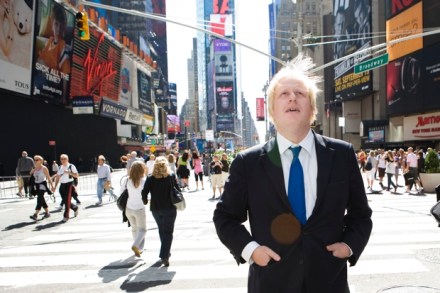
When in doubt, blame wealthy foreigners for any political problems. That goes for pols in the US and the UK alike, and even the dual-national Mayor of London is not immune. Boris Johnson opposes blanket non-dom and mansion taxes, but wants councils to ‘whack up’ local levies on empty homes and advocates closing stamp-duty loopholes exploited by ‘mainly but not exclusively non-doms'.  Through these, he explained in one Telegraph column, and with ‘the agency of some clever lawyers, they avoid a tax that is paid by virtually everyone else’.

How America’s right wing is becoming a lot more like Britain’s

From our UK edition

   Washington DC [audioplayer src="http://traffic.libsyn.com/spectator/TheViewFrom22_20_Nov_2014_v4.mp3" title="Michael Lind and Sebastian Payne discuss the growing similarities of the Britain and American right" startat=1350] Listen [/audioplayer]Amid all the commentary about the Republican party’s triumph in America’s midterm elections, a remarkable fact was ignored: in style and substance, the American right is rapidly becoming a lot more like Britain’s. And that might be the key to its success. In the last generation, American right-wingers have stood proudly apart from their counterparts in Europe, Britain, Canada and Australia. They were more religious, and more supportive of mass immigration. But that is changing.

There is no such thing as ‘immigrants’ – only Poles, Yanks, Somalis…

From our UK edition

There was much glee about yesterday’s publication of a report into the economic impact of immigration, which concluded eastern Europeans had provided a net benefit of £4.4 billion to the UK economy. There was far less mention of the fact that immigrants from outside Europe in the same period cost the taxpayers £118 billion. But as Christopher Caldwell observed in Reflections on the Revolution in Europe, the immigration debate is not about economics, for ‘the social, spiritual, and political effects of immigration are huge and enduring, while the economic effects are puny and transitory. If, like certain Europeans, you are infuriated by polyglot markets and street signs written in Polish, Urdu, and Arabic, sacrificing 0.

Kurds can pull off miracles, but they need help against Isis

From our UK edition

The Kurds can pull off minor miracles when they need to. They require active support, however, now they are at the centre of the global struggle against the self-styled Islamic caliphate, Isis. Recent history shows the Kurdish potential. Eight years ago in Iraqi Kurdistan, there was much talk about oil and gas reserves. Some thought it was all hot air; their oil sector is now huge and has driven another once impossible dream - rapprochement with Turkey, which needs vast energy supplies to fuel its growing economy. Energy could even fuel Kurdish independence. However, a longer history hangs over the Kurds. Nearly a century ago, Kurdish hopes of a single nation-state were snuffed out. Some say they weren't ready, others say they were betrayed.

The real winner at the US mid-terms? Hillary Clinton

From our UK edition

Washington, DC The American election cycle is beginning to resemble the 1993 comedy Groundhog Day. In the film, you may recall, Bill Murray plays an egomaniacal Pittsburgh weatherman named Phil Connors who discovers that he’s stuck in a time loop in which the same day repeats itself over and over. He goes bonkers, driving a truck over a cliff in a suicide attempt, only to wake up again the next morning. Substitute the American public for Connors and you have a sense of the prevailing political atmosphere in the US. Ever since 9/11 shattered its illusion of omnipotence, the United States has been unable to escape its troubles. Instead, it has been subjected to a series of psychic blows, large and small.

Obama was the Republicans’ greatest weapon last night. What will they do without him?

From our UK edition

Anchorage, Alaska You don’t mean a thing if your state’s not a swing, goes the saying in American elections. But if it is a swing, then a whirlwind of money, consultants and campaigners will be sent your way. Alaska has been invaded these last few weeks; armies of activists sent to knock on doors in what looks to be a failed attempt to keep control of the senate. Across the nation, victory went to the Republicans, but with a hitch: their victory depended on Barack Obama. The president’s approval ratings are now down to those last seen by George W Bush. The Republicans won by denouncing Obama, and turning the mid-term elections into a referendum on his presidency.

Lame duck unleashed – Bulgarian in London asks ‘what next’ on US immigration

From our UK edition

London Careening through the city in a minicab last night, en route to a pub in Bloomsbury that had promised to screen US election results, the mustachioed driver confirmed my accent and inquired: 'So, what will happen after the elections?' I issued the run-down: left-ish Democrats lose control of the Senate to right-ish Republicans, who also expand their House majority. The Republican gains won't be enough to have too much fun (for instance, re-reforming health care) without meeting the President's veto pen; but should prove enough to justify more executive action from the White House, bypassing Congress in areas such as immigration and border control, if Mr Obama's pre-election promises can be believed.

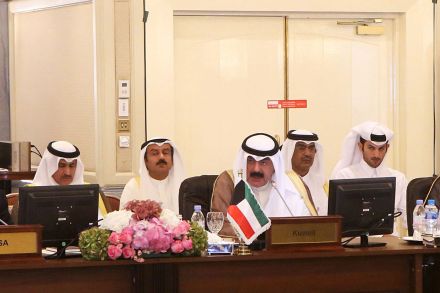
The US won’t beat Isis alone; Qatar and other Gulf allies must help in Iraq

From our UK edition

Revelations keep pouring in about the uneasy relationship between Western aid givers and ISIS operators: from bribes given by humanitarian convoys to secure access in war-torn Syria, to food and medical equipment appropriated by Islamists and used to provide basic services to the population under its control. Moreover, USAID personnel working in the area have to be vetted by ISIS: “There is always at least one ISIS person on the payroll; they force people on us” one aid worker told the Daily Beast earlier this month. This is just the start. As the Islamic State makes inroads into Iraqi and Syrian territory, it’s becoming increasingly clear that American promises to 'degrade, and ultimately destroy' the jihadists ring ever more hollow.

The Spectator at war: American sympathy

From our UK edition

From The Spectator, 31 October 1914: We do not ask for help of any material kind from the United States; we recognize that a strict neutrality is not only her proper course, but represents her true interests. All we desire is the sympathy of comprehension, the sympathy of a clear understanding of the principles on which we have acted. When a man is in a great crisis, whether of sorrow, adversity, or illness, he craves for the sympathy of persons of his own flesh and blood. Their money and their energies may be of no use at all to him, but he does value their thoughtfulness and their regard. We feel somewhat in this relation with the United States, and that the sympathy we prize is being amply offered to us by Americans we must gratefully acknowledge.

Meet the two Americans set to steer the next general election

From our UK edition

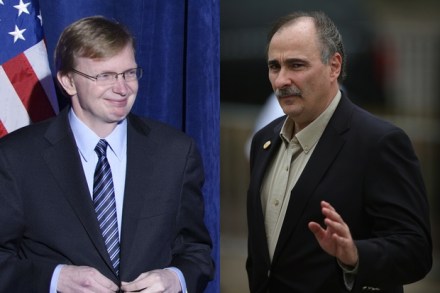
Washington, D.C. David Cameron, Ed Miliband and Nick Clegg - the obvious targets to blame for the disillusionment engulfing British politics. But let's not forget the role of the Americans. Thanks to the main Westminster parties’ increasing use of technologies and personalities from Washington, the traditional British forms of electioneering have been gradually abandoned for slick, expensive techniques that have inadvertently allowed more traditional campaigners, the SNP and Ukip for example, to take the establishment by surprise. Despite this, 2015 is set to be the most American election to date.

Farewell to Afghanistan (for now)

From our UK edition

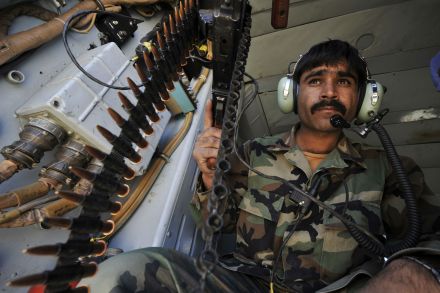
Britain has ended combat operations in Afghanistan. The war did topple the Taleban, but it hasn’t got rid of them. It has improved some things in Afghanistan – better roads, better education, better newspapers – but the country is still corrupt, bankrupt and dangerous. When Britain and America decided to go into Afghanistan in 2001, The Spectator ran an editorial entitled Why We Must Win. This is not a war against Islam, but against terrorists who espouse a virulent strain of that religion, a fundamentalism that most moderate Arabs themselves regard as a menace. This is not even a war against Afghanistan, but an attempt to topple a vile regime. The Taleban deserve to be expelled simply by virtue of their inhuman behaviour towards women and dissenters.

Is Canada’s foreign policy making the country any safer?

From our UK edition

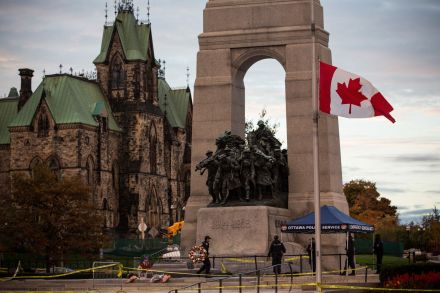
We Canadians like to think that we are a boring and peaceful nation, that nothing much ever happens here, and everybody likes us. It therefore comes as a shock when we are attacked, as we were this week in Ottawa. Yet terrorism is not a new phenomenon for Canada, as demonstrated by the assassination of one of the fathers of the confederation, Thomas D’Arcy McGee, in 1868; by the murderous behaviour of the Front de Libération de Québec in 1970; and by the destruction of Air India Flight 128 in 1985. Our legislative institutions have been regular targets of attack. A Loyalist mob burned down the Parliament of Lower Canada in Montreal in 1848.

Hooray for Homeland – Carrie’s back blasting America’s enemies to pieces with drones

From our UK edition

One of the more welcome and surprising things about television at the moment is that Homeland (Channel 4, Sunday) is good again. As I’m not the only person to have pointed out, the first series was great. After that, though, the show suffered badly from the diminishing returns which so often afflict a deserved American hit that’s obliged for financial reasons to just keep on going — usually by serving up increasingly minor variations on a theme. (Exhibit A: Lost; exhibit B: most of mid-period 24.) Fortunately now that Damian Lewis’s Brody is dead, Homeland no longer has to think up any more ways to make us wonder which side he’s on. Instead, to the obvious relief of all concerned, it can start again with a different story.

Nick Clegg’s pro-European arguments lack the nuance needed to win over the electorate

From our UK edition

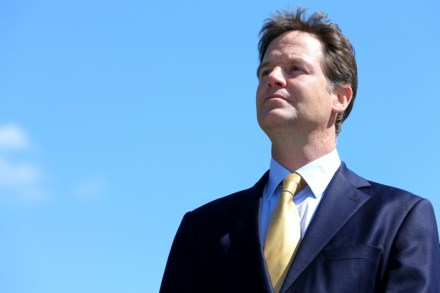
At his press conference this morning, Nick Clegg told Jason Groves, ‘Do you really think Washington is going to bother picking up the phone if we can’t even punch above our weight in our own back yard?’ This must be one of the most absurd bits of political hyperbole in recent years. There’s an argument to be had about whether or not Britain would be less influential in Washington if it left the EU. But the idea that the Americans wouldn’t bother to even pick up the phone to a country that’s a permanent member of the UN Security Council is just risible. One of the real problems for pro-Europeans is that they are so inclined to hyperbole when it comes to the consequences of Britain leaving the EU.

Happy ‘anti-slavery day’ to Clapham Christians, et al

From our UK edition

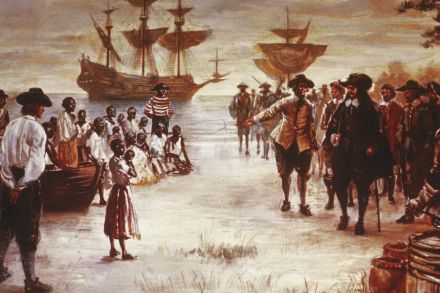
October 18 is 'anti human-trafficking' day by 2007 Act of European Parliament; along with 'anti-slavery day' by 2010 Act of UK Parliament. So there's that, for the 29.8 million people worldwide estimated to live in forced servitude. Over at SlaveryFootprint.org, your correspondent learns that I personally make use of 37 slaves in my London routine, mostly through my consumer electronics and my larger-than-average appetite. The survey, laden with factoids about the coerced labour behind shrimp cocktail and mascara, is macro-analysis at its mushiest - and a far more worthwhile use of 15 minutes online than all the 'carbon-footprint' calculators put together.

A brief history of biker gangs at war – Islamofascist Iraq edition

From our UK edition

America and Britain are still fumbling for policies to deal with nationals joining the Islamic State in Iraq and Syria. In Holland, meanwhile, authorities faced a more cheering task: sorting out Dutch motorbikers who've joined the Kurdish Peshmerga against Isis. To accomodate freelance counter-jihadists, the ever-progressive Dutch have amended their rules against joining foreign armies, Agence France-Presse reports. The three Dutch Peshmerga we know of so far belong to a biker club called 'No Surrender',  whose chief concerns were heretofore limited to motorcycling and brawling with Hell's Angels. Speaking of Hell's Angels, Dutch hog-heads aren't the first to take interest in a foreign freedom-fight.