Us politics

‘We don’t know what’s going on or why we’re doing this’: how Trump’s Iran gamble backfired

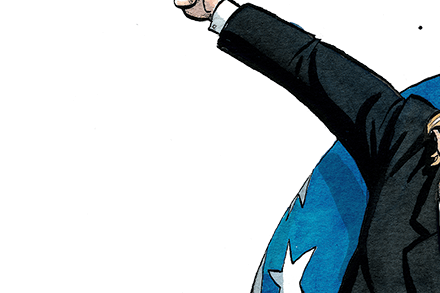
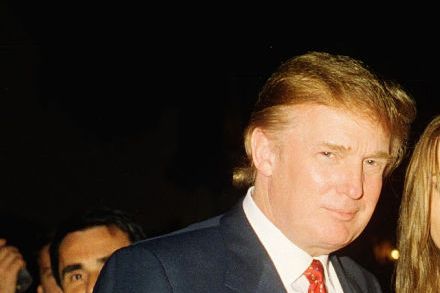
‘Donald Trump is a complicated person with simple ideas,’ said Kellyanne Conway, the former White House senior counsellor. ‘Way too many politicians are the exact opposite.’ It’s a good way of understanding the 45th and 47th US President and his extraordinary success. His turbulent personality causes mayhem, yet his political aims have remained constant, straightforward and popular. Decades ago, as a New York tycoon with a keen eye on international affairs, he identified three priorities for America: tackle the nation’s trade imbalances, force Nato allies to spend more on defence, and destroy terrorists. When it comes to realising those simple ideas, however, his more complex attributes emerge.

Is the special relationship over?

From our UK edition

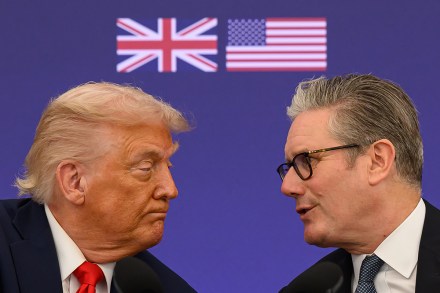
The US Defense Secretary Pete Hegseth has said today will be the most intense day yet of American strikes on Iran. Over the weekend, Donald Trump claimed the war could soon be over – and suggested the US has already effectively won. He also took aim at Keir Starmer, accusing Britain of joining wars America has ‘already won’. Deputy and US editor Freddy Gray joins the podcast to explain what’s really happening in Washington and why he believes the ‘special relationship’ may be over – and not coming back. Economics editor Michael Simmons also joins to discuss the fallout. As oil prices surge and markets react, Reform UK is seizing on renewed pressure over the cost of living. What does the crisis mean for Rachel Reeves – and how serious could the economic consequences become?

Is the special relationship over?

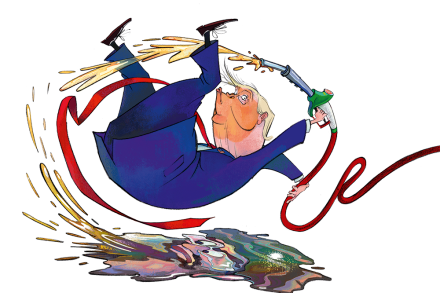
Operation Epic Fury is already tearing the MAGA movement apart

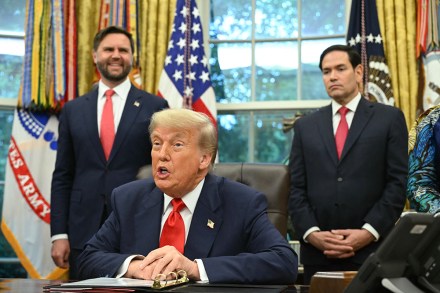
When President George W. Bush invaded Mesopotamia in 2003, everybody laughed at Comical Ali, the bespectacled Iraqi information minister who kept insisting that the American ‘rats’ were doomed as Saddam Hussein’s regime collapsed around him. The world moved on. Iran is not Iraq, as President Donald Trump’s supporters are so fond of saying, and Bush-era ‘forever wars’ are no more. Plus, these days the comedy communications come from the American Commander-in-Chief. At the weekend, as missiles rained across the Middle East, Trump’s cabinet officials mostly avoided attention-grabbing interviews. The boss, however, embarked on his own heroic PR campaign.

Will Iran descend into civil war?

33 min listen

Freddy is joined by historian and former diplomat, Charlie Gammell. They discuss the situation in Iran, whether the US is heading for a decisive confrontation, and examine the regional consequences: proxy warfare, Gulf energy security, Pakistan’s delicate position, and migration pressures on Europe.

Will Iran descend into civil war?

Who doesn’t want a better life?

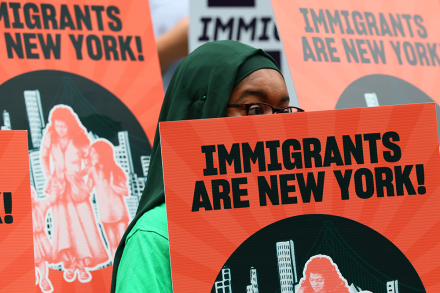
Every couple of years a columnist-cum-novelist will inevitably stoop to shameless self-promotion. In my defence, at least the novel released this month is germane to the political moment. Lest its simple title, A Better Life, come across as lame, I asked the designers of my British and American hardback covers to use imagery that conveys the book’s focal subject matter: immigration. See, proponents of unfettered mass migration have eternally assured us that most illegal immigrants – or as the Biden administration instructed federal law enforcement to call them, ‘newcomers’ – are merely seeking ‘a better life’. This explanation is routinely trotted out as an irrefutable justification for a potentially near-infinite imposition of foreigners on western polities.

What will Donald Trump say at Davos?

From our UK edition

25 min listen

Freddy Gray is joined by John Carney, who leads finance and economics news for Breitbart, to discuss what Donald Trump will say at the World Economic Forum. Will the president 'stick it to Davos man' about tariffs and the world's trade reliance on China? They also discuss how Trump's quest to resolve the cost of living crisis has led him to find common ground with unlikely figures: Zohran Mamdani and Elizabeth Warren.

Why is the West ignoring Jimmy Lai?

15 min listen

Father Robert Sirico joins Freddy Gray to discuss the imprisonment of Jimmy Lai – the British passport holder and Hong Kong media tycoon facing life in jail for opposing the Chinese Communist Party. Sirico reflects on Lai’s rise from poverty, his Catholic faith, the collapse of freedoms in Hong Kong, and why the West has failed to mount a serious campaign for his release.

How is Trump’s counter revolution going?

From our UK edition

40 min listen

US historian and classicist Victor Davis Hanson joins Americano for a wide-ranging assessment of Donald Trump’s first year back in office, from the economy and immigration to Ukraine and the future of the West.

Will anyone miss the Boomers?

From our UK edition

31 min listen

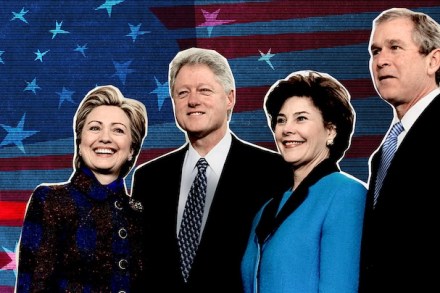
Christopher Caldwell joins Freddy Gray to discuss why the 'Boomer generation' – those born between 1946 and 1964 – became one of the most hated generations in recent history. Chris argues that the Boomers uniquely benefited from the resources of other generations, and were able to enjoy the benefits of leftist politics alongside the political and economic freedoms associated with the right; the apex of their power perhaps being the Clinton/Bush era. To what extent are the Boomers responsible for the decline of America? And what merits are there in judging society through age? Plus, do the digital-millennial generation – those born at the late 1980s and early 1990s – mark the next era of cultural configuration? Produced by Patrick Gibbons and James Lewis.

Why is the US obsessed with Britain’s decline?

From our UK edition

30 min listen

Why are Americans so interested in Britain's decline? While visiting London, Tucker Carlson has said that the country has ‘shrunken’ and its culture ‘destroyed’, particularly because of mass immigration. Freddy Gray is joined by Tim Stanley and Ed West to discuss whether Britain has become ‘ground zero in the decline of western civilisation’ and if the US has always viewed the UK this way.

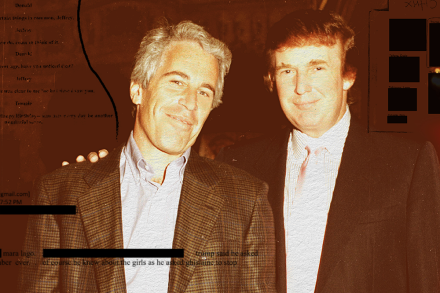
Trump’s Epstein gamble

It is always interesting to see who the American left claims are the leaders of the American right. There was a time during President Trump’s first term when Steve Bannon fitted the role – and relished playing it. Back then most days brought another media profile of the dark genius of the MAGA movement. The Guardian, New York Times and others were obsessed. Vanity Fair would send reporters to follow Bannon as he conquered America and, er, Europe. Documentary crews were perennially in tow. Indeed one documentary following Bannon around included a scene in which they followed him to the showing of another documentary about him from a crew who had similarly followed him around. At which point you felt that we might fall into some kind of vortex.

Are we in an age of necromancy?

From our UK edition

19 min listen

Katherine Dee is the new technology correspondent for The Spectator World. She joins Freddy to discuss the phenomenon of necromancy, the practice of communicating with the dead, and how AI is fuelling it. How is technology blurring the lines between the living and the dead?

Has Trump Made America Great Again? Ann Coulter v Peter Hitchens

From our UK edition

29 min listen

To watch the debate in full, go to https://spectator.com/article/americano-live-is-america-great-again/ American commentator Ann Coulter and British columnist Peter Hitchens join host Freddy Gray live in London to debate whether America is great again—and what the Trump era means for both sides of the Atlantic. From immigration and national identity to executive power and the rule of law, they clash over whether Trump has delivered real change or simply accelerated a dangerous new politics.

Is New York finished?

From our UK edition

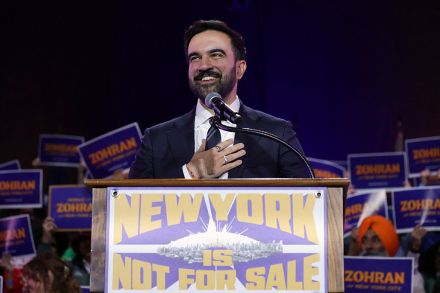
New York has elected Zohran Mamdani — and Heather Mac Donald, fellow at the Manhattan Institute and Spectator writer, warns the city is heading for trouble. She tells Freddy Gray why she thinks Mayor-elect Mamdani’s agenda on crime, housing and education could undo decades of progress, and why this moment feels like “a student activist government taking over a real city”.

Is AI satanic?

From our UK edition

28 min listen

Max Tegmark is an author and professor doing AI and physics research at MIT. He joins Freddy to discuss the moral and spiritual dangers of artificial intelligence, the rise of Silicon Valley’s ‘tech overlords’, and why he believes technology must remain a tool – not a master.

Has Trump been taken over by Big Tech?

From our UK edition

54 min listen

Donald Trump has arrived in Britain with promises of billions in tech investment. But is this AI boom real growth — or just another bubble? Oren Cass, chief economist at American Compass and editor of The New Conservatives, joins Freddy Gray to discuss whether the Trump administration has been taken over by big tech. Click here to get your tickets for Americano Live.

What’s driving political violence in America?

From our UK edition

Tyler Robinson, a 22-year-old from south-west Utah, has been detained over the shooting of Kirk, a conservative activist and close ally of Donald Trump. Author and anthropologist Max Horder joins Freddy Gray to discuss the cocktail of online hate and tribal divisions that's fuelling America's new era of political violence.

How authoritarian is Trump 2.0?

From our UK edition

33 min listen

On this episode, Nick Gillespie, Reason's editor at large, joins Freddy to discuss whether Trump 2.0 is really as authoritarian as people say. Is he closer to a gangster than a dictator? They also discuss tariffs, the weaponisation of the Justice Department, and the state of free speech in the UK.

Do mass shootings begin online?

From our UK edition

32 min listen

Freddy Gray is joined by writer and internet ethnographer Katherine Dee. She's written about the Minneapolis school shooting and Robin Westman for Spectator World. Two children were killed and 17 others injured by a killer with a bizarre online footprint: a mix of memes, nihilism, politics and gore references. Katharine argues 'these shooters are radicalised, but in no particular direction. Their identities fragment. There is a deep fear of being forgotten.