Us politics

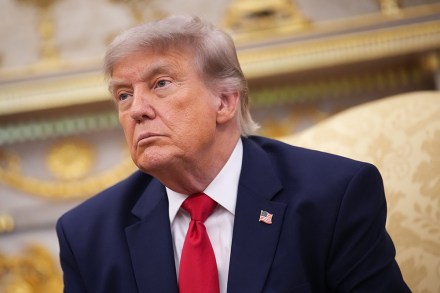
I can’t remember when I was last so disgusted with Trump

You’d think when your country goes to war you’d want it to prevail, but these are topsy-turvy times. Thus the dominant American commentary on Donald Trump’s ‘excursion’ in the Middle East – or should we call it a ‘special military operation’? – has come from pundits who yearn for Epic Fury to fail. Close-up and personal antipathy for their President far outweighs theoretical distaste for a tyrannical theocracy in another hemisphere. For these critics, the glaring deficiencies of the ‘Memorandum of Understanding’, Trump’s already shaky negotiated peace deal, are gratifying. I’m not one of those people.

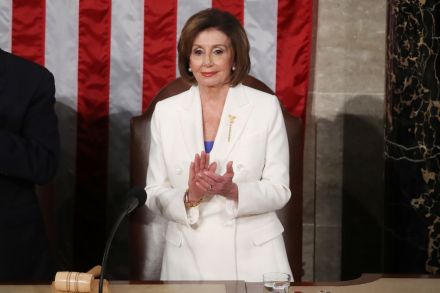
A full-throated endorsement of the Pelosi Center

Former speaker of the House, Representative Nancy Pelosi, who will retire from Congress this year is lending her name and her leadership to the University of California Berkeley to create the Nancy Pelosi Institute. She explains that it will help to “train leaders for our future.”   The National Association of Scholars, being a non-partisan organization with a strong commitment to civic virtue, is delighted to see another prominent politician contribute to the realization of important principles in higher education. Admittedly, we have not always agreed with the former speaker on how best to advance the public good on campus, but Pelosi says she was drawn by the “notion of a bipartisan academic center” at Berkeley, “the epitome of public education.

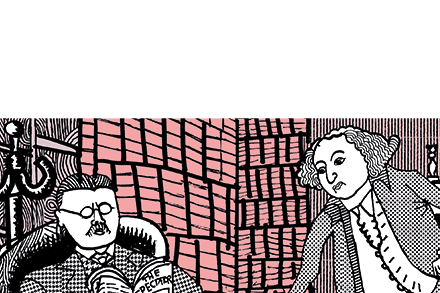
The Spectator’s role in the birth of America

The Spectator was there at the founding of America. George Washington had six copies of the original 18th-century Spectator at his Mount Vernon estate and read them often. He shared with Joseph Addison, The Spectator’s co-publisher, an interest in how to educate ideal citizens: men and women with wit and grit. Young Washington read The Spectator in the hope of bettering himself, too. Both of his older half-brothers had been educated in England and he wished also for the manners and polish of an English gentleman. For the pioneering, self-improving men who would go on to create an independent America, the 18th-century Spectator was both an education and a guide. ‘I bought it, read it over and over, and was much delighted with it,’ wrote Benjamin Franklin in his autobiography.

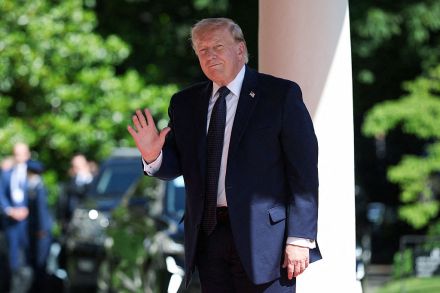
Trump has been outplayed by Iran

From our UK edition

The Founding Fathers may have modelled America on Ancient Rome, but they would have found the ersatz gladiatorial spectacle Donald Trump mounted at the White House to mark his birthday a grotesque perversion of their dreams. An ‘ultimate fighting contest’, staged to pay homage to Trump’s rule (though dressed up as part of the United States’ 250th anniversary celebrations) was exactly the cult of one man the Founding Fathers most dreaded. The President is not an emperor unconstrained, however. A shellacking in November’s midterm elections will show how hemmed in he is. And nowhere is his weakness more apparent than in his so-called ‘peace agreement’ with Iran. It is the latest in a series of humiliations visited on the Great Republic by this tawdry tinsel Caesar.

Can Trump forge a lasting peace?

22 min listen

Freddy is joined by Daniel McCarthy, US columnist for The Spectator and the editor of Modern Age: A Conservative Review. They discuss the US-Iran peace deal, whether a lasting peace is possible in the region, and what's at stake for Iran and leaders in the Persian Gulf.

Why is Cenk Uygur banned from Britain, really?

50 min listen

Freddy Gray is joined by Cenk Uygur after he and Hasan Piker were banned from entering Britain. They discuss free speech, debate Cenk's position on criticising Israel, Britain’s censorious turn, and what the Henry Nowak case reveals about policing and anti-racism.

Why is Cenk Uygur banned from Britain, really?

The real ‘Thucydides Trap’ Beijing and Washington must avoid

These are good times to be a scholar of the classical world. Last summer, Donald Trump issued an order that all federal architecture needed to be ‘beautiful’, noting that the Founding Fathers ‘wanted America’s public buildings to inspire the American people and encourage civic virtue’. George Washington and Thomas Jefferson had therefore ‘consciously modelled the most important buildings in Washington, D.C., on the classical architecture of ancient Athens and Rome’. It was time to go back to these principles, said Trump. From now on ‘classical architecture shall be the preferred and default architecture for Federal public buildings’ in the District of Columbia.

How Iran turned Trump’s propaganda against him

From our UK edition

On 19 November 1941, King George and Queen Elizabeth paid a visit to Woburn Abbey, home of Britain’s covert propaganda war against the Nazis. Surrounded by a park full of rare monkeys, and among corridors bearing Old Masters, the King and Queen were presented with ‘Britain’s Secret Army’, a fleet of radio stations that broadcast subversive content deep into enemy territory. Sefton Delmer, who before the war had been a foreign correspondent for the Daily Express, presented his new German station. While the officious BBC German Service was lecturing Germans about the virtues of democracy and the evils of fascism, Delmer was trying something different.

Let’s ditch the idea of the ‘black vote’

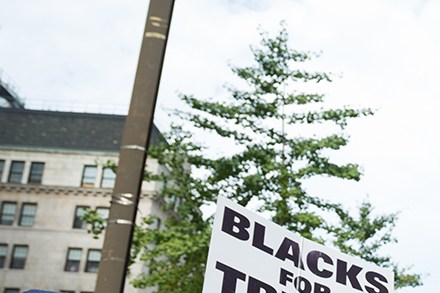
I long took for granted that US opinion polls break down respondents into white people, black people and Hispanics. But I’ve come to look askance at this convention. Reporting on political views by race now seems perverse. It implies that a citizen’s primary identity is grounded in skin colour, and it reifies a way of thinking about the American people that is regressive, divisive, inaccurate and downright un-American. I was reminded of this recent point of annoyance last week when the Supreme Court struck down a Louisiana congressional map that none too subtly contrived to create an additional majority-black district. (The district in question drizzled and blobbed diagonally from one northern corner of the state to the far southern one like a trail of ink on blotting paper.

The inverted imperialism of the royal visit

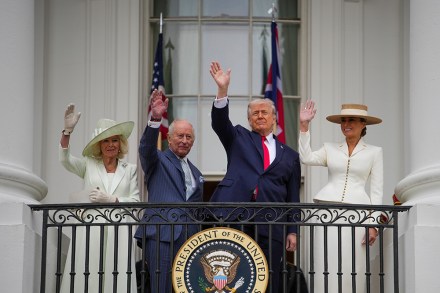
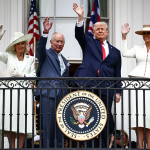
It’s hard not to feel sorry for Christian Turner, the UK's new ambassador in Washington. He’s only been in post three months, yet he’s already had to handle a string of bilateral crises – none his fault. US-UK relations are under intense strain over Iran, Ukraine and now the Falklands. And the Jeffrey Epstein stench still lingers thanks to his predecessor, Peter Mandelson. The King’s visit was meant to gloss over all that unpleasantness. Word went round last week that a grateful Donald Trump would pack King Charles and Camilla off and promptly declare the US-UK trade deal had been finalized. Then, on Tuesday, the first morning of the visit, news broke of a leaked tape.

When will we admit that the special relationship does not exist?

From our UK edition

It was to King Charles’s great credit that he refused to fall for the Trump power handshake thing and instead retracted his own hand so that the orange psychotic was left, for a nanosecond, flailing and unsure of what to do with his right arm. It is always good to call the bluff of a bully, because they usually are bluffing. I would have preferred it if Chaz had executed a swift jujitsu move and thrown the President over his shoulder and onto the ground. But one cannot have everything – and of course the King was there to be emollient and to remind Trump of the things he quite likes about the UK: golf and class distinction, basically. He doesn’t seem to like us for any other reason – which is, in fairness, the mindset of almost every previous US president.

My night under fire at the White House correspondents’ dinner

Last Saturday evening, the American media class descended for its annual jamboree of back-slapping at the Washington Hilton. Protestors outside waved signs reading ‘Death to tyrants’ and ‘Death to all of them’. The atmosphere inside was more jovial. Donald Trump was attending the dinner for the first time since becoming President, along with most of his cabinet and senior officials. We were expecting him to give the assembled media a good roasting – and some of us were looking forward to it. Attendees had to show invitations to get into the hotel, but there were few ID checks and no screening as we went to the pre-parties thrown by the major news organisations. Only when we walked into the main dinner hall did we pass through metal detectors.

What do you do with a captured soldier?

From our UK edition

What do you do with a captured soldier? In 255 BC, fighting the Carthaginians, the Roman consul and general Marcus Atilius Regulus was taken prisoner near Tunis. They sent him back to Rome, having sworn an oath that he would ensure the release of some important Carthaginian prisoners; but if he failed, he himself would return to Carthage. Regulus went back, informed the Senate of his mission, took no part in the discussions or the vote, except saying that the prisoners were fine, active young officers, while he was bowed with age. The Senate decided not to return them, and Regulus made his way back to Carthage, well aware of the consequences.

End of America’s empire?

30 min listen

Freddy Gray is joined by Jacob Heilbrunn, Americano regular and editor of the National Interest. They discuss the Strait of Hormuz, rising energy prices and whether the US can extricate itself from a conflict it may not be able to win – and whether we're watching the end of Trumpism.

End of America’s empire?

‘I don’t want this state that I love to become the country I left’: Steve Hilton on why he’s running to be California governor

‘I don’t want this state that I love to become the country I left,’ Steve Hilton tells the lunch meeting of Southern California Republican Women. Knives and forks rattle on porcelain as the perfectly coiffured ladies down cutlery to clap. Remarkably, Hilton, the former director of strategy under David Cameron, has topped virtually every poll for governor of California since he launched his campaign in April last year. Hilton has leant into the West Coast aesthetic and spirit. Once the rebel of Downing Street in T-shirts and stockinged feet, today he sports a tech-bro beard, more bracelets and beads on his wrists than Prince Harry, and has the top three buttons of his white shirt undone. British by birth, he has renounced his citizenship and become an American.

The end of Trumpism is nigh

Having Donald Trump as your president probably resembles being a heroin addict: you undergo regular episodes of sweating terror and mortal danger, the end result of which is to get you – at best – back to normal. A year ago, the Liberation Day tariffs nearly caused the American economy to seize up, before China mercifully let the matter drop. Then came the even more reckless decision to join Israel in bombing Iran’s Fordow nuclear installation; Iran agreed to halt hostilities just as it was figuring out how to penetrate Israeli airspace with its missiles. But now the President has pressed his luck. He has joined Israel in a campaign of aerial assassination and bombardment against Iran – this time of an almost incredible violence – and has wound up trapped.

Can the special relationship survive Trump?

From our UK edition

Since this calamitous Iran war began, there’s been endless talk in Britain about our ‘special relationship’ (often capitalised) with the United States. People who declare this relationship to be important are almost always those who also believe that, come what may in the war, we British should stand shoulder to shoulder with Donald Trump. Those, on the other hand, who think we should distance ourselves from him, tend to disparage the special relationship as unimportant. This column therefore breaks new ground. I think the special relationship is very important. But I don’t believe we should stand shoulder to shoulder with this president. Our special relationship is with America. Mr Trump is not America.

‘We don’t know what’s going on or why we’re doing this’: how Trump’s Iran gamble backfired

‘Donald Trump is a complicated person with simple ideas,’ said Kellyanne Conway, the former White House senior counsellor. ‘Way too many politicians are the exact opposite.’ It’s a good way of understanding the 45th and 47th US President and his extraordinary success. His turbulent personality causes mayhem, yet his political aims have remained constant, straightforward and popular. Decades ago, as a New York tycoon with a keen eye on international affairs, he identified three priorities for America: tackle the nation’s trade imbalances, force Nato allies to spend more on defence, and destroy terrorists. When it comes to realising those simple ideas, however, his more complex attributes emerge.

Is the special relationship over?

From our UK edition

The US Defense Secretary Pete Hegseth has said today will be the most intense day yet of American strikes on Iran. Over the weekend, Donald Trump claimed the war could soon be over – and suggested the US has already effectively won. He also took aim at Keir Starmer, accusing Britain of joining wars America has ‘already won’. Deputy and US editor Freddy Gray joins the podcast to explain what’s really happening in Washington and why he believes the ‘special relationship’ may be over – and not coming back. Economics editor Michael Simmons also joins to discuss the fallout. As oil prices surge and markets react, Reform UK is seizing on renewed pressure over the cost of living. What does the crisis mean for Rachel Reeves – and how serious could the economic consequences become?

Is the special relationship over?

Operation Epic Fury is already tearing the MAGA movement apart

When President George W. Bush invaded Mesopotamia in 2003, everybody laughed at Comical Ali, the bespectacled Iraqi information minister who kept insisting that the American ‘rats’ were doomed as Saddam Hussein’s regime collapsed around him. The world moved on. Iran is not Iraq, as President Donald Trump’s supporters are so fond of saying, and Bush-era ‘forever wars’ are no more. Plus, these days the comedy communications come from the American Commander-in-Chief. At the weekend, as missiles rained across the Middle East, Trump’s cabinet officials mostly avoided attention-grabbing interviews. The boss, however, embarked on his own heroic PR campaign.