Ukraine

Can Zelensky surrender?

Kyiv The urge to run from danger is only human. It was palpable when air raid sirens sounded as I left the Ukrainian city of Dnipro, which is close to the front line and under relentless attack nightly from Russian drones. Five MiG-31 aircraft were in the air, Telegram channels with access to reliable intelligence reported. The warplanes can be armed with either the Iskander ballistic missile – which travels at up to 5,400mph – or the Kinzhal hypersonic missile, top speed 7,700mph. So fast there wasn’t enough time to find a shelter. We sat in traffic with bated breath, waiting. A deep boom resonated through the mini-bus and two colleagues of mine began praying. Was it an intercept or an impact – or a Patriot defense battery firing? We still don’t know.
zelensky ukraine

Inside the mind of Putin’s real hatchet man

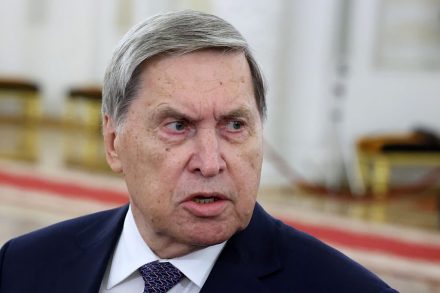
As Moscow and Washington prepare for talks on the latest version of Donald Trump’s peace plan, leaked recordings of a conversation with US envoy Steve Witkoff have thrown a spotlight on to senior diplomat Yuri Ushakov. It seems he, not Foreign Minister Sergei Lavrov, is the prime mover behind Russia’s negotiating position. The stature of Lavrov, once a legend in the diplomatic community, has steadily diminished since 2014, when he wasn’t even consulted before Vladimir Putin decided to annex Crimea. Every year since then, the now-75-year-old minister has petitioned Putin to be allowed to retire; every year this is denied. Instead, Lavrov remains confined to a role of repeating threadbare talking points to audiences who frequently and openly disbelieve him.

ushakov russia ukraine putin

How damaging could the Ukraine corruption scandal be for Zelensky?

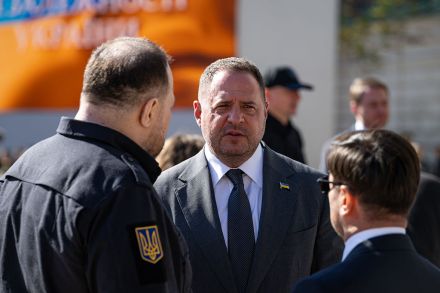
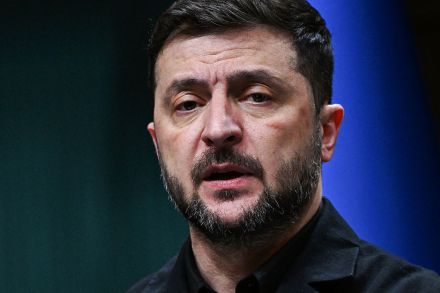
Andriy Yermak, the cryptic aide who shadowed Volodymyr Zelensky through every phase of the war, resigned Friday after anti-corruption investigators searched his office and house. Yermak was the center of Zelensky’s wartime team – and the consequences of his resignation could be far reaching.  In an evening address, Zelensky thanked Yermak for representing Ukraine’s negotiating position in recent tense talks with the United States, “as it should be” and stressed that it had “always been patriotic,” while urging Ukrainians to ignore rumors around the resignation. He said he would begin consultations on a new chief of staff immediately. With more talks looming, he underlined that, in wartime, every institution must stay focused on defending the state.

yermak corruption

The path to peace in Ukraine will be tortuous

From our UK edition

In order to impose peace terms, you first need to win the war. That fundamental principle seems, for the moment, to elude Ukraine’s European allies. Donald Trump, on the other hand, has taken the more pragmatic – some would say more cynical – view that Ukraine will never defeat Russia and therefore needs to make the best of a bad lot. Trump’s strategy for peace in Ukraine has been to browbeat Volodymyr Zelensky into approving a deal acceptable to Vladimir Putin. In fairness, Trump has also gone some way to putting the squeeze on the Kremlin too, by sanctioning the oil giants Rosneft and Lukoil, authorising the Ukrainians to use US--provided long-range weapons against Russian targets, and threatening to provide Kyiv with Tomahawk cruise missiles.

Why would Putin sign Trump’s peace deal?

It was summer 2022. Ukraine had just taken back Kyiv, people were returning to the city, and the mood was one of euphoria, triumph and success. I was having dinner with a Ukrainian official in a neon-lit seafood restaurant in the center of the city, the curfew nearing. "If this ends like the West Germany or Korea scenario, that would be the best outcome," I said to him. He snapped at me: "You want me to tell my relatives in Kherson that they will never live in Ukraine?" Three years later, and even that unwelcome outcome is now far from what Kyiv is being offered by the Trump administration.

trump putin
electric

The battle for Ukraine’s electric grid

On Sunday, Ukrainian drones attacked the Shatura Power Station located about 75 miles east of Moscow. The 1,500-megawatt gas-fired facility provides heat and power to the residents of Shatura, a town of about 33,000. The drone attack caused three transformers at the plant to catch fire, and a local official said, “All efforts are being taken to promptly restore heat supply,” to the town. According to Reuters, the drone strike was “one of Kyiv’s biggest attacks to date on a power station deep inside Russia.” Sunday’s attack on the power plant in Shatura came two weeks after Ukrainian drones and missiles hit power infrastructure in the Russian cities of Belgorod, Voronezh and Taganrog.

Russia is willing to keep on fighting in Ukraine

At a time when western commentators are tying themselves in knots trying to parse the ongoing Ukraine peace discussions, the Russian media is suddenly strikingly united in its coverage. There is a common misperception that, like their Soviet forebears, the Russian press simply reproduces some standard party line, day in, day out. In fact, there is often surprising pluralism, with different newspapers having their own interests and angles. However, the Kremlin does impose its will when it comes to especially important or sensitive matters, with editors receiving tyomniki, informal but authoritative guidance from the presidential administration on lines to take and topics to avoid. When the press is speaking in one voice, that voice is Putin’s.

russia

Zelensky risks coup or civil war

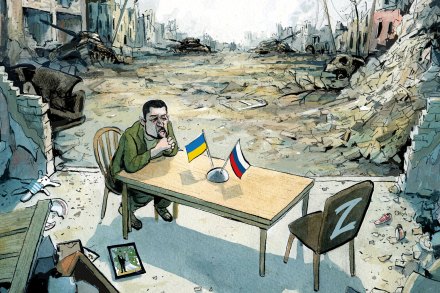
Kyiv When is the price of peace ever fair? War does not determine who is right, only who is left, Bertrand Russell wisely observed. Very often conflicts come down to a numbers game – and on the numbers Ukraine is losing. Despite losing more soldiers, Russia is winning on the battlefield and unlike Ukraine hasn’t even begun mass mobilization.  Donald Trump’s proposed peace deal won’t turn the clock back on Ukraine's borders, or compensate Ukraine for Russian aggression and war crimes, or even punish Putin personally for starting a horrific and needless war that has claimed as many as 500,000 lives. If anything, the deal rewards him.  But Trump hopes his proposal will draw a line in the sand to stop the relentless bloodshed.

volodymyr zelensky

Will the Russia peace deal backfire on Trump?

Kyiv The rumor reverberating around Kyiv is that the FBI has been leaning on Ukrainian anti-corruption police to investigate Zelensky’s inner circle in order to force him to swallow the bitter US peace deal. Trump, as they say, has put the screws, or the feds, on Zelensky. The National Anti-Corruption Bureau – which is unravelling a $100 million war-profiteering scandal that has implicated many of Zelensky’s closest political allies – has denied the accusation point blank, and there’s not a single shred of evidence that it is true.

Witkoff’s Ukraine peace proposal is unworkable

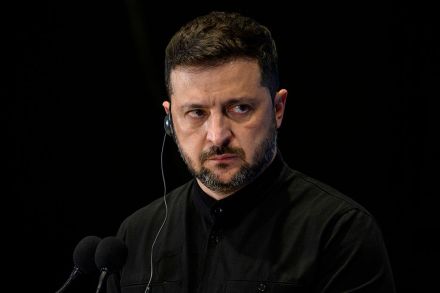
With Ukrainian president Volodymyr Zelensky’s political authority already under grave assault in the wake of a major corruption scandal, he now faces a new challenge – this time from his erstwhile ally, the United States. A high-level US delegation led by army secretary Daniel Driscoll is meeting Zelensky in Kyiv today to present the latest version of a peace plan aimed at ending the war. The contents of the plan have not been officially revealed and so far it has not been publicly endorsed by Donald Trump. But two things are already clear. One is that there’s nothing new in it. And two, there’s nothing good in it for Zelensky.

ukraine

Ukraine is on the verge of political collapse

From our UK edition

Defeat, political implosion and civil war – those are the jeopardies that Volodymyr Zelensky faces as Ukraine heads into the most difficult and probably the last winter of the war. Evermore effective Russian strikes against Ukraine’s energy and transport infrastructure are likely to plunge swaths of the country into cold and darkness. Russian troops continue to push forwards slowly and bloodily in Donbas and, more dangerously, on the southern flank in Zaporizhzhia. Desertions from the Ukrainian army are up four times since last year and the number of deserters now matches the number of active fighters. The US has turned off the money taps and Europe struggles to produce the cash Kyiv needs to keep its war effort going.

What my pyjamas taught me about China

From our UK edition

About seven years ago, I bought two pairs of pyjamas, one British, the other Chinese. At the time, they seemed of roughly similar quality, the important difference being that the Chinese ones were half the price of the British. Given that they have the same ‘lived experience’, I can make a direct comparison. The British ones, by Peter Christian (‘gentlemen’s outfitters’ accompanied by an image of two hares boxing), show few signs of the passing years. Their reddish colour with green and yellow stripes holds fast. There is very little wear and no tear at all. The Chinese pair (labelled ‘sleepwear’) tells a different story – the drawstring disappeared, the elasticated waist (which the British one wisely eschews) decayed, the blue checks faded, the cotton thinned.

Why Europe can’t go it alone on Ukraine

Who will pay for Ukraine’s war effort now the Trump administration has turned off the financial taps? European leaders have expressed themselves ready and willing to take up the burden, with European Commission President Ursula von der Leyen affirming that “if we continue to believe that Ukraine is our first line of defense, we need to step up our assistance.” Individual countries have come up with generous funding packages – most open-handed of all being Germany, which has recently pledged more than €3 billion in direct funding. But that’s just a drop in the ocean compared to what Ukraine says it needs.

zelensky ukraine
azov enemy ukrainian

How the Ukrainian far right is preventing peace

Since the start of the Russian invasion of Ukraine in February 2022, discussion of the Ukrainian far right has been verboten in western media, largely because one of Vladimir Putin’s stated war aims is the “denazification” of Ukraine. Putin’s claim that Ukraine is a Nazi state has been recycled by Russian propagandists and the western party line has consistently been that while the Ukrainian military does have far-right strains, they are marginal and inconsequential. This may have been true in 2022, but things have changed significantly after almost four years of war. Today, far-right figures control some of Ukraine’s strongest military units, and neo-Nazi ideology is displayed openly in the Ukrainian ranks.

Putin thinks time is on his side

Very well then – war. That is the bottom line of Vladimir Putin’s response to Donald Trump’s latest attempts at mediating an end to Russia’s invasion of Ukraine. In August, Putin rejected the peace deal that Trump lined up in Alaska. Now, the Kremlin has scuttled the White House’s plan for a summit in Budapest by insisting that Russia’s demands for Ukrainian demilitarization and “de-nazification” remain in force. Clearly, the Russian President still believes that he can win the war on the battlefield – and terrorize Ukraine’s civilians. What is Putin’s plan?

putin

Portrait of the week: Downfall of a duke, double-decker trains in the Chunnel and no more chocolate Penguins

From our UK edition

Home Prince Andrew said he would no longer use his titles, including as Duke of York, or his honours; his former wife will be known as Sarah Ferguson and no longer Duchess of York. The posthumous memoirs of Virginia Giuffre repeated her allegations of sexual abuse against him, which he has denied. George Abaraonye, who had rejoiced at the death of the right-wing US campaigner Charlie Kirk, was prevented from becoming president of the Oxford Union by a no-confidence vote against him. Lady Annabel Goldsmith died aged 91. Aston Villa was told by the advisory group responsible for issuing match safety certificates that no Maccabi Tel Aviv fans would be allowed at their football game on 6 November because police had warned it was ‘high risk’.

So much for Trump’s peace push

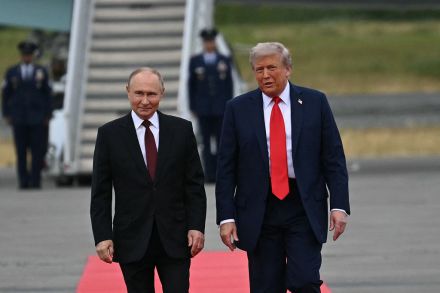
Here we go again. Now that Russian president Vladimir Putin has resumed his bombardment of Ukraine, President Donald Trump is responding by sanctioning the oil giants Rosneft and Lukoil. So much for the vaunted peace push that Trump has been engaging in since he met with Putin in August in Alaska.  The atmosphere has turned distinctly frostier since they held their pow-wow. Budapest was supposed to be a reprise of the brief thaw that took place in August but Trump has got cold feet after the Kremlin indicated that it was in no mood to compromise over the actual boundaries between it and Ukraine.

Ukraine

Should the Nord Stream saboteurs be extradited to Germany?

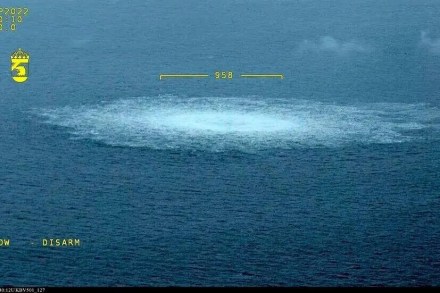
The identity of the saboteurs who blew up the Nord Stream pipelines in September 2022 was for years the western security establishment’s worst-kept secret. Just two weeks after a series of explosions within the economic zones of Sweden and Denmark crippled three of the four undersea natural-gas pipelines linking Russia to Germany, Scandinavian diplomats in Brussels were already being quietly briefed that the most likely culprits were Ukrainian. By January 2023, a forensic investigation by German police had discovered traces of the explosives on board the charter yacht Andromeda and found that the vessel’s movements aligned exactly with the location of the blasts.

Nord Stream

Trump, the foreign policy president?

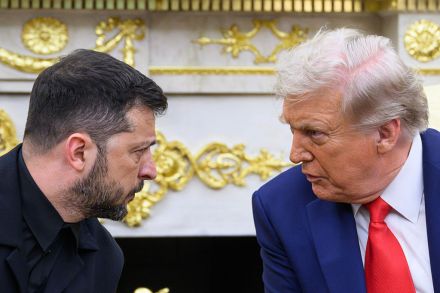
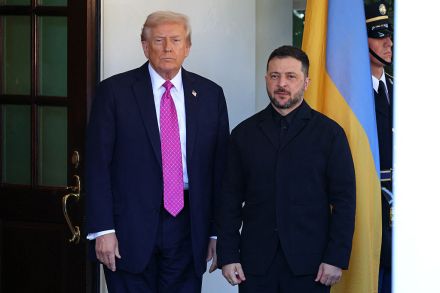
President Volodymyr Zelensky of Ukraine continued his excellent sartorial adventure at the White House, appearing in an elegantly cut black suit and shirt on Friday as he met with President Donald Trump in the Cabinet Room. But while they may have helped avoid any emanations of wrath from his host, his habiliments did not appear to prompt Trump to approve the dispatch of Tomahawk missiles to Kyiv, a coveted item indeed. “We’d much rather not need Tomahawks,” Trump said. “We’d much rather get the war over. It could mean a big escalation. It could mean a lot of bad things could happen.”  Back to square one, in other words. In August, Trump had claimed that his summit meeting with President Vladimir Putin would lead to a breakthrough. It never happened.

Trump

Nick Boles, James Ball, Andrew Rosenheim, Arabella Byrne & Rory Sutherland

From our UK edition

27 min listen

On this week’s Spectator Out Loud: Nick Boles says that Ukraine must stand as a fortress of European freedom; James Ball reviews If Anyone Builds It, Everyone Dies: The Case Against Superintelligent AI, by Eliezer Yudowsky and Nate Sores; Andrew Rosenheim examines the treasure trove of John Le Carre’s papers at the Bodleian; Arabella Byrne provides her notes on skip-diving; and, in the battle of the sexes, Rory Sutherland says the thing to fear is not feminisation, but emasculation. Produced and presented by Patrick Gibbons.