Ukraine

What would Thatcher have said about Putin?

From our UK edition

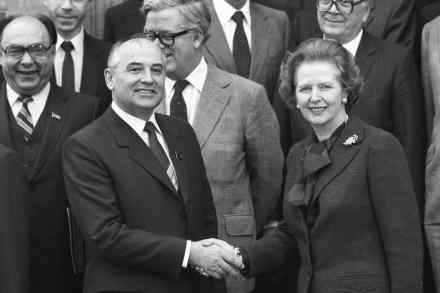
When Sir Tony Brenton writes a letter to the Times, as he frequently does, it always says at the bottom that he was British ambassador to Moscow. The uninformed reader could be forgiven for thinking the sub-editors have got it back to front and he was actually the Russian ambassador to London. Sir Tony’s message in every letter is ‘It’s all Britain’s fault’. In his latest, his particular target was the Foreign Secretary, Liz Truss, after her visit to Moscow. He said she ‘might usefully recall Margaret Thatcher’s wise message to Mikhail Gorbachev sent in 1985 as perestroika began to take off: “We know that you have as much right to feel secure as we do.

energy

Biden’s looming energy crunch

Oil and gas prices have soared since Joe Biden took office and skyrocketed further as Russian troops surround Ukraine. Prices will get worse — much worse — if Putin invades. President Biden has promised “swift, sharp sanctions” on Russia and an end to the Nord Stream II pipeline, which will supply Germany with much-needed Russian natural gas when it’s completed. The German chancellor has said little about ending the pipeline but has not publicly contradicted Biden’s threat to stop it. European analysts are confident Germany will go along with American energy sanctions, including those on Nord Stream II. In any case, the US can stop the pipeline, if it chooses.

As with Iraq, so with Russia

Against the backdrop of the Ukraine crisis, we have been bombarded with many historical analogies. Leading the list are the 1961 Berlin standoff and the 1962 Cuban Missile crisis. And then there is that all-time favorite, the 1938 Munich Agreement. Those crises should certainly not be regarded as ancient history. But then why go back 60 or 80 years when you can walk down memory lane? Like, say, when an American president was trying to rally the public and mobilize international support in the name of using military force against an alleged bloodthirsty dictator who was supposedly threatening Western geostrategic interests and challenging its liberal democratic values?

ukraine

NATO won’t bleed for Ukraine

Ask three different people whether Russian President Vladimir Putin will approve an invasion of Ukraine, and you are likely to get three different answers. Yes, a Russian land, air, and sea blitz is inevitable and will come in fairly short order, likely without warning. Yes, a Russian invasion is possible, but could still be averted with some shrewd diplomacy. Or, no, surely Putin understands an invasion would be a disaster for his legacy and his country’s economy. In the midst of all of this comes wild speculation about what Putin is thinking at any given moment, how the weather may factor into his calculations, and what the Russian government’s end goal really is. What can be said for certain, however, is that diplomacy has picked up significantly over the past week.

Is this Biden’s Munich moment?

When it is 1938 in Washington, it is already past midnight in Moscow. The clock is ticking and the map of Europe is being redrawn, but this is not a Munich moment. We are now past that, and past the time when the leader of a Western democracy might have the honesty to admit to his public, as Neville Chamberlain did in 1938, that he doesn’t want to fight a war over “a quarrel in a faraway country between people of which we know little.” The shadow of Munich shames and intimidates the leaders of the Western democracies, and not without reason. But if there is a Munich moment in the latest Ukraine crisis, then it happened nearly seven years ago — in 2015, when the Obama administration backed the Minsk II accords and the dismemberment of Ukraine.

energy munich

Putin may yet resist a full-on invasion

From our UK edition

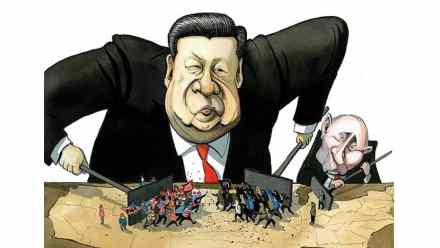
The west is still in the dark on what Vladimir Putin will do next. The Russian military build-up on the Ukrainian border continues but in televised meetings with Sergey Lavrov, his foreign minister, Putin was told that there is a case for ‘continuing and intensifying’ diplomatic discussions with the West. For Putin — who smarts at what he sees as the humiliation of the end of the Cold War and the decline of Soviet power — there is a satisfaction in watching the West scramble to respond to his actions. The Biden administration wanted to prioritise competition with China, but Putin is succeeding in forcing him to concentrate on European diplomacy — something that will please both Moscow and Beijing.

I stand with Diane Abbott

From our UK edition

Not for the first time in her political career, Diane Abbott is getting a lot of flak online. She’s being trolled, heckled and denounced as an enemy of the United Kingdom. Only this time Ms Abbott is being hauled over the coals not for saying something silly, but for saying something sensible. Something true. Something fundamentally correct. Namely, that Nato bears a great deal of responsibility for the current crisis in Ukraine. Browsing the Abbott-bashing headlines you could be forgiven for thinking she had upped sticks, flown to Moscow, and sworn lifelong allegiance to Vladimir Putin. ‘Diane Abbott backs Russia!’, says the Express.

What really happens if Russia invades Ukraine?

From our UK edition

Russia will pay an enormous price if it invades Ukraine, whether it goes for the whole country or only the eastern region around Donbas. Vladimir Putin has already assembled well over 100,000 troops near Ukraine’s borders, moved in tanks, heavy artillery and aircraft, and brought in the medics and blood supplies needed to deal with casualties. Western governments have evacuated all but essential diplomatic personnel and told their citizens to get out now. Still, no one knows what Putin has decided, or even if he has decided. Visits to Moscow by senior western politicians have yielded little information and no diplomatic solution. The message seems to be that Putin remains uninterested in a compromise.

Why does Germany look so weak on Russia?

A recent survey of Germans done by Forsa, amongst the most reputable polling institutions in that country, shows that at least in one way, the Cold War has not quite ended. A majority of West German respondents (52 percent) blame Russia for escalating the conflict with Ukraine, while a plurality of East German participants (43 percent) blame the United States. All respondents, meanwhile, plead for peace in the region and expressed fear of a looming war between Europe and Russia. The political repercussions here are very real. The generation born in the late 1960s, having been completely educated in the East German communist dictatorship, currently constitutes the most significant single voting block in the East.

The unthinkable horror of a Russia-Ukraine war

In the coming days, if intelligence assessments are accurate, the world will watch the unfolding of a bloody war between Russia and Ukraine. It will make history for all the wrong reasons, as the largest armed conflict since World War Two. And while Moscow would almost certainly defeat Kyiv on the battlefield, the real story will be the horror unleashed by the first modern war fought between nations of real consequence in decades. Such a war would showcase military modernizations that, while well-known, will still shock most Americans and change our perception that war in the twenty-first century is anything but cost-free. Worst of all, there's chance that a Russia-Ukraine war might not be contained to just those two countries, sucking in America in the process.

Ukraine’s plight paints a bleak vision of Europe’s future

From our UK edition

It is tempting to view Vladimir Putin as a Cold War relic: a former KGB officer who hasn’t got over the fall of the Soviet Union, which he called the ‘greatest geopolitical catastrophe of the century.’ But, as I say in the Times today, what is happening on Ukraine’s border isn’t a throwback to the Cold War. Rather, it is a preview of Europe’s future. Since Nato’s creation, European security has rested on America’s involvement. But Europe is now a secondary concern for the US; Asia and competition with China is the most important challenge facing Washington now. The horribly messy US withdrawal from Afghanistan was justified on the basis that it would free up resources to focus on China.

Why Putin wins

From our UK edition

Does Vladimir Putin intend to invade Ukraine? Or are his troop manoeuvres just a game — another test of the West’s resolve? If the former, he will win: British troops (and citizens) have been told to leave Ukraine in the event of conflict and no one doubts that the estimated 130,000 Russian forces could succeed in their objective. So the first major land war in Europe since World War II would end in an easy victory for Russia.  “My guess is he will move in,” Joe Biden said last week, as if he were a casual observer. Families of US diplomats in Ukraine have been ordered to leave the country But even if it's a bluff, Putin can count the past few weeks a success.

The new unpatriotic conservatives

The die against conservatives opposed to the Iraq war was cast by David Frum in a now-infamous essay for National Review back in 2003. Not only were the right's antiwar sorts unpatriotic, Frum charged, they were defeatist and conspiratorialist appeasers. “They have made common cause with the left-wing and Islamist antiwar movements in this country and in Europe,” he wrote. As one can imagine, this made it quite difficult for this small but active faction of the conservative movement (which included the American Conservative magazine and libertarians like Texas Congressman Ron Paul) to penetrate the mainstream, or build trust with their compatriots across the aisle.

Kudos to Macron for going to Moscow

Landing in Moscow on February 7, French President Emmanuel Macron had a twinkle in his eye and a spring in his step. There he was, taking it upon himself to be the first European head-of-state to meet Russian President Vladimir Putin since over 130,000 Russian troops massed on Ukraine’s border from three sides. Macron's mission was to explore whether a de-escalation with Russia was possible. “I believe that our continent is today in an eminently critical situation, which requires us all to be extremely responsible,” he told reporters before his five-hour session with Putin began. The other option, what could be the largest land war in Europe since World War II, would be far worse.

Could Viktor Orbán be a peacemaker in Ukraine?

From our UK edition

For a politician whose calling card is the struggle for Hungarian national sovereignty, Viktor Orbán and Vladimir Putin’s press conference on Tuesday didn’t look good for the Hungarian leader. Putin abruptly walked off the stage, brusquely beckoning Orbán to follow. The Hungarian strongman dutifully picked up his papers and traipsed across the large, socially distanced podium all alone, apparently flummoxed by whether or not to button up his suit jacket. The unfortunate clip makes Orbán look every inch Putin’s puppet – quite the turnaround for a politician who made his name campaigning against Hungary’s lack of independence as a Soviet satellite state in the dying days of the Cold War.

Is our Ukrainian ambassador OK?

From our UK edition

I know the following sentence is going to get me into trouble. Still, there are times when you wonder whether highly feminised people should perform certain jobs. I am not saying ‘women’ and I am not saying ‘always’, just ‘times’. Still, I can hear you say: what sort of a dinosaur are you? Well, join me in the Jurassic period for a moment by contemplating the social media activity of our lead diplomatic representative and ambassador in the Ukraine, Melinda Simmons. Simmons is in a rather important position at present, yet her social-media account suggests otherwise. Here is Simmons a few months ago, writing on Instagram about a photograph of her at a podium with a chaplain to one side and a military guard at the other.

How many people still send letters?

From our UK edition

Borderland Few countries can have passed through as many kingdoms and empires as Ukraine — the ‘borderlands’. These are just a few of the political entities which have controlled parts or all of modern-day Ukraine before it became an independent nation in 1991: Scythian Kingdom; Roman Empire; Ostrogothic Kingdom; Bulgar Kingdom; Khazar Kingdom; Kievan Rus; Mongolia; Galicia-Volhynia; Poland; Lithuania; Ottoman Empire; Cossack Hetmanate; Austro-Hungarian Empire; Russia; Free Territory of Ukraine; Soviet Union. Schemes and scams The government hopes to raise £12 billion through the 1.25% rise in National Insurance contributions from April. How does this compare with money wrongfully claimed under Covid relief schemes? According to HMRC estimates: 8.

Portrait of the week: Sue Gray speaks, Boris goes to Ukraine and 477-mile bolt of lightning strikes

From our UK edition

Home Sue Gray, the second permanent secretary in the Cabinet Office, in a 12-page ‘update’ on her investigation into 16 gatherings in Downing Street, refrained from comment on particular cases, 12 of which were being looked into by police. ‘Some of the behaviour surrounding these gatherings is difficult to justify,’ she concluded. ‘There was a serious failure to observe… the standards expected of the entire British population.’ Some events ‘should not have been allowed to take place’. She said that ‘excessive consumption of alcohol is not appropriate in a professional workplace’. Boris Johnson, the Prime Minister, told the Commons that he ‘wanted to say sorry’.