Ukraine

What Ukraine means for Asia

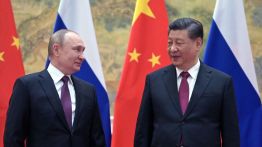
If Asia has entered the debate over the war in Ukraine, it is primarily through questions over the role China is purported to be playing in supporting Russia. Given the now-infamous declaration of a “partnership without limits” by Vladimir Putin and Xi Jinping during the Beijing Olympics just weeks before the invasion, many observers have searched for signs of Chinese aid, military or economic, to Russia in the conflict. The scope of devastation in Ukraine and the probable war crimes being committed by Russian troops understandably mean less attention has been paid to how the conflict might affect geopolitical stability in the Indo-Pacific region. The exception is Taiwan — there has been considerable speculation over the influence of Ukraine on Beijing’s calculations there.

asia
speech

Why we need robust free speech laws

The biggest tragedy of the Russian invasion of Ukraine is, of course, the loss of thousands of Ukrainians, who have been killed because of Vladimir Putin’s insane and horrific actions. But alongside that horror are many other alarming developments. One of them is the near-total suppression of the free flow of information in both Russia and China. As you have likely read, Putin cast the war with Ukraine not as the unprovoked invasion it is but, laughably, as a “special military operation” for “de-Nazifying” the Ukrainian leadership. Russia swiftly passed a law greatly enabling Putin’s propaganda campaign.

Why the sinking of the Moskva matters

From our UK edition

The sinking of the Russian guided missile cruiser Moskva is both a reminder of the past and a marker for the future. It harkens back to a lesson learned forty years ago. It was in 1982, in the waters around the Falkland Islands, that the ability of anti-ship missiles to destroy modern warships was brought home to much of the world. It was a shock for many to see a not-first-rate military run by the oppressive Argentinian Junta being able to destroy a number of the newest British warships during the Falklands War. Most notably the destroyer HMS Sheffield, which had been commissioned only seven years before, was destroyed after being hit by only one French-made Exocet missile.

Why Russians celebrate monsters

From our UK edition

Nobody knows how long people live in Dzerzhinsk – life expectancy statistics for the Russian city, 250 miles east of Moscow, aren’t released to the public. In the days of the Soviet Union, it was closed to outsiders and left off official maps, but those in neighbouring Nizhny Novgorod joked that residents must have purple skin and second heads because of the emissions from its secretive chemical weapons plants. In recent years, however, it has gained notoriety as one of the most polluted places on the planet, with a study after the fall of the Iron Curtain reporting locals usually died in their mid-forties.

The next phase of the Ukraine war will be bloody

From our UK edition

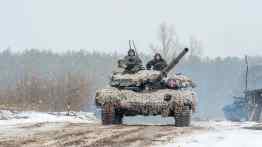
The war in Ukraine is about to enter an even deadlier stage, one in which both Kyiv and Moscow will be tempted to apply more and more military might that could even draw in outside powers. The Battle for Donbas, with another battle raging for what is left of the city of Mariupol, will be a new hell that Europe has not seen since the second world war. It has the potential even to mutate into World War III unless the conflict is brought to a conclusion — and fast. Why the war in Ukraine is shifting to these critical regions is simple to understand.

Down with the ‘Third World War’ doomsayers

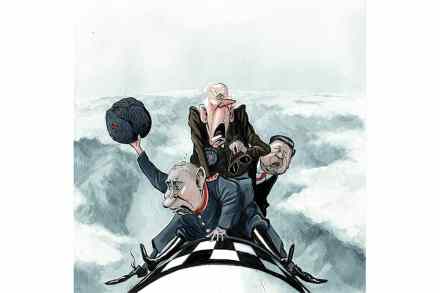
Some people are always telling you that the world is soon to end. In the old days many of them would wear sandwich boards describing near-term doom, and not wash. Now, their cousins in the environmental movement glue themselves to oil refineries and don’t shave. In each case, they drip with urgency. The oceans will boil, the land will burn. Your children will fry. Or, alternatively, the Lord will return and take only the righteous to their reward. Be afraid and confess, before it is too late. Public life has these people, too, for this tendency is quite universal. Financial doom-mongering is a profitable little side-line for some economists. The great crash they predict is always upcoming.

world war three

Inflation is here to stay

Inflation last month increased to 8.5 percent over a year ago. That’s up from 7.9 percent just last month. It’s the sixth straight month that inflation has been over 6 percent, and the highest it’s been since 1981. The Fed will almost certainly be raising the funds rate steadily for the rest of the year, perhaps by fifty basis point increments instead of the usual twenty-five basis points. The trick, of course, is to rein in the inflation without causing a severe recession. The price of gasoline rose a staggering 18.3 percent in March alone. But even if you take out the cost of fuel and food, which tend to be much more volatile than other commodities, the “core inflation” was 6.5 percent, again the highest in decades.

Portrait of the week: Boris in Kyiv, Rishi in hot water and crystal meth in a cereal packet

From our UK edition

Home Boris Johnson, the Prime Minister, travelled to Kyiv in secret and joined President Volodymyr Zelensky for the cameras in his office and in empty streets. He was given a pottery cock by local people. He said: ‘We are stepping up our own military and economic support.’ Mr Zelensky said: ‘It is time to impose a complete embargo on Russian energy resources.’ Britain would send 120 armoured vehicles, Starstreak anti-aircraft missiles, 800 anti-tank missiles and anti-ship missile systems. Supporters of Extinction Rebellion sat down in the road at Oxford Circus in London. The tyres of 100 SUVs were let down in Edinburgh by campaigners who left notes saying ‘Your gas-guzzler kills’.

‘Putin still has a lot left to lose’: Niall Ferguson and David Petraeus in conversation

From our UK edition

David Petraeus is a former CIA director who, as a four-star general, led US military campaigns in Iraq and Afghanistan. He speaks to the historian Niall Ferguson about the war in Ukraine. NIALL FERGUSON: General, I wanted to ask you to give your assessments of the Russian invasion of Ukraine. If you were grading Russia’s military performance and Ukraine’s, what grades would you give? DAVID PETRAEUS: Clearly Russia has failed. That’s the only way to describe the campaign thus far. And the Ukrainians, gosh, I think you have to give them an A at least and perhaps even more for just the sheer determination. But it’s much more than fighting for their very survival. They have done it very, very impressively.

Bitter harvest – how Ukraine’s wheat has always been coveted

From our UK edition

Publishers love books with ambitious subtitles such as ‘How Bubblegum Made the Modern World’, and this one’s, about American wheat remaking the world, was no doubt devised to appeal to readers in the United States. It is not really appropriate: for ‘American’, read ‘Ukrainian’. The focal point of Oceans of Grain lies very far from the vast wheat fields of North America. This is mainly a book about Ukraine and the Black Sea, and the importance of Ukrainian grain in world history. Its appearance during the current war is extraordinarily timely. Scott Reynolds Nelson insists that grain supplies have lain at the heart of millennia of conflict.

The age-old story of strongmen

From our UK edition

The only good news, after the massacres in Ukraine, is that so many ugly behemoth super-yachts have been seized and will not be polluting the seas this summer. There is no more horrible sight than an oligarch’s super-yacht on the horizon, and that is before it disgorges its passengers, which is a horror show in itself. Arab boats, with their hookers on board, are even worse. The other good news is that Elon Musk has become the largest shareholder in Twitter, and in a Trojan War replication has challenged Putin to a duel. Oh, what a wonderful world this would be if those who started wars would duke it out with their opponents, rather than sending youngsters to do the fighting for them. But don’t hold your breath.

The case against a European army

From our UK edition

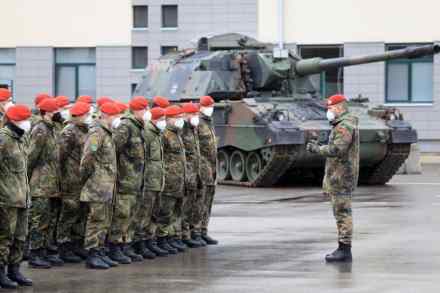
The end of the Cold War was used by the victors to unite Germany. To balance this, Europhiles created a single currency which, by replacing the deutschmark, would ‘hold Germany down’. The reverse occurred. The euro made Germany the most important power in the European Union, and so it remains. Today, the same Europhiles want to use the rebirth of the Cold War to encourage Germany to re-arm. To balance this, they want to create a truly ‘European’ defence, of which Germany would be a vital part. The EU would prevent Germany from using its force for national needs. For this purpose, they say, Nato would be no good because it is intergovernmental.

I can feel my heart hardening as the war goes on

From our UK edition

Palm Sunday in Perugia. Umbrians were scuttling around with twigs and leaves, but I was in town to celebrate another faith. It was the annual International Journalism Festival, which hasn’t been ‘annual’ for the past two years due to Covid. Happy reunions were applauded with the sound of countless clinking glasses, but the mood was often mournful. In the first panel I was on, the moderator, Natalia Antelava, asked for a moment of silence for the 18 journalists already killed in Ukraine. Among them was Oksana Baulina, a former colleague of Natalia’s at Coda Story news platform, where I am also a contributing editor. Oksana was Russian.

Is this the birth of a Nordic Nato?

From our UK edition

In the past six weeks, Finland and Sweden’s security policies have changed more than they have over the past six decades. In much of what they do, the two countries come as a couple and were militarily neutral during the Cold War – but their defence cooperation has only deepened since Russia’s invasion of Crimea in 2014. Now, the two are about to break with their long history of non-alignment. Their applications to join Nato are likely to come in the next two months. At a press conference in Stockholm this week, the prime ministers of the two countries – Sanna Marin and Magdalena Andersson – came close to admitting they want their countries to join the western military alliance. That declaration cannot be understated.

Putin is devouring his children

From our UK edition

Like the Greek titan Cronos devouring his own children, Vladimir Putin seems determined to turn against those he was once closest to – out of fear, anger and hubris. In the process, he is only further weakening his regime. The former deputy head of the infamous Federal Security Service (FSB), colonel general Sergei Beseda, has been moved from house arrest to the investigations wing of the equally infamous Lefortovo prison. Designed to break inmates’ wills, guards escorting prisoners through its corridors use clickers to announce their presence. This allows other prisoners to be placed face to the wall in niches along the way so that they don’t get to see who else is in there.

Zelensky has snubbed Germany’s President

From our UK edition

When Volodymyr Zelensky told the German President Frank-Walter Steinmeier yesterday that he did not want to see him in Kyiv, it hit his delegation like a slap in the face. The political class in Berlin still underestimates the depths of mistrust caused by Germany’s Russia policy. Whether trust with Eastern Europe can be rebuilt will depend on Berlin’s support for Ukraine – and certainly not on empty words, gestures and visits. Steinmeier had been on a state visit to Poland when Zelensky’s message reached him. He had travelled there in order to meet with President Andrzej Duda – in itself no easy encounter. Tensions between the two countries run higher than many in Germany realise.

Is Putin using chemical weapons in Ukraine?

From our UK edition

In 1942, as Hitler’s forces swept through the Soviet Union, the Red Army went underground. Outside the city of Kerch in Crimea, 10,000 Russian, Belarusian and Ukrainian soldiers dug into the caves of a limestone quarry, ready to defend their position to the last man. Intent on flushing them out, the Nazis bombed them from the skies, flooded the complex and, according to testimony from survivors, pumped noxious gas into the tunnels. That siege, 80 years ago, would have been the last time that chemical weapons were used in combat in Europe. Until, perhaps, yesterday. Just over 100 miles north of Kerch, in the Ukrainian city of Mariupol, locals have reportedly complained of lung and ear problems after a drone dropped its payload overhead.

Russia is trying to destroy Ukraine’s energy sector

From our UK edition

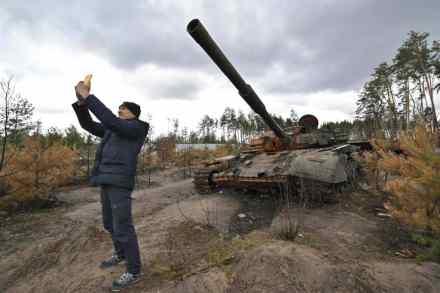
We are seven weeks into the war and the level of destruction in Ukraine is mounting. Every single day we learn more about Russia’s scorched earth tactics and about the atrocities its forces have committed in the areas they once occupied. But with another Russian surge in Ukraine’s east looming, one trend is not sufficiently understood in the West. Over the past weeks, Russian air and missile strikes have deliberately targeted and destroyed key components of Ukraine’s critical civilian infrastructure, especially in the energy sector, in a bid to make the country collapse. In late March the Pentagon estimated that Russia had fired over 1,200 precision guided missiles into Ukraine.

The Russian army is running out of options

From our UK edition

So much had been written about the Russian armed forces’ modernisation and improvement over the last decade that that it was widely believed that the Russians possessed one of the largest and most powerful armies in the world until a few weeks ago. The army might not be on par with the US or China, but it was certainly capable of conquering a military minnow like Ukraine – or so the logic went. The six weeks of war in Ukraine – which have seen Russian forces fail to take Kyiv and fall back elsewhere – has dented the army’s reputation. And now it seems that the Russian military may be running out of options in the rest of the country too.