Ukraine

Germany is failing Ukraine

From our UK edition

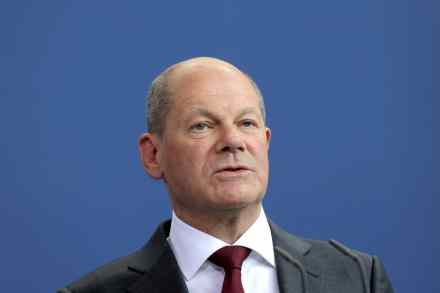
‘A giant step for German and European security,’ is how Chancellor Olaf Scholz described his government’s €100 billion cash injection for the country's depleted military. But while Germany’s newfound commitment to its own defence is welcome, its commitment to Ukraine’s is still questionable at best.   Over the weekend, the German newspaper Die Welt reported that it had seen documents showing that Berlin had reduced military support for Ukraine to ‘a minimum’. According to inside sources, only two German weapon deliveries have reached Ukraine since the end of March. Both contained light equipment such as mines, hand grenades and spare parts for machine guns.
How Russia wins

From our UK edition

It is still too early to predict the outcome of the war in Ukraine. Russia has certainly solidified its position in the east and is making small military gains. What's become clear over the last few days is that Russia may, after all, be able to achieve at least some of its military goals. Here is an interesting, albeit disturbing, political scenario by Sabine Fischer, a senior fellow at a German foreign policy tank. She notes that the mood in Moscow itself has shifted. It is the Kremlin’s political calculation that the western nations will not sustain their massive financial and military support for Ukraine.

The West is watching the war in Ukraine like it’s sport

From our UK edition

Every time I hear a politician speak of Munich, I suspect that something is amiss. Last week, President Zelensky accused former US Secretary of State Henry Kissinger of living in the ‘deep past’, and demanding that ‘a part of Ukraine be given to Russia’. ‘It seems that Mr. Kissinger has 1938 on the calendar instead of 2022’, Zelensky said. He wasn’t alone: figures from the Dutch Prime Minister Mark Rutte to the former chess champion Garry Kasparov put themselves on the record timidly or violently disagreeing with Kissinger. I wasn’t at Davos, but I learned of Kissinger’s revelations through Twitter.

The age of American unexceptionalism

Our administration would have us believe that Joe Biden is the leader of the free world. But he isn’t — and our relative inaction on Ukraine should firmly put to rest the idea of “American exceptionalism.” While Ukrainians were heartened by British prime minister Boris Johnson’s April trip to Kyiv, our commander-in-chief has adopted a different strategy for this active war zone: send in the women. Security concerns are ostensibly to blame for Biden being MIA, but sending in three of the country’s most important ladies — Speaker of the House Nancy Pelosi to Kyiv, First Lady Jill Biden and Vice President Kamala Harris to neighboring countries in Eastern Europe — seems an odd way to demonstrate that the administration is worried about security.

unexceptionalism

Are sanctions making Russia richer?

From our UK edition

Before the invasion of Ukraine, it was by no means certain that there would be a united response from the West. The sanctions imposed on Russia after Vladimir Putin’s annexation of Crimea in 2014 were fairly limited, especially from the European Union. Germany pressed on with the Nord Stream 2 gas pipeline to Russia. But now, America, Europe and much of Asia have been united in applying severe sanctions against Russian banks, companies and oligarchs. Three months on, it’s time to ask: are the sanctions working? The answer from the Bank of Russia’s balance of payment data for January to April isn’t reassuring. It showed that the sanctions are emphatically not working, at least not in the way that they were intended.

Inside Taiwan’s plan to thwart Beijing

From our UK edition

Taipei   Nowhere is watching Russia’s faltering attempt to crush its democratic neighbour more closely than Taiwan. The Ukraine war is seen in Taipei as a demonstration of how determined resistance and the ability to rally a global alliance of supporters can frustrate a much larger and heavily armed rival. Taiwan has spent the past few years planning how it would cope if China attacked. It is developing a doctrine of defence warfare right out of the Ukrainian playbook. China was carrying out military exercises off the east coast of the island last week when I met Joseph Wu, Taiwan’s foreign minister. ‘They keep circling in that area,’ Wu says. ‘Nonstop for two weeks, and it is very threatening.

Could Putin be toppled? An interview with Richard Dearlove

From our UK edition

‘One of the things about being in Moscow as the guest of the Russian government,’ says Richard Dearlove, the former head of MI6, ‘is this real attempt to make you feel like an outsider.’ It comes, he says, ‘from a fundamental Russian suspicion of foreigners’: ‘The Kremlin is designed to intimidate you. It’s designed to make you feel as if you are at the centre of a great empire.’ Dearlove joined the Secret Intelligence Service in 1966, and though spies are always a little cagey about their past, it seems he served as an intelligence officer behind the Iron Curtain. After a stint as head of station in Washington, in 1999 he was appointed chief of MI6 by Robin Cook. It was then that he first met the man who is now Russian president.

‘China is all-out against us’: an interview with Lithuania’s foreign minister

From our UK edition

On the 16th floor of a tower block in Vilnius, Lithuania, is an office with a nameplate so incendiary that it has started a trade war. The ‘Taiwanese Representative Office’ violates a rule that China imposes upon its trade partners: never allow Taiwan to open official offices. Call it ‘Taipei’, or anything, just not ‘Taiwan’. Lithuania recently decided that an important principle is at stake: should small countries be bullied by big ones? It thought not – and has allowed Taiwan to use its own name at what is regarded as a de facto embassy. This was Vilnius going out on a limb, saying it was time to defend democracies and support freedom, and it is now looking to build an alliance of like-minded countries. This has made Beijing very angry.

Ukraine and a short history of dogs in war

From our UK edition

In his own inimitable way, Ukrainian president Volodymyr Zelensky has unleashed his dogs of war on Vladimir Putin and once again he’s pulled off a propaganda coup. The Russian President has in the past not been averse to using animals to his advantage; he posed topless on horseback, making the pulse race of every red-blooded Russian woman, and in 2007 he famously brought his pet labrador, Konni, to a meeting with Angela Merkel, fully aware that the then German chancellor had a fear of dogs. Zelensky is more a Jack Russell guy and earlier this month he decorated one of Ukraine’s bravest of the breed – Patron, which means ‘ammo’ in Ukrainian.

Inside Russia’s military collapse in Ukraine

From our UK edition

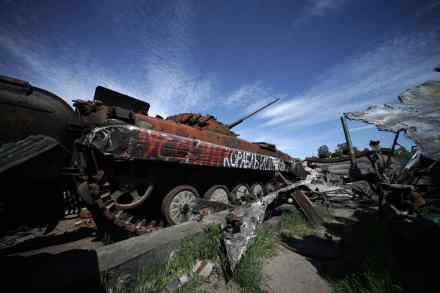
The Russian military has performed far worse in Ukraine than anyone could ever have predicted. After failing to take Kyiv, Russian troops have now been forced to focus on the Donbas region. Despite this greater concentration of forces, they are still struggling to make any major gains beyond the final capture of Mariupol, which had been under siege since the first days of the invasion without resupply or relief. For Vladimir Putin this represents a grand humiliation. But for the West, Russia’s struggling campaign offers an unrivalled opportunity to understand Russia’s capacity to pose a future military threat.

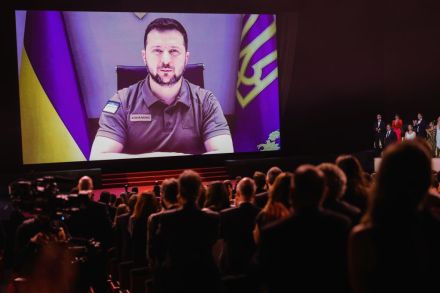
Zelensky is the star of the Cannes Festival

The Cannes Film Festival remains the most glamorous and famous gathering of the movie industry in the world. High-profile, black-tie premieres attended by some of the best-known actors jostle alongside the more disreputable commercial market. Films on sale this year include My Neighbor Adolf, about the unlikely friendship that is struck up between a Holocaust survivor and a mysterious man who may or may not be Adolf Hitler. But back in the main festival, everything is going entirely to plan. Apparently. There has not been a “normal” Cannes Film Festival since 2019. The 2020 edition was canceled, and the 2021 event took place in reduced and rather glum circumstances in July. But now Cannes is back, back, back, bébé!

What we learnt from Eurovision

From our UK edition

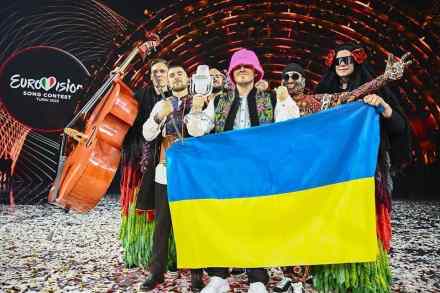
Twice during the Eurovision Song Contest our television lost the signal and the set went blank – once, mercifully, during the performance of a hirsute, gurning, cod-operatic bellend from that patently European country Azerbaijan. ‘Putin’, my wife and I both reckoned, seeing as Russian hacker groups favourably disposed towards their country’s leader had promised that they would do what they could to disrupt the broadcast and indeed the voting. If this really is the third world war, then I suppose it is a suitably banal and modernist take on universal annihilation – this yearly celebration of joyous gayness and very bad music suddenly part of the same war as the bloodshed, carnage and misery of Mariupol.

How not to level up parliament

From our UK edition

Justified relief that soldiers are now coming out of the Azovstal steelworks alive is accompanied by anxiety about what might happen next. The day before the news broke, I was talking on WhatsApp to Daniel Detcom, a Ukrainian territorial reservist (in normal life, a disc jockey), currently on active service in Mykolaiv. He told me that the Azovstal issue was producing disagreement among Ukrainians. Those fighting in the steel plant were mostly more nationalist than President Zelensky. Some people suspected him of not striving hard enough to help them, because they might be better for him as ‘dead heroes’ than as active participants in a future Ukraine.

Lviv diary: ballet, bomb shelters – and everyone loves Boris

From our UK edition

It is a glorious spring evening in Lviv and what could be better than a ballet gala at one of Europe’s grandest opera houses? The performance starts with an unusual announcement. In the event of an air raid siren, all spectators must go to the bomb shelter. The red-velvet seats are less than a third full – not for fear of going to a ballet in a war in which Russians have bombed a theatre, but because they can sell only 300 tickets since that is the bunker’s capacity. There is an emotional rendering of the national anthem for which the audience stand, hand on heart, and it is hard not to shed a tear, then the lights dim and the curtains open.

When did footballers’ wives become ‘WAGs’?

From our UK edition

Wagtime Footballers’ wives Rebekah Vardy and Coleen Rooney are locked in a libel trial dubbed ‘Wagatha Christie’. The term WAGs, as it happens, was first unleashed on the public 20 years ago this week while the England football team and their families were spending a five-day bonding session in Dubai, prior to the 23 players flying out to South Korea for the 2002 World Cup. The term WAGs, reported the Sunday Telegraph, had been used for ‘wives and girlfriends’ by staff at Jumeirah Beach Club, where they were staying and enjoying the facilities, which included two swimming pools with underwater music and belly-dancing workshops.

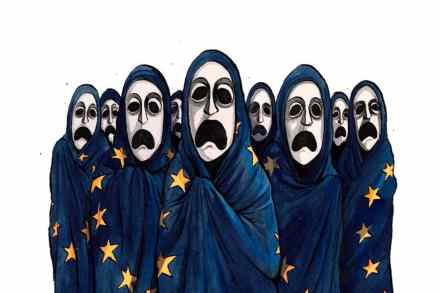
The EU is hopelessly muddled on Ukraine

From our UK edition

A couple of weeks ago Ursula von der Leyen portentously announced a further package of EU sanctions against Russia – the sixth, in case you had lost count. No doubt an underling immediately told Vladimir Putin. Most likely, that adviser will have been waved away; Vladimir has more important matters to think about. Much of the announcement was small beer. Putin won’t be shaking in his shoes at the thought that a few more of his top brass are being sanctioned, the odd bank removed from Swift, three broadcasters silenced in the EU, and a bar on the EU supply of corporate services like accountancy to Russian companies.

Stop calling Putin! Macron appears to be scolded by the Estonian PM

From our UK edition

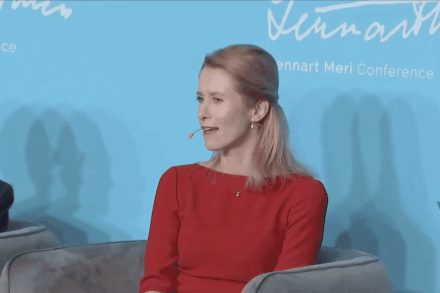
For a man who likes to present himself as a Jupiter-like statesman, gliding across the world stage, Emmanuel Macron’s efforts at diplomacy have fallen remarkably flat in recent months. While Britain spent the weeks before the Russian invasion of Ukraine shifting weapons to Kyiv – to demonstrable effect now – Macron instead responded to the troop build-up by going on a doomed diplomatic mission to Moscow. Unsurprisingly, his face to face with Putin, across an absurdly long table in the Kremlin, did not work out. Undeterred, Macron has spent the weeks following the invasion keeping up a close relationship with Putin, and has spoken a number of times to the bloated authoritarian on the phone.

Does Putin have blood cancer?

From our UK edition

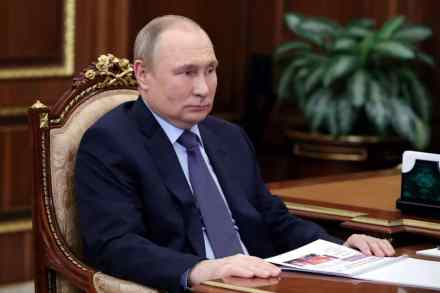
Suddenly, we are all diagnosticians. Clips of a puffy Putin slurring his words, his hands twitching or clutching a table for grim death, have led to all kinds of speculation about his health. It does seem probable that he is suffering from some ailments, to be sure. However, we need to be careful we do not get carried away with the speculation. Putin is notoriously private and his health is considered well off-limits. For a man who built much of his personal brand on his judo-fighting, ice hockey-playing, bare-chested horseback-riding persona, illness and ageing are obviously sensitive topics. Nonetheless, it has long been known that he suffers from recurring back problems, and appears to have undergone surgery more than once.