Ukraine

The sin of neutrality

From our UK edition

Yet again, millions of civilians across the Horn of Africa are starving. The world blames the crisis on drought and climate change, which nowadays is the way we excuse these countries for environmental mismanagement. But as ever, war is really the single greatest reason why people are killed year after year in this region. And while western countries pour billions of dollars of food aid into Ethiopia, Somalia and South Sudan, the weapons flooding those states originate mainly from Russia, China, Belarus – and Ukraine. In response to an article I recently wrote in The Spectator about why I think so few African governments condemn Russia’s invasion of Ukraine, I have had the usual deluge of ad hominem attacks so familiar to anybody who dares to criticise African governments.

Where will the war in Ukraine go next?

Almost every night in Russia, it seems, a government building bursts into an unexplained fire. Fuel depots, office buildings, infrastructure hubs — and once a bridge. No doubt people have their theories. Insinuation abounds. "Karma is a cruel thing," one Ukrainian official has said on Telegram. But in the main, both the Russian government and Ukraine maintain an eloquent silence. The metaphor is apt. The fires are an unexpected consequence of Russia’s war in Ukraine, an eventuality, no doubt, that no one in the Kremlin inner circle anticipated, or planned for. And yet they burn merrily nonetheless.

British volunteers shouldn’t be fighting in Ukraine

From our UK edition

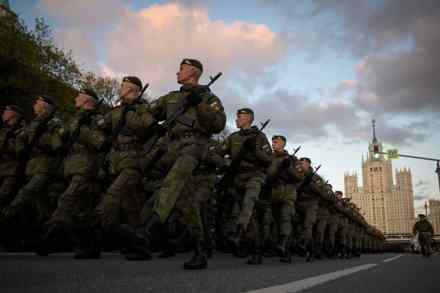
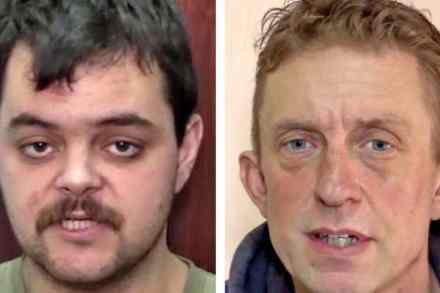
What’s going to happen to British volunteers captured while fighting Russian forces? According to Ukrainian analysts, there is intelligence to suggest that Russia is planning to parade them through Red Square. You read that correctly: Putin is planning to march 500 captured soldiers in the annual 9 May victory parades. Wasn’t this kind of thing always going to happen if British volunteers joined the Ukrainian war effort? And should Foreign Secretary Liz Truss really have said that she 'absolutely' backed anyone who travelled to the country to fight Russian troops? Unprepared veterans and untrained civilians really aren't that much help in the war effort.

Among Moscow’s lost generation

Vladimir Lenin famously said that there are “weeks where decades happen.” He was talking about the Bolshevik Revolution, but the panic-stricken weeks after Vladimir Putin shocked even his own people by invading "brotherly" Ukraine will also be remembered as an intensely transformative period in Russia’s history, when the ground shifted and Moscow was yanked back to its Soviet past. Those crazy weeks when my phone rang non-stop now feel like decades in retrospect, especially from the perspective of New York. The changes were apparent even after the first mad days of the "special operation." Anti-war Russians had panicked at Putin’s cruel gambit and fled the country by the tens of thousands, along with thousands of Western expats.

My stock has soared since I’ve taken in two Ukrainians

From our UK edition

I have temporarily taken in two Ukrainian refugees and suddenly find that, for very little sacrifice, my stock has soared. People who have regarded me as a hard-nosed, right-wing bastard are suddenly confused and struggling to readjust. A woke young relative who has despaired of my ignorant, reactionary views on Black Lives Matter, climate change, gender and so on suddenly sees a halo above my head. My mother-in-law on the Costa Brava reports mentioning that her daughter and son-in-law have Ukrainian refugees is like being sprinkled with gold dust. Her social circle is in awe. Never have I received so much praise for doing hardly anything at all.

What makes a ‘just’ war?

From our UK edition

What is a just war? Those who, from St Augustine onwards, have debated the question usually begin with Cicero, the Roman philosopher and statesman, who first attempted a definition in 44 bc. Cicero’s general understanding of the nature of justice, which was a central duty of those in power, went as follows: ‘Justice instructs us to spare all men, to consider the interests of the whole human race, to give everyone his due, and not to touch property which belongs to others.’ The foundation of justice was good faith, i.e. ‘truth and fidelity to promises and agreements’. There should be ‘a limit to retribution and punishment for wrongdoing’: much better to encourage repentance.

Letters: Workshy Whitehall has its benefits

From our UK edition

In check Sir: Jade McGlynn (‘Conflict of opinion’, 23 April) has a point that there are many reasons for popular support inside Russia for Putin’s ‘special operation’ to take over Ukraine. Whether a country is a democracy or a repressive dictatorship you will always find supporters of a patriotic war. Nonetheless you have to take into account the effects of a repressive state on ordinary people’s motivation to protest, even if they want to do so. Millions in Russia and Belarus are either state employees or dependent on the state in some existential way. If you protest you are locked up or beaten up; in many cases both. Would you – and I am pointing my Kitchener finger at you here – risk your life or livelihood for your views?

Portrait of the week: Twitter takeover, late nights for pubs and a row over leg-crossing

From our UK edition

Home Ben Wallace, the Defence Secretary, said Britain assessed that 15,000 Russians had been killed in the war against Ukraine and at least 530 Russian tanks, 530 armoured personnel carriers and 560 infantry fighting vehicles had been lost or captured. Sixty Russian helicopters and fighter jets had also been lost. He told the House of Commons that Britain was sending to Ukraine some Stormer armoured vehicles, with launchers for Starstreak anti-aircraft missiles. Liz Truss, the Foreign Secretary, called for aircraft to be sent too. In the seven days up to 23 April, 2,207 people had died with coronavirus, bringing total deaths (within 28 days of testing positive) to 173,693. In the previous week 1,289 had died.

Is NATO about to get even bigger?

The last time NATO inducted a new member was in 2019. The alliance agreed to accept North Macedonia’s request for membership. The small Balkan country was an odd choice to become the alliance’s thirtieth member state. At roughly 7,500 troops, North Macedonia’s military was smaller than the Los Angeles Police Department. Its entire population was smaller than Brooklyn's and its economy was one fifth the size of North Dakota’s. Three years later, NATO is set to become even bigger. Finland and Sweden, two Nordic nations with a decades-long policy of military neutrality between the West and Russia, will very likely submit their own membership bids as early as next month. Before Russia’s invasion of Ukraine, neither power was especially interested in becoming full-fledged members.

Germany’s military muddle over Ukraine

From our UK edition

The reluctance of chancellor Olaf Scholz to provide heavy weapons to Ukraine is now coming under increasing fire from abroad and within Germany itself. Prominent politicians from the liberal FDP and the Greens, the coalition partners of Scholz’s Social Democrats in Berlin, have criticised the chancellor for his lack of leadership, and complain that Germany is lagging behind other major western powers in supplying weapons. Marie-Agnes Strack-Zimmermann, the flamboyant chairwoman of the defence committee in the German parliament, hit out at the chancellor’s ‘deafening silence’ on the subject.

Joe Biden’s new world disorder

From our UK edition

The chaos abroad that has marked Joe Biden’s presidency is accelerating. Russia’s bloody war on Ukraine is rolling from winter into late spring; Iran and its proxies are launching missiles into Iraq and Saudi Arabia; China is menacing Taiwan and other Asian neighbours, and North Korea is preparing to revive its nuclear programme. Meanwhile, long-time US friends like Saudi Arabia and newer partners like India are starting to hedge their bets by cosying up to these regimes. Is the post-Cold War, US-led world order fracturing? It certainly looks like it. America’s enemies no longer fear her — and her friends don’t wholly trust her.

Could Russia lose the war in Donbas?

From our UK edition

We face a serious dilemma as the Battle of the Donbas begins. The idea that the Russian army remains a powerful, effective force capable of breaking through Ukrainian lines and encircling forces in the Donbas remains widespread. It is regularly claimed that now the Russians have shortened their supply lines, concentrated and rebuilt their forces, and appointed a bloodthirsty war criminal as their commander they will show us what they are capable of. And, it is claimed that the Russians must seize the Donbas and have a major victory by May 9, so that Vladimir Putin can stage a victory day parade then in Moscow. But what if the Russian forces haven’t improved since the beginning of the Ukraine war?

Will economic pressures weaken the West’s alliance?

From our UK edition

This morning’s retail sales update isn’t pretty. Sales volumes fell by 1.4 per cent last month, following a 0.5 per cent drop in February (revised, and worse, than the original estimate of 0.3 per cent). The biggest fall came in non-store retail shopping: almost an 8 per cent month-on-month fall. However, the Office for National Statistics points out that overall sales volumes are still roughly 20 per cent higher now than they were pre-pandemic. But the recent drop indicates that the cost-of-living crisis is already worsening, as inflation – now at 7 per cent – is taking its toll on real incomes and is already prompting changes in consumer behaviour. As Capital Economics notes today, the 9.

Why Putin’s ‘Satanic’ missile launch matters

From our UK edition

In some ways, it’s a headline-writer’s dream: Putin puts his faith in Satan. In reality, it’s actually Putin’s new RS-28 Sarmat (‘Sarmatian’) heavy intercontinental ballistic missile, which has become colloquially known in western circles as the ‘Satan II’. It is intended as a replacement for the R-36M, which in Nato parlance is known as the SS-18 ‘Satan.’ Following a successful test on Wednesday Putin asserted that the missile would not only ‘reliably ensure Russia's security from external threats’ but that it would ‘provide food for thought for those who, in the heat of frenzied aggressive rhetoric, try to threaten our country.’ It is certainly true that it is a powerful, next generation weapon.

Is Putin in pain?

From our UK edition

Is Vladimir Putin in pain? Until now, there has been plenty of chatter about the wellbeing of his minister of defence, Sergei Shoigu. Before the war, this veteran political survivor from the Yeltsin era was famous for being photographed on manly Siberian expeditions with his new patron, the bare-chested saviour of ‘All the Russias’. Putin and Shoigu camped out together in the taiga, with moody fireside photos and a spot of fishing – ‘Brokeback Mountain 2’, jested Russian bloggers. Though in reality, the two looked a more like Jack Lemmon and Walter Matthau in a dreary remake: Frumpy Old Men.

Why does India get a free pass for supporting Russia?

From our UK edition

When Russia invaded Ukraine the Indian government rapidly launched ‘Operation Ganga’. This was not a military operation, nor did it aim to supply Ukraine with weapons – it was an operation to extract the 500 Indian students stranded in Ukraine. After Prime Minister Narendra’s Modi’s video call with Putin, the Russian president ordered his invading army ‘to ensure the safe exit of Indian nationals from the armed conflict zone.’ The Indian government quickly dispatched civil servants, not weapons, to Poland, Hungary and Romania to assist their fleeing citizens. Since February more than 22,000 have been repatriated. Otherwise, Modi’s attitude to Ukraine has been decidedly non-committal.

Why more and more Russians are backing the war

From our UK edition

O, do the Russians long for war? Ask of the stillness evermore, Ask of the field, or ask the breeze, And ask the birch and poplar trees. So begins a famous Soviet-era song and poem, written by Yevgenii Yevtushenko during Khrushchev’s Thaw. Volodymyr Zelensky cited the poem in his eve-of-war address to Russians, hoping it would rekindle these pacifistic sentiments and encourage resistance against the Kremlin’s imminent invasion. Apart from a relatively few (very) brave souls, Russians did not rise up.

Russia becomes a lost cause

After an embarrassing two-month start to its war in Ukraine marked by pictures of abandoned armored personnel carriers, destroyed tanks and stalled armored columns outside Ukraine’s major cities, the Russian army is re-tooling and re-arming itself for a more manageable fight in the east. I use the word “manageable” not because the battle in the Donbas will be easy for Russian forces, but because the objective of expanding Russian control over the entirety of Donetsk and Luhansk is more realistic than overthrowing the Ukrainian government and occupying the entire country. Capturing, let alone holding, Kyiv, Kharkiv and Chernihiv would have entailed a massive number of personnel and a long-term commitment Russia doesn't have the resources to sustain.

U.S. President Joe Biden and Russian President Vladimir Putin (Getty Images)

In search of a Biden doctrine

Considering how likely we all are to be blown to pieces by it within the next five years, the atomic bomb has not roused so much discussion as might have been expected,” wrote George Orwell in 1945. The public conversation soon caught up with the lethal realities of the nuclear age. The possibility of annihilation loomed over politics, domestic and foreign, for much of the second half of the twentieth century. Then, with the fall of the Berlin Wall, it faded into the background. Thanks to Vladimir Putin, the threat has returned to the fore. The isolated and unpredictable strongman in the Kremlin is not shy when it comes to reminding the world of Russia’s nuclear arsenal.

biden
Cold War

Springtime for Cold War nostalgics

My favorite spy movie cliché of all time is the secret agent stuck in the 1980s. The threats have gone asymmetrical, terrorists slip across borders, but our hero longs for the simple days when the world was divided between good Westerners and bad Russians. “You’re a fossil!” sneer his girlboss department administrator, his vegan drone pilot, his tech whiz who has just hunted down a non-state actor by crosschecking the latest SIGINT with a Yelp! review of an Iraqi yoga studio. Cut to him muttering under his breath à la Judi Dench in Casino Royale: “Christ, I miss the Cold War.” Now, suddenly, those who miss the Cold War are having a moment.